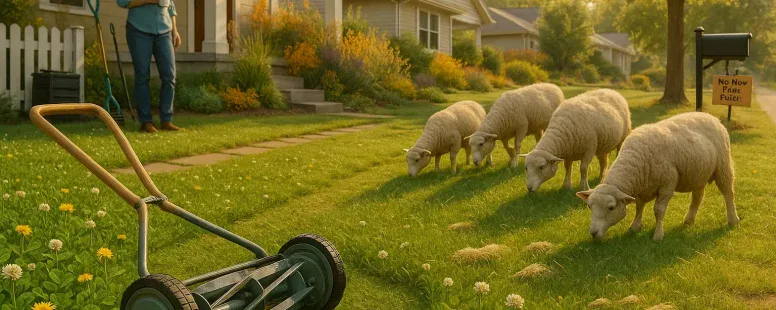
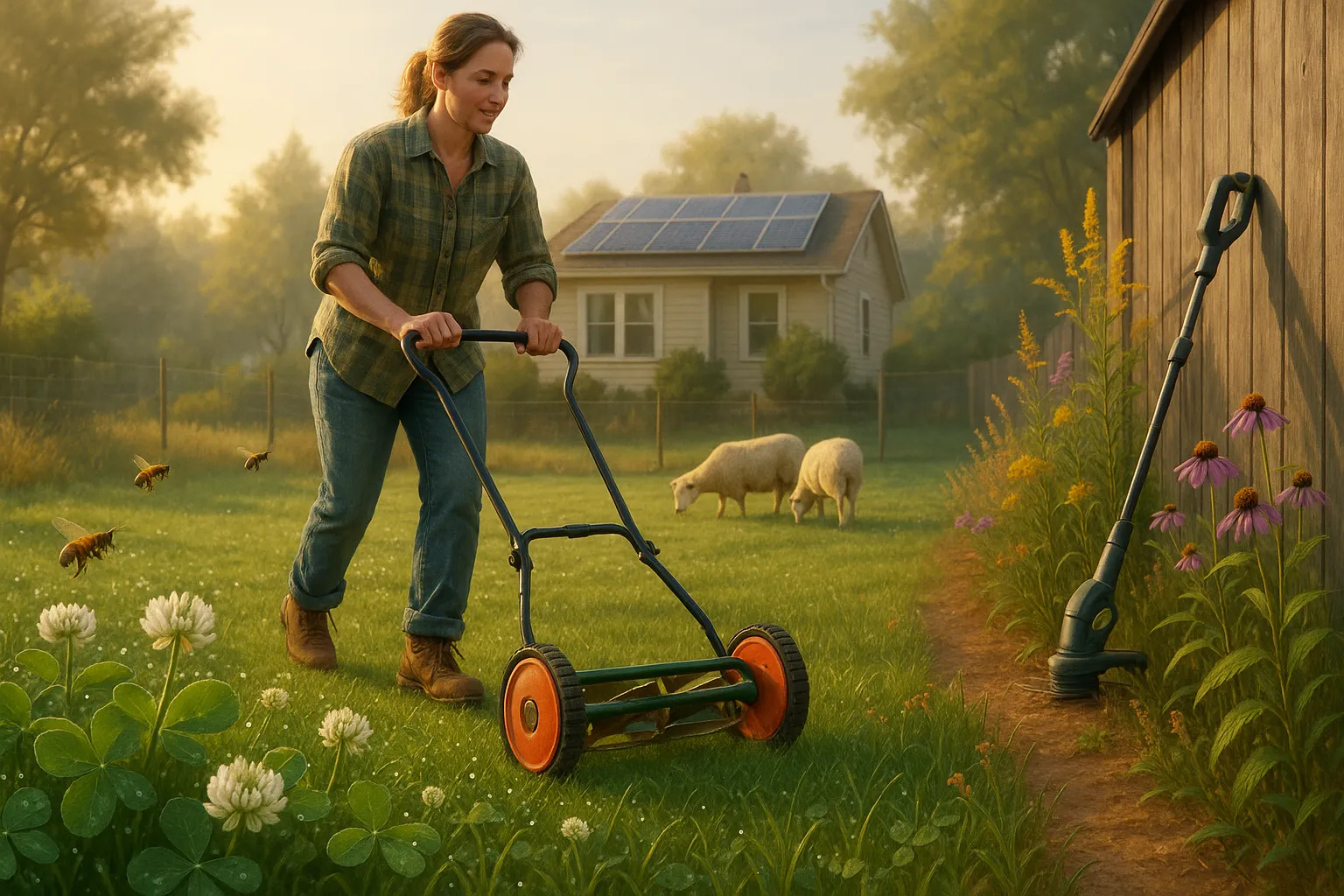
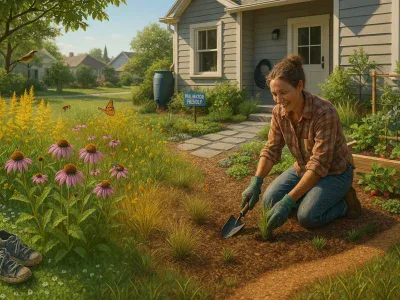
You can reclaim weekends and cut costs without losing a neat yard. Choosing the best alternative to a lawn mower can reduce noise, lower emissions, save water, and invite more wildlife into your green space. Picture a soft carpet of clover that smells of honey in June, or a small flock of sheep quietly grazing a sloped lawn while you sip coffee, both real options that sidestep the roar and upkeep of a gas mower. This guide gives clear, practical choices and trade-offs so you can pick what fits your yard, budget, and the life you want to lead.
Why Choose An Alternative To A Lawn Mower
Fact: Alternatives reduce noise, emissions, and maintenance costs. Most gas mowers emit measurable hydrocarbons: the EPA estimates small engines contribute disproportionately to air pollution. You may choose an alternative because you want quieter mornings, lower fuel costs, or a yard that supports pollinators.
Alternatives also change the work you do. You swap routine mechanical upkeep for simple seasonal tasks: trimming edges, planting groundcovers, or managing a small flock. That trade often improves biodiversity and reduces water use. For example, replacing turf with clover can cut summer irrigation needs and attract bees. Some options, manual reel mowers, electric trimmers, or native meadows, fit tight budgets: others, sheep grazing services, artificial turf, require more planning but deliver dramatic lifestyle gains.
Top Lawn-Mower Alternatives: Overview And Quick Comparison
Fact: You have five clear paths: manual and handheld tools, low-maintenance groundcovers and conversions, animal-based solutions, artificial surfaces, and passive succession to native plants. Each path balances upfront cost, labor, aesthetics, and ecological effect.
Use this comparison to narrow choices before you jump into specifics.
Manual And Handheld Tools
Fact: Manual and handheld tools lower emissions and let you control precision. You can keep a tidy yard without gas.
Manual And Handheld Tools
Start by choosing tools that match yard size and your body. Small yards suit a reel mower: larger or awkward yards benefit from battery trimmers. Brand examples: Fiskars makes reliable manual reel mowers: Stihl and Ryobi lead in battery trimmers. Test weight and balance in-store if you can.
Manual Reel Mowers, How They Work, Pros, Cons, And Cost
Fact: Reel mowers cut by scissor action against a bed knife. They produce clean cuts that favor turf health.
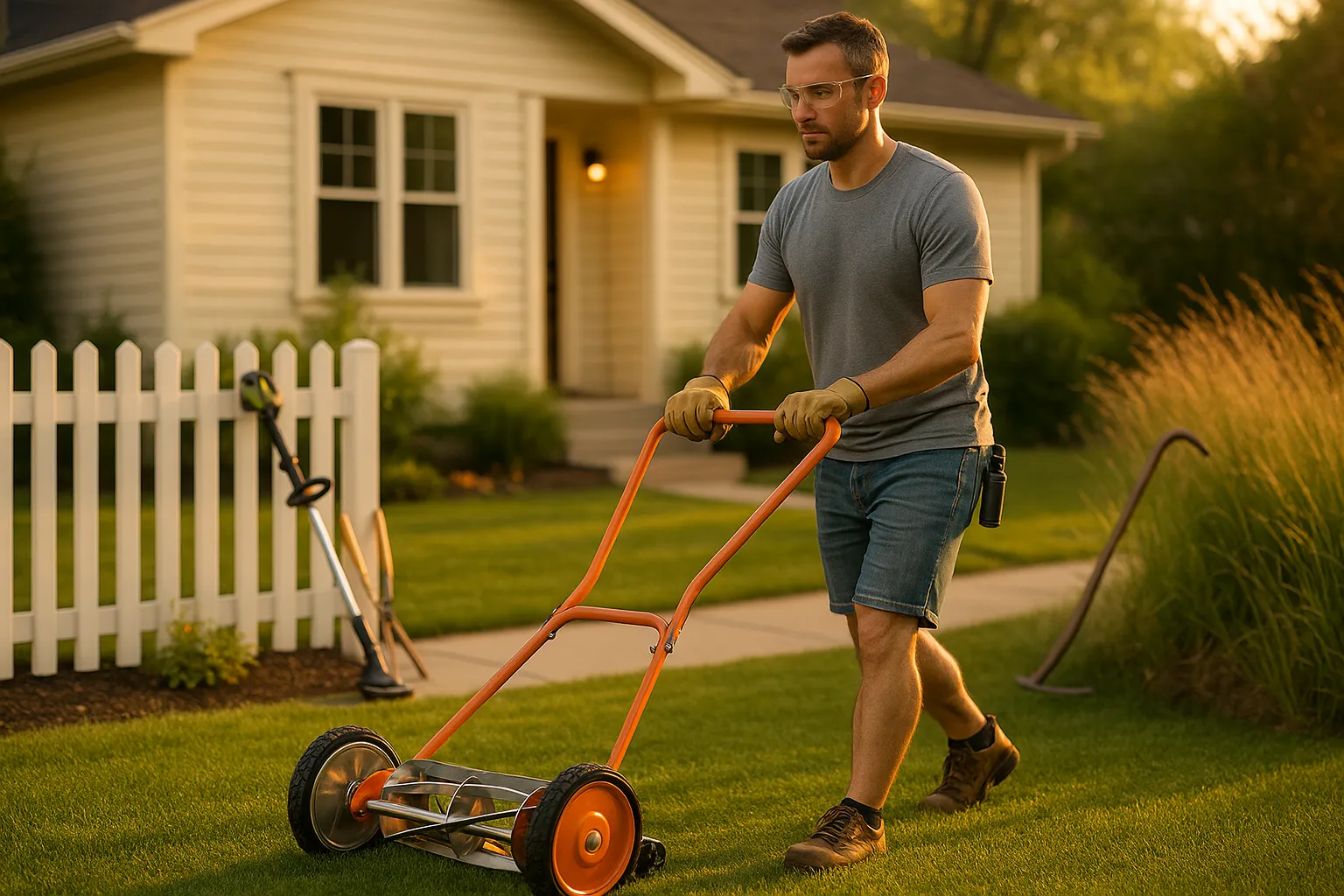
Reel mowers cost $80–$400. Pros: quiet, no fuel, low maintenance, sharper cut. Cons: they struggle with tall or wet grass and require push power. Reel mowers work best on well-maintained lawns under 1/4 acre. They also reduce thatch and encourage healthy turf when used weekly.
String Trimmers And Grass Shears, Uses And Best Practices
Fact: Trimmers let you reach edges, steep slopes, and tight spots a mower can’t.
Battery string trimmers cost $80–$300: gas models cost more and pollute. Hold the trimmer at a slight angle, make sweeping passes, and use manufacturer-recommended lines. For a neat edge, follow with manual grass shears (handheld or electric). Safety tip: wear eye protection and gloves: loose gravel becomes a projectile.
Scythes And Sickle Tools, When To Consider Traditional Cutting
Fact: Scythes perform well on tall, coarse vegetation and sloped terrain.
Use a scythe when you have meadow grasses, long weedy growth, or hard-to-reach slopes. They demand technique: sharpen the blade often and practice stance. Scythes are quiet, fuel-free, and satisfying to use, but they require time and an initial learning curve. Farmers and restoration volunteers often prefer scythes for meadow maintenance.
Low-Maintenance Living Groundcovers And Landscape Conversions
Fact: Replacing turf with groundcovers reduces mowing, irrigation, and chemical use.
Top Lawn-Mower Alternatives: Overview And Quick Comparison
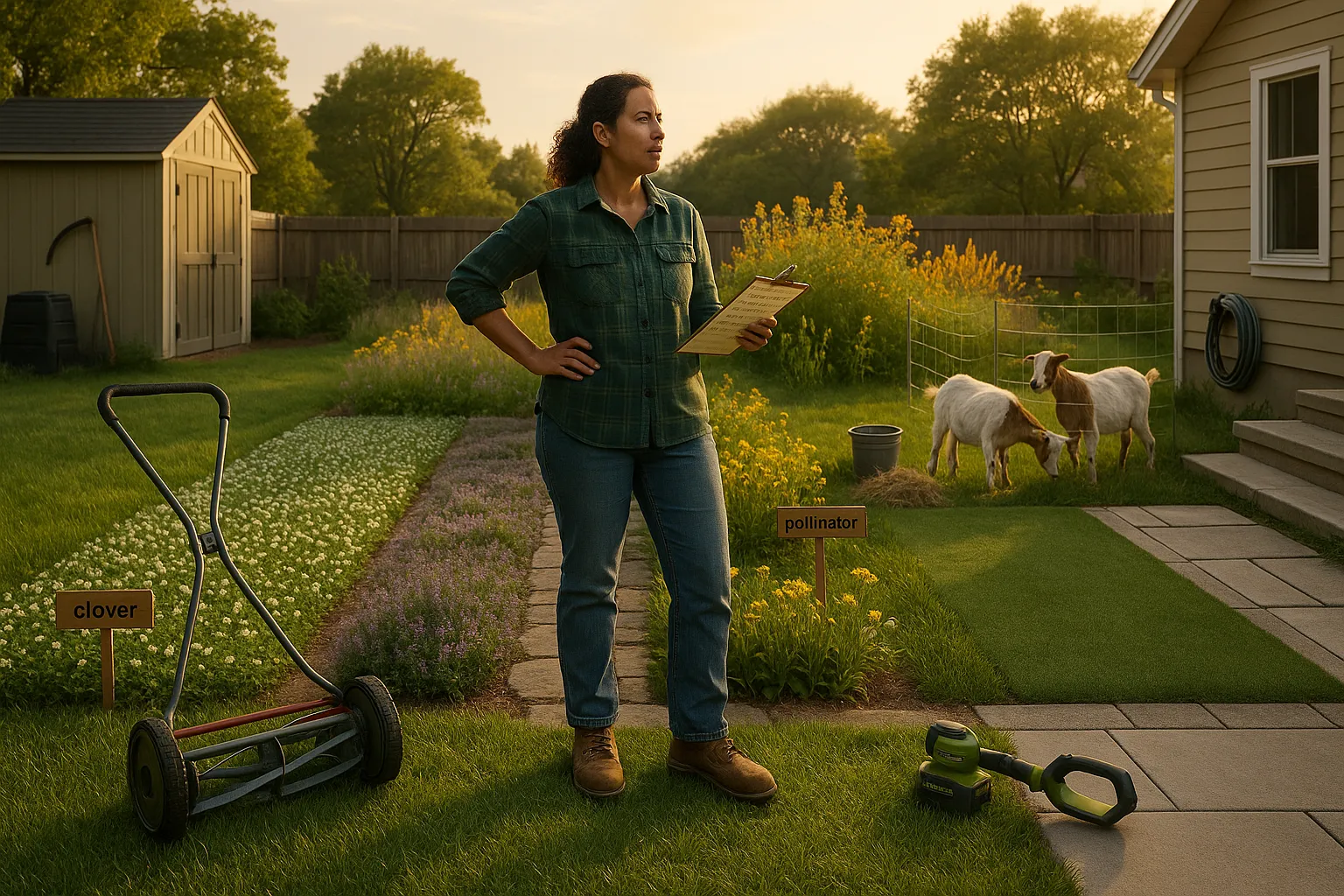
(Repeated here for depth) Groundcovers vary by sunlight and use. Choose clover for soft, walkable lawns: creeping thyme for fragrant walkways: no-mow grass mixes for low-cut turf appearance. Consider pet use and foot traffic when selecting species.
Low-Maintenance Living Groundcovers And Landscape Conversions
Fact: Groundcovers and conversions shift labor from mowing to planting and establishment care.
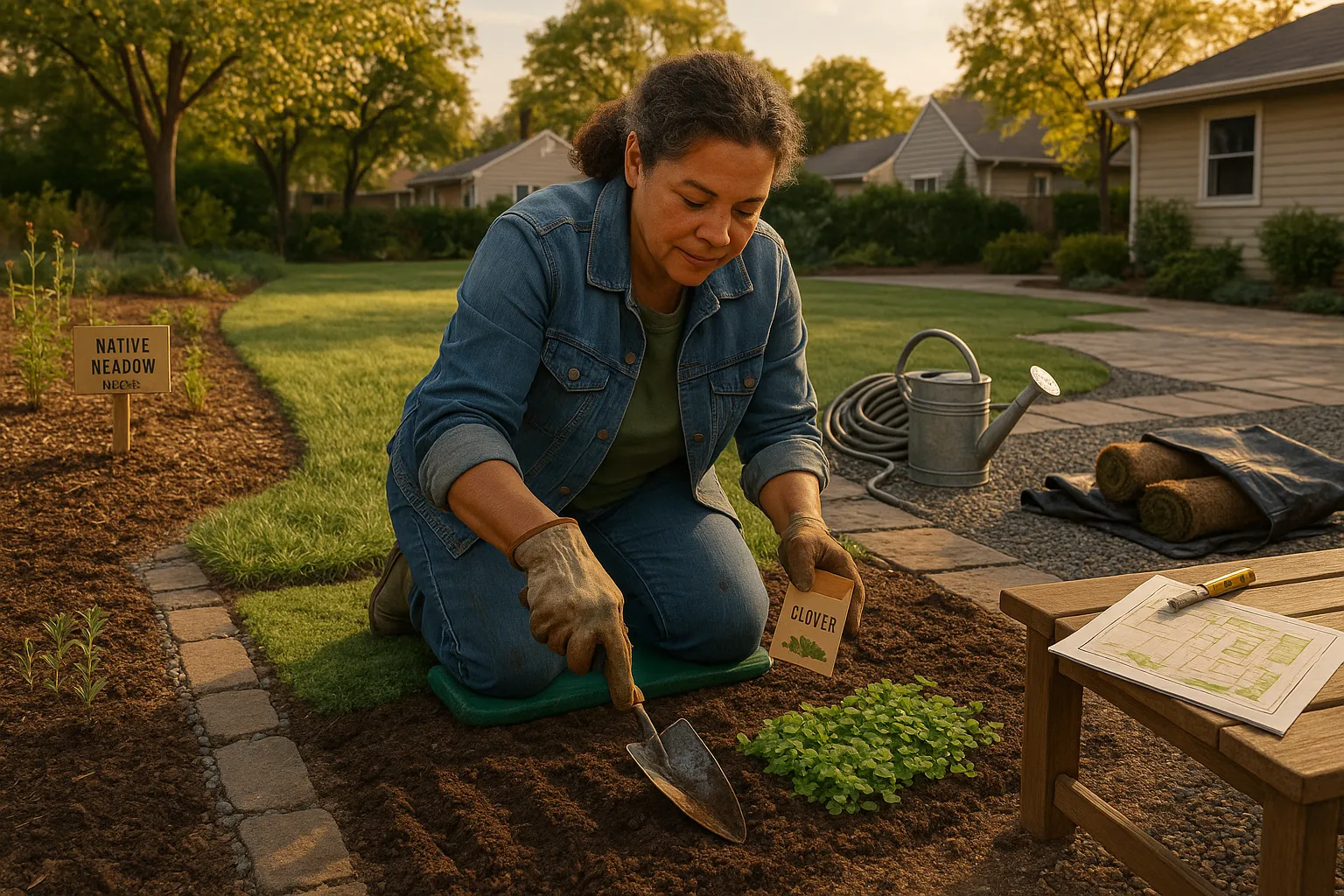
Convert in stages: map the site, remove sod or kill with solarization, amend soil, and plant. Expect a 1–2 year establishment period. Costs vary: seed mixes run $20–$150: professional installations cost more. Benefits: less mowing, more pollinators, and seasonal interest.
Clover, Creeping Thyme, And No-Mow Grass Mixes, Benefits And Drawbacks
Fact: Clover fixes nitrogen and reduces fertilizer needs.
Clover: hardy, low-water, blooms that feed bees. Drawbacks: not ideal if you want spotless green turf and some people note pollen concerns. Creeping thyme: fragrant, tolerates light foot traffic, attractive in paver joints. No-mow mixes: usually include fescues that stay low: they give a lawn-like look with minimal cuts.
Native Meadow Or Pollinator Plantings, Design, Maintenance, And Timeline
Fact: Native meadows boost biodiversity and require limited mowing after establishment.
Design tip: pick a local seed mix from a native plant nursery or Xerces Society–recommended mix. Maintenance in year one includes weed control and occasional watering. By year two to three, you’ll mow selectively, once or twice a season, to prevent woody invasion. A meadow offers high ecological return but looks less ‘manicured.’
Mulched Beds, Hardscaping, And Artificial Turf, Pros, Cons, And Cost Considerations
Fact: Hardscaping eliminates mowing but increases impervious surface area.
Mulched beds reduce plant competition and maintenance but need periodic mulch refresh. Hardscaping (gravel, pavers) offers durability: stormwater planning matters. Artificial turf removes mowing and watering but has a high upfront cost and synthetic material footprint: choose products with good drainage and heat mitigation properties.
Natural And Animal-Based Options
Fact: Animals and natural succession can replace mechanical cutting when matched to scale and local rules.
Natural And Animal-Based Options
You can choose grazing or hands-off succession depending on your tolerance for change.
Grazing Animals (Sheep, Goats), Practicality, Regulations, And Care Needs
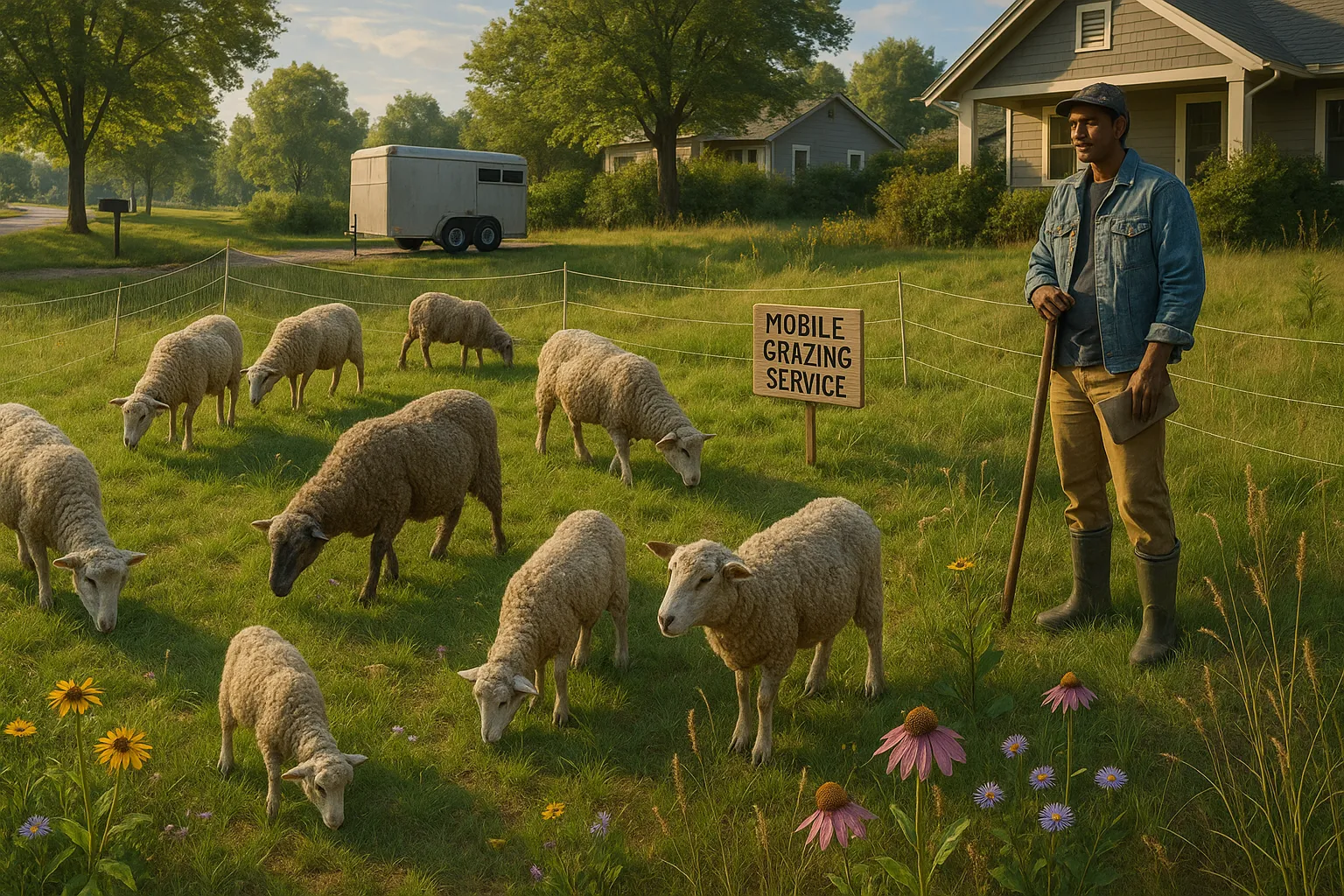
Fact: Sheep and goats can clear grass and certain brush, but they require care and legal compliance.
Practical notes: small flocks of sheep cut grass efficiently on irregular sites and slopes. Goats excel at brush control but are less selective and may damage plantings. You must check local ordinances, fencing needs, and predator risks. Services exist, look for local shepherd contractors or mobile grazing services in many U.S. cities.
Encouraging Native Plant Succession, Letting Nature Replace The Lawn
Fact: Passive succession produces a mosaic of native plants with minimal inputs over time.
You can stop mowing to encourage native seedlings, then selectively remove invasive species. This path requires patience: early years look weedy: by year three to five, native shrubs and wildflowers establish. Expect trade-offs in appearance and neighbor reactions, but gain habitat and low long-term maintenance.
How To Choose The Best Alternative For Your Yard
Fact: The best option matches yard conditions, lifestyle, and rules. Answering a few clear questions narrows choices quickly.
How To Choose The Best Alternative For Your Yard
Begin by listing your priorities: quiet, cost savings, wildlife, or a tidy look. Then use the checklist below.
Assess Your Yard: Size, Slope, Soil, Sun Exposure, And Local Climate
Small, flat yards: manual reel mower or clover mix works well. Large or steep properties: grazing, string trimmers, or hardscaping may be better. Soil and sun guide plant choice, shade favors moss or ajuga: full sun favors thyme and fescues. Check your USDA Plant Hardiness Zone for species selection.
Match Lifestyle And Budget: Time, Physical Ability, Upfront Vs. Ongoing Costs
Fact: Consider what you want to trade, time for money or vice versa.
If you have little spare time, artificial turf or a contractor-led grazing service may suit you. If you enjoy physical work and want low cost, a reel mower and groundcovers fit. Factor in lifespan: batteries age, turf needs eventual replacement, and meadows need management.
Implementation Steps For Common Conversions
Fact: A staged approach reduces mistakes and neighbor friction.
Steps: survey your space, test soil, choose species or tools, pilot a small area, and scale up. For conversion to a meadow, prepare seedbed in fall and sow with a drill or by broadcast. For grazing, confirm zoning, fence the area, and source animals or a contractor.
Environmental And Community Considerations
Fact: Alternatives impact water use, emissions, biodiversity, and neighborhood aesthetics.
Environmental Impacts: Water Use, Emissions, And Biodiversity
Switching to clover or native plants lowers summer water demand and boosts pollinators. Replacing gas mowers with manual or electric tools cuts emissions immediately. But, artificial turf can increase surface temperatures and reduce groundwater recharge.
Dealing With Local Rules, HOA Guidelines, And Neighbors
Fact: Local regulations often restrict livestock and visible ‘non-lawn’ plantings.
Check municipal codes and HOA rules before planting or bringing animals. Talk to neighbors early, show them a plan or photographs of completed projects. A small pilot plot can demonstrate aesthetics and reduce objections. Be ready to mow an access strip or maintain tidy edges to keep community relations smooth.
To provide the best experiences, we use technologies like cookies to store and/or access device information. Consenting to these technologies will allow us to process data such as browsing behaviour or unique IDs on this site. Not consenting or withdrawing consent, may adversely affect certain features and functions.
Functional
Always active
The technical storage or access is strictly necessary for the legitimate purpose of enabling the use of a specific service explicitly requested by the subscriber or user, or for the sole purpose of carrying out the transmission of a communication over an electronic communications network.
Preferences
The technical storage or access is necessary for the legitimate purpose of storing preferences that are not requested by the subscriber or user.
Statistics
The technical storage or access that is used exclusively for statistical purposes.The technical storage or access that is used exclusively for anonymous statistical purposes. Without a subpoena, voluntary compliance on the part of your Internet Service Provider, or additional records from a third party, information stored or retrieved for this purpose alone cannot usually be used to identify you.
Marketing
The technical storage or access is required to create user profiles to send advertising, or to track the user on a website or across several websites for similar marketing purposes.