
Which Is Older: Japan or China?
The rich tapestry of East Asian history weaves narratives of cultural innovation, profound philosophical contributions, and remarkable advancements in science and art. Among the nations central to this vibrant region, China and Japan stand out as iconic civilizations. But, an intriguing question often arises when discussing their historical legacies: which of these nations holds the claim of being the older civilization? While both countries possess ancient roots, distinct factors illuminate their unique timelines, and exploring these distinctions offers valuable insights into their historical journeys.
Understanding the Origins of China

Early Dynasties and Cultural Development
China’s extensive history begins with the establishment of the Xia Dynasty around 2070 BCE, a point often regarded as the dawn of Chinese civilization. But, tangible archaeological evidence becomes prominent with the Shang Dynasty (1600–1046 BCE), known for its oracle bone script and sophisticated bronze works. These initial periods laid the foundation for intricate governance structures, philosophies, and social systems.
Significant Historical Achievements
Over millennia, China produced notable achievements. From the construction of the Great Wall to the formulation of Confucian and Daoist thoughts, the country profoundly influenced cultural and political landscapes across East Asia. China’s advances in technology and written language, exemplified by early papermaking and printing techniques, also cemented its global significance.
Understanding the Origins of Japan

Foundation Myths and Archeological Evidence
Japan’s origin is intricately connected with its creation myths recorded in the “Kojiki” and “Nihon Shoki,” which attribute the creation of the islands to the divine kami, Izanagi and Izanami. Archaeological evidence, but, points to the Jomon Period (14,000–300 BCE) as the beginning of human activity on the archipelago, characterized by its unique pottery tradition.
Key Periods in Japan’s Early History
The Yayoi Period (300 BCE–300 CE) saw significant transitions, such as the introduction of rice agriculture and metallurgy, vital steps in Japan’s socio-economic evolution. The Kofun Period (250–538 CE) marked the emergence of centralized authority, symbolized by the iconic kofun burial mounds.
Comparative Analysis of Historical Timelines
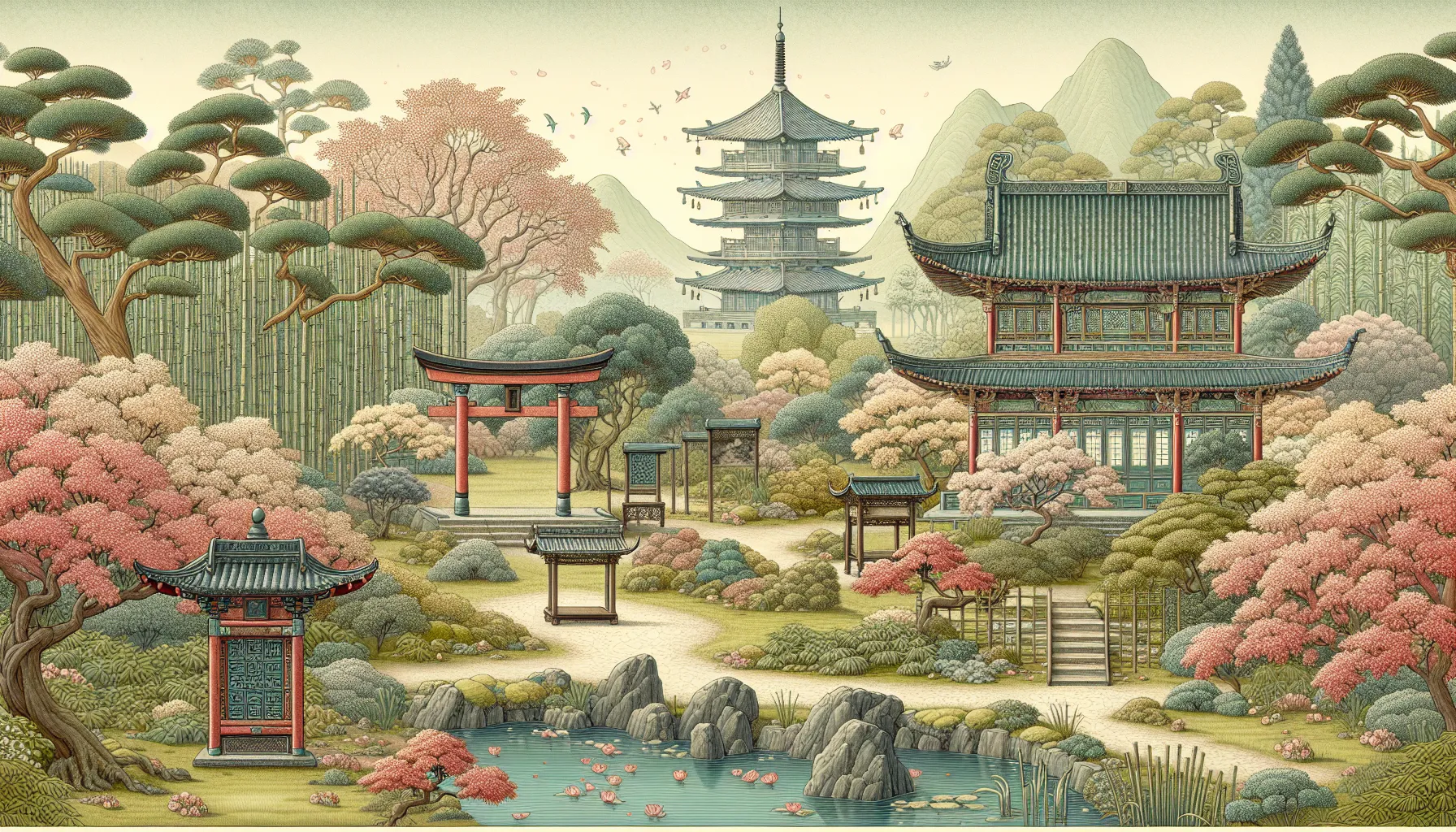
Earliest Recorded Histories
While China’s Xia Dynasty predates Japan’s Jomon Period by several millennia, both civilizations evolved independently with distinct trajectories that reflect their unique geographical and cultural contexts.
Cultural and Political Interactions
Even though their own independent paths, history bears witness to profound interactions between these two nations. During the Tang Dynasty, Chinese cultural practices, administration systems, and religious principles enriched Japanese society, evident in the dissemination of Buddhism and Confucian ideals.
The Legacy of Ancient Civilizations in East Asia

Both China and Japan have contributed significantly to human history and cultural development. China’s model of ordered governance and intellectual traditions inspired countless thinkers across continents, while Japan’s artistry and adaptability continue to influence modern aesthetics and technologies. Evaluating their legacies can help us better appreciate the distinct yet intertwined nature of human innovation.

- Vitamix Product Comparison: Which Blender Should You Buy? - September 15, 2026
- MGS6 Competitors: Top Stealth & Action Games - September 15, 2026
- HBM Competitors in High-Bandwidth Memory Tech - September 15, 2026
by Ellie B, Site Owner / Publisher