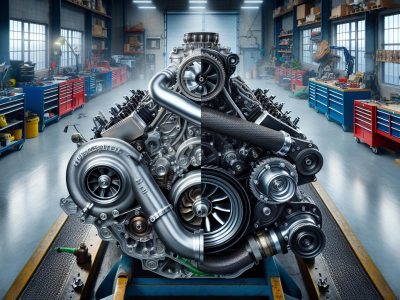
Picture feeling the raw power of your engine surge with every press of the pedal. But what really fuels that thrill—a turbocharger or a supercharger? Both promise to boost your ride, yet they deliver power in strikingly different ways. One whispers efficiency while the other roars with instant response.
You might not realize that choosing between these two isn’t just about speed. It’s about how your car breathes, how it reacts, and eventually, how it makes you feel behind the wheel. Jump into the world of forced induction and discover which powerhouse suits your driving style and needs best.
Understanding Turbochargers and Superchargers
Forced induction engines change your driving experience by boosting power through increased air intake. Knowing how turbochargers and superchargers operate reveals why one might fit your style better than the other.
How Turbochargers Work
Turbochargers use exhaust gases to spin a turbine that’s connected to a compressor. This compressor forces more air into the engine’s cylinders, resulting in more fuel burning and higher power output. Because turbos use what’s essentially wasted energy — exhaust — they’re efficient. But, you might notice a delay, often called “turbo lag,” before the boost kicks in, especially at low engine speeds. For example, a race car driver expects a burst of power after hitting a certain RPM, not immediately. This delay happens because the turbine needs enough exhaust flow to spool up. Even though this, modern turbochargers have advanced with variable geometry turbines and twin-scroll designs, reducing lag significantly. You’ll find turbos popular in performance cars and even in everyday vehicles aiming for better fuel efficiency since they don’t constantly draw power from the engine.
How Superchargers Work
Superchargers connect directly to the engine’s crankshaft via a belt or gear system, providing instant boost as soon as the engine runs. Unlike turbos, superchargers deliver compressed air on demand without relying on exhaust flow. This gives you immediate throttle response with no lag, which is critical for drag racers and muscle car enthusiasts who want raw, unfiltered power right away. But, superchargers consume engine power to operate, sometimes robbing up to 20% of horsepower due to mechanical drag. Even though this drawback, their simplicity and reliability often make them a favorite for those valuing immediate power delivery over efficiency. Picture your classic muscle car roaring to life the moment you press the gas pedal; that instant surge is a supercharger’s signature feature.
Feature
Turbocharger
Supercharger
Power Source
Exhaust gases
Engine crankshaft
Boost Delivery
Delayed, depends on exhaust flow
Immediate, belt/gear driven
Efficiency
Higher, uses otherwise wasted energy
Lower, consumes engine power
Common Uses
Performance & fuel-efficient vehicles
Muscle cars & drag racing
Deciding between turbochargers and superchargers requires weighing the importance of immediacy versus efficiency. Will your preference for power come from a delayed push or an instant shove? It’s a question that pushes the limits of engineering and personal taste alike.
Key Differences Between Turbochargers and Superchargers
Understanding how turbochargers and superchargers differ helps you choose the right forced induction system for your vehicle. The distinctions affect performance, efficiency, and maintenance in ways you might not expect.
Performance and Power Delivery
Turbochargers boost engine power by harnessing exhaust gas energy to spin a turbine, which compresses intake air. This process delivers more oxygen for combustion, increasing horsepower and torque significantly. But, turbo lag, the delay between pressing the accelerator and power delivery, may interrupt smooth acceleration. Advances in twin-scroll turbos and variable-geometry turbines reduce this lag considerably, offering quicker throttle response in modern cars like the Porsche 911 Turbo.
Superchargers connect mechanically to the engine’s crankshaft via a belt. This direct link generates instant boost without lag, giving you immediate throttle response and consistent power through the RPM range. This is why muscle cars like the Chevrolet Camaro ZL1 often favor superchargers for their aggressive, instant acceleration. Yet, since superchargers rely on engine power to operate, they can lower net horsepower output by drawing energy away from the combustion process.
Efficiency and Fuel Economy
Turbochargers excel in efficiency by recycling exhaust gases that would otherwise be wasted. This can improve fuel economy, especially during steady cruising or highway driving, where turbo boost modulates to optimize combustion. For instance, many modern turbocharged four-cylinder engines surpass older V6 engines in miles per gallon, demonstrating better fuel economy without sacrificing power.
In contrast, superchargers impose a constant load on the engine since their boost depends on crankshaft speed. This additional mechanical draw reduces fuel efficiency, particularly during low-speed driving or idling. While superchargers offer raw power, they do less to conserve fuel, making them less appealing if economy is important to you.
Installation and Maintenance
Turbochargers demand more complex installation due to their dependence on exhaust plumbing and intercooling systems. They require precise tuning and high-quality lubricants to endure extreme heat and rotational speeds that exceed 150,000 RPM. Mistakes in turbo installation or maintenance often result in premature failure or reduced performance. But, once set up properly, turbos usually require less frequent adjustment.
Superchargers boast simpler installation since they mount directly on the engine without complicated exhaust rerouting. You can install a roots or twin-screw supercharger kit in a day with basic mechanic skills. Maintenance involves regular belt inspection and occasional clutch replacement in some models. Though superchargers put mechanical strain on the engine, their robust design translates to easier, more predictable upkeep.
Aspect
Turbocharger
Supercharger
Power Delivery
Delayed (turbo lag), powerful at high RPM
Instant boost, consistent across RPM range
Fuel Efficiency
More efficient, recycles exhaust energy
Less efficient, draws engine power
Installation Complexity
Complex, requires exhaust and cooling mods
Simpler, mounts directly to engine
Maintenance
Requires precise lubrication and tuning
Belt and clutch maintenance
Deciding between a turbocharger or a supercharger depends on whether you prioritize efficiency and high RPM power, or immediate throttle response and installation simplicity. Each system brings unique strengths and trade-offs that suit different driving styles and goals. You can choose based on your driving habits, vehicle type, and performance expectations while considering long-term reliability and maintenance costs.
Advantages and Disadvantages of Turbochargers
Turbochargers offer a mix of power and efficiency by using exhaust gases to spin a turbine that compresses incoming air. This process boosts engine performance without drawing power directly from the crankshaft. You benefit from significant horsepower increases and improved fuel economy, especially during highway cruising when the engine runs steady. A common example: many modern diesel trucks rely on turbos to deliver both torque and fuel savings.
But, turbochargers come with trade-offs. A notable drawback is turbo lag, a delay between pressing the accelerator and feeling the boost. Although advances like twin-scroll turbos and variable-geometry turbines reduce this, a minor hesitation can be felt during sudden acceleration. Also, turbos require precise maintenance. They run at extremely high rotational speeds—often over 150,000 RPM—and depend on clean, high-quality oil to avoid premature wear.
If you value efficiency and power at higher RPMs, turbos provide an edge. But they’re not as responsive at low speeds compared to superchargers. For example, in stop-and-go city traffic, the delay can affect drivability. Plus, installation complexity and cost tend to be higher due to additional components like intercoolers and wastegates.
You might wonder if the trade-offs are worth it. Real-world testing from automotive publications confirms turbos excel on fuel economy and long-distance performance, while superchargers shine in immediate throttle response. If you drive mostly on highways or want a balance between power and fuel savings, turbos fit that mold well. Yet for spirited, aggressive acceleration without waiting, turbos can feel less exhilarating.
In essence, turbochargers transform exhaust heat that normally goes to waste into useful power. This clever engineering reduces emissions and improves mileage, which is why so many manufacturers push turbo tech nowadays. Still, understanding the slight hesitation and extra maintenance helps you decide if this tech matches your driving style and expectations.
Advantages and Disadvantages of Superchargers
Superchargers provide instant boost by drawing power directly from your engine’s crankshaft. This connection means you get immediate throttle response, a feature favored by muscle car enthusiasts and drag racers who crave acceleration without delay. You never experience turbo lag, which makes superchargers ideal for situations that demand quick power bursts, like overtaking on highways or launching off the line.
One major advantage of superchargers lies in their simplicity. Since they don’t rely on exhaust gases, their installation tends to be less complex compared to turbos. This often translates to easier maintenance and less worry about specialized lubrication needs. For instance, many aspirated V8 engines can be outfitted with belt-driven superchargers, greatly enhancing performance without a complete engine overhaul.
Even though these upsides, superchargers also comes with downsides that may affect your driving experience and vehicle efficiency. Because they take power straight from the engine, you lose some horsepower to drive the compressor itself. This parasitic loss means fuel economy generally takes a hit, especially during steady cruising, where efficiency matters most. So if you commute long distances, a supercharger might increase your fuel costs noticeably.
Also, superchargers generate more heat due to their constant mechanical load, which can lead to greater engine wear over time. Without adequate cooling systems, heat build-up might reduce reliability and requires you to monitor coolant levels and belt conditions regularly. Past examples, like the roots-type supercharger, highlight how excessive heat can stunt performance if not managed.
Summarizing, choosing a supercharger gives you fast, predictable power delivery and relative installation ease but demands trade-offs in fuel economy and engine strain. If immediate throttle response drives your priorities, superchargers outperform turbos in this domain, but expect higher maintenance and operational costs. You get more punch upfront, though eventually, balancing these factors depends on your driving style and vehicle goals.
Which Is Better Turbo Or Supercharger For Different Applications?
Choosing between a turbocharger and a supercharger depends heavily on the driving context and the specific needs your vehicle aims to fulfill. Each system plays a unique role, suited for different scenarios and performance goals.
Daily Driving and Commuting
In daily driving or commuting, efficiency and smooth power delivery take priority. Turbochargers, by harnessing exhaust gases, enhance fuel economy during steady speeds and light throttle use. For example, vehicles like the 2024 Ford F-150 EcoBoost use turbocharged engines to balance power and mileage, making them ideal for stop-and-go city traffic or long highway stretches. The slight delay known as “turbo lag” often goes unnoticed in these environments where sudden acceleration isn’t frequent.
Superchargers provide instant throttle response but tend to sap engine power continuously, which can lower gas mileage over time. If your daily travel involves frequent accelerations, such as merging onto highways, a supercharger’s immediate boost can feel satisfying, yet it might cost you in fuel economy. So, for daily commutes prioritizing economy and subtle power gains, turbochargers holds the edge.
Performance and Racing
For performance enthusiasts and racers craving immediate power and rapid acceleration, superchargers offer undeniable appeal. Because they are mechanically driven directly by the engine’s crankshaft, they deliver power with zero lag. Drag racers and muscle car fans often opt for superchargers—take the iconic Chevrolet Camaro ZL1, which uses a supercharger to dominate quarter-mile times with instantaneous punch.
On the other hand, turbocharged engines have advanced significantly with technologies like twin-scroll systems and variable geometry turbines, which minimize lag. Modern race cars, including certain Porsche 911 GT3 models, use turbochargers to extract maximum power while maintaining efficiency. If you want explosive power but can tolerate a fraction of a second delay, turbochargers provide a winning balance between speed and fuel efficiency on the track.
Towing and Heavy-Duty Use
When towing heavy loads or engaging in heavy-duty tasks, consistent torque and reliability are paramount. Turbochargers excel here by generating more torque at lower RPMs through exhaust energy, enhancing performance in trucks like the Ram 2500 EcoDiesel. They also improve fuel consumption compared to aspirated engines under heavy strain.
Superchargers, while capable, impose a parasitic load which can reduce overall engine output during demanding work. Plus, the extra heat from constant mechanical drive requires vigilant cooling system maintenance. If your aim is sustained pulling power with a reasonable operating cost, turbochargers deliver superior torque and efficiency for heavy-duty applications.
Application
Recommended Forced Induction
Reason
Example Vehicle
Daily Driving
Turbocharger
Better fuel economy, manageable turbo lag
Ford F-150 EcoBoost
Performance Racing
Supercharger
Instant power boost, zero lag
Chevrolet Camaro ZL1
Towing/Heavy-Duty
Turbocharger
High low-end torque, improved efficiency
Ram 2500 EcoDiesel
The choice between turbo and supercharger eventually reflects your driving priorities: efficiency with gradual power, or instant power with some efficiency compromises. Understanding this trade-off helps you pick the system aligning perfectly with your vehicle’s role and your personal driving style. Would you rather have fuel-saving momentum or instant acceleration at your command? Give thought to your daily routes and future driving goals before deciding.
Conclusion
Choosing between a turbocharger and a supercharger comes down to what matters most in your driving experience. If you prioritize fuel efficiency and smooth power delivery, a turbocharger might be the better fit. On the other hand, if instant throttle response and aggressive acceleration are your goals, a supercharger could be the way to go.
Consider your daily driving habits, vehicle type, and long-term maintenance preferences before making a decision. Both systems offer unique benefits and trade-offs, so aligning your choice with your performance expectations ensures you get the most out of your ride. Eventually, the best option is the one that matches your style and needs on the road.
To provide the best experiences, we use technologies like cookies to store and/or access device information. Consenting to these technologies will allow us to process data such as browsing behaviour or unique IDs on this site. Not consenting or withdrawing consent, may adversely affect certain features and functions.
Functional
Always active
The technical storage or access is strictly necessary for the legitimate purpose of enabling the use of a specific service explicitly requested by the subscriber or user, or for the sole purpose of carrying out the transmission of a communication over an electronic communications network.
Preferences
The technical storage or access is necessary for the legitimate purpose of storing preferences that are not requested by the subscriber or user.
Statistics
The technical storage or access that is used exclusively for statistical purposes.The technical storage or access that is used exclusively for anonymous statistical purposes. Without a subpoena, voluntary compliance on the part of your Internet Service Provider, or additional records from a third party, information stored or retrieved for this purpose alone cannot usually be used to identify you.
Marketing
The technical storage or access is required to create user profiles to send advertising, or to track the user on a website or across several websites for similar marketing purposes.