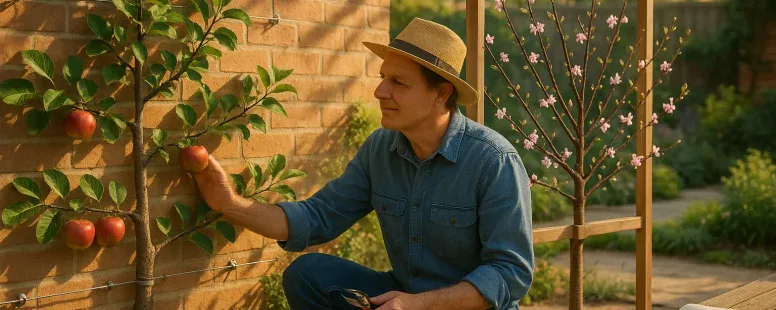
You can shape a tree like a living piece of furniture. A flat lattice of branches against sun-warmed brick, or a fan of radiating limbs that catches morning light, both turn a tree into a deliberate design choice. “Espalier vs. Fan-Trained Trees” is more than a how-to: it’s a choice about space, fruit, and style. In this text you’ll smell the citrus, feel the bark under your fingers, and see the trade-offs . I’ll show surprising benefits, from higher yields per square foot to microclimates that keep fruit ripening evenly, and give you the practical steps to pick the right form and grow it well.
What Espalier And Fan Training Are
Fact: Espalier and fan training both flatten tree growth, but they use different geometries and goals.
Defining Espalier: Forms, Geometry, And Typical Uses
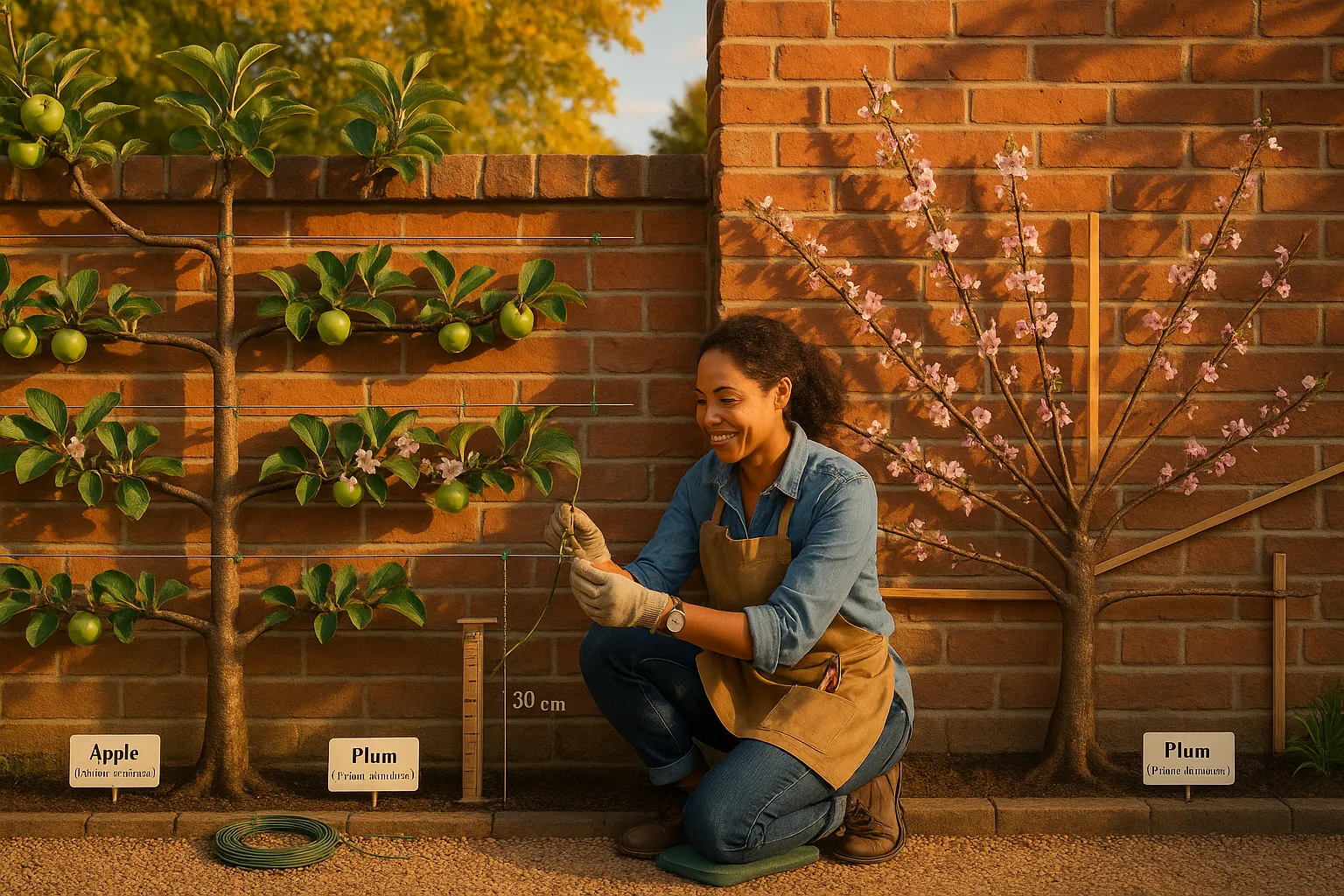
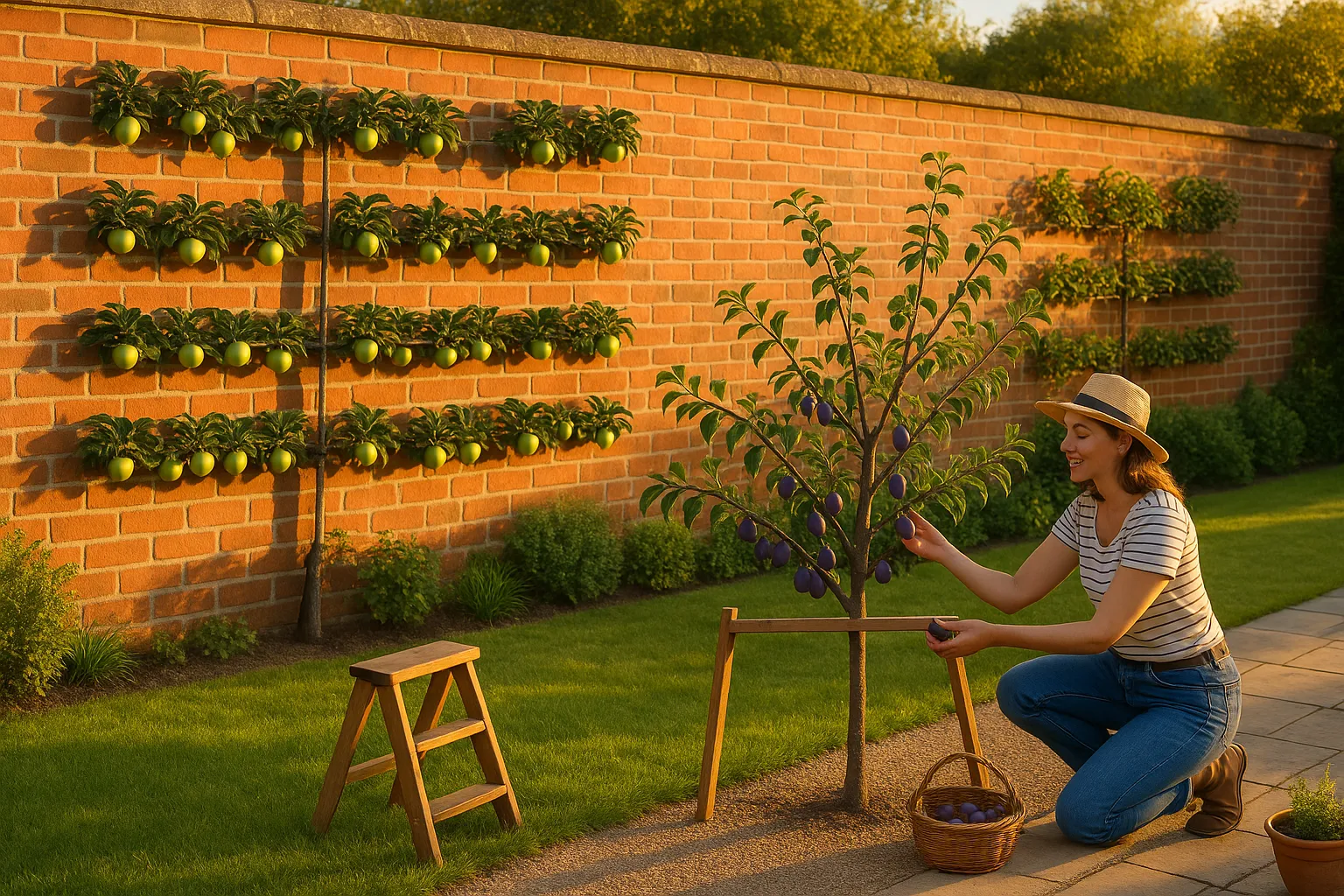
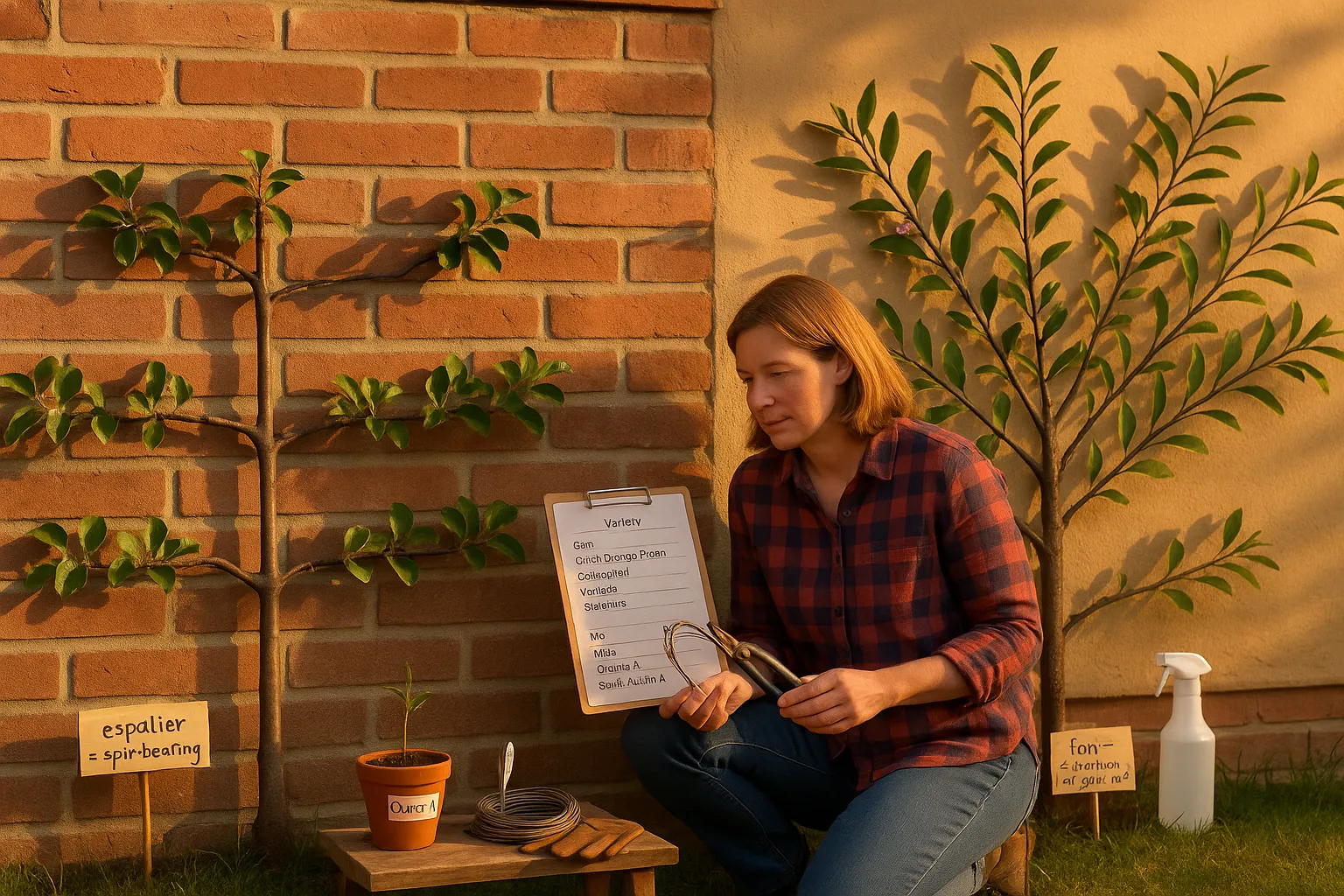
Espalier is a training method that forces tree branches into two-dimensional, repeated patterns along a support. You start with a central trunk and set tiers of horizontal or angled scaffold branches. Common forms include horizontal cordons, the Belgian fence (interlaced diagonals), and palmettes (fan-like symmetric designs). Growers prefer apple (Malus domestica) and pear (Pyrus communis) on espalier because those species fruit well on spur wood and respond predictably to pruning.
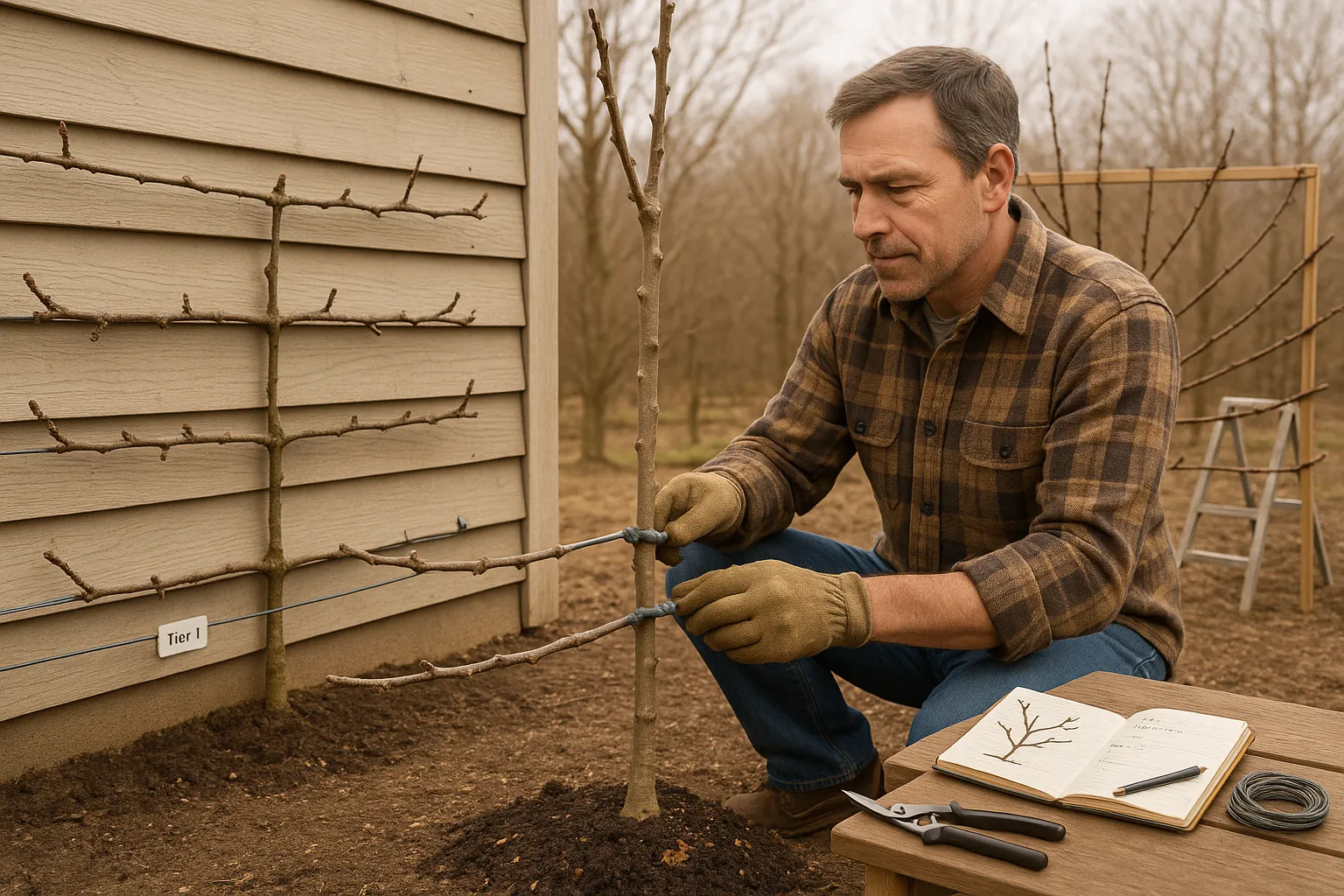
Espalier serves three clear uses: save space, decorate walls and fences, and improve fruit quality by exposing buds to uniform light. You will attach branches to wires, typically spaced 30–60 cm apart, and you will prune to keep the geometry precise. The technique creates a neat, architectural silhouette that reads like a living trellis.
Defining Fan Training: Structure, When It’s Used, And Typical Species
Fact: Fan training spreads many short shoots from a low point, producing a radiating fan of slender branches.
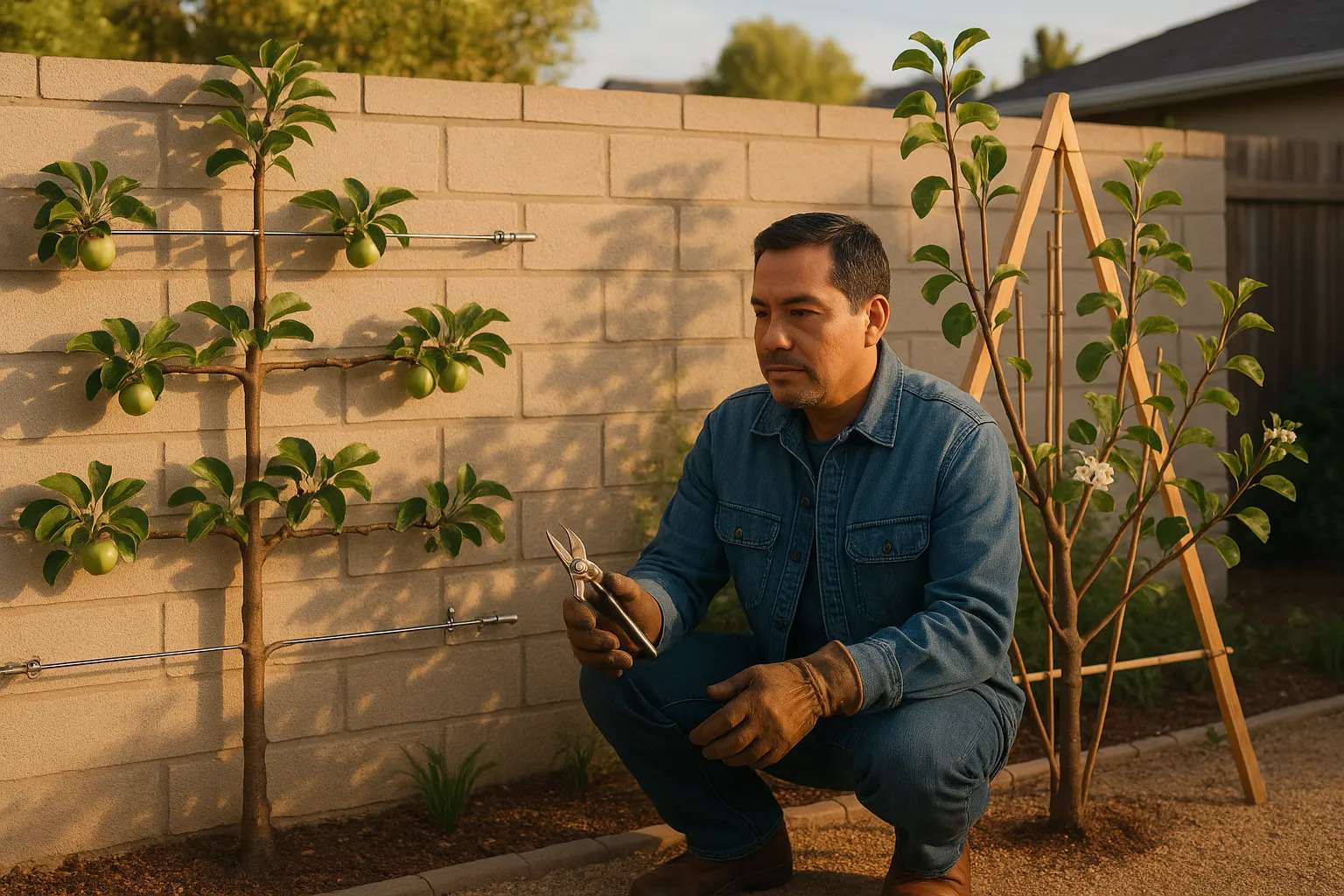
Fan training begins with a short trunk or stool and encourages multiple shoots to emerge and arc outward like spokes. You secure those shoots to fanning wires or a wooden frame. The fan form suits stone fruits, plum (Prunus domestica), cherry (Prunus avium), and peach (Prunus persica), because those trees often fruit on one-year wood and need space for blossoms and fruit to develop.
Use fan training on a warm wall to catch reflected heat or on freestanding support where you want easy access to fruit. The fan’s many small shoots make pruning less surgical than espalier, but you must still manage overcrowding and crossing wood.
Key Structural Differences Between Espalier And Fan Trains
Fact: Espalier emphasizes ordered horizontal scaffolds: fan training emphasizes radial shoots from a low point.
Branch Architecture, Support Systems, And Growth Habit
Espalier architecture uses a single leader and ordered scaffold branches. You use strong horizontal wires or rungs mounted to a wall. Branches run parallel to the ground and develop laterals that produce fruiting spurs. The support must bear heavy lateral loads: choose stainless-steel or galvanized wire for longevity.
Fan architecture uses short vertical stems that send many fruiting shoots outward. Support can be lighter: a simple wooden frame, a set of tensioned wires, or even bamboo stakes. Growth habit differs: espalier promotes long-lived scaffolds with defined rhythm, while fan training renews short shoots every year. The choice affects how you prune, train, and repair damaged wood.
Impact On Light Exposure, Airflow, And Fruiting
Fact: Both methods increase light exposure, but they do so differently and that affects fruit set.
Espalier’s horizontal tiers deliver uniform light to buds along the scaffold. This encourages even fruiting and allows you to manage bloom times by adjusting branch angle. Air moves along the plane, which helps reduce fungal risk if spacing is right. Fan training exposes many small shoots to sun from multiple angles: this can boost flower bud initiation for one-year wood and helps fruit ripen faster on species that need heat.
But, overcrowded fans trap humidity. You must thin regularly. Espalier can create microshadows behind dense tiers: pruning must maintain open wood to keep airflow steady. Both forms increase productivity per square foot versus freestanding trees, but they require specific pruning habits to avoid disease and to balance vegetative growth with fruiting.
Practical Benefits Compared: Space, Yield, And Aesthetics
Fact: Espalier wins on architectural control: fan training wins on ease for stone fruits and fast harvesting.
Space Efficiency And Garden Placement
Espalier saves linear space. You can fit multiple apple trees along a narrow wall and still access grass or patio. Place espalier against a south-facing brick wall to store heat: the wall will raise local temperatures and extend the growing season. Fans occupy a semicircular area and work well on freestanding frames or against walls where you want a softer visual edge.
Fruit Production, Ease Of Harvest, And Long-Term Yield
Fact: Both methods increase accessible yield, but they scale differently.
Espalier lets you lay out multiple varieties in a small area for extended harvest windows. You can train cordons to make pruning and harvest predictable. Long-lived scaffold branches will produce for decades if you manage them. Fan-trained trees often give bigger early crops on plums or apricots because you allow many one-year shoots to fruit, but they need annual renewal to maintain vigor.
Harvest is easier on both forms because fruit hangs within reach. For mechanical picking you’ll prefer wide espalier tiers: for hand-picking you may prefer fans since fruit clusters spread out and are simple to pluck.
Aesthetic And Landscape Design Considerations
Fact: Espalier reads as formal and architectural: fan training reads as decorative and organic.
Use espalier where you want rhythm and symmetry, formal gardens, entryways, or to turn a blank wall into a feature. Use fans where you want a softer, radial accent near patios, pergolas, or kitchen gardens. Consider the visual weight: espalier makes a wall feel horizontal and expansive: fans create focal points and softer textures.
How To Choose: Best Trees, Rootstocks, And Varieties For Each Method
Fact: Choose species by fruiting habit: spur-bearing trees suit espalier: shoot-producing trees suit fans.
Recommended Fruit Trees And Ornamentals For Espalier
Espalier favors apple (Malus domestica), pear (Pyrus communis), quince (Cydonia oblonga), and some ornamental crabapples. Use dwarfing or semi-dwarf rootstocks (M9, M26 for apple: Quince A for pear) to keep height manageable and to encourage earlier fruiting. For ornamentals, train Camellia or trained roses in espalier to outline a wall with flowers.
Pick varieties known for spur fruiting: ‘Cox’s Orange Pippin’ or ‘Gala’ for apples: ‘Conference’ or ‘Doyenné du Comice’ for pears. These respond well to close pruning and keep compact habit.
Recommended Trees For Fan Training And When To Prefer Them
Fan training suits plum, cherry, apricot, and peach. Use vigorous rootstocks that support heavy yearly renewal, such as Saint Julian A or Myrobalan for plum. Choose varieties with strong yearly shoot growth: ‘Victoria’ plum, ‘Sunburst’ peach, and many self-fertile cherry cultivars.
Prefer fans when you want quick establishment on warm walls, or when you grow trees that fruit on last year’s wood. Fans handle frost pockets better if placed low, because heat radiates from nearby surfaces and the low shoots flower later in spring.
Step-By-Step Training And Pruning Guide (Starter Timeline)
Fact: Early training sets long-term form: the first three years determine most future structure.
First 1–3 Years: Establishing Frameworks And Initial Pruning
Year 1: Plant a tree on a suitable rootstock. For espalier, select a single leader and cut it to the first desired tier (about 60–90 cm). For fan training, cut to a low stool and encourage 6–8 shoots. Tie primary shoots to the wire or frame using soft ties.
Year 2: For espalier, train two scaffold branches at correct angles and tie horizontally. Prune competing verticals. For fans, spread shoots and secure them in the fan array: shorten long shoots to 30–40 cm to encourage side branching.
Year 3: Fill in secondary branches, start light pruning to form fruiting spurs, and remove weak or crossing wood. Check ties and replace any that bite into bark.
Ongoing Annual Maintenance: Pruning, Thinning, And Tying Techniques
Fact: Annual pruning keeps form and balances fruit with growth.
Prune in late winter while the tree is dormant to set framework and remove dead wood. In summer, do light heading to manage vigor: shorten overly vigorous shoots by one-third. Thin fruit clusters in spring to improve size and reduce branch strain. Replace ties yearly and retension wires every 3–5 years. Keep records: note which tiers fruit best and which need renewal so you can adjust training next season.
Common Problems And Troubleshooting
Fact: Crowding, poor ties, and wrong species-choice cause most failures.
Pest, Disease, And Environmental Issues Specific To Each Method
Espalier issues: fungal problems like apple scab and powdery mildew increase if tiers are too dense. You must prune for airflow and spray or use organic controls when needed. Mechanical stress from wind can break horizontal scaffolds: anchor wires strongly.
Fan issues: crowed shoots trap moisture and invite brown rot on stone fruit. Birds and squirrels also find fans attractive because fruit is easy to reach: use netting early.
Both methods require monitoring for scale, aphids, and borers. Use integrated pest management: beneficial insects, sticky traps, and targeted sprays.
Correcting Mistakes: Rejuvenation, Re-Training, And When To Replace
Fact: You can salvage many mistakes with staged rejuvenation, but some trees need replacement.
If a scaffold dies on an espalier, prune to a nearby lateral and retrain a replacement shoot over several seasons. For overgrown fans, cut back to a stool and allow new shoots to form: expect reduced yield for a year but better structure after two.
Replace a tree when trunk rot, root failure, or chronic disease undermines recovery. When you replace, select correct rootstock and site, and avoid repeating the same spacing or support mistakes. Be patient: a well-trained espalier or fan will repay careful work with years of reliable fruit and beauty.
To provide the best experiences, we use technologies like cookies to store and/or access device information. Consenting to these technologies will allow us to process data such as browsing behaviour or unique IDs on this site. Not consenting or withdrawing consent, may adversely affect certain features and functions.
Functional
Always active
The technical storage or access is strictly necessary for the legitimate purpose of enabling the use of a specific service explicitly requested by the subscriber or user, or for the sole purpose of carrying out the transmission of a communication over an electronic communications network.
Preferences
The technical storage or access is necessary for the legitimate purpose of storing preferences that are not requested by the subscriber or user.
Statistics
The technical storage or access that is used exclusively for statistical purposes.The technical storage or access that is used exclusively for anonymous statistical purposes. Without a subpoena, voluntary compliance on the part of your Internet Service Provider, or additional records from a third party, information stored or retrieved for this purpose alone cannot usually be used to identify you.
Marketing
The technical storage or access is required to create user profiles to send advertising, or to track the user on a website or across several websites for similar marketing purposes.