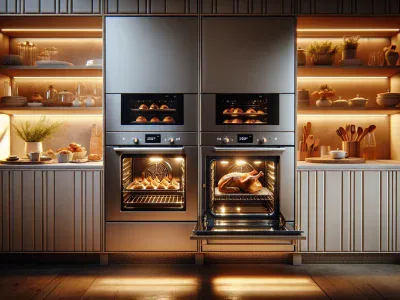
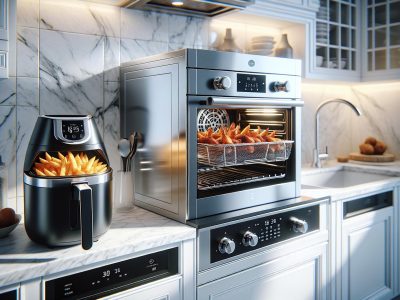
Picture this: the aroma of crispy, golden fries or a perfectly baked pizza wafting through your kitchen. When it comes to achieving culinary perfection, the choice between an oven and an air fryer can feel like a heated debate. Both promise mouthwatering results, but which one truly deserves a spot in your kitchen?
You’ve likely heard the buzz around air fryers—compact, efficient, and seemingly magical. On the other hand, ovens have been the trusted workhorse for decades, handling everything from slow-roasted meals to decadent desserts. Deciding which is best isn’t just about convenience; it’s about flavor, versatility, and how you cook.
So, whether you’re a seasoned chef or a busy foodie, understanding the strengths and limits of each can transform your cooking game. Let’s jump into what sets these appliances apart and help you make the ultimate choice.
Understanding Ovens And Air Fryers
Ovens and air fryers serve distinct purposes in the kitchen. Knowing their key functions helps determine which appliance suits your cooking needs.
What Is An Oven?
An oven is a versatile appliance for baking, roasting, and broiling. It operates by heating air within a chamber using gas or electricity. This process allows even cooking and the preparation of large meals, such as roasted turkeys or casseroles.
Modern ovens often include features like convection settings, which circulate heated air for faster and uniform cooking. But, they can be energy-intensive and require preheating, which adds to cooking time. For instance, baking a pizza typically takes 15 minutes to preheat the oven and about 20 minutes to cook.
What Is An Air Fryer?
An air fryer is a compact, countertop appliance designed for high-speed convection cooking. It surrounds food with hot air to achieve a crispy texture similar to deep-frying, with minimal oil. This method is popular for making fried chicken or french fries.
Air fryers are efficient for small portions, often cooking meals in 10-15 minutes. They are energy-efficient compared to ovens but have limited capacity, making them less ideal for large gatherings. Many models include presets for specific dishes, simplifying the cooking process.
Both ovens and air fryers cater to different meal types, offering unique advantages depending on your requirements. Consider the size of your household and cooking preferences when deciding between the two.
Comparing Features
Ovens and air fryers both offer essential cooking functionalities, but their features cater to different culinary styles and needs. Exploring these features helps you assess which appliance fits your kitchen routine better.
Cooking Speed
Air fryers cook at a faster rate due to their rapid air circulation technology. This makes them ideal for busy days when you want crispy chicken wings or roasted vegetables in under 15-20 minutes. Ovens, especially those with convection settings, can also cook quickly for larger batches but usually require preheating, adding to total preparation time.
If you’re preparing meals for a big family dinner, ovens might be more suitable even though the longer cooking time. But, for single servings like potato wedges or reheating leftovers, air fryers handle the job efficiently.
Energy Efficiency
Air fryers are energy-efficient for small meals since they heat up instantly and use less overall cooking time. According to a General Electric study, air fryers consume 700 to 1,500 watts, while ovens typically draw 2,000 to 5,000 watts depending on the model. For low-energy consumption with frequent use, an air fryer would be the economical choice.
Ovens, on the other hand, are better for energy utilization when cooking multiple dishes simultaneously. Baking bread and roasting a chicken in the oven uses less electricity per portion compared to running an air fryer for each separately.
Versatility
Ovens excel in versatility, accommodating everything from baking cookies to roasting turkeys or broiling steaks. Modern ovens often include features like self-cleaning functions and dual-temperature zones, enhancing their utility for complex recipes such as lasagna or soufflés.
That’s not to say air fryers lack adaptability—they effectively replicate frying, grilling, and even reheating functions, which is especially evident in dishes like crispy fish fillets or toasted bagels. But, their smaller baskets might struggle with larger or layered meals.
Maintenance And Cleaning
Cleaning air fryers involves washing smaller components like the basket and tray, which are often dishwasher-safe. This makes them convenient for users, especially after oily recipes. In comparison, ovens can be harder to maintain as spills and grease accumulate in their larger cavities.
If you regularly bake items prone to dripping, like cheesy casseroles, cleaning an oven might require more effort. Consider how much kitchen cleanup you can handle when picking between the two.
Pros And Cons Of Ovens
Ovens have been a kitchen staple for decades due to their versatility and ability to cook large meals effectively. Exploring their strengths and limitations helps determine their place in your cooking routine.
Advantages Of Using An Oven
Versatility Across Cooking Methods
Ovens support baking, roasting, broiling, and even dehydrating food. You can bake a cake, roast a turkey, or broil vegetables with consistent results. For example, a standard oven can handle both delicate soufflés and hearty casseroles.
Capacity For Larger Meals
Standard ovens offer spacious interiors, ideal for accommodating large baking trays or multiple dishes at once. If you’re hosting a family dinner or cooking an elaborate holiday meal, ovens make multitasking manageable.
Consistent Temperature Control
Modern ovens provide digital temperature settings for precision cooking. Recipes for lasagna or roast chicken rely on consistent heat distribution to achieve the desired textures.
Broader Recipe Compatibility
Many recipes are designed with oven cooking in mind, from baked goods to slow-cooked dishes. An oven provides a reliable means to replicate various culinary methods.
Disadvantages Of Using An Oven
Energy Consumption
Ovens, especially older models, consume more electricity or gas compared to smaller appliances. This can lead to higher energy bills if used frequently for small portions.
Preheating Time
Unlike quicker alternatives like air fryers, ovens often require preheating, which adds wait time. For quick meals, this delay might be inconvenient.
Maintenance Challenges
The large interior makes cleaning more difficult, particularly with spills from baked dishes like pies or lasagnas. Over time, food residues can build up, requiring deep cleaning.
Heat Dispersion
Ovens generate significant heat, affecting the surrounding environment. This can be an issue in compact kitchens or during warmer seasons.
Each of these points reveals unique considerations when deciding the most appropriate appliance for your cooking needs.
Pros And Cons Of Air Fryers
Air fryers have grown in popularity due to their ability to recreate the crispy textures of fried foods without excessive oils. They offer unique advantages but also come with certain limitations.
Advantages Of Using An Air Fryer
Efficient cooking times. Air fryers use rapid air circulation technology, reducing cooking times compared to traditional ovens. For instance, frozen fries can be ready in 15 minutes versus 30 minutes in an oven.
Healthier meals. Air fryers require minimal to no oil, making dishes like chicken wings or onion rings lower in calories and fats. According to a study by Harvard Health, air frying reduces fat content by up to 70% compared to deep frying.
Compact design. These appliances fit easily on countertops and are ideal for small kitchens or limited spaces. Their portability also allows you to store them conveniently.
Easy maintenance. Most air fryer baskets are non-stick and dishwasher-safe, making cleaning less time-consuming. Unlike ovens, they minimize grease spread.
Specific functionality. Air fryers excel at achieving crispy finishes due to their focused heat distribution, great for foods like breaded chicken or roasted vegetables.
Disadvantages Of Using An Air Fryer
Limited capacity. The compact size restricts the amount you can cook at once, which is challenging for larger families. Cooking large dishes may require multiple batches, reducing efficiency.
Texture inconsistencies. While air fryers produce a crispy exterior, denser or heavily layered foods may cook unevenly, leaving the center less cooked.
Specialized tasks only. Even though their benefits, air fryers aren’t suitable for all cooking methods, like baking bread or preparing complex multi-dish meals.
Noise levels. Air fryers produce notable operational noise due to their high-speed fans, which can be distracting when preparing meals.
Higher initial cost. Compared to basic ovens, advanced air fryer models cost more upfront, particularly those with additional functions like rotisserie or dehydration.
Choosing The Best Option For Your Needs
When deciding between an oven and an air fryer, focus on aligning the appliance features with your specific requirements. Consider factors such as your daily routine, financial planning, and available kitchen space to determine the optimal choice.
Lifestyle And Cooking Habits
Evaluate your cooking methods and routine to find the appropriate appliance. If you regularly prepare elaborate meals for family gatherings or enjoy baking, an oven provides better versatility for roasting turkeys or baking cakes. On the other hand, if you prioritize quick, low-oil options for weekly meal preparation, an air fryer offers efficient functionality for tasks like roasting vegetables or frying chicken wings. Factor in the frequency of use; air fryers cater well to single servings or small batches, while ovens accommodate multiple dishes. Acknowledge that time-strapped professionals or students may find air fryers ideal due to their faster cooking cycles and compact design.
Budget Considerations
Analyze appliance costs, including upfront buying prices and ongoing energy expenses. Air fryers, ranging between $50 and $300, are priced lower than advanced ovens, which can cost between $400 and $3,000 depending on features. For households aiming for energy savings, it’s worth noting that air fryers generally consume less electricity during operation compared to ovens. But, if you’re investing in multifunctional appliances, ovens with convection settings enable you to perform broader cooking tasks like broiling or grilling. If you’re spending cautiously, choose based on the most frequently required cooking scenario.
Kitchen Space
Assess the available space in your kitchen for accommodating a new appliance. Air fryers, often compact enough to fit on countertops without occupying excessive room, are suited for smaller living arrangements like apartments or dorms. Conversely, ovens require built-in installation or more extensive countertop areas, making them ideal for spacious kitchens in larger homes. Also, consider portability; air fryers can be moved as needed, while ovens are typically stationary. If you maintain a minimalist kitchen style, air fryers integrate seamlessly without impacting overall organization.
Conclusion
Choosing between an oven and an air fryer eventually depends on your cooking style, household needs, and available space. Each appliance offers unique benefits that cater to different preferences, whether you’re preparing quick, crispy snacks or large, versatile meals. By considering factors like capacity, energy efficiency, and maintenance, you can select the option that best suits your lifestyle. Both appliances have their strengths, so the right choice is the one that aligns with how you love to cook.
To provide the best experiences, we use technologies like cookies to store and/or access device information. Consenting to these technologies will allow us to process data such as browsing behaviour or unique IDs on this site. Not consenting or withdrawing consent, may adversely affect certain features and functions.
Functional
Always active
The technical storage or access is strictly necessary for the legitimate purpose of enabling the use of a specific service explicitly requested by the subscriber or user, or for the sole purpose of carrying out the transmission of a communication over an electronic communications network.
Preferences
The technical storage or access is necessary for the legitimate purpose of storing preferences that are not requested by the subscriber or user.
Statistics
The technical storage or access that is used exclusively for statistical purposes.The technical storage or access that is used exclusively for anonymous statistical purposes. Without a subpoena, voluntary compliance on the part of your Internet Service Provider, or additional records from a third party, information stored or retrieved for this purpose alone cannot usually be used to identify you.
Marketing
The technical storage or access is required to create user profiles to send advertising, or to track the user on a website or across several websites for similar marketing purposes.