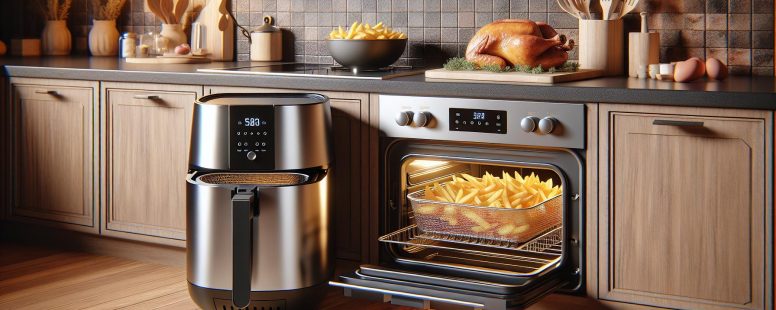
Picture this: the aroma of crispy, golden fries wafting through your kitchen, tantalizing your senses. You’re left with a delicious dilemma—should you reach for the trusty oven or the trendy air fryer? Both promise culinary magic, yet they offer different paths to savory satisfaction. The oven, a kitchen staple, stands as a symbol of tradition and reliability, while the air fryer, with its sleek design and promise of healthier meals, captures the spirit of innovation.
As you ponder which appliance deserves a spot on your countertop, consider the surprising benefits each brings to the table. The oven’s versatility allows you to bake, roast, and broil to your heart’s content. Meanwhile, the air fryer boasts quick cooking times and a knack for delivering that coveted crunch with less oil. Jump into the world of oven versus air fryer, and discover which one aligns with your culinary aspirations.
Oven Versus Air Fryer: Key Differences
Examine the distinct features of both the oven and air fryer. Each appliance offers unique cooking technologies and benefits.
Cooking Technology
The oven uses conventional heating methods. It employs both radiant and convection heat. Ovens allow even cooking across various types of foods, making them versatile. An air fryer, with rapid air technology, circulates hot air around food. It replicates deep frying without excessive oil. This method is ideal for achieving a crispy texture with less fat.
Cooking Times and Efficiency
Ovens generally take longer to preheat. Cooking processes may extend due to higher volume capacity. An air fryer heats quickly. It reduces cooking times significantly. For example, frying chicken wings takes around 20 minutes in an air fryer, compared to 35 minutes in an oven. So, energy consumption drops with air fryers due to shorter cycles.
Size and Space Requirements
Ovens often occupy significant kitchen space. Their large size allows cooking multiple dishes simultaneously. Air fryers have a compact design. They fit on countertops easily. But, limited space may restrict batch sizes. Choose based on kitchen dimensions and dish requirements.
Performance and Versatility
Examine both the oven and air fryer to understand their performance and versatility in the kitchen. Consider how each appliance addresses your culinary needs across different types of dishes and desired cooking results.
Types of Dishes
Traditional ovens excel at accommodating various dishes from big roasts to baked goods. You can roast a turkey, bake a pie, or broil vegetables using an oven’s multitude of cooking modes. It allows for adjustments in temperature and rack positions for optimal results.
Air fryers handle versatile cooking too although they tend to be better suited for smaller portions and foods that benefit from rapid cooking, like fries or chicken wings. The air fryer might surprise you, though, by handling dishes like roasted nuts or reheating pizza slices efficiently. Even though their compact size, some air fryers come with attachments and settings that allow for baking, grilling, and even dehydrating.
Cooking Results
Ovens are known for their consistent heat distribution, making them ideal for achieving evenly cooked dishes. This consistency is essential when preparing baked goods like bread and cakes. The browning and caramelization due to dry heat also enhance flavor profiles, a key point for dishes like roasts and casseroles.
Air fryers provide unique cooking results by emphasizing crispy textures with minimal oil. Utilizing rapid air technology, they circulate hot air around food, yielding a crunch similar to deep frying but without the excess oil. This is particularly beneficial for health-conscious cooks seeking fried-like results without the drawbacks. Besides, air fryers preheat quickly and can reduce cooking times, making them an energy-efficient choice for quick meals.
Health and Nutrition
Ovens and air fryers each offer distinct advantages about health benefits and nutritional output. The choice between these two appliances can impact your dietary goals, so it’s crucial to understand their differences.
Oil Usage
Air fryers require significantly less oil than traditional ovens for cooking. In many air fryer recipes, you only need a tablespoon of oil, while ovens often need more to achieve similar textures. Less oil means reduced calorie intake and lower fat consumption, supporting heart health. For example, crispy chicken wings or French fries can be prepared in an air fryer with just a minimal amount of oil, maintaining flavor while cutting down on excess fat. This decrease in oil usage is ideal for those monitoring their cholesterol levels. Consider if reducing fat content is a priority when choosing between these appliances.
Nutritional Benefits
Both ovens and air fryers preserve the nutritional integrity of foods. An oven’s even heat distribution cooks food thoroughly, retaining essential nutrients. Air fryers, with their rapid air technology, produce crispy food that retains more vitamins and minerals by reducing cooking time and exposure to heat. For individuals focusing on nutrient-dense meals, air fryers allow you to cook vegetables and retain more of their natural value. When preparing meals that prioritize nutrition, consider how each appliance affects these balances.
Cost and Energy Efficiency
Choosing between an oven and an air fryer often involves considering cost and energy efficiency. With appliances being a significant financial decision for many households, understanding the cost implications of each option is essential.
Initial Investment
The initial cost of an air fryer is usually lower than that of an oven. Air fryers typically fall within the price range of $50 to $300, based on features and capacity. In contrast, conventional ovens can cost anywhere from $400 to over $1,000, depending on size and functions. While air fryers offer a budget-friendly alternative, they might lack the versatility of a full-sized oven, which is capable of handling larger meals and more varied cooking styles. If your cooking needs include roasting whole chickens or baking sizeable batches of cookies, owen’s the better deal.
Energy Consumption
Power consumption is another critical factor when assessing oven and air fryer usage. Air fryers are generally more energy-efficient, as they require less electricity for shorter cooking times. Ovens, particularly electric ones, demand more energy, especially when preheating and maintaining temperature for extended periods. According to EnergyStar.gov, ovens can use as much as 2,500 watts, whereas air fryers typically use between 1,200 and 1,500 watts. Over time this can result in significant energy savings with frequent air fryer use, potentially lowering utility bills and contributing to a more sustainable kitchen environment.
User Experience and Maintenance
When comparing an oven and an air fryer for everyday use, understanding their user experience and maintenance needs is crucial.
Ease of Use
Ovens and air fryers differ significantly in ease of use. Traditional ovens offer extensive cooking options, with settings for baking, broiling, and roasting. You might navigate through comprehensive controls and learn the nuances of each mode, but once mastered, ovens cater to a wide range of cooking tasks seamlessly. Preheating is typically required, adding to preparation time.
In contrast, air fryers boast simplicity. Many models come with preset functions for specific foods like fries and chicken, making them intuitive for beginners. They heat up quickly, often eliminating the need for preheating, which speeds up your cooking experience. For small meals or snacks, an air fryer can provide a more convenient solution.
Cleaning and Maintenance
Maintaining cleanliness with ovens entails effort. Their larger size means more surface area to clean, including racks and trays that may smudge with spills and splatters. Some ovens feature self-cleaning functions, but the process can be time-consuming and energy-intensive.
Air fryers, being compact, generally offer easier cleaning. Many components, like the basket and tray, are dishwasher-safe. But, grease and food residue can accumulate in crevices, requiring manual cleaning to avoid odors or performance issues.
By considering these aspects—ease of use and maintenance—you can better determine which appliance aligns with your cooking habits and lifestyle.
Conclusion
Deciding between an oven and an air fryer eventually depends on your cooking preferences and lifestyle. If you value versatility and have the space, an oven might be your go-to choice. It’s perfect for large meals and offers consistent cooking results. On the other hand, if you’re looking for a compact, energy-efficient option that delivers crispy results with minimal oil, an air fryer could be ideal.
Consider your dietary goals, budget, and kitchen space when making your decision. Both appliances have their strengths, so think about what matters most to you in your cooking routine. Whether it’s the traditional reliability of an oven or the modern convenience of an air fryer, you’re sure to find a solution that fits your needs.
To provide the best experiences, we use technologies like cookies to store and/or access device information. Consenting to these technologies will allow us to process data such as browsing behaviour or unique IDs on this site. Not consenting or withdrawing consent, may adversely affect certain features and functions.
Functional
Always active
The technical storage or access is strictly necessary for the legitimate purpose of enabling the use of a specific service explicitly requested by the subscriber or user, or for the sole purpose of carrying out the transmission of a communication over an electronic communications network.
Preferences
The technical storage or access is necessary for the legitimate purpose of storing preferences that are not requested by the subscriber or user.
Statistics
The technical storage or access that is used exclusively for statistical purposes.The technical storage or access that is used exclusively for anonymous statistical purposes. Without a subpoena, voluntary compliance on the part of your Internet Service Provider, or additional records from a third party, information stored or retrieved for this purpose alone cannot usually be used to identify you.
Marketing
The technical storage or access is required to create user profiles to send advertising, or to track the user on a website or across several websites for similar marketing purposes.