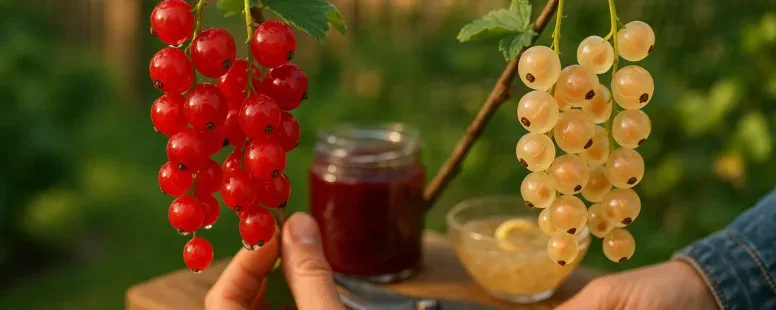
Redcurrants and whitecurrants look like close cousins on the same shrub, small, glossy beads clustered on stems, yet they offer different flavors, uses, and nutritional perks. If you’re choosing berries for a tart jam, a bright garnish, or a backyard patch, knowing the practical differences saves time and prevents surprises. This guide strips away folklore and gives you clear, sensory-first comparisons, surprising health notes, and hands-on growing and cooking tips so you can pick the right currant for your pantry, plate, or garden.
Quick Comparison: Key Differences At A Glance
Fact: Redcurrants are tangier and more common in recipes: whitecurrants are milder and often used where color or subtlety matters.
Redcurrants (Ribes rubrum) give you bright tartness, a high-acid punch, and deep red color that holds in sauces and jams. Whitecurrants are a pigment mutation of redcurrants: they keep the same structure but deliver a gentler, almost translucent sweetness and lower visible acidity.
Practical takeaway: choose redcurrants when you want bold flavor and color contrast: choose whitecurrants when you need subtle sweetness or a light, elegant look.
Quick facts you can use immediately:
Flavor: Red = tart: White = mild-sweet.
Appearance: Red = opaque ruby: White = translucent amber or pale pink.
Best uses: Red = preserves, sauces, savory glazes: White = fresh eating, delicate desserts, elegant garnishes.
Follow-up: If you wonder about nutrition, growing, or swaps, read the sections below for exact ratios, storage times, and cultivar names.
Appearance, Flavor, And Texture
Fact: The berries share structure but differ in color, sugar balance, and mouthfeel.
Color And Size
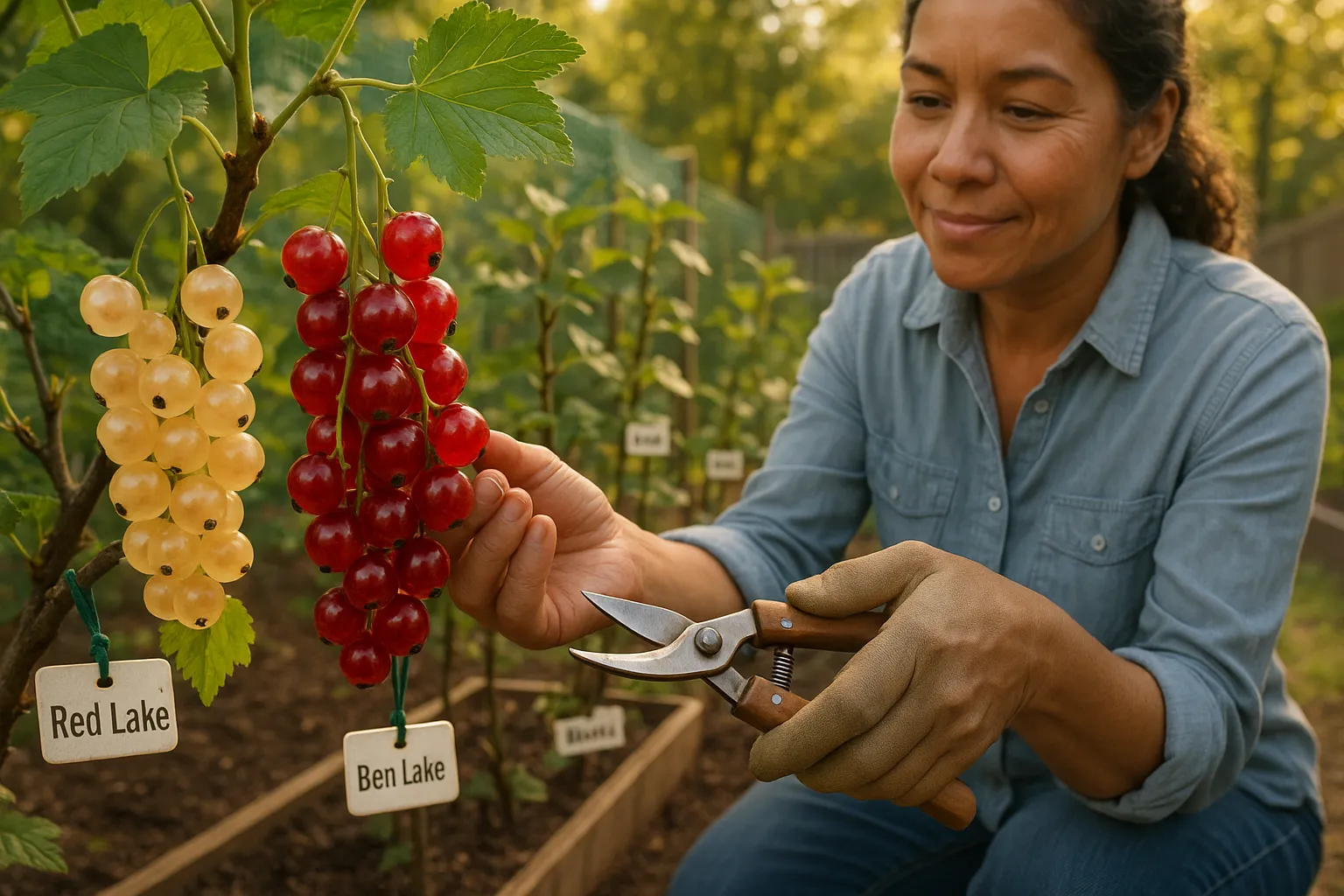
Whitecurrants start with the same size range as redcurrants, often 6–9 mm in diameter, but their skin is pale yellow, creamy, or faintly pink. You can see seeds easily through the translucent flesh. Redcurrants range from bright cherry to deep ruby. In both species, clusters form drooping racemes: whitecurrant clusters sometimes look like strings of tiny pearls.
A sensory note: whitecurrants catch light differently. They look jewel-like in sunlight and add a subtle visual lift to a dessert plate.
Flavor Profile And Mouthfeel
Answer: Redcurrants taste sharper: whitecurrants taste softer. Redcurrants give a clear sour note first, then a fruit sweetness. Whitecurrants offer mild sweetness first, with a gentle acidity behind it.
Texture: both are juicy and snap when you bite them. Redcurrant skins feel firmer: whitecurrants often seem silkier inside. The seeds add a slight crunch: if you freeze the berries, the texture softens and skins can split, which works well for cooked uses.
Compare sensory uses:
If you need acidity to cut through fatty dishes or to balance sugar in a jam, redcurrants are your pick.
If you want a berry that won’t overpower vanilla or delicate creams, pick whitecurrants.
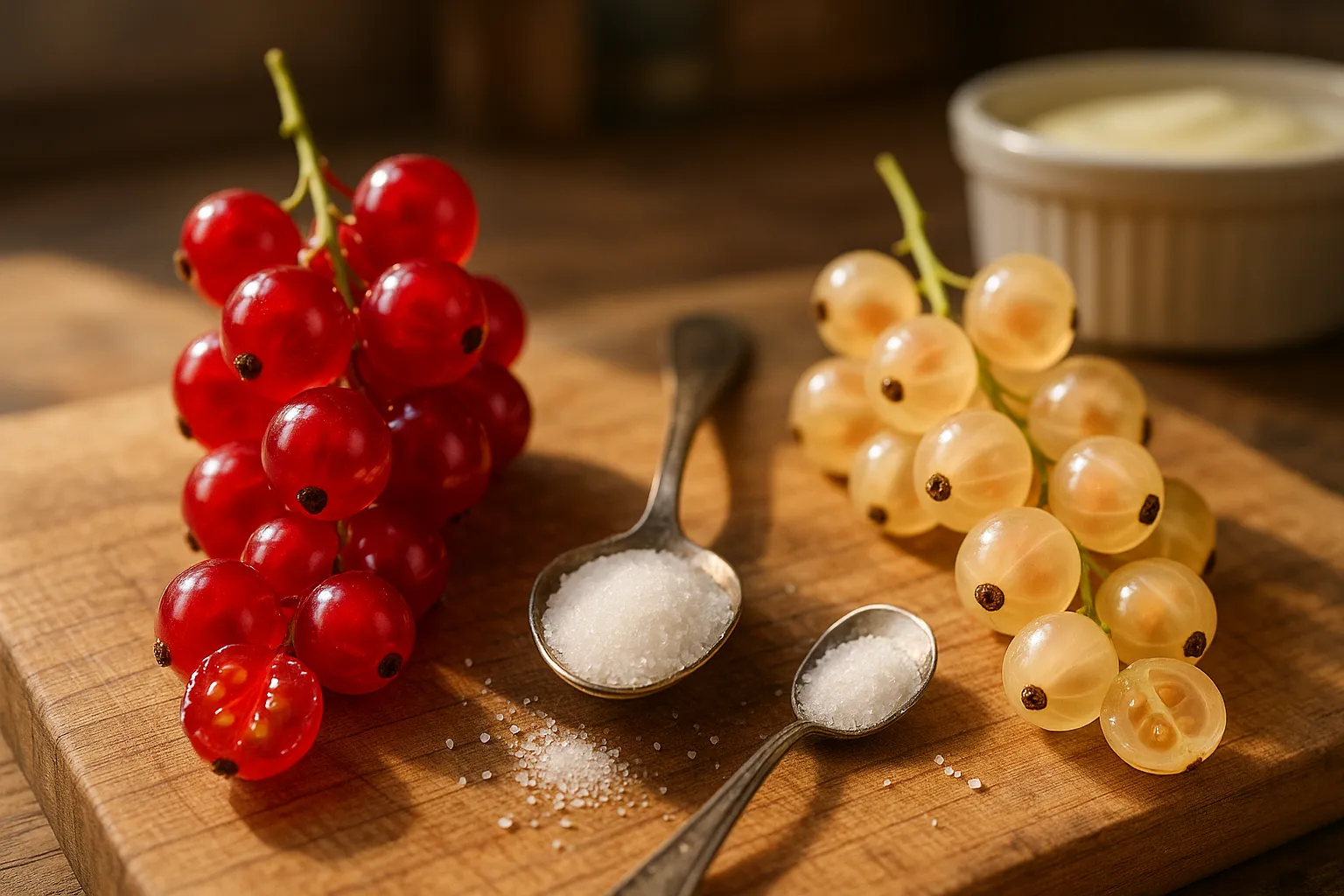
Real-life tip: taste a small spoon of sugar with each berry variety to see how their sugar-acid balance changes perception. The same sweetener will make whitecurrants sing and may only tame redcurrants.
Nutritional Profile And Health Benefits
Fact: Both currants provide vitamin C, fiber, and antioxidants: redcurrants often register slightly higher in measurable anthocyanins because of their color.
Vitamins, Minerals, And Fiber
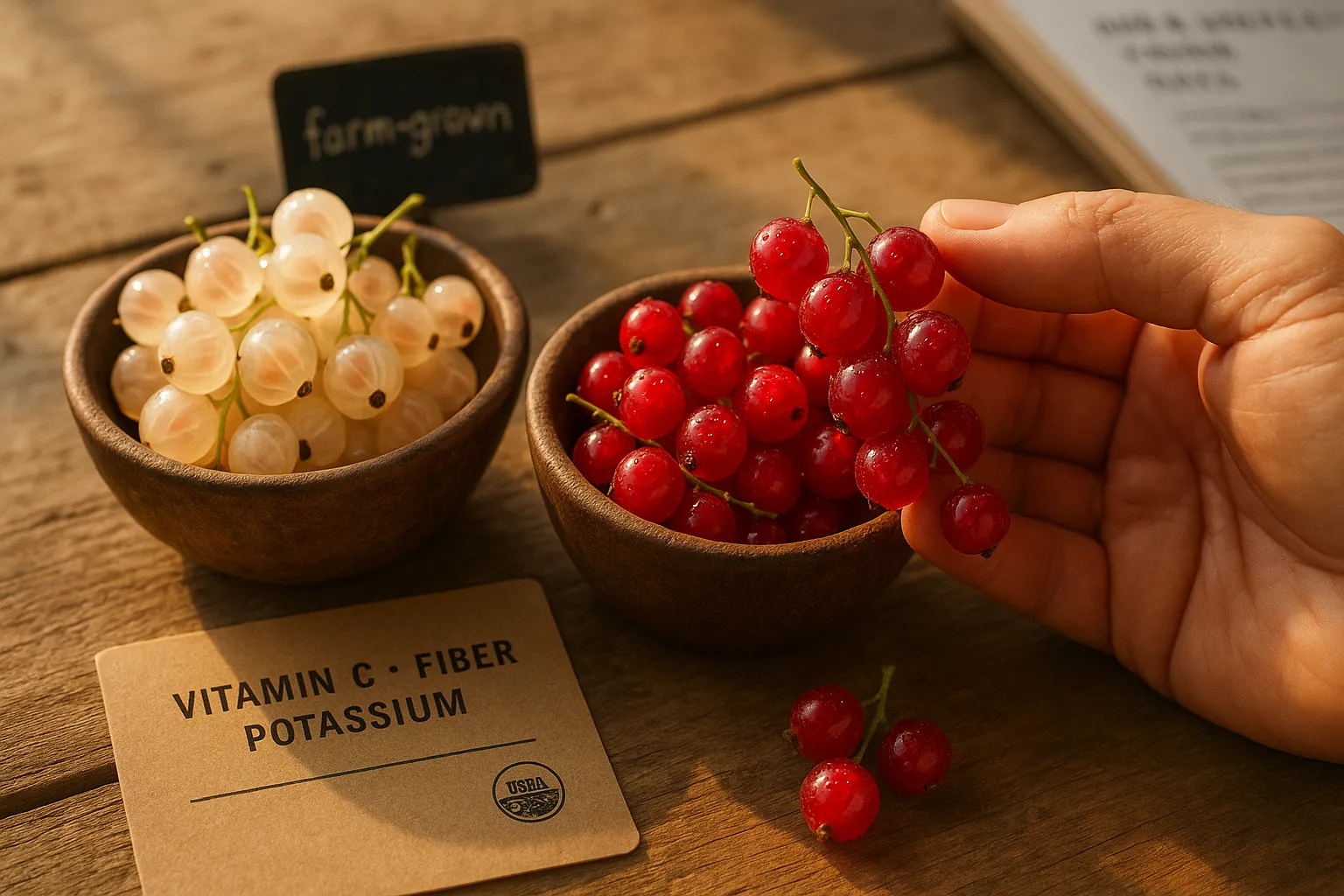
Currants contain vitamin C, potassium, and dietary fiber. A 100 g serving of redcurrants typically delivers around 40–50% of the daily value for vitamin C (depending on source and ripeness). Whitecurrants contain the same vitamin types but often in slightly lower quantities by weight because pigments correlate with some nutrient levels.
Named entities: USDA data, Royal Horticultural Society observations, and small-farm growers report consistent vitamin C presence across cultivars.
Health angle: fiber in currants supports digestion and helps you feel full. Potassium supports blood pressure regulation. You’ll get micronutrients without many calories, good for tight calorie budgets.
Sugar, Acidity, And Antioxidants
Answer: Redcurrants usually have higher acidity and visible pigments (anthocyanins). Anthocyanins act as antioxidants and give redcurrants their color. Whitecurrants lack these pigments but still supply other antioxidants like vitamin C and flavonols.
Practical implication: if you want the antioxidant punch associated with anthocyanins, redcurrants are the better choice. If you’re reducing acidity for children or people sensitive to tart foods, whitecurrants are friendlier.
Caveat: nutrient levels vary by soil, sunlight, and ripeness. A garden-grown variety can have different vitamin C than imported supermarket berries.
Culinary Uses And Recipe Ideas
Fact: Redcurrants perform best in cooked preparations that use acidity: whitecurrants shine raw or in lightly sweet applications.
Sweet Applications: Jams, Desserts, And Baking
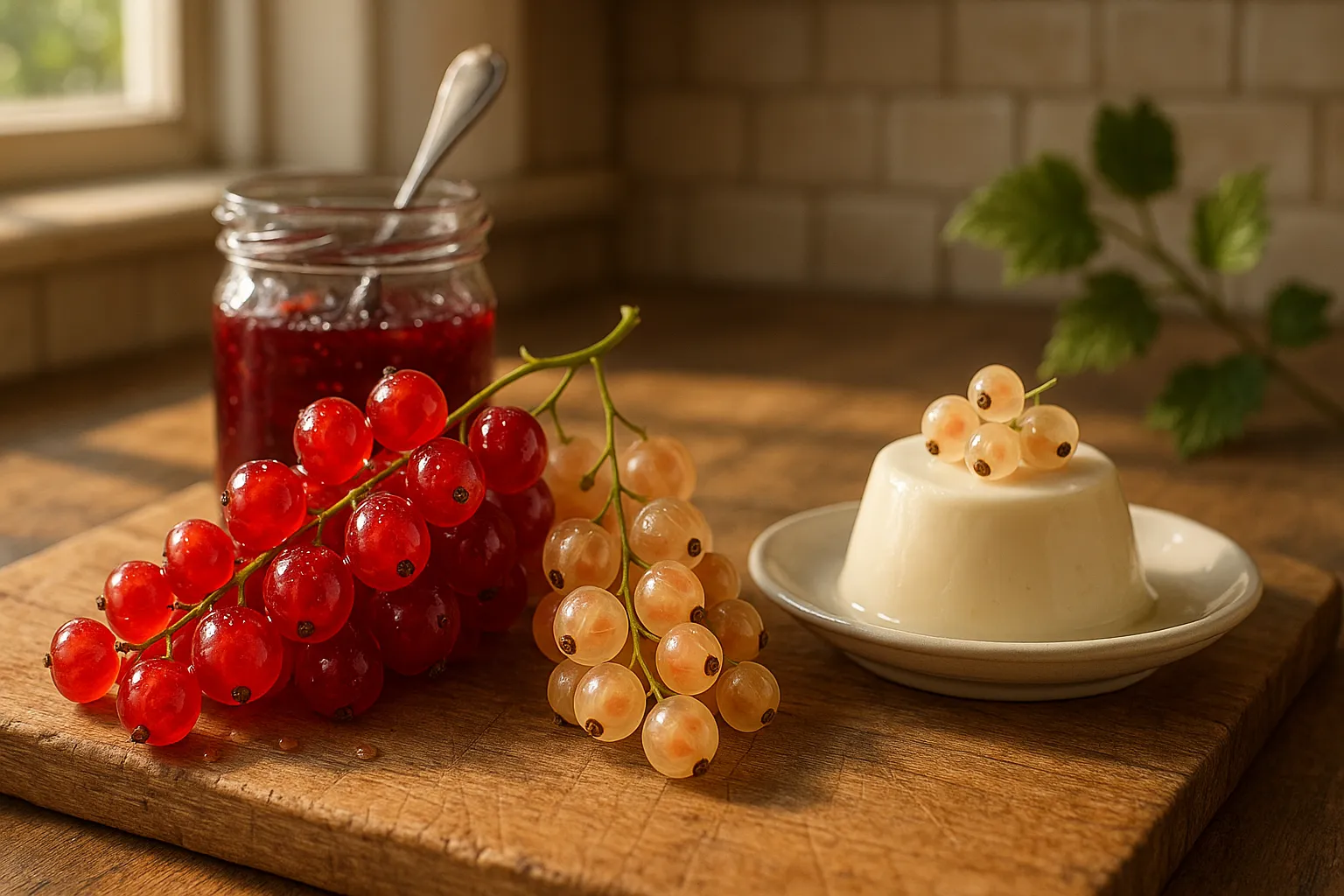
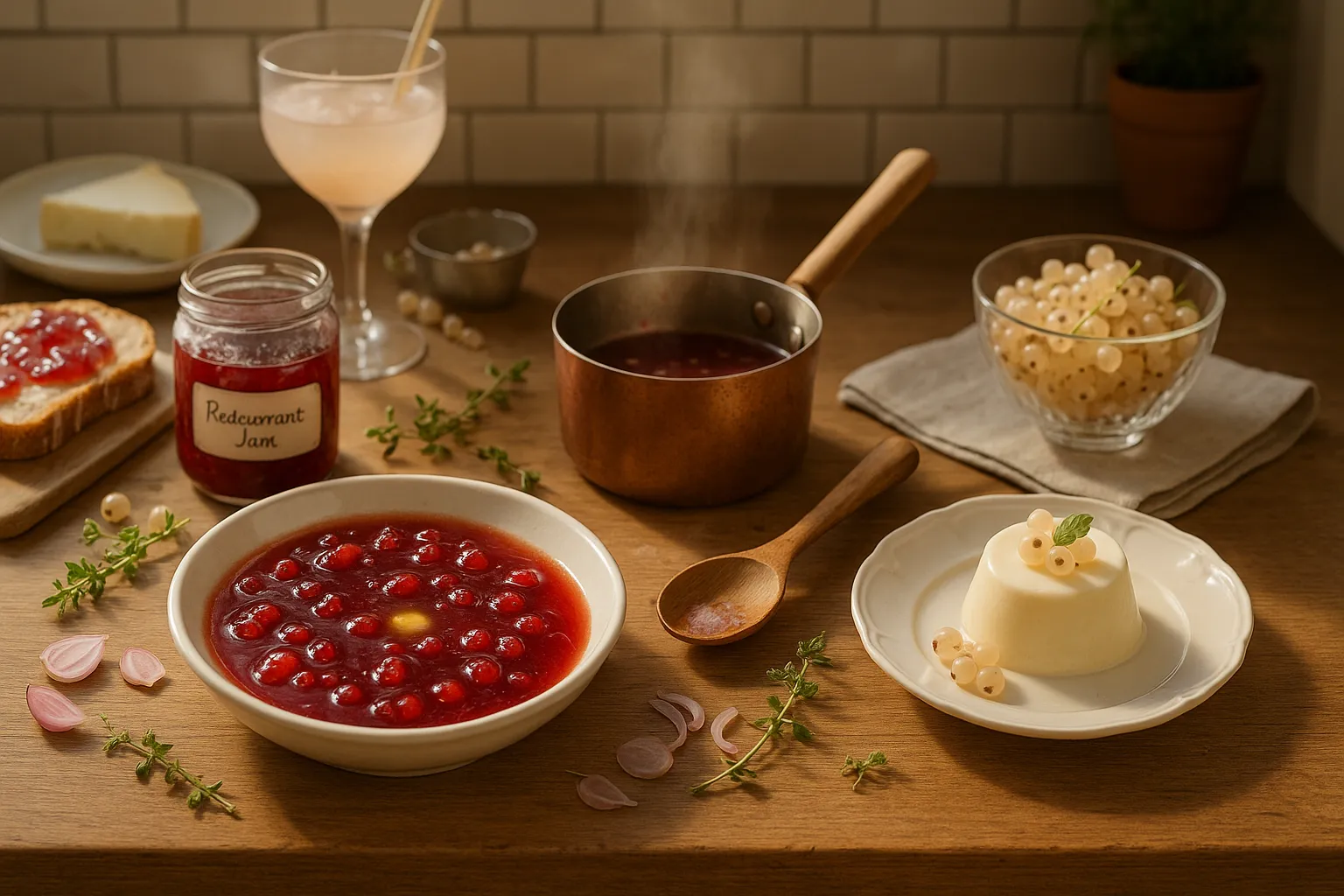
Redcurrant jam keeps a bright tang that pairs well with fatty cheeses and roast meats. Use redcurrants for traditional redcurrant jelly (a classic with lamb) or for tarts where the jam acts as a flavor anchor.
Whitecurrants make delicate jams and conserve that taste without overwhelming sugar in pastries. In baked goods, whitecurrants give pale color and a light fruit note, great on vanilla scones, panna cotta, or layered with cream in trifles.
Recipes and proportions:
For jam: use roughly 1 kg berries to 750 g sugar for a firm set with redcurrants: reduce sugar slightly for whitecurrants because they taste sweeter raw.
For baking: fold 1 cup of currants into muffin batter: toss with a tablespoon of flour to prevent sinking.
Anecdote: a pastry chef told me she prefers whitecurrants for a wedding tart because they read as elegant under soft lighting.
Savory Uses And Beverage Applications
Redcurrants balance savory dishes. Make a redcurrant reduction with shallot, wine, and a knob of butter for pork or duck. Add whole redcurrants to salads for bursts of acid.
Whitecurrants suit light beverages, muddle them into gin cocktails, steep them with sugar for a pale cordial, or place whole berries in sparkling water for subtle flavor and visual appeal.
Drink tip: macerate whitecurrants with a little sugar and lemon zest overnight to release flavor without heating: strain for a fragrant syrup.
Warnings: because currants are tart, reduce added acids in dressings if you add redcurrants so the dressing doesn’t become overpowering.
Growing, Varieties, And Harvesting Tips
Fact: Both types grow on hardy shrubs and share similar growing needs: cultivar choice affects yield and flavor.
Common Varieties And Cultivar Differences
Named varieties: ‘Red Lake’ and ‘Ben Sarek’ (redcurrants) are known for firm berries and reliable yields. Whitecurrant cultivars include ‘White Pearl’ and ‘Blanka’. These names appear in seed catalogs and nursery lists across Europe and North America.
Cultivar differences matter: some redcurrants are bred for larger berries and higher sugar: some whitecurrants prioritize translucent color and dessert-friendly flavor. Check nursery descriptions for harvest window and disease resistance.
How To Grow, Harvest Timing, And Yield Tips
Answer: Plant currants in cool-season temperate climates with partial sun. They prefer fertile, well-drained soil and consistent moisture. Prune older wood in late winter to encourage vigorous new shoots which carry most of the fruit.
Timing: harvest when berries are fully colored and slightly soft to the touch. Redcurrants often ripen mid to late summer: whitecurrants follow a similar schedule but sometimes finish earlier because of reduced pigment-building time.
Yield tips:
Space shrubs 4–6 feet apart for air flow and easier harvesting.
Net your bushes to protect clusters from birds: currants are a bird magnet.
Thin early-season fruit clusters only if you need larger individual berries: otherwise, leave clusters intact for more total yield.
Practical mistake note: many home growers pick too early because the berries look full-colored: wait one extra day and you’ll gain sweetness without losing acidity balance. Trust your taste, not only color.
Buying, Storage, And Substitution Guidance
Fact: Fresh currants are fragile: choose firm, glossy clusters and plan to use them quickly or freeze them.
How To Choose Fresh Berries And Storage Best Practices
Choosing: look for firm berries on flexible stems. Avoid fruit with dull skins or leaking juice. Named sellers like farmers markets often have fresher picks than prepackaged supermarket trays.
Storage: refrigerate in a single layer or a shallow container lined with paper towel: use within 3–5 days for best texture. Freeze by spreading on a tray until solid, then transfer to freezer bags, this preserves shape and makes them easy to measure for recipes.
Long-term: make jelly, jam, or syrup for shelf-stable storage. A properly processed jam keeps months in a pantry.
Substitution Ratios, Pairings, And When To Swap
Answer: You can swap redcurrants and whitecurrants at a 1:1 ratio in most recipes, but adjust sugar and acid based on taste.
Substitution guidance:
When swapping whitecurrants for red in jam, reduce sugar by about 10–15% or add a small squeeze of lemon to compensate for lower natural acidity.
When swapping red for white in fresh salads or desserts, consider macerating the redcurrants briefly with sugar to soften their tart edge.
Whitecurrants: cream, vanilla, citrus zests, light liqueurs, delicate fish preparations.
Practical warning: if a recipe relies on color (a clear red glaze or a jewel-bright topping), don’t swap whitecurrants without adjusting visual expectations. Conversely, whitecurrants can replace redcurrants when you want a pale presentation.
If you still are unsure which to pick for a recipe, test a small batch first. You’ll save time and avoid waste.
To provide the best experiences, we use technologies like cookies to store and/or access device information. Consenting to these technologies will allow us to process data such as browsing behaviour or unique IDs on this site. Not consenting or withdrawing consent, may adversely affect certain features and functions.
Functional
Always active
The technical storage or access is strictly necessary for the legitimate purpose of enabling the use of a specific service explicitly requested by the subscriber or user, or for the sole purpose of carrying out the transmission of a communication over an electronic communications network.
Preferences
The technical storage or access is necessary for the legitimate purpose of storing preferences that are not requested by the subscriber or user.
Statistics
The technical storage or access that is used exclusively for statistical purposes.The technical storage or access that is used exclusively for anonymous statistical purposes. Without a subpoena, voluntary compliance on the part of your Internet Service Provider, or additional records from a third party, information stored or retrieved for this purpose alone cannot usually be used to identify you.
Marketing
The technical storage or access is required to create user profiles to send advertising, or to track the user on a website or across several websites for similar marketing purposes.