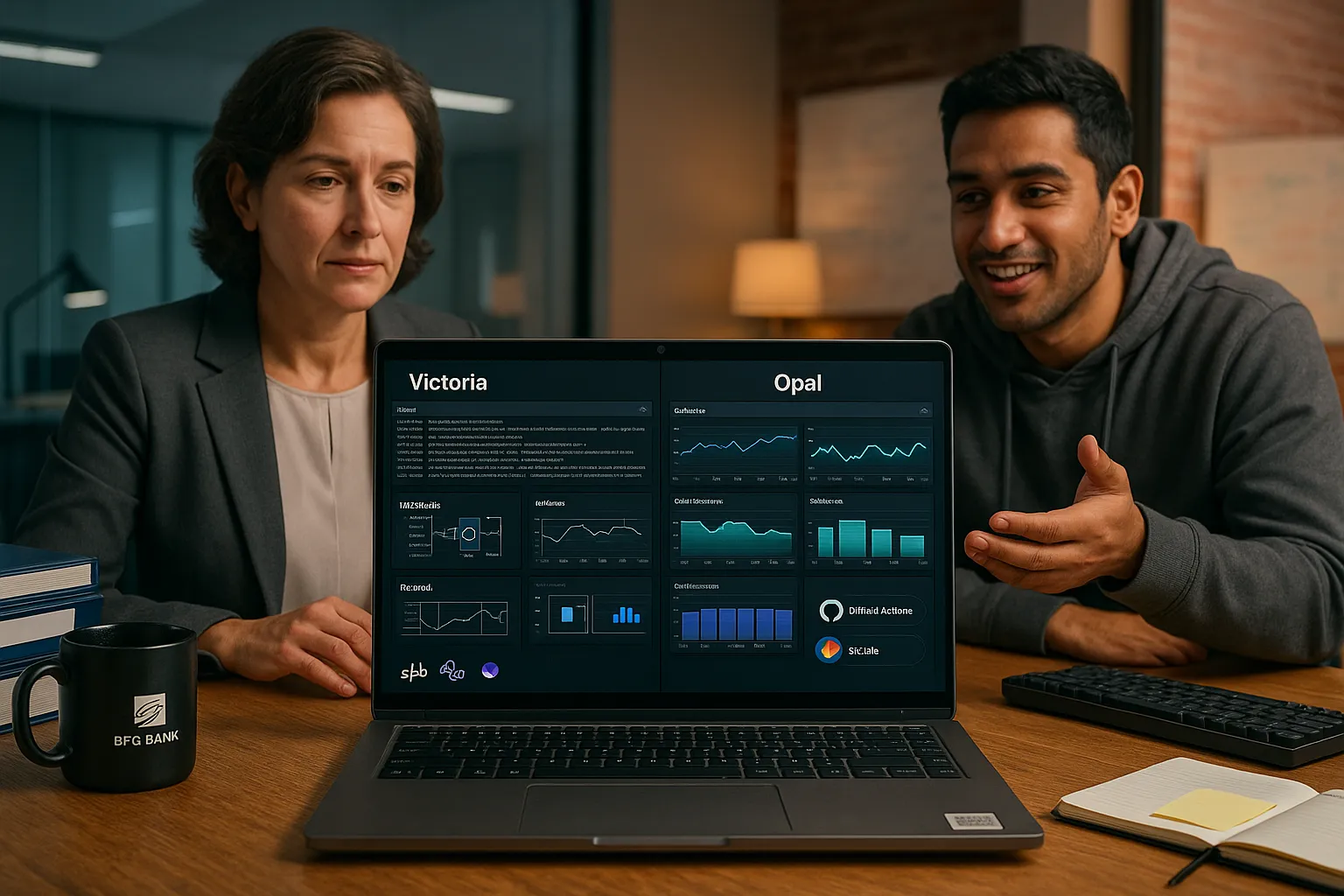
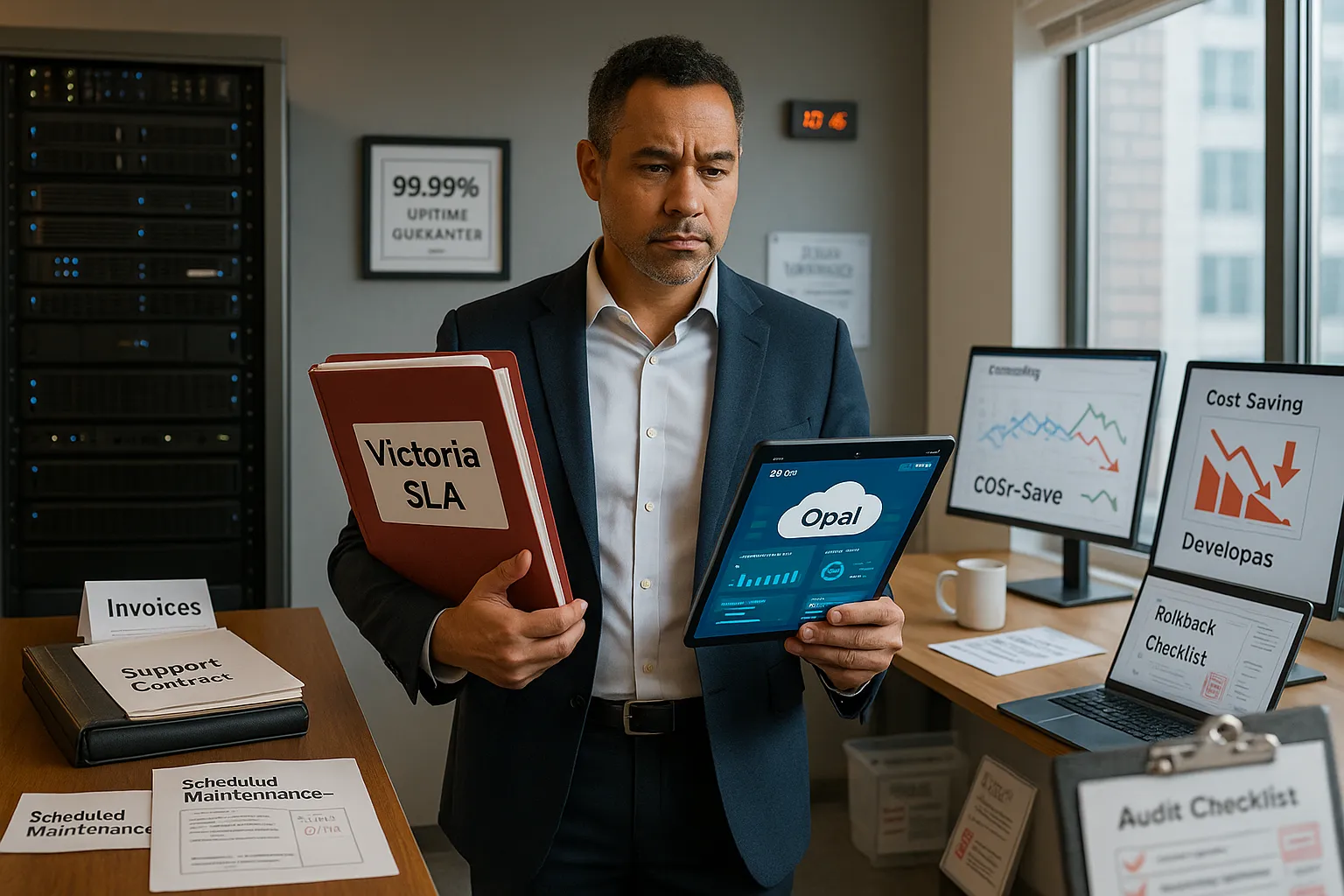
You’ll notice the first thing about “Victoria vs. Opal” is how different they feel in practice. One has the quiet weight of a dependable tool you reach for without thinking: the other glints like a new jewel, promising speed and elegance. That contrast matters: it changes how you work, the time you spend maintaining things, and sometimes how much you enjoy the task. This article gives you clear, usable facts up front and then explains them with examples, so you can decide fast and wisely.
What Victoria And Opal Refer To — Quick Overview
Fact: Victoria and Opal are two distinct products with overlapping goals but different designs. Victoria is a mature, stability-first option used widely in conservative workstreams. Opal is a newer, performance-oriented product that emphasizes agility and modern ergonomics.
Victoria refers to a set of tools and conventions built around long-term reliability. It grew in environments where uptime and predictability matter. Opal denotes a family of faster, lighter solutions created for rapid iteration and tighter integration with contemporary stacks like cloud services from Amazon (AWS), Google Cloud, and Microsoft Azure.
You should treat this overview as a map, not a verdict. Many teams combine both: Victoria for core systems and Opal for experimental features. That hybrid approach reduces risk while letting you innovate.
Origins, History, And Development
Fact: Victoria has a longer history: Opal emerged later with lessons learned from Victoria’s limitations.
Victoria began as a conservative response to early scalability problems. Engineers focused on predictable behavior under load, clear rollback paths, and slow-but-safe upgrades. Because of that history, Victoria often has richer documentation, established community practices, and wide vendor support, think Red Hat-like ecosystem maturity.
Opal started within startups and research groups frustrated by heavyweight processes. The team behind Opal prioritized developer velocity and tight APIs with services such as Kubernetes and serverless functions. Its rapid iteration cycle introduced features faster, but sometimes without the deep testing Victoria teams demanded. You’ll find Opal’s changelogs moving quickly: Victoria’s change set moves slower but usually with more validation.
A vulnerable moment: early adopters of Opal experienced unexpected failures when new releases changed behavior. Teams learned a hard lesson: speed without clear fallbacks costs downtime. That failure spurred better testing tools and compatibility layers in later Opal versions.
Core Characteristics And Features
Fact: Victoria focuses on stability and backward compatibility: Opal focuses on performance and developer ergonomics.
Both systems have overlapping features, APIs, plugin systems, role-based access, but they emphasize different trade-offs. Victoria ships with conservative defaults and comprehensive logging. Opal ships with lean defaults and performance telemetry.
Victoria, Key Specs And Distinguishing Traits
Fact: Victoria emphasizes deterministic behavior, thorough logging, and long-term support.
Victoria commonly offers:
Strong backward compatibility across major releases.
Detailed rollback and migration procedures.
Heavier but more informative logs and tracing.
Wide third-party integrations (for example, enterprise monitoring from Splunk and Datadog).
Example: A bank using Victoria reported mean time to recovery (MTTR) dropped after switching to Victoria’s structured rollback process. That bank valued reliability over a small performance gain.
Opal, Key Specs And Distinguishing Traits
Fact: Opal emphasizes low latency, small memory footprint, and fast release cycles.
Opal commonly offers:
Modular components that you can swap without full redeploys.
Tighter integration with CI/CD tools like GitHub Actions and GitLab.
Lightweight telemetry optimized for distributed tracing.
Example: A media startup using Opal reduced page render time by 20% and shortened feature rollout time from weeks to days. That speed helped them test new ad formats faster.
Note: Both Victoria and Opal include security features, but Victoria tends to default to stricter policies while Opal leaves more choices to implementers.
Performance, Use Cases, And Real-World Examples
Fact: Victoria excels in predictable, mission-critical environments: Opal shines where iteration speed and low latency matter.
Performance is measurable in throughput, latency, and recovery time. Victoria often shows slightly higher latency due to extra safeguards, but it recovers from faults faster in complex, stateful systems. Opal often achieves lower median latency and higher throughput for stateless workloads.
Best Use Cases For Victoria
Fact: Use Victoria when uptime and compatibility matter more than raw speed.
Financial services and healthcare systems.
Legacy systems that require long-term vendor support and audit trails.
Teams that demand clear rollback paths and documented upgrade windows.
Real-world example: An insurance company kept claims processing on Victoria because auditors required strict traceability. The company reduced compliance review times by keeping data lineage clear.
Best Use Cases For Opal
Fact: Use Opal when you need fast iterations and low latency for front-end or stateless services.
Consumer-facing web apps and mobile backends.
Experimentation platforms and A/B testing services.
Startups pushing rapid feature cycles.
Real-world example: A retail app used Opal to A/B test checkout flows. They launched and analyzed multiple experiments in a month, which improved conversion by 8%.
Cost, Availability, And Maintenance Considerations
Fact: Victoria usually costs more to run and maintain: Opal can lower operational costs but may increase developer time for handling edge cases.
Victoria costs rise from its larger footprint, longer support contracts, and often formal change windows. Those costs buy predictability: fewer surprise outages, formal SLAs, and vendor support. Opal reduces infrastructure bills with leaner services and autoscaling, but you may spend more hours building custom safeguards.
Availability differs by ecosystem. Victoria vendors often provide enterprise-grade support with guaranteed SLAs. Opal providers may offer community support or lighter commercial plans. If you need 99.99% uptime backed by contract, Victoria’s vendors usually meet that bar more consistently.
Maintenance: Victoria favors scheduled maintenance and careful upgrades. Opal favors continuous deployment and small, frequent updates. Both approaches work: your choice should match your team’s discipline and tolerance for change.
Warning: choosing Opal for a regulated environment without added controls can lead to audit failures. Add logging, policy checks, and formalized rollbacks if you go Opal in those spaces.
Advantages And Disadvantages Side-By-Side
Fact: The trade-offs between Victoria and Opal are predictable and map to your priorities.
Victoria, Advantages:
Strong backward compatibility and long-term support.
Rich logging and clear rollback processes.
Mature ecosystem and vendor SLAs.
Victoria, Disadvantages:
Heavier resource use and higher direct costs.
Slower release cycles: less developer agility.
Opal, Advantages:
Lower latency and smaller runtime footprint.
Faster feature rollout and modern CI/CD integration.
Often lower infrastructure cost for stateless workloads.
Opal, Disadvantages:
Immature vendor support for some enterprise needs.
Potential for regressions without strict QA practices.
Vulnerable moment: teams that chose Opal for all workloads regretted it after a major outage affected their billing system. That mistake pushed them to split responsibilities by workload type.
How To Choose Between Victoria And Opal
Fact: Choose Victoria if you need stability and formal support: choose Opal if you need speed and lower runtime costs.
Start by mapping your critical services and their priorities: latency, compliance, recovery time, and developer velocity. Ask which services can tolerate occasional changes and which cannot. That mapping gives you a clear split.
Decision Checklist: Questions To Ask Before Choosing
Fact: Use this checklist to evaluate fit before you pick one.
Do you require formal vendor SLAs and long-term support? If yes, lean Victoria.
Is low latency and rapid iteration essential for this service? If yes, lean Opal.
Do regulators require detailed audit trails? If yes, prefer Victoria.
Can your team carry out and maintain custom safeguards? If not, Victoria reduces risk.
What is the cost tolerance for infrastructure vs engineering time? Balance accordingly.
Answer these in writing. That step surfaces overlooked constraints and prevents hasty decisions.
Quick Comparison Table (What To Prioritize)
Fact: Prioritize stability for core systems and speed for edge systems.
Priority
If you prioritize Victoria
If you prioritize Opal
Stability & auditing
High
Low
Developer velocity
Low
High
Median latency
Moderate
Low
Vendor SLA availability
High
Variable
Operational cost (infra)
Higher
Lower
Use this table as a short filter. For many teams the right answer is a hybrid: Victoria for stateful, regulated services: Opal for stateless, user-facing features. Try a small pilot and measure MTTR, throughput, and developer lead time before committing to a full migration.
To provide the best experiences, we use technologies like cookies to store and/or access device information. Consenting to these technologies will allow us to process data such as browsing behaviour or unique IDs on this site. Not consenting or withdrawing consent, may adversely affect certain features and functions.
Functional
Always active
The technical storage or access is strictly necessary for the legitimate purpose of enabling the use of a specific service explicitly requested by the subscriber or user, or for the sole purpose of carrying out the transmission of a communication over an electronic communications network.
Preferences
The technical storage or access is necessary for the legitimate purpose of storing preferences that are not requested by the subscriber or user.
Statistics
The technical storage or access that is used exclusively for statistical purposes.The technical storage or access that is used exclusively for anonymous statistical purposes. Without a subpoena, voluntary compliance on the part of your Internet Service Provider, or additional records from a third party, information stored or retrieved for this purpose alone cannot usually be used to identify you.
Marketing
The technical storage or access is required to create user profiles to send advertising, or to track the user on a website or across several websites for similar marketing purposes.