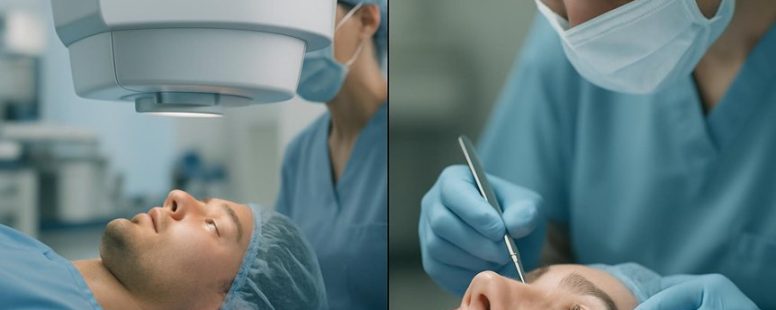
Imagine waking up each morning and seeing the world clearly without glasses or contacts—a feeling as freeing as spreading your wings. Over 600,000 Americans choose laser eye surgery each year to make this a reality.
But which path is right for you—LASIK or PRK? These procedures are like two different routes through a vibrant landscape, each with its own perks and quirks.
Surprisingly, PRK often offers a safer option for those with thinner corneas, providing a long-term solution that’s just as effective.
Understanding their differences can help you select the perfect fit for your eyes and lifestyle, turning the dream of perfect vision into your new everyday reality.
Understanding LASIK and PRK Eye Surgery
LASIK and PRK are two common types of laser eye surgeries used to correct vision. They are different in how the surgery is done, but both aim to fix problems like nearsightedness, farsightedness, and astigmatism.
LASIK is a popular choice because it has a quick recovery. During LASIK, the surgeon makes a small flap on the surface of the cornea. They lift this flap and then reshape the underlying tissue with a laser. Afterward, the flap is placed back. This method usually means less pain and faster healing. But LASIK needs a thicker cornea to work well. If your cornea is thin, LASIK might not be safe for you.
PRK is another option. Instead of making a flap, the surgeon removes the outer layer of the cornea completely. Then they reshape the eye with a laser. The outer layer grows back over time, which can take several days. PRK might be better if your cornea is thin or if you are very active since there is less risk of flap problems. However, PRK often has a longer healing time and more discomfort at first.
Both surgeries are safe and effective, but they have different risks and recovery times. LASIK usually offers faster results, but PRK might be better for some eye types. Your eye doctor can tell you which option is best for your eyes and your lifestyle.
Some people worry about long-term effects. Both surgeries have been around for many years and are regularly tested. Still, it’s good to know that LASIK and PRK may cause dry eyes or halos around lights for a while. Serious complications are rare but possible.
In the end, neither surgery is clearly better for everyone. It depends on your eye shape, health, and how quickly you want to recover. Asking your doctor questions about your specific needs can help you choose the right surgery. Picking the best option means understanding what each surgery involves and what risks are involved.
Which Surgery Works Best for Your Cornea and Eyes?
What is the best eye surgery for your cornea and eyes?
The best surgery depends on your eye shape, corneal thickness, age, and lifestyle. Here’s how to choose the right one.
PRK (Photorefractive Keratectomy)
PRK is good if your corneas are thinner. It doesn’t create a flap on your eye, so it’s safer for thinner corneas. It takes longer to heal and might cause more discomfort, but it reduces risks for dry eyes and significant astigmatism. If you have dry eyes or irregular corneas, PRK might be the better choice.
LASIK (Laser-Assisted In Situ Keratomileusis)
LASIK is popular for quick recovery. It creates a thin flap on your cornea, so your vision improves fast. If you are young and active, LASIK might suit your busy lifestyle. But if you have dry eyes or large amounts of correction needed, it may cause more complications.
Other options
LASEK or SMILE are alternatives. LASEK is similar to PRK but involves a thinner flap. SMILE is less invasive and might cause fewer dry eye problems, but not all surgeons perform it.
Which surgery works best?
If your corneas are thin, go for PRK.
If you want quick recovery and your corneas are normal thickness, LASIK is often best.
If you have dry eyes or high correction needs, PRK or SMILE could be safer.
What should you do?
Talk to an eye specialist about your eye shape, corneal thickness, age, and daily needs. They can help you decide which surgery fits your eyes and lifestyle best. Remember, no one surgery is perfect for everyone, so get professional advice before making a choice.
Vision Correction Results: LASIK vs PRK
LASIK and PRK are two popular eye surgeries that fix vision problems like nearsightedness and astigmatism. LASIK generally gives you clearer eyesight faster, while PRK might take longer but can work just as well.
LASIK uses a tiny flap in your cornea, which is folded back so the laser can reshape the eye. This allows for quick healing, often just a day or two. If you want to see clearly soon after surgery, LASIK is usually the best choice. But some people worry about the flap, especially if they have dry eyes or thin corneas.
PRK removes the outer layer of the cornea instead of making a flap. The laser then reshapes the eye. It takes longer to heal, sometimes a week or more, and your vision may be blurry for a few days. However, PRK might be better for those with thinner corneas or who are at risk of injury, because it doesn’t create a flap.
Both surgeries can give great results, but they come with different risks and recovery times. If quick recovery matters most, LASIK is a good pick. If you’re concerned about the flap or have specific eye conditions, PRK might be better. Talk to your eye doctor about which option fits your needs best.
In the end, both procedures can improve your vision, but think about your lifestyle, eye health, and how soon you want to see clearly.
Visual Clarity Outcomes
What is laser eye surgery?
Laser eye surgery is a procedure that helps fix vision problems like nearsightedness, farsightedness, or astigmatism. Two common types are LASIK and PRK. Both use a laser to reshape the cornea, the clear front part of your eye, so you see better without glasses or contacts.
Which procedure gives better long-term results?
Both LASIK and PRK can give excellent vision, often 20/20 or better. But PRK may stay more stable over many years. This is especially true for people with thinner corneas or those who do hard physical activities. PRK also avoids cutting a flap in the cornea, reducing some risks.
How do they differ in recovery?
LASIK usually recovers faster. Many people see clearly within a day or two. PRK might take a week or more to heal, and vision can be blurry for a while. If you want quick results, LASIK might be better. But if you prefer a safer option that might last longer for active lifestyles, PRK could be the way to go.
What should you consider before choosing?
Lifestyle matters a lot. If you play sports or have a physically demanding job, PRK’s lower risk of flap problems might be better. For those looking for quick recovery, LASIK wins. Your eye health and cornea thickness are also key factors. A doctor can tell you which is best for you.
Are there any downsides?
Yes. LASIK can cause flap-related issues if the flap gets damaged. PRK has a longer recovery time and some discomfort. Both surgeries have similar long-term results, but your choice depends on your needs and health.
Recovery Timeline Differences
Recovery times differ a lot between LASIK and PRK eye surgeries.
LASIK usually offers a quick recovery. Many people see clearly within a day or two. Pain is rarely a problem, and they can get back to normal activities fast. Follow-up visits are simple, and activity restrictions are short, like avoiding rubbing your eyes or swimming for a few days. This makes LASIK a popular choice for people who want quick results and less discomfort.
PRK takes longer to heal. After the procedure, the outer layer of the eye is removed, which can cause more pain and discomfort that might last for several days or even weeks. During this time, vision can fluctuate, meaning it might be blurry or unclear sometimes. People need to be careful with activity restrictions to protect the healing surface, like avoiding strenuous activities and protecting their eyes from dirt or dust. Follow-up visits are more important to watch over the healing process and make sure everything is okay.
Risks and Side Effects of LASIK and PRK Eye Surgery
LASIK and PRK are two common eye surgeries that help improve vision. Both can work well, but they also have risks and side effects you should think about before choosing.
LASIK is popular because it usually gives quick results. It involves creating a flap in the cornea and reshaping the eye. This flap can sometimes cause problems like dry eyes or flap movement. Although these issues are rare, they can happen and may need more treatment.
PRK does not make a flap. Instead, it removes the outer layer of the cornea and reshapes the eye directly. This means it avoids flap problems, but it often causes more discomfort in the first few days. Also, it may take longer for your vision to stabilize after PRK.
Both surgeries can have side effects that last a long time. Common issues include glare or halos around lights, especially in dark places. Many patients are happy with their improved vision, but some report these visual problems months or years later.
Some people choose LASIK because they want a quick recovery. Others prefer PRK to avoid flap risks, even if it means feeling more discomfort during healing. Your eye health and daily life are important in deciding which surgery is better for you.
Recovery Times After LASIK and PRK Eye Surgery
Recovery times after LASIK and PRK eye surgeries are quite different, and knowing these differences can help you decide which is better for you. LASIK usually has a faster healing process, while PRK might take longer but may be better for certain eye types.
LASIK recovery is quick. Most people see clearly within a day or two and can return to normal activities fast. For example, if you have LASIK at a clinic in Los Angeles, you might be back at work in just a couple of days. However, you still need to avoid rubbing your eyes and follow your doctor’s instructions to prevent problems.
PRK recovery takes longer. It can take a week or more for your eyes to heal fully, and your vision may be blurry for a few days after surgery. During this time, your eyes might feel sore or irritated. So, if you are planning a busy week, PRK might not be the best choice. Still, some people prefer PRK if they have thin corneas or other eye issues because it’s a safer option for them.
Both surgeries require follow-up visits, and you need to use eye drops to help healing. Keep in mind that while LASIK offers quick recovery, it’s not risk-free. PRK has a longer healing time but can be better for some eye shapes.
In the end, think about your schedule, your eye health, and what your doctor recommends. It’s smart to ask questions about recovery times before choosing your surgery. Whether you want fast results or a safer option for your eyes, understanding these facts can help you make the right move.
Healing Duration Comparison
LASIK and PRK are two types of eye surgeries that fix vision problems like nearsightedness, farsightedness, and astigmatism. The main difference is how long it takes to heal. LASIK usually heals faster, often within a few days, so people can get back to their normal routines quickly. PRK takes longer because the outer layer of the eye needs more time to grow back, sometimes several weeks.
If you want to see clearly sooner and get less time off work or activities, LASIK might be the better choice. It often causes less discomfort and has fewer activity restrictions in the first few days. But if you’re okay with a longer healing time and want a good result, PRK can work well too.
Both surgeries need regular check-ups after the procedure. These visits help the doctor see how your eyes are healing and catch any problems early. Remember, healing times can vary from person to person. Some people bounce back quickly, while others need more time.
Postoperative Care Differences
LASIK and PRK are different eye surgeries, and their after-surgery care is also different. Knowing what to expect can help you heal better and avoid problems.
With LASIK, recovery happens quickly. You usually only need to rest your eyes for a few days. The main care involves protecting your eyes from irritation and avoiding heavy activities like sports or lifting heavy objects for a few days. You will probably use antibiotic and anti-inflammatory eye drops for about a week. Some people feel a little dryness or irritation, but it usually gets better fast.
PRK takes longer to heal because the surface layer of the cornea is removed during surgery. Because of this, the healing process can take several weeks or even months. Postoperative instructions for PRK focus on managing pain and preventing infections. You will need to be very careful with your eye drops, using them as prescribed, and avoid rubbing your eyes for several weeks. This is important because rubbing can cause damage and slow down healing.
Some people might find PRK frustrating because it takes longer to see clear results. But it has its benefits too, like a lower chance of flap complications compared to LASIK. Both surgeries can give great vision, but they need different care routines.
Lifestyle Factors That Affect LASIK vs PRK Choice
Choosing between LASIK and PRK depends a lot on your daily habits and lifestyle. Here’s what you need to know.
If you are very active in sports or have a job that involves physical work, PRK might be better. That is because PRK doesn’t involve creating a flap in your cornea. A flap can be dislodged during rough activities, which makes PRK safer for people who do tough sports or work with their hands.
On the other hand, if your daily routine is less intense, LASIK can give you faster vision recovery. Many people see clearly within a day or two after LASIK, so it’s a good choice if you want quick results.
Your age and health also matter. Older people or those with certain eye conditions often do better with PRK because it can be safer for their eyes.
To pick the right surgery, think about how active you are, your work, and your health. Knowing how these things fit with your lifestyle helps you choose the best option for your eyes. Remember, it’s not just about your eyes but how your daily life might be affected.
Cost Differences Between LASIK and PRK Eye Surgery
LASIK and PRK are two popular eye surgeries that can improve your vision. The main difference is how much they cost and how long it takes to heal. LASIK usually costs more because it uses advanced laser technology and lets you see clearly faster. PRK often costs less but needs more time to heal, which might add to your total expenses.
Most insurance plans don’t cover either surgery because they are considered optional. This means you will probably pay out-of-pocket. Some clinics offer payment plans or financing options that can help spread out the cost. It is a good idea to ask your eye doctor about all the payment choices and what the price includes.
Knowing the cost differences before your surgery can help you plan better. Remember, if you choose LASIK, you might pay more upfront but get quicker results. If you pick PRK, it could be cheaper but take longer to recover. Think about what matters most to you—saving money now or getting back to your normal life faster.
Deciding Between LASIK and PRK: What’s Right for You?
Choosing between LASIK and PRK eye surgery depends on what’s most important for you. Here are the main things to consider to decide which one is better:
What is LASIK and PRK?
LASIK and PRK are types of laser eye procedures that correct vision problems like nearsightedness, farsightedness, and astigmatism. LASIK uses a small flap on the cornea, while PRK removes the outer layer of the cornea without creating a flap.
Which surgery is better for you?
LASIK is usually preferred if you want quick recovery and minimal discomfort. Many patients see clearly in just a day or two. But, LASIK isn’t for everyone. If your corneas are thin, PRK might be a better choice because it doesn’t require making a flap. PRK takes longer to heal and can be more uncomfortable, but it has fewer risks related to the flap coming loose later.
How do you decide?
First, get a thorough eye exam from a surgeon. They will check if your eyes are a good fit for LASIK or PRK. Think about your lifestyle too. If you play contact sports or do activities that could hit your eyes, PRK might be safer because it doesn’t involve a flap that could be dislodged.
What about long-term results?
Both surgeries give excellent long-term results. Still, the success depends on the surgeon’s skill and the technology they use. Advances in laser tools mean outcomes are better than ever, but choosing a experienced surgeon is key.
Cost and recovery
LASIK usually costs more but recovers faster. PRK may be cheaper but takes longer to heal and causes more initial discomfort. Think about your budget and how quickly you want to get back to normal.
What should you do next?
Make an appointment with an eye doctor. They will tell you what’s safest for your eyes and help you understand the risks and benefits of each surgery. Ask questions about recovery time, risks, and costs. Remember, no surgery is perfect, and some limitations might stay.
Summary
Both LASIK and PRK can give you clear vision. Your choice depends on your eye health, lifestyle, and preferences. Talk with your doctor honestly about your goals and concerns. This way, you can pick the right surgery confidently and start seeing better.
To provide the best experiences, we use technologies like cookies to store and/or access device information. Consenting to these technologies will allow us to process data such as browsing behaviour or unique IDs on this site. Not consenting or withdrawing consent, may adversely affect certain features and functions.
Functional
Always active
The technical storage or access is strictly necessary for the legitimate purpose of enabling the use of a specific service explicitly requested by the subscriber or user, or for the sole purpose of carrying out the transmission of a communication over an electronic communications network.
Preferences
The technical storage or access is necessary for the legitimate purpose of storing preferences that are not requested by the subscriber or user.
Statistics
The technical storage or access that is used exclusively for statistical purposes.The technical storage or access that is used exclusively for anonymous statistical purposes. Without a subpoena, voluntary compliance on the part of your Internet Service Provider, or additional records from a third party, information stored or retrieved for this purpose alone cannot usually be used to identify you.
Marketing
The technical storage or access is required to create user profiles to send advertising, or to track the user on a website or across several websites for similar marketing purposes.