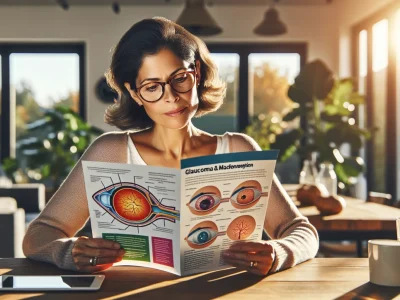
Picture trying to read your favorite book, but the words blur together like watercolor on wet paper—while distant streetlights gleam with perfect clarity. Or maybe you catch yourself squinting at the horizon, longing to bring the world into focus, yet the text on your phone jumps out crisp and sharp. Your eyes, those tiny windows to the world, shape every moment with their unique quirks.
But what if those quirks held unexpected advantages? From easier nighttime driving to effortless close-up work, the way you see can open doors you never noticed. Understanding the difference between being near sighted and far sighted isn’t just about labels—it’s about unlocking a new perspective on how you experience life itself.
Understanding Nearsightedness (Myopia)
Nearsightedness, known to doctors as myopia, changes how you see the world. When you’re nearsighted, far-away things—like traffic signs, chalkboards, or even the moon—look muddy, but your phone screen or a menu in your hands stay crisp.
Causes of Nearsightedness
Light rays, when your eye’s shape bends them the wrong way, focus in front of your retina instead of right on it. Most often, your eyeball grows just a bit too long front-to-back, creating that disconnect. If both parents wear glasses for myopia, there’s a higher chance you inherit it—studies from the American Academy of Ophthalmology state children with nearsighted parents develop myopia at a higher rate. You might notice kids who read a lot, or spend hours on tablets, start squinting at the TV—some experts think prolonged close-up work when young links to rising myopia cases globally. Urban environments, with less outdoor time, gives another boost to these statistics; research cited by the World Health Organization shows half of the world could be myopic by 2050.
Common Symptoms of Nearsightedness
Blurry vision at a distance usually reveals itself before anything else. Maybe you miss road exits you used to spot miles away, or faces at the end of the hall start blending together. Discomfort or headaches sometimes follow long bouts of squinting, as your eyes strain to clear up what’s far. Many students first notice myopia when schoolwork gets harder—directions on the board blur, while words in their books look fine. Are you asking friends to read distant clocks, or moving closer at movies? Those habits tell your story. Eye doctors confirm myopia with a refractive test—it’s quick, painless, and clarifies if glasses or contacts will sharpen up your distant view.
Exploring Farsightedness (Hyperopia)
Farsightedness, known medically as hyperopia, lets distant objects appear clear while closer details blur. You might not notice it creeping into your routine until words in a paperback fade or threading a needle becomes a guessing game. Hyperopia connects with the quirks of your eye’s shape, genetics, and how light bends on the retina.
Causes of Farsightedness
You find hyperopia, most times, traces back to a short eyeball length or a cornea with too little curvature. These anatomical features cause incoming light rays to focus behind your retina rather than right on it. Picture a camera lens that doesn’t quite catch the sharpness at the exact film spot—nearby images get washed out. Genetic entities, like family ancestry, commonly influence the risk. According to the American Optometric Association, children gets diagnosed more often, but adults can also develop it if their lens stiffens with age. Lifestyle influences, for instance, extensive screen time, doesn’t directly cause farsightedness, but it may make symptoms appear earlier.
Common Symptoms of Farsightedness
You’ll often squint while reading, notice headaches after close-up work, or feel your eyes burn during tasks like sewing or viewing your phone. Maybe, you breeze through road signs miles away but struggle with ingredient labels up close. Kids with uncorrected hyperopia sometimes have trouble in school, misreading words or losing focus in class activities—vision tests often catch it late. Don’t you sometimes wonder why your friend’s crossword is easy for them but nearly unreadable for you? Eyestrain, blurry near vision, and even tiredness by the end of the day are credible clues. The CDC notes that farsightedness impacts nearly 10% of U.S. children, a surprisingly high number considering how subtle early symptoms can be.
Key Differences Between Nearsighted and Farsighted
Vision quirks shape how you see the world’s texture, making a street sign shimmer with clarity or turn into a fuzzy mystery. Every blink reframes your interaction with objects, from threading a needle to following distant headlights under city lights.
How Vision Is Affected
In nearsightedness (myopia), light rays focuse in front of your retina—blur distorts everything in the distance, but text in your hands feels crisp like daybreak. With farsightedness (hyperopia), light rays traces beyond the retina—your view of faraway trees stays sharp, but a close-up page dissolves into ambiguity. Picture one eye acting like a zoomed-in camera that missed its mark; the other, a wide landscape always a little out of touch nearby. Kids, often not knowing there’s a difference, might squint unknowingly, while you could catch yourself holding a menu at arms length in a cafe with dim lights.
Differences in Symptoms and Daily Impact
Adults with nearsightedness typically notice road signs drifting out of focus or squinting for distant movie screens. Children, according to American Academy of Ophthalmology, might sit too close to TVs or avoid sports with hand-eye coordination. Farsighted individuals, in contrast, complain of eye strain or headaches after reading, and they can “zone out” on assignments that seems to float away from comprehension. At a family gathering, you’ll recognize the uncle peering at a crossword or the toddler rubbing her eyes after story time. Many never realize subtle symptoms until eye strain becomes chronic or frustration mounts—Vision Council says almost 10% of US children are farsighted, often undiagnosed until their reading lags behind peers. These distinct experiences ripple through daily life, shaping work, learning, and leisure—Would you choose night driving over book clubs if you saw worlds differently?
Diagnosis and Testing
Eye professionals rely on refraction tests using phoropters to differentiate between myopia and hyperopia. A simple vision chart, the Snellen chart, helps calibrate what “clear” looks like for each person—your E’s and O’s might shimmer while a friend’s pop out. Diagnostic technology, like autorefractors and retinoscopy, pinpoints how the shape of your eye nudges light. The American Optometric Association recommends annual comprehensive exams—especially for children, as uncorrected vision issues often masquerade as learning problems (The Vision Council, 2023). Sometimes a quick vision screening misses what a full eye exam catches, so scheduling that appointment could reveal what you’ve been missing behind the blur.
If your world sometimes blurs and you wonder what’s hidden at the edge of sight, consider: How much of your day is shaped by the quiet quirks of your eyes?
Treatment Options for Each Condition
Treatment options for nearsightedness and farsightedness alter how you interact with your environment. Clarity at every distance connects directly to the right choice, whether you’re squinting to read highway signs or stretching your arms to decipher tiny menu fonts.
Corrective Lenses
Corrective lenses provide immediate improvement for myopia and hyperopia—glasses or contact lenses adapt your eyes to daily demands. With myopia, you put on glasses with concave lenses, and suddenly streetlights stop blurring into a distant haze. For hyperopia, glasses with convex lenses flip the script, making restaurant receipts legible without the need to guess what the bill says.
Children with myopia, like 12-year-old Mia squinting at her classroom board, often discover sharper vision the moment prescription lenses rest on their nose. According to the American Optometric Association, over 150 million Americans use corrective eyewear, covering college students poring over textbooks and retirees reading crosswords under different lighting.
Contacts can suit you if you favor an unobstructed view or play sports, though the risk of eye infections increases with poor hygiene. Bifocal and progressive lenses let you see both far and near without switching pairs, which is helpful for adults whose vision shifts with age. The convenience gap between contacts and glasses—think of fumbling to clean foggy lenses during a rainstorm versus popping in a fresh pair—might shape your preference.
Surgical Procedures
Surgical procedures offer lasting vision correction, removing dependency on daily spectacles. LASIK (Laser-Assisted in Situ Keratomileusis) reshapes the cornea, allowing you to wake up and see your alarm clock sharply, not a blur. According to the American Refractive Surgery Council, over 700,000 LASIK surgeries occur each year in the US, though some patients still rely on reading glasses later in life.
PRK (photorefractive keratectomy) also sculpts the cornea, benefiting those ineligible for LASIK due to thin corneas—like marathon runner Evelyn, who avoided glasses fog during morning sprints after PRK. Refractive lens exchange swaps the eye’s natural lens with an artificial one, treating severe hyperopia or age-related vision loss (presbyopia). Each surgery has risks such as dry eyes, glare, or fluctuating clarity, demanding careful discussion with an ophthalmologist.
You can glimpse a world without glasses, though costs, recovery, and possible need for enhancements make surgical choices complex. Would you chose sharper vision at sunrise hikes if it meant weeks of dry, sensitive eyes? Stories from athletes, artists, and commuters showcase that no singular route fits all—rather, vision correction reflects your lifestyle, priorities, and the quirky story your eyes tell daily.
Conclusion
Your vision shapes more than just what you see—it influences how you move through life. Whether you’re nearsighted or farsighted, understanding your unique needs empowers you to make better choices for your eye health.
By staying proactive with regular eye exams and exploring the right corrective options, you’ll ensure your world stays sharp and clear. Don’t underestimate the impact of clear vision on your daily comfort and confidence.
To provide the best experiences, we use technologies like cookies to store and/or access device information. Consenting to these technologies will allow us to process data such as browsing behaviour or unique IDs on this site. Not consenting or withdrawing consent, may adversely affect certain features and functions.
Functional
Always active
The technical storage or access is strictly necessary for the legitimate purpose of enabling the use of a specific service explicitly requested by the subscriber or user, or for the sole purpose of carrying out the transmission of a communication over an electronic communications network.
Preferences
The technical storage or access is necessary for the legitimate purpose of storing preferences that are not requested by the subscriber or user.
Statistics
The technical storage or access that is used exclusively for statistical purposes.The technical storage or access that is used exclusively for anonymous statistical purposes. Without a subpoena, voluntary compliance on the part of your Internet Service Provider, or additional records from a third party, information stored or retrieved for this purpose alone cannot usually be used to identify you.
Marketing
The technical storage or access is required to create user profiles to send advertising, or to track the user on a website or across several websites for similar marketing purposes.