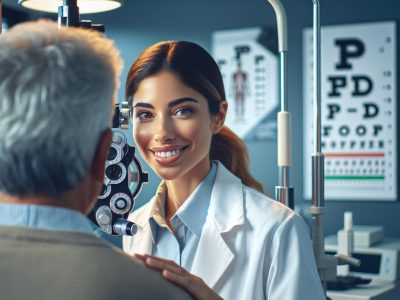
Your eyes are your window to the world, but what happens when that view starts to blur or fade? Glaucoma and cataracts are two common conditions that can cloud your vision, yet they’re often misunderstood. While both affect your eyes, they do so in entirely different ways—one sneaks up silently, while the other gradually dims the light. Do you know how to tell them apart?
Understanding the difference isn’t just about knowledge; it’s about protecting your sight. Whether it’s the pressure silently building in glaucoma or the foggy lens of a cataract, recognizing the signs early can make all the difference. Jump into the key distinctions between these conditions and discover how to safeguard the clarity of your world.
Understanding Glaucoma
Glaucoma, often referred to as the “silent thief of sight,” causes progressive damage to the optic nerve, predominantly due to elevated intraocular pressure (IOP). It’s a leading cause of irreversible blindness worldwide.
Causes and Risk Factors
Primary open-angle glaucoma (POAG) is the most common form, resulting from improper drainage of aqueous humor. Angle-closure glaucoma, less common, occurs when the iris blocks the drainage angle suddenly.
Risk factors include family history, age over 40, ethnic background (African Americans and Hispanics are at higher risk), and medical conditions such as diabetes. Prolonged use of corticosteroids and severe eye injury also heighten the risk. For example, steroid eye drops used for inflammation could lead to increased IOP, worsening glaucoma.
Symptoms and Diagnosis
Early stages often show no symptoms, making glaucoma difficult to detect without regular eye exams. As the condition progresses, peripheral vision starts to shrink, leading to “tunnel vision.” Advanced stages may cause complete blindness.
Eye care professionals diagnose glaucoma using tests like tonometry (measuring IOP), visual field testing, and optical coherence tomography (OCT). A patient experiencing halos around lights or sudden vision loss might already have advanced glaucoma.
Treatment Options
While glaucoma isn’t curable, treatments aim to control eye pressure and prevent further damage. Medications such as prostaglandin analogs or beta-blockers are commonly prescribed.
Laser therapy, like selective laser trabeculoplasty (SLT), helps improve fluid drainage. In severe cases, surgical options like trabeculectomy or drainage implants effectively reduce IOP. For instance, a trabeculectomy creates an alternate pathway for fluid drainage, lowering eye pressure.
Manage the risk of glaucoma with routine eye exams, especially if you fall under high-risk categories.
Understanding Cataract
Cataract refers to the clouding of the eye’s natural lens, leading to gradually impaired vision. This condition primarily affects adults over 60, though it can occur at any age due to various factors.
Causes and Risk Factors
Cataracts develop due to the clumping of proteins in the eye’s lens, which disrupts light transmission. Age remains the primary cause, but other factors include prolonged UV exposure, diabetes, smoking, and long-term steroid use. Family history of cataracts also increases your risk.
For example, individuals with uncontrolled diabetes may develop cataracts earlier, emphasizing the importance of managing general health to protect your vision.
Symptoms and Diagnosis
Symptoms of cataracts include blurry vision, increased sensitivity to light, difficulty seeing at night, and seeing halos around lights. Colors may appear faded or yellowed, and frequent glasses prescription changes become necessary.
Eye exams, including slit-lamp evaluations and visual acuity tests, confirm the diagnosis. Early detection helps monitor progression and plan treatment effectively.
Treatment Options
Treatment depends on the severity of vision impairment caused by cataracts. In mild cases, glasses or brighter lighting may temporarily improve vision. But, when cataracts interfere with daily life, surgery to replace the clouded lens with an artificial intraocular lens (IOL) becomes the recommended option.
Modern cataract surgery, which involves techniques like phacoemulsification, boasts a success rate of over 95%, restoring clarity for most patients.
Key Differences Between Glaucoma And Cataract
Both glaucoma and cataracts affect vision, but they do so in distinct ways. Understanding their differences helps in early detection and proper management.
Impact On Vision
Glaucoma reduces peripheral vision over time, leading to tunnel vision when untreated. It quietly damages the optic nerve, often without early symptoms. For example, a person with glaucoma may initially notice difficulty detecting objects at the edge of their view.
Cataracts cause blurry, hazy, or dimmed vision due to the clouding of the eye’s lens. Objects may appear yellowish or faded. For instance, reading becomes harder under dim light, or seeing halos around lights at night becomes bothersome.
Progression Of The Condition
Glaucoma progresses silently and irreversibly, with damage accumulating gradually. Without intervention, it results in permanent blindness. Risk factors like high intraocular pressure or a family history accelerate this process.
Cataracts develop slowly, with symptoms becoming noticeable as the clouding worsens. Unlike glaucoma, cataracts don’t cause irreversible blindness. But, untreated cataracts can reach a stage where vision is severely impaired.
Treatment Approaches
Glaucoma treatments aim to control intraocular pressure through medicated eye drops, laser therapy, or surgeries like trabeculectomy. These prevent further damage but cannot restore lost vision.
Cataracts are treatable through lens replacement surgery, often providing immediate vision improvement. Modern techniques, such as phacoemulsification, allow precise and minimally invasive removal of the clouded lens.
Understanding these distinctions ensures timely action for preserving your vision.
How To Identify Both Conditions
Recognizing glaucoma and cataracts demands attention to specific symptoms and regular eye care practices. Both conditions impact vision differently and require varying diagnostic approaches.
Importance Of Regular Eye Checkups
Routine eye exams play a critical role in identifying eye health issues at early stages. Glaucoma, often called the “silent thief of sight”, can progress without symptoms until significant vision loss occurs. Early detection through tonometry tests, optic nerve evaluation, and visual field assessments helps map any changes caused by increased eye pressure.
For cataracts, eye exams identify lens clouding even before you notice symptoms such as blurry or dim vision. If you’re over 60 or have risk factors like UV exposure or diabetes, annual screenings are essential. These exams also help eye specialists differentiate between conditions as overlapping symptoms, such as reduced clarity, could create confusion.
Consulting With An Eye Specialist
An eye specialist determines the root cause of vision impairment using advanced diagnostic tools. For glaucoma, gonioscopy evaluates the drainage angle of your eye, while OCT (optical coherence tomography) measures damage to the optic nerve. If peripheral vision loss aligns with other findings, the diagnosis is confirmed.
Cataracts are diagnosed when a slit-lamp examination reveals protein clumps on the lens. You’ll likely notice increased light sensitivity or glare, steering the specialist toward treatment options like corrective lenses or surgery. Specialists guide tailored treatments based on your specific condition, so reaching out proactively ensures better outcomes.
It’s never too early for a consultation, especially if any gradual vision changes start affecting daily activities.
Conclusion
Understanding the differences between glaucoma and cataracts is key to safeguarding your vision. While both conditions can significantly impact your eyesight, their causes, symptoms, and treatments differ greatly. Regular eye exams and prompt attention to any vision changes are your best tools for early detection and effective management.
By staying proactive about your eye health and consulting with an eye specialist when needed, you can address these conditions before they progress. Prioritizing regular checkups and maintaining awareness of your risk factors ensures a clearer and healthier future for your vision.
To provide the best experiences, we use technologies like cookies to store and/or access device information. Consenting to these technologies will allow us to process data such as browsing behaviour or unique IDs on this site. Not consenting or withdrawing consent, may adversely affect certain features and functions.
Functional
Always active
The technical storage or access is strictly necessary for the legitimate purpose of enabling the use of a specific service explicitly requested by the subscriber or user, or for the sole purpose of carrying out the transmission of a communication over an electronic communications network.
Preferences
The technical storage or access is necessary for the legitimate purpose of storing preferences that are not requested by the subscriber or user.
Statistics
The technical storage or access that is used exclusively for statistical purposes.The technical storage or access that is used exclusively for anonymous statistical purposes. Without a subpoena, voluntary compliance on the part of your Internet Service Provider, or additional records from a third party, information stored or retrieved for this purpose alone cannot usually be used to identify you.
Marketing
The technical storage or access is required to create user profiles to send advertising, or to track the user on a website or across several websites for similar marketing purposes.