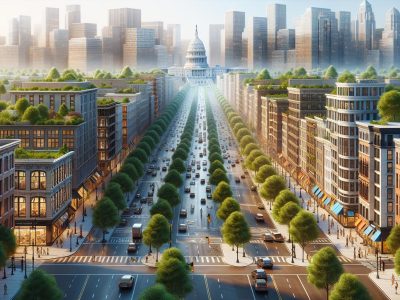
Picture waking up to the hum of bustling streets, skyscrapers casting long shadows over your morning coffee. Now picture a slower pace—tree-lined avenues, open spaces, and the distant chirp of birds greeting your day. The contrast between inner-city living and life in the outer city couldn’t be more striking, each offering its own unique rhythm and charm.
Do you crave the energy of urban hubs where convenience is at every corner? Or does the tranquility of suburban neighborhoods call your name with promises of space and serenity? Choosing between these worlds isn’t just about location—it’s about lifestyle. Whether it’s vibrant nightlife or peaceful starry skies that draw you in, understanding what each has to offer can help you find where you truly belong.
Understanding Inner City Vs Outer City
Inner cities, often marked by dense populations and towering buildings, serve as hubs of activity. They offer proximity to workplaces, cultural landmarks like museums, theaters, and essential services such as hospitals and public transport. But, these areas frequently experience higher living costs and limited green spaces.
Outer cities or suburbs provide a contrasting lifestyle with spacious homes, larger yards, and quieter streets. These regions typically attract families seeking affordable housing options and access to quality schools. While amenities might be less concentrated than in inner cities, suburban areas often boast parks, recreational facilities like sports complexes, and community centers.
The pace of life varies significantly between the two. Inner-city living immerses you in fast-paced environments where opportunities for networking flourish. In contrast, outer city settings emphasize relaxation and personal space but can require longer commutes to urban centers.
Consider factors such as your career goals or family needs when choosing between these lifestyles. For instance, young professionals may value the connectivity inner cities provide; whereas families might prioritize the safety and tranquility of suburban neighborhoods.
Both settings have unique challenges. Inner cities face noise pollution from traffic congestion while outer cities contend with fewer public transit options which increase car dependency. Evaluating priorities helps align your choice with long-term satisfaction in either environment.
Demographics And Lifestyle Differences
Inner and outer cities differ significantly in demographics and lifestyle, shaping how residents interact with their environment and each other.
Population Density And Diversity
Inner cities typically have higher population density. Urban areas like New York City or Chicago often host millions within a few square miles, creating crowded residential zones and bustling public spaces. This density fosters diversity, with inner cities becoming melting pots of cultures, ethnicities, and languages. For instance, neighborhoods may feature restaurants serving global cuisines such as Thai, Ethiopian, or Mexican.
Outer cities exhibit lower population densities. Suburban areas prioritize spaciousness over compact living arrangements. These regions often attract more homogenous populations due to affordability trends or specific housing developments catering to particular income groups.
Cultural And Social Dynamics
Urban centers thrive on cultural vibrancy. Inner-city residents engage in dynamic social activities like attending art galleries, live music venues, or sporting events at iconic arenas. The proximity to theaters or museums broadens access to cultural enrichment but can feel overwhelming for those seeking solitude.
Outer cities emphasize community-oriented lifestyles centered around shared spaces like parks or local schools. Social gatherings might include neighborhood barbecues or youth sports leagues rather than large-scale urban nightlife experiences.
Economic Disparities
Economic disparities between inner and outer cities significantly influence living conditions, career prospects, and financial planning. Understanding these differences helps you navigate the challenges tied to each area.
Job Opportunities And Industries
Inner cities often house diverse industries like finance, technology, healthcare, and entertainment. These economic hubs attract professionals seeking competitive salaries and career growth. For example, Silicon Valley in San Francisco or Wall Street in New York City offer numerous high-paying jobs within urban centers. But, competition is intense due to the high concentration of skilled workers.
Outer cities primarily support sectors such as manufacturing, retail, education, and local services. Employment options might be fewer but are often more community-focused. Suburban regions like Plano in Texas have witnessed growing job markets linked to corporate headquarters relocating for lower operational costs.
While urban areas provide access to global networks and cutting-edge innovation, suburban zones favor stability with less occupational stress. Your choice depends on whether you prioritize ambitious professional development or work-life balance.
Cost Of Living
Living expenses in inner cities are higher due to elevated housing demand and limited space availability. Monthly rents for apartments in metropolitan areas can exceed $3,000 (e.g., Manhattan). Essential commodities like groceries or utilities also carry premium price tags because of logistical constraints.
Outer city living reduces costs by offering affordable real estate options—single-family homes with larger yards are common under $300k compared to million-dollar properties downtown (depending on location). Transportation expenses may increase since commuting distances grow when residing farther from employment centers.
Choosing between convenience at a cost versus affordability with longer commutes depends on your financial goals and lifestyle needs.
Infrastructure And Transportation
Inner-city and outer-city areas differ significantly in infrastructure and transportation, shaping daily life and accessibility.
Access To Public Transport
Inner cities often feature extensive public transport networks. Subways, buses, and light rail systems provide frequent service, reducing reliance on personal vehicles. For example, New York City’s subway system operates 24/7 across 472 stations. These options help shorter commutes to workplaces or cultural hubs.
Outer cities typically lack such comprehensive public transit options. Bus routes may be limited to major roads or specific hours. Residents often depend on cars for mobility, leading to higher fuel expenses and traffic congestion during peak hours. Carpooling initiatives or park-and-ride facilities can alleviate some of these challenges but aren’t universally available.
Housing And Urban Development
Urban development in inner cities prioritizes high-density housing like apartments or condominiums. Proximity to essential services drives demand for smaller living spaces with higher costs per square foot. Skyscrapers dominate cityscapes, utilizing vertical space efficiently amidst land scarcity.
Outer cities emphasize suburban sprawl with single-family homes and spacious yards. Zoning laws foster separation between residential zones and commercial areas, creating quieter neighborhoods but necessitating longer travel distances for work or shopping needs.
Incorporating mixed-use developments—integrating residences with retail stores—in both settings could enhance convenience while addressing differing needs effectively.
Quality Of Life
Inner-city and outer-city living significantly influence aspects of daily life, including safety, healthcare, and education. Each setting offers distinct advantages that cater to different lifestyles and priorities.
Crime Rates And Safety
Crime rates generally differ between inner cities and outer cities due to population density and socioeconomic factors. Inner cities often experience higher crime rates, influenced by crowded neighborhoods and economic disparities. For example, property crimes like thefts or burglaries are more common in urban areas where valuable assets are concentrated.
Outer cities tend to have lower crime rates because of smaller populations and stronger community bonds. Suburbs often focus on family-oriented environments with neighborhood watch programs that promote safety. But, some outer-city regions may encounter issues like vandalism or car thefts in less-monitored areas.
You need to assess local statistics before deciding on a location since safety levels can vary widely within both urban centers and suburban districts (source: FBI Uniform Crime Reporting Program).
Health And Education Services
Healthcare access is typically more extensive in inner cities due to the concentration of hospitals, clinics, and specialized medical facilities. Urban residents benefit from proximity to top-tier institutions for emergency care or advanced treatments. For instance, major metropolitan areas frequently host teaching hospitals affiliated with renowned universities.
In contrast, outer-city healthcare options might include fewer facilities but offer shorter wait times for routine check-ups at local practices. Some suburban communities lack immediate access to specialists; but telemedicine services help bridge this gap.
Education also differs greatly between these settings. Inner cities feature diverse schools with varied academic programs but often struggle with overcrowding or limited funding in public institutions (e.g., low teacher-student ratios). Suburban schools usually excel in resources per student—such as extracurricular activities—but may not provide the same cultural diversity found in urban classrooms.
When weighing health care or education quality consider your family’s specific needs alongside any available regional data (source: National Center for Education Statistics).
Environmental Impact
Inner and outer cities influence the environment differently due to their urban planning, population density, and transportation systems. These impacts shape air quality, green spaces, and overall ecological footprints.
Green Spaces And Pollution Levels
Green spaces are more abundant in outer cities, with larger parks, nature reserves, and suburban backyards offering natural habitats for wildlife. Inner cities often lack sufficient greenery; small urban parks or rooftop gardens may substitute but can’t match the scale of outer-city expanses. For example, New York City’s Central Park provides vital greenery but remains an exception rather than a norm for densely populated areas.
Pollution levels tend to be higher in inner cities due to increased vehicular traffic and industrial activities concentrated within compact zones. Outer cities experience lower pollution levels because of reduced traffic congestion and dispersed developments. But, reliance on personal vehicles in suburbs contributes significantly to carbon emissions over longer commutes.
Urban heat islands (UHIs) further highlight environmental disparities between these settings. UHIs occur when concrete-heavy inner-city areas trap heat during warmer months, elevating temperatures compared to cooler suburban regions with vegetation coverage. Addressing these issues demands sustainable city designs that balance development with environmental preservation practices like tree planting initiatives or improved public transit solutions.
Conclusion
Choosing between inner-city and outer-city living eventually depends on your priorities, lifestyle preferences, and long-term goals. Each offers distinct advantages and challenges that cater to different needs, from career opportunities and cultural experiences to family life and affordability.
By understanding the unique characteristics of both environments, you can make an well-informed choice that aligns with your values and aspirations. Whether you thrive in the dynamic pace of urban life or prefer the calm serenity of the suburbs, there’s a setting that suits you perfectly.
To provide the best experiences, we use technologies like cookies to store and/or access device information. Consenting to these technologies will allow us to process data such as browsing behaviour or unique IDs on this site. Not consenting or withdrawing consent, may adversely affect certain features and functions.
Functional
Always active
The technical storage or access is strictly necessary for the legitimate purpose of enabling the use of a specific service explicitly requested by the subscriber or user, or for the sole purpose of carrying out the transmission of a communication over an electronic communications network.
Preferences
The technical storage or access is necessary for the legitimate purpose of storing preferences that are not requested by the subscriber or user.
Statistics
The technical storage or access that is used exclusively for statistical purposes.The technical storage or access that is used exclusively for anonymous statistical purposes. Without a subpoena, voluntary compliance on the part of your Internet Service Provider, or additional records from a third party, information stored or retrieved for this purpose alone cannot usually be used to identify you.
Marketing
The technical storage or access is required to create user profiles to send advertising, or to track the user on a website or across several websites for similar marketing purposes.