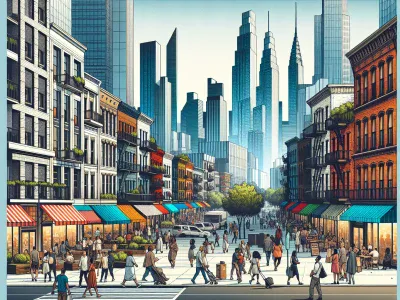
Picture this: the quiet rustle of leaves in a serene village, the steady hum of life in a bustling town, or the electric pace of a sprawling city. Each place carries its own rhythm, shaping how you live, work, and connect with others. But how these environments truly differ beyond just population size or scenery?
Choosing between a village’s simplicity, a town’s balance, and a city’s endless opportunities can feel like stepping into entirely different worlds. Each offers unique benefits—tranquility versus convenience versus boundless possibilities—that shape your lifestyle in ways you might not expect. Whether you’re drawn to starry skies or neon lights understanding these contrasts can help you discover where your heart feels most at home.
Understanding The Basics: Town, City, And Village
Understanding the distinctions between a town, city, and village is key to appreciating their unique lifestyles. Each settlement type varies in size, density, and infrastructure.
Defining A Town
A town typically serves as a midpoint between a village and a city. It houses moderately sized populations ranging from 1,000 to 20,000 people. Towns often feature essential services like schools, healthcare facilities, and local markets.
For example, towns may have small shopping centers but lack the extensive public transport networks found in cities. You might notice that community events play an important role in fostering social connections within towns.
What Makes A City?
Cities are characterized by large populations exceeding 100,000 residents. They serve as economic hubs with advanced infrastructure including skyscrapers, highways, airports, and metro systems.
Cultural diversity defines urban life; you’ll encounter various cuisines at restaurants or engage with art galleries representing global traditions. High job opportunities attract individuals seeking career growth but also contribute to challenges such as higher living costs.
The Essence Of A Village
Villages represent rural life with populations often below 1,000 residents. Agriculture frequently dominates the economy while natural landscapes define their surroundings.
Population And Size Comparison
Population and size differentiate villages, towns, and cities significantly. Each settlement type offers distinct population densities, distribution patterns, and community dynamics.
Density And Distribution In Towns
Towns typically house populations ranging from 1,000 to 20,000 residents. They balance rural spaciousness with urban connectivity. Streets are moderately crowded but maintain a sense of order; essential services like schools and health centers are accessible without overwhelming infrastructure. For example, many US towns include centralized marketplaces where residents gather weekly for supplies or social interaction. Population density often allows for green spaces within residential areas while supporting small businesses nearby.
Cities: The Epicenter Of Populations
Cities host over 100,000 people in compact spaces teeming with activity. Skyscrapers dominate skylines as dense housing accommodates growing populations. Public transportation systems like subways in New York City help movement across vast urban landscapes even though high traffic congestion on roads. Ethnic neighborhoods create cultural hubs—Chinatown or Little Italy stand out as examples—while business districts attract global professionals seeking career opportunities.
Lifestyle And Social Structure
Lifestyle and social structure differ greatly among villages, towns, and cities. Each settlement type shapes daily routines, interpersonal relationships, and cultural norms.
Town Life: A Blend Of Urban And Rural
Towns combine the rural charm of open spaces with urban conveniences like healthcare facilities or schools. Community events like farmers’ markets or fairs often become key gathering points. You may find neighbors who know each other by name but still maintain personal privacy compared to tight-knit village communities.
Employment opportunities range from small businesses to administrative roles supporting nearby cities. Recreational activities like local sports leagues or hiking trails provide balance for work-focused lifestyles. But, some towns lack diverse entertainment options that larger cities offer.
City Life: Fast-Paced And Cosmopolitan
Cities buzz with activity 24/7 due to their dense population and economic significance. Skyscrapers dominate skylines while bustling streets showcase restaurants, theaters, and nightlife venues catering to various tastes.
Social structures in cities are more individualistic; people prioritize careers over communal ties in many cases. Yet ethnic neighborhoods like Chinatown or Little Italy create micro-communities within the vast metropolitan sprawl. Public transport systems ensure mobility even though heavy traffic congestion.
While providing unmatched career growth opportunities across industries such as tech or finance—cities often come with high living costs affecting your quality of life unless income levels align accordingly.
Village Life: Traditional And Community-Oriented
Villages revolve around agriculture-driven economies where traditions play a vital role in shaping day-to-day interactions. Residents engage closely through festivals celebrating harvests or religious occasions fostering collective identity stronger than urban environments typically allow.
Infrastructure And Services
Infrastructure and services vary significantly between villages, towns, and cities, shaping daily life, accessibility, and opportunities. Each settlement type reflects unique priorities in its development and resource allocation.
Town Infrastructure: Balanced Development
Towns balance rural simplicity with urban amenities. You find a mix of paved roads, small shopping centers, schools, and healthcare facilities. The infrastructure supports local businesses while attracting regional visitors. Public spaces like parks or town squares serve as hubs for community events.
For example, many towns feature weekly markets where residents buy fresh produce or handmade goods directly from farmers and artisans. While public transportation might be less comprehensive than in cities, bus routes or shared taxis often connect nearby areas effectively.
City Services: Advanced And Extensive
Cities offer sophisticated infrastructure that caters to large populations and diverse needs. Skyscrapers dominate skylines alongside advanced transit systems such as subways or high-speed trains. Utilities like electricity grids and water systems are optimized for scalability.
You encounter specialized facilities including hospitals with cutting-edge technology or universities offering global-standard education. Cultural institutions—museums, theaters—enrich public life further. But congestion challenges urban services; traffic delays can disrupt schedules even though availability of multiple transit modes.
For instance New York City’s Metro system enables millions to commute daily but occasional maintenance issues highlight strain on aging infrastructures within metropolises worldwide (source: MTA reports).
Villages: Limited Yet Essential Amenities
Villages prioritize essential resources over expansion-focused projects due to smaller populations (often below 1k). Dirt roads replace highways reflecting agricultural lifestyles centered around sustainability rather than modernization trends impacting larger settlements globally today .
Basic amenities include wells providing water access alongside primary schools ensuring literacy growth locally even though higher-education options frequently necessitate travel elsewhere by ambitious students seeking broader academic horizons .
Cultural And Economic Differences
Cultural and economic aspects vary widely between villages, towns, and cities, shaping how people live, work, and interact with their environments. Each settlement type reflects unique traditions, lifestyles, and financial structures.
Towns: A Mix Of Traditions And Progress
Towns blend traditional values with modern development. Community festivals like local fairs or parades often highlight long-standing customs while new industries bring economic opportunities. For example, family-owned bakeries might coexist alongside tech startups in the same area.
Small businesses thrive through centralized markets or shopping centers that support both producers and consumers. Agriculture may still play a role in peripheral areas of towns but is often supplemented by service-based jobs. You’ll also find cultural diversity increasing as people from different backgrounds move to towns for better access to education or healthcare.
While maintaining historical landmarks like old town squares or churches, towns adapt by introducing contemporary facilities such as recreational parks or public libraries. The balance here allows you to experience a slower pace compared to cities without losing touch with modern conveniences.
Cities: Cultural Melting Pots And Economic Hubs
Cities are vibrant mosaics of culture and economics driven by innovation and diversity. Ethnic neighborhoods like Chinatown in San Francisco or Little Italy in New York City showcase rich cultural heritages coexisting within urban landscapes.
Economic activities span across sectors including finance, technology, arts, and retail—all facilitated by state-of-the-art infrastructure. Skyscrapers house multinational corporations while bustling marketplaces cater to small entrepreneurs selling handmade crafts or global products. Public art installations and museums reflect the city’s multicultural identity shaped by its residents.
Living costs are higher due to demand for housing near economic centers; but career growth opportunities offset these expenses for many professionals striving for success amidst competition. Even though congestion issues common in metropolitan regions—public transit systems connect districts efficiently fostering economic connectivity alongside cultural exchange.
Villages: Preserving Culture And Agrarian Economy
Villages prioritize preserving traditional practices intertwined with agrarian economies where farming forms the backbone of daily life. Agricultural fairs showcasing crops or livestock symbolize community pride while religious ceremonies strengthen social cohesion among residents who frequently share resources like tools or expertise.
Conclusion
Choosing between a village, town, or city eventually depends on your priorities and lifestyle preferences. Each setting offers unique experiences shaped by its size, pace, and opportunities. Whether you’re drawn to the simplicity of rural life, the balanced charm of small-town living, or the dynamic energy of urban centers, there’s a place that aligns with your values and aspirations.
Understanding what each environment has to offer helps you make an well-informed choice about where you’ll feel most at home. Embrace the diversity these settings provide and explore how they can enrich different aspects of your life.
To provide the best experiences, we use technologies like cookies to store and/or access device information. Consenting to these technologies will allow us to process data such as browsing behaviour or unique IDs on this site. Not consenting or withdrawing consent, may adversely affect certain features and functions.
Functional
Always active
The technical storage or access is strictly necessary for the legitimate purpose of enabling the use of a specific service explicitly requested by the subscriber or user, or for the sole purpose of carrying out the transmission of a communication over an electronic communications network.
Preferences
The technical storage or access is necessary for the legitimate purpose of storing preferences that are not requested by the subscriber or user.
Statistics
The technical storage or access that is used exclusively for statistical purposes.The technical storage or access that is used exclusively for anonymous statistical purposes. Without a subpoena, voluntary compliance on the part of your Internet Service Provider, or additional records from a third party, information stored or retrieved for this purpose alone cannot usually be used to identify you.
Marketing
The technical storage or access is required to create user profiles to send advertising, or to track the user on a website or across several websites for similar marketing purposes.