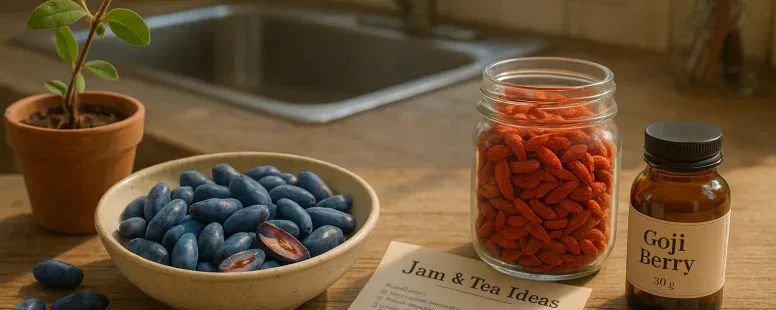
Honeyberry vs. Goji Berry: Which Is Right For You?
You can find small berries that promise big health perks, but they are not the same. Honeyberry and goji berry both arrive with colorful stories: one shows up as an early spring treat on cold-climate bushes, the other as a dried staple from Asia that’s been traded for centuries. Which one fits your garden, kitchen, or supplement shelf? This comparison cuts straight to the facts and flavors. You’ll learn how they taste, what they deliver nutritionally, how they grow, and where they add value to your day. By the end you’ll know which berry matches your goals, taste, health, or growing ease.
Quick Comparison Snapshot
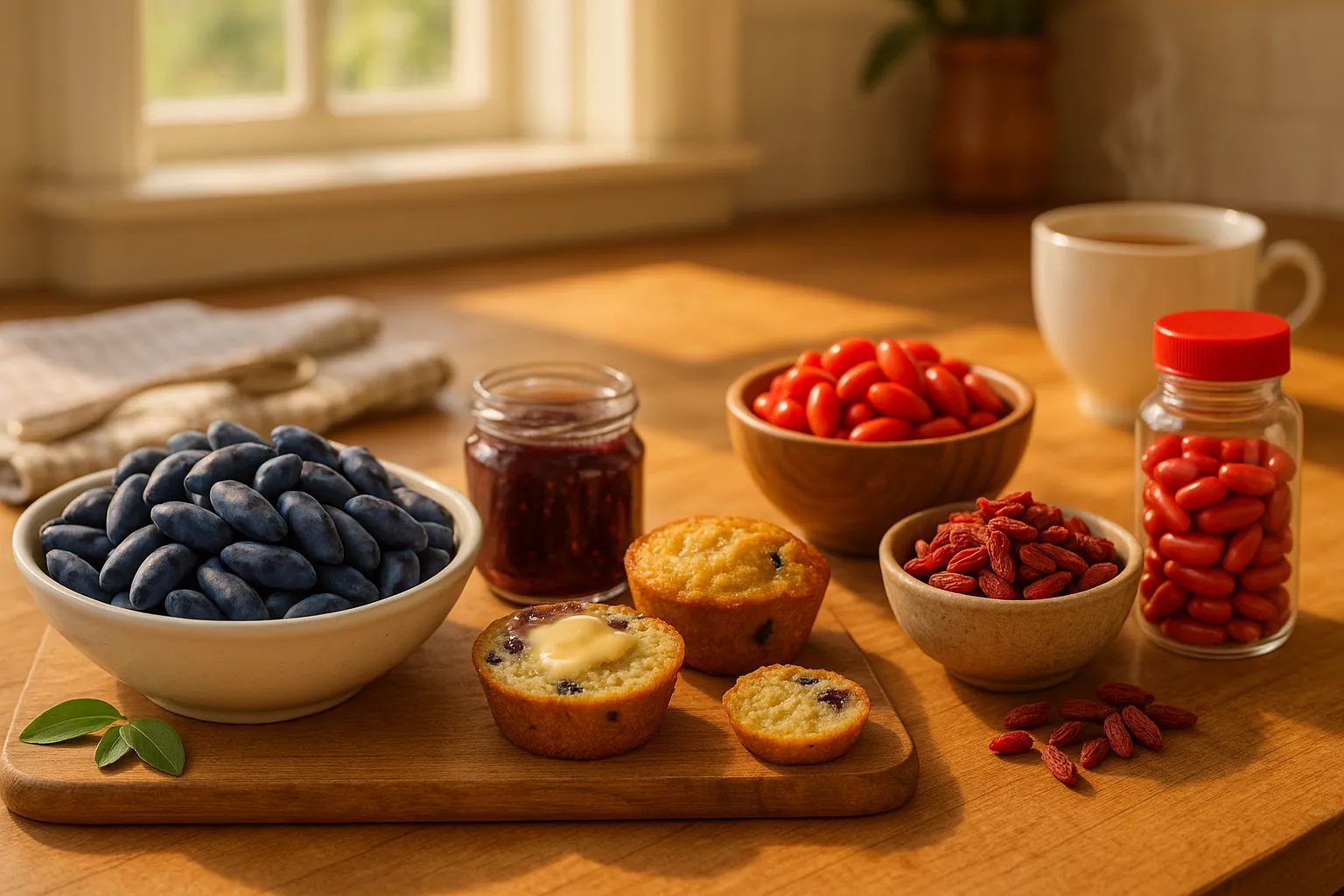
Fact: Honeyberry and goji berry differ in origin, taste, and typical use. Honeyberry (Lonicera caerulea) comes from cold regions of Russia, Japan, and Canada. Goji berry (Lycium barbarum and Lycium chinense) comes from China and Mongolia.
- Appearance: Honeyberries look like elongated blue-purple berries similar to elongated blueberries. Goji berries are oblong, bright red when fresh, and often sold dried.
- Flavor: Honeyberry tastes tart-sweet with floral notes and a hint of green apple. Goji berry tastes mildly sweet with bitter undertones and a leathery texture when dried.
- Typical uses: You’ll find honeyberries in fresh eating, jams, and baking. You’ll find goji berries in teas, dried-snack mixes, and supplements.
Quick takeaway: Pick honeyberry if you want fresh, early-season fruit for cooking and eating. Pick goji berry if you want a shelf-stable ingredient often sold as a supplement or dried snack.
Why this matters: Your climate, taste preference, and how you plan to use the fruit determine the better choice for you.
Appearance, Flavor, and Texture
Fact: Honeyberry and goji berry present distinct sensory profiles that shape their culinary roles.
Honeyberry Characteristics
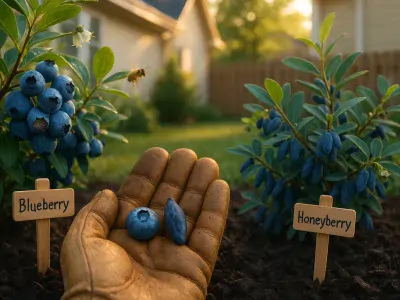
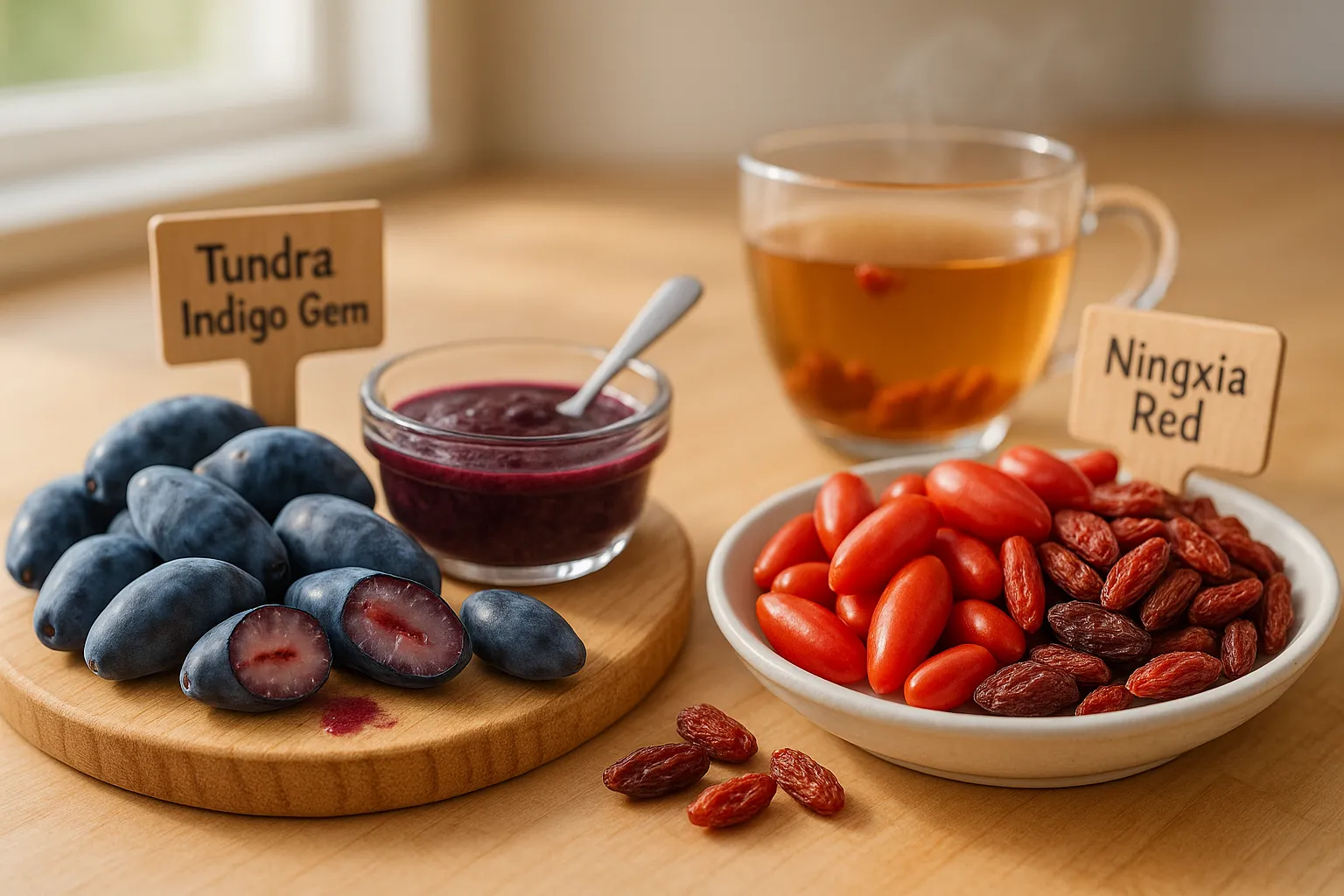
Honeyberry looks like a slim blueberry. The skin is blue to purple with a powdery bloom. Flesh is juicy and pale. You will notice a clean, tart opening on the palate followed by floral sweetness. Texture is soft and juicy when ripe. Honeyberries crush easily, which makes them ideal for sauces and purees. In cold climates, cultivars such as ‘Tundra’, ‘Indigo Gem’, and ‘Borealis’ produce reliably large fruit.
Goji Berry Characteristics
Goji berries look like small red peppers when fresh: dried they wrinkle and darken. Fresh gojis are soft but slightly firm: dried gojis are chewy. Flavor leans toward mild sweetness with earthy and slightly bitter notes. You will taste a subtle herbal quality that carries through in tea and broth. Goji varieties such as Ningxia red are prized in Chinese medicine and commerce.
How this affects use: The honeyberry’s juiciness favors fresh eating, baking, and juice. The goji’s chew and shelf-stability favor snacks, teas, and dried mixes.
Nutrition and Health Benefits
Fact: Both berries provide antioxidants and nutrients, but the nutrient profiles and evidence behind health claims differ.
Key Vitamins, Minerals, and Macronutrients Compared
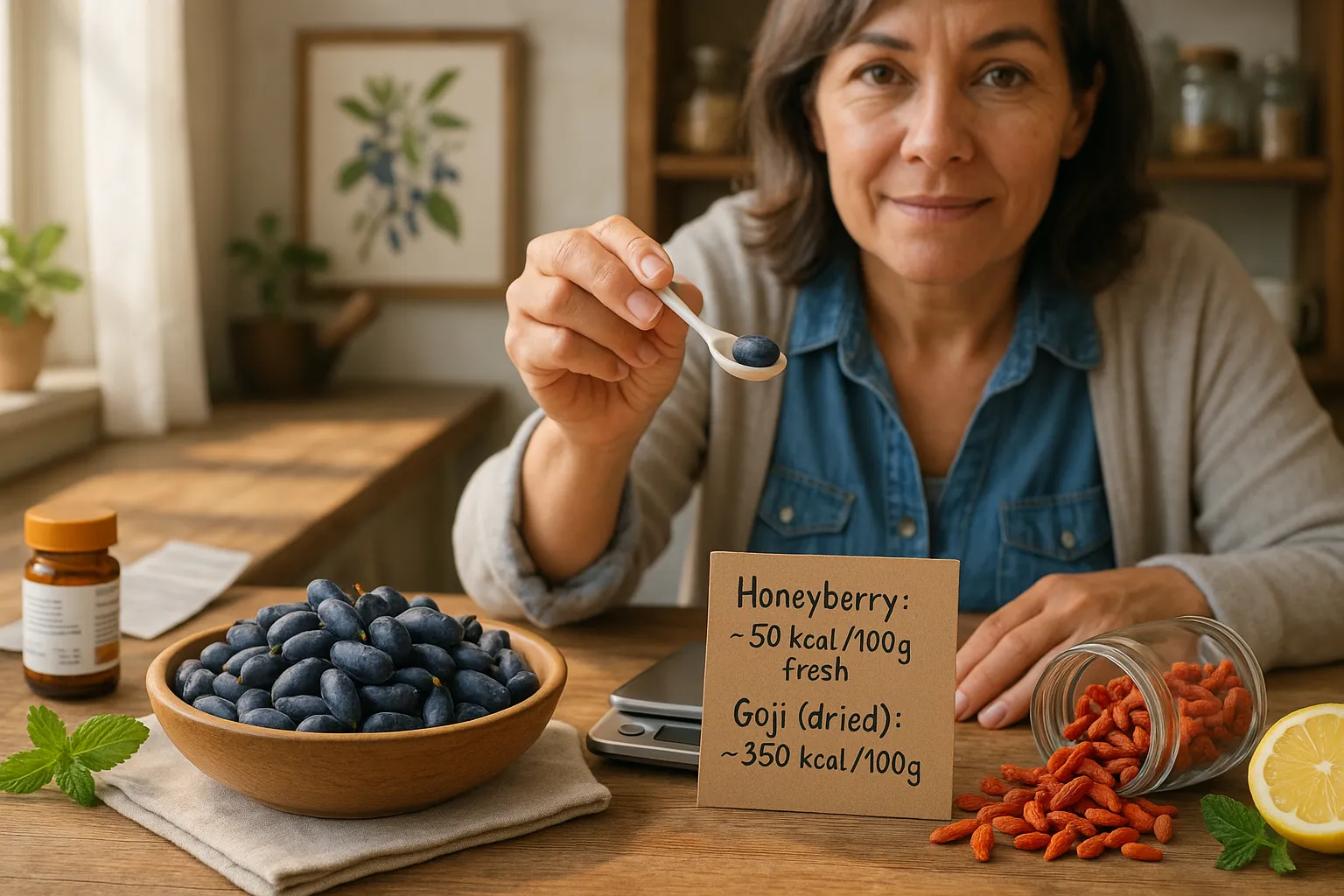
Honeyberry supplies vitamin C, dietary fiber, and small amounts of vitamin K and manganese. Per 100 g fresh honeyberries typically contain about 40–60 kcal, 6–10 g carbs, and 2–4 g fiber (varies by cultivar).
Goji berries (dried) supply vitamin A (as beta-carotene), vitamin C, iron, and protein relative to many fruits. Per 100 g dried goji berries contain roughly 350 kcal, 68 g carbs, and 11 g fiber, plus 10–15 g protein, numbers reflect drying concentration.
Practical note: If you track calories or carbs, fresh honeyberries are lighter. If you want beta-carotene or shelf-stable nutrients, dried gojis pack more per gram.
Antioxidants, Phytochemicals, and Research Evidence
Both berries contain polyphenols and flavonoids. Honeyberry contains anthocyanins similar to blueberries: those molecules link with antioxidant activity in lab assays. Goji berries contain carotenoids (zeaxanthin) and polysaccharides that appear bioactive in some studies.
Research evidence: Human clinical trials on goji berry show mixed results, some small studies report improved antioxidant status or mood, while others show minimal effects. Honeyberry research is smaller but shows promising antioxidant measures in lab and animal models. Neither fruit offers definitive disease-prevention claims: current studies suggest potential benefits but more well-controlled human trials are needed.
Potential Risks, Allergies, and Interactions
Fact: Both fruits can cause allergic reactions in sensitive people. Goji berries can interact with warfarin and other blood-thinning medications due to vitamin K and possible drug interactions reported in case studies. They may also interact with diabetes medications. Honeyberries are generally safe but can trigger pollen-food syndrome in people allergic to related plants (honeysuckle family).
Caution: If you take prescription drugs or have autoimmune disease, check with your healthcare provider before using high-dose goji supplements. Start with small amounts to test tolerance.
Growing, Harvesting, and Cultivation Requirements
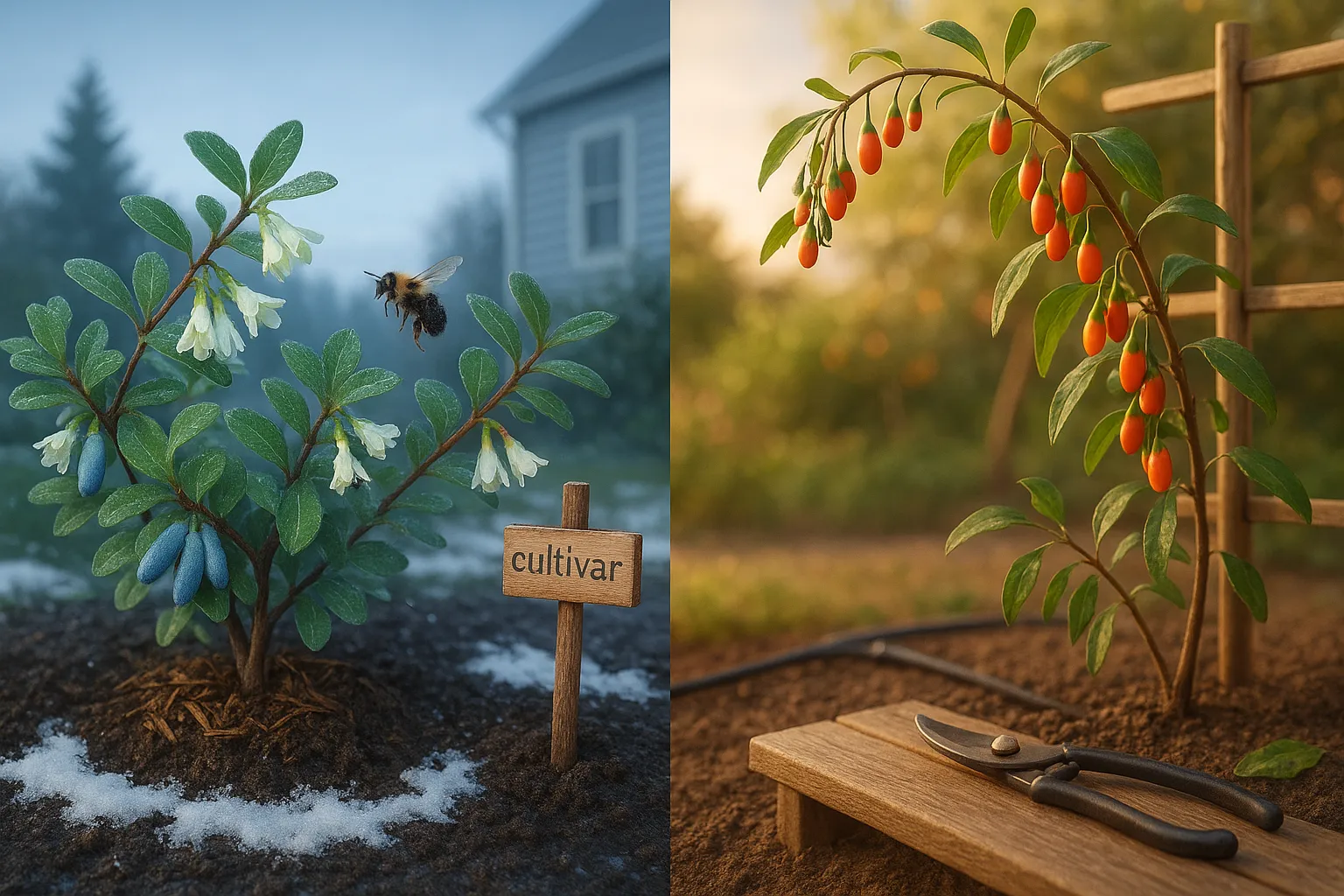
Fact: Honeyberry and goji berry require different climates and care: your local zone determines which one you can grow reliably.
Climate, Hardiness, and Soil Needs
Honeyberry thrives in cold climates. It tolerates USDA zones 2–7 depending on cultivar. You will plant it in full sun to part shade and well-drained, slightly acidic to neutral soil. Honeyberries need chilling hours: they flower early and can withstand late cold snaps better than many fruits.
Goji berry prefers milder winters and long warm growing seasons. It grows in USDA zones 5–9. Goji tolerates poor soils but prefers well-drained loam and full sun. Some goji varieties handle short frosts, but young shoots are frost-sensitive.
Practical planting tip: If you live in Alaska, Canada, or northern New England, honeyberry suits you. If you live in California, Oregon, or Mediterranean climates, goji will likely do better.
Pollination, Yield, and Pest/Disease Considerations
Honeyberries often require cross-pollination between compatible cultivars to set fruit: you should plant two different cultivars for best yield. Yields vary by cultivar but can be several pounds per mature bush.
Goji bushes self-pollinate but benefit from pollinators. They can yield heavily with proper pruning. Pests: honeyberries face bird predation and occasional fungal issues. Goji faces aphids, spider mites, and fungal leaf spots in humid areas.
Maintenance: Prune both for airflow. Mulch honeyberries to protect roots in winter. Provide drought-tolerant irrigation for goji during dry heat.
Culinary Uses, Forms, and Preparation Tips
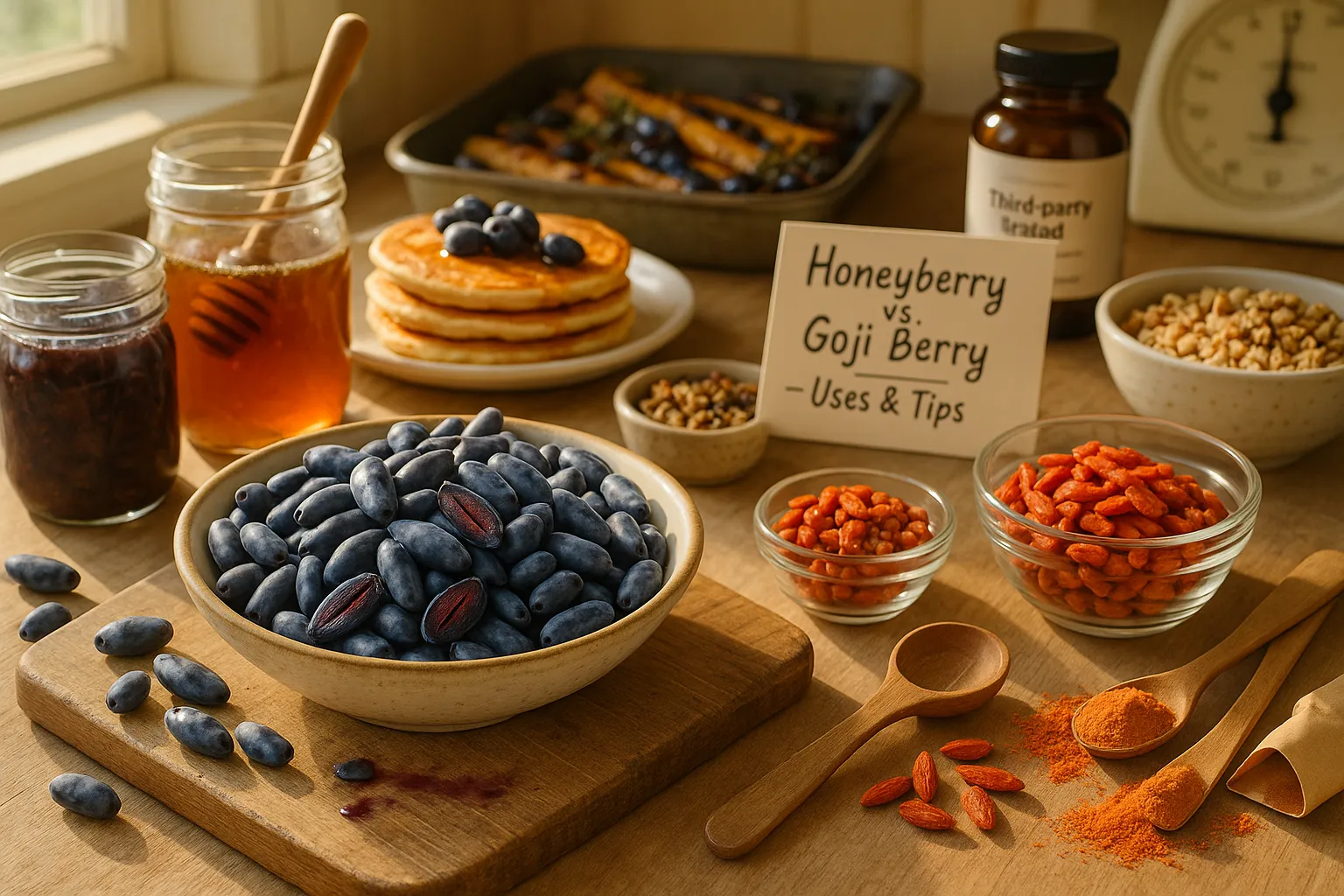
Fact: Form determines how you’ll use each berry, fresh honeyberries shine, gojis excel dried or in infusion.
Fresh Eating, Baking, and Savory Applications
Honeyberry: Eat fresh with yogurt or in fruit salads. Use in muffins, pies, or galettes: the berry holds flavor but releases juice quickly. You can fold honeyberries into pancake batter or roast them with root vegetables for a sweet-tart glaze for pork.
Goji berry: Fresh gojis work in salads or smoothies but fresh fruit is less common outside Asia. Dried gojis rehydrate in warm water and add to pilafs, congee, or baked granola. Their texture pairs well with nuts and oats.
Cooking tip: When baking with honeyberries, reduce added liquid slightly because the berries release juice. When using dried gojis in a savory dish, soak them to soften and to release color.
Preserves, Juices, Supplements, and Dosage Notes
Honeyberry makes vibrant jams and syrups. Juice the fruit for cocktails, shrubs, or simple syrups.
Goji berry appears widely as dried berries, powders, tinctures, and capsules. Common supplement doses vary: dried goji portions commonly range 10–30 g per day in studies. For extracts or capsules, follow product labeling and consult a clinician if you take medications.
Safety note: Supplements vary in potency and purity. Choose reputable brands such as Nature’s Way, NOW Foods, or traditional suppliers from Ningxia when possible. Look for third-party testing.
Availability, Cost, and Where to Buy
Fact: Availability depends on form and region: goji berries are easier to find dried, honeyberries are more seasonal and regional.
- Honeyberry: You will find fresh honeyberries at farmers markets in Canada, northern US, and parts of Europe during late spring to early summer. Nursery plants sell online via suppliers like Vesey’s or One Green World. Frozen honeyberries appear in some specialty stores.
- Goji berry: You will find dried goji berries year-round at supermarkets, health food stores like Whole Foods, and online marketplaces such as Amazon. Fresh gojis are sometimes available at Asian markets.
Cost: Fresh honeyberries can be pricey due to limited supply and labor. Dried gojis are moderately priced per bag but costlier per calorie than common dried fruit. Price varies widely by origin and brand.
Shopping tip: For culinary use, buy fresh honeyberries if available: for convenience and year-round use, buy dried gojis from a brand that lists origin (Ningxia or Inner Mongolia often indicate higher-grade fruit).
Choosing Between Honeyberry and Goji Berry (Which To Pick)
Fact: Your choice should match your priority: fresh flavor and cold-hardiness, or shelf-stability and concentrated nutrients.
Decision Guide: Taste, Nutrition, Growing, and Use Case Factors
- Taste: If you prefer tart, floral, juicy fruit for fresh eating and baking, choose honeyberry. If you prefer mildly sweet, chewy berries for teas, snacks, and tonic-style uses, choose goji.
- Nutrition: If you need vitamin A and concentrated phytonutrients in a shelf-stable form, choose goji (dried). If you want lower-calorie fresh fruit with anthocyanins and vitamin C, choose honeyberry.
- Growing: If you live in USDA zones 2–7 choose honeyberry. If you live in zones 5–9 and want a drought-tolerant shrub choose goji. Consider pollination needs: plant multiple honeyberry cultivars: goji will self-pollinate more readily.
- Use case: For jams, syrups, and fresh desserts pick honeyberry. For dried snacks, teas, and supplements pick goji.
Final practical step: Try both on a small scale. Buy a 1–3 lb sample of fresh or frozen honeyberries and a small bag of dried gojis. Taste them in the recipes you plan to use. Growing? Start with one plant of each to learn their habits: you’ll adjust pruning and soil as you learn.
Call to action: Choose the berry that fits your plate, garden, and health goals, then test it. Make one recipe this week with your chosen berry and note how it changes your cooking or routine.

- Top Free Alternatives to VTube Studio for Streamers - October 24, 2026
- Software Development Models Comparison: SDLC Frameworks - October 23, 2026
- WxWidgets Alternatives for Cross-Platform GUI Development - October 22, 2026
by Ellie B, Site Owner / Publisher