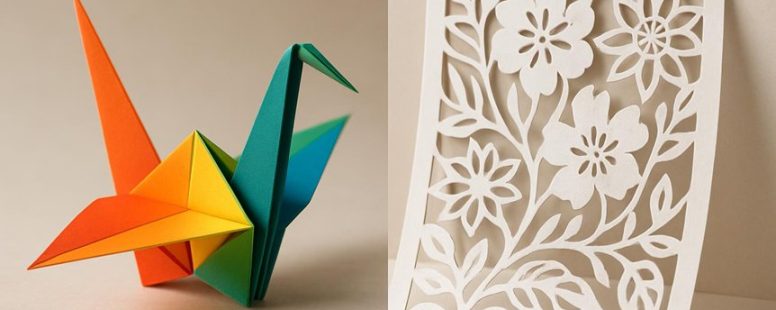
Imagine holding a delicate paper sculpture that springs to life through intricate folds or daring cuts. Origami, with roots stretching back over a thousand years, transforms simple sheets into stunning, three-dimensional art.
In contrast, kirigami—its more recent sibling—adds a daring twist with precise cuts that open new worlds of design. Once you see their creations side by side, the differences become as clear as day, revealing distinct techniques and endless artistic possibilities.
Exploring these paper worlds not only sparks creativity but also uncovers a lesser-known secret: kirigami’s ability to create movable, interactive pieces that feel almost alive.
What Are the Basic Techniques for Starting With Origami and Kirigami?
Origami and kirigami are arts that involve folding and cutting paper to make beautiful shapes and designs. The key to starting with these arts is to learn some basic techniques. These simple steps help you make more complex and creative projects later on.
In origami, the most important folds are valley and mountain folds. A valley fold bends the paper inward, like making a fold in a paper fan. A mountain fold bends the paper outward, like a mountain peak. These folds are the building blocks for many origami shapes, like cranes or flowers. Practicing these small folds helps you understand how to control the paper and make sharp, clean lines.
Kirigami adds cutting to the mix. You make cuts in the paper to make 3D shapes or pop-up designs. For example, you can cut out windows or add layered details. This makes your designs more interesting and complex. But be careful—cutting too much can ruin your paper, so start with small, simple cuts.
Some people say that mastering folds first is best because it builds a strong foundation. Others believe that experimenting with cuts right away can inspire new ideas. Both ways can work, but beginners should start with basic folds and simple cuts. Practicing these techniques will give you confidence and help you create more detailed figures later.
Have you ever tried folding a paper crane or cutting out a snowflake? These are good starting projects. By learning these basic techniques, you can turn a plain piece of paper into art that shows your creativity.
How Do Materials Differ When Creating Origami and Kirigami?
Materials for origami and kirigami are different because of the way they are made. Origami uses thin, flexible paper that can be folded many times without tearing. This type of paper helps make precise, sharp folds. For example, arts and crafts stores sell special origami paper that is lightweight and easy to fold.
On the other hand, kirigami involves cutting as well as folding. Because of the cutting, thicker paper or cardstock is often used. Thicker paper can handle the cuts without ripping apart. Some artists even use sturdy materials like cardboard for big or complex kirigami designs.
People also choose their materials based on what they want to create. If they want delicate and detailed animals or flowers, they might pick thin origami paper. But if they want to make pop-up cards or 3D sculptures, thicker paper might be better for kirigami.
Some say that using the right materials makes a big difference in how well the final piece turns out. But others warn that thicker paper can be harder to fold neatly in origami, and thin paper can tear easily in kirigami. So, the choice depends on what kind of project you want to do and what tools you have.
Paper Thickness and Flexibility
Paper thickness and flexibility are very important when making origami and kirigami.
Thinner, more flexible paper is best for origami because it allows for many folds. This makes the models look delicate and detailed. For example, a thin rice paper works well for complex origami animals. But if you use thick paper, it will be hard to fold many times without tearing.
Thicker paper is better for kirigami, which involves cutting and layering. It can hold the cuts better and stand up to more manipulation. For example, a sturdy cardstock can make a strong layered design. Still, thicker paper can be hard to fold smoothly in origami. So, it is better suited for cuts and layers than for tight folds.
Paper color also matters. In kirigami, cuts show the layers underneath, so bright or contrasting colors make the design pop. For example, a red paper with white layers underneath can look striking.
How you store your paper affects your art too. Delicate origami paper needs gentle handling to avoid creases and tears. Sturdier kirigami paper can be folded or cut more often without damage.
Flexibility is how easily paper bends. Flexible paper bends easily without tearing, which is good for origami. Less flexible paper might crack or rip when folded too much. Sometimes, trying to fold thick paper can cause tears if it is not flexible enough.
Knowing these differences helps you choose the right paper for each art style. If you want intricate folds, go for thin, flexible paper. If you plan to cut and layer, thicker and sturdier paper works better. Picking the right paper makes your art look better and last longer.
Cutting and Folding Techniques
Origami is a paper art that focuses on folding without cutting. The best paper for origami is smooth, thin, and even, like traditional Japanese washi paper. This helps make sharp, clean folds and detailed shapes. Since origami uses only folds, the paper needs to hold creases well without tearing. If the paper is too thick or rough, it can be hard to make precise folds. Many origami artists prefer lightweight paper because it’s easier to fold multiple times and keeps the shape neat.
Kirigami combines folding and cutting to make more complex designs. The paper used in kirigami can be thicker or textured, so it supports cuts and layered parts. Bright colors or patterned paper are often chosen because cuts add visual interest. Unlike origami, kirigami allows for intricate shapes and open spaces, making it more like a paper sculpture or pop-up card. The key is to choose sturdy paper that won’t tear easily when cuts are made. Some artists use cardstock or textured paper for better results.
There are two main views about the best paper for these arts. Some say thin, smooth paper works best for origami because it makes sharp folds and detailed shapes. Others believe thicker or textured paper is better for kirigami because it supports cuts and layered designs. Both types of paper have their limits. Thin paper can tear easily if not handled carefully, while thicker paper might be harder to fold precisely.
In the end, the choice depends on what you want to create. If you like delicate, neat shapes, origami paper is best. If you want to make complex, layered art with cuts, kirigami paper will work better. Trying both can help you see what kind of paper suits your style best.
What Are the Key Differences in Folding Methods?
Origami and kirigami are two paper-folding arts that use different methods. Origami is all about folding only, creating shapes by making precise creases. It usually does not involve cutting, just folding paper into animals, flowers, or models. For example, a simple crane is made by carefully folding a square piece of paper. This method comes from Japan and shows beauty through clean, smooth lines. People enjoy origami because it needs skill and patience, and it often looks simple but takes practice to master.
Kirigami, on the other hand, mixes folding with cutting. Artists fold the paper and then cut parts out to make more detailed and layered designs. This process allows for more complex shapes that folding alone cannot make. For instance, a snowflake cut from paper can have many tiny, intricate patterns because of the cutting. While origami focuses on symmetry and balance, kirigami adds more creative options through cuts, making it more dynamic and decorative.
Some people prefer origami because it is neat and disciplined, while others like kirigami for its extra detail and freedom. Both arts have roots in different traditions and bring unique styles. If you want to try something simple, origami is a good start. If you like more detailed and layered designs, kirigami might be better. Just remember, both require practice and patience, and trying them can be a fun way to express your creativity.
How Do Cuts Create Unique Design Opportunities in Kirigami?
Cuts in kirigami are what make it special. They create design options that folding alone can not do. When you carefully cut the paper, you can add detailed patterns, openings, and layered shapes that give your art more depth and interest. Removing small parts of paper changes the simple sheet into a more dynamic structure.
For example, you can make delicate designs like lace or bold geometric shapes. The cuts act as both decorative details and functional parts of the design. They help create movement and interaction in the piece, making it more lively and interesting to look at. Some artists use cuts to form windows or floral patterns that catch the eye.
There are two main views about using cuts in kirigami. One says that cuts expand the creative options and help artists make more complex and beautiful designs. The other warns that too many cuts can weaken the paper, making it fragile and easy to tear. So, while cuts can add a lot to the art, they also need to be used carefully.
What Types of Designs Are Best for Each Art Form?
Geometric patterns are best for origami because they create clean and precise shapes. Origami involves folding paper to make figures, so simple shapes like triangles and squares work well. These patterns make the folds look neat and easy to follow. For example, origami cranes often use straight lines and sharp angles because they are easy to fold accurately.
When it comes to kirigami, intricate cutouts are the best choice. Adding detailed cuts makes the paper more interesting and textured. These designs can include lace-like patterns or detailed pictures. Because kirigami involves cutting as well as folding, complex cutouts add a beautiful, delicate look to the artwork.
Flexible designs also work well in kirigami. These are cutouts or folds that can move or layer on top of each other. They add a sense of movement and make the art more dynamic. For example, layered flowers or animals with movable parts can be very eye-catching and fun.
Some artists prefer geometric patterns for their simplicity, while others love detailed cutouts for their beauty. Each style has its strengths and limits. Geometric designs are easier to make but can sometimes feel plain. Intricate cutouts look impressive but can be hard to cut precisely. So, choosing the right design depends on what you want your art to achieve.
Suitable for Geometric Patterns
Geometric patterns are a popular choice in many art forms. The best design depends on what you want to create. Origami is great for simple, folded shapes inspired by cultural designs like Japanese motifs. It focuses on folding to make three-dimensional, angular shapes with clean lines. This makes origami perfect for designs that need symmetry and balance. For example, traditional Japanese paper cranes show how origami can create elegant geometric shapes.
Kirigami is better if you want detailed cutouts and layered patterns. It allows for more complex shapes and motifs by cutting paper, which adds depth and texture. Many artists use kirigami to make intricate geometric designs that look like lace or stained glass. Both art forms are influenced by culture, so you might see traditional symbols mixed with modern styles.
Modern artists have expanded what’s possible with both origami and kirigami. They now combine techniques and use new materials to make more diverse designs. However, each has limits. Origami works best with simple folds and shapes, but it can be hard to make very detailed designs. Kirigami lets you do more detailed work, but it can be tricky to keep the paper from tearing or bending out of shape.
Best for Intricate Cutouts
Kirigami is best for creating intricate cutouts in paper art. Unlike origami, which focuses on folding shapes, kirigami involves cutting paper to make delicate and detailed patterns. These cutouts can be floral, geometric, or abstract, and they often look like lace or filigree. The fine cuts reveal complex designs that are both beautiful and symbolic. This makes kirigami perfect for artwork that needs a lot of detail and craftsmanship.
Historically, kirigami has roots in Japan, where it was used to decorate textiles and paper crafts. Many artists and crafters enjoy using sharp scissors or craft knives to make precise cuts. The challenge is that very detailed cutouts require patience and skill. If you rush, the paper can tear or your design may not look as neat.
Some people love how kirigami can turn a simple sheet of paper into a tiny, detailed work of art. Others warn that it can be tricky for beginners because the cuts need to be very careful. For best results, use good-quality paper and sharp tools.
Ideal for Flexible Designs
Origami and kirigami are two art forms that create flexible designs, but they do this in different ways. Origami is the art of folding paper without cutting. Its strength lies in shaping three-dimensional forms by folding. For example, you can make a paper crane or flower that can be changed or flattened easily. This makes origami good for artistic sculptures or objects that can be adjusted or stored flat. Many cultures, especially Japan, have traditions of origami that emphasize simple and elegant shapes.
Kirigami is similar but includes cutting the paper along with folding. This creates layered and intricate patterns. For example, you might cut out a snowflake or design a pop-up card. Kirigami designs can expand or fold into different shapes, making them very flexible for decorations or artistic projects. They often include detailed motifs inspired by cultural designs or modern art.
Both art forms are good for flexible designs, but they serve different purposes. Origami is better when you want a foldable, three-dimensional shape that can be easily changed or stored. Kirigami is better when you want detailed, layered patterns that can be expanded or folded into new shapes.
If you want to make a sculpture or a simple, elegant object, origami is a good choice. If you want decorative paper art with detailed patterns, kirigami might be better. Keep in mind that kirigami can be harder because cutting requires more skill, and fragile designs may tear easily. Both forms let you create beautiful, flexible designs, but they are suited for different kinds of projects.
How Do Visual and Structural Elements Differ?
Visual and structural elements in origami and kirigami are different because they serve different purposes. Visual elements are about how the finished piece looks. Structural elements are about how it stays together and keeps its shape.
In origami, the main visual feature is the clean lines and simple shapes made by folding paper. The colors and symbols used can also tell stories or show meanings, like peace or luck. For example, a crane made from red paper might symbolize good fortune. The focus is on creating a beautiful shape using only folds. The structure depends on how well the paper is folded, which makes it stable without cutting. But if you make a mistake while folding, the whole shape could fall apart.
Kirigami mixes folding and cutting to make designs. The cuts add details, such as holes or layered patterns. These designs can be very detailed and textured. For example, a snowflake made with kirigami might have many tiny cutouts that look like real snow. The cuts make the piece more interesting to look at, but they can also make it weaker if too many are added or if the cuts are too big. The structure of kirigami depends on both folds and cuts. If you cut too much, the paper might tear easily. But if done well, kirigami can be both pretty and strong enough for display.
Some people prefer origami because it is simple and elegant, while others love kirigami for its detailed patterns. Both use visual and structural elements, but they focus on different skills. Knowing the difference helps if you want to make either art form or compare their beauty and strength.
Which Art Form Allows for More Complexity and Detail?
The art form that allows for more complexity and detail is kirigami. Unlike origami, which only uses folding, kirigami combines folding with cutting. This means artists can make more detailed and layered designs. For example, they can cut out tiny patterns, create overlapping shapes, and build three-dimensional images that stand out. Because of these extra tools, kirigami can make very intricate artwork that shows fine details and complex shapes.
Some people see kirigami as more flexible because it uses both cuts and folds, giving artists more options. It can also be a way to tell stories or symbolize themes with detailed patterns, especially in traditional Japanese art. On the other hand, origami focuses only on folding. This limits how detailed the designs can be but makes the shapes simple, elegant, and easy to recognize.
Both art forms have their strengths. Kirigami is better for making detailed and layered pieces. Origami is great for creating clean and beautiful shapes with fewer steps. If you want to make very complex designs, kirigami might be the better choice. But if you prefer simple beauty, origami is still a wonderful art form.
Getting Started: Tips for Beginners in Origami and Kirigami
Origami and kirigami are paper art forms that involve folding and cutting to create shapes and designs. They are fun crafts that anyone can learn, but they do take some practice. To get started, it helps to understand the basics and keep a few tips in mind.
First, always use good quality paper. A smooth, sturdy paper makes folding and cutting easier and helps your designs look better. For beginners, origami paper or lightweight craft paper works well. If the paper is too rough or too thick, your folds might not turn out neat.
Second, follow simple tutorials. Many websites and YouTube channels offer step-by-step guides for beginners. These can teach you the basic folds for origami or simple cuts for kirigami. Starting with easy projects builds confidence and helps you learn the correct techniques.
Third, be patient. Making perfect folds or cuts can take time. Don’t get discouraged if your first tries don’t look perfect. Practice regularly and you will see improvement. Remember, even experienced artists had to start somewhere.
Some people like to learn about the history of origami and kirigami. These art forms come from Japan and have been around for hundreds of years. Knowing their background can make your practice more meaningful and fun. You can also try different styles and see what you enjoy most.
Finally, keep in mind that both art forms have some limitations. For example, intricate kirigami designs need a steady hand and sharp scissors, which can be tricky for kids or beginners. Also, not all paper types work well for every project. Experiment with different materials to see what suits you best.
Starting with these simple tips can make your journey into origami and kirigami more enjoyable. With patience and practice, you will be making beautiful paper creations in no time.
To provide the best experiences, we use technologies like cookies to store and/or access device information. Consenting to these technologies will allow us to process data such as browsing behaviour or unique IDs on this site. Not consenting or withdrawing consent, may adversely affect certain features and functions.
Functional
Always active
The technical storage or access is strictly necessary for the legitimate purpose of enabling the use of a specific service explicitly requested by the subscriber or user, or for the sole purpose of carrying out the transmission of a communication over an electronic communications network.
Preferences
The technical storage or access is necessary for the legitimate purpose of storing preferences that are not requested by the subscriber or user.
Statistics
The technical storage or access that is used exclusively for statistical purposes.The technical storage or access that is used exclusively for anonymous statistical purposes. Without a subpoena, voluntary compliance on the part of your Internet Service Provider, or additional records from a third party, information stored or retrieved for this purpose alone cannot usually be used to identify you.
Marketing
The technical storage or access is required to create user profiles to send advertising, or to track the user on a website or across several websites for similar marketing purposes.