You can tell a lot about a recipe by the apple it calls for. Both Granny Smith and Greensleeves bring bright green color and firm flesh to the table, but they are not interchangeable. One is a global kitchen staple known for sharp acidity and year-round availability: the other is a more recent cultivar prized for a sweeter tang, higher sugar balance, and a subtle floral note. Read on to learn the concrete differences in history, flavor, growing habits, and how to pick the right apple for your dish or orchard.
Quick Comparison: Key Differences At A Glance
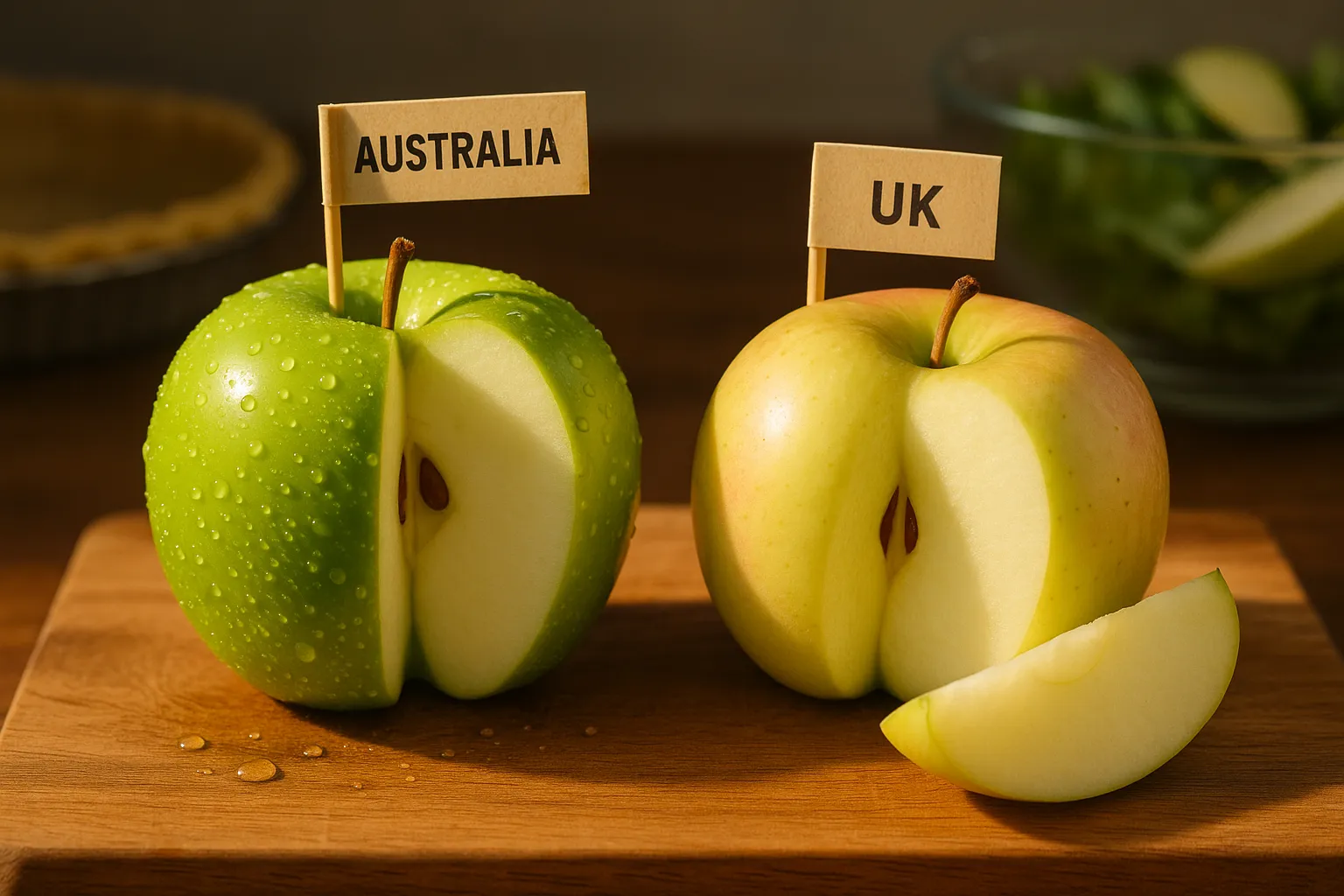
Fact: Granny Smith is tart and widely grown: Greensleeves is milder and less common. Granny Smith originated in Australia in the 1860s and now appears in global supply chains through brands like Stemilt and Dole. Greensleeves is a modern British cultivar developed in the late 20th century and often appears at UK farmers’ markets and specialty grocers.
Flavor: Granny Smith = high acidity, green apple tang. Greensleeves = medium acidity, mild sweetness, floral hints.
Texture: Granny Smith = very firm, crisp. Greensleeves = crisp but softer at peak ripeness.
Uses: Granny Smith excels in pies, sauces, and pickling. Greensleeves works well fresh, in salads, and refined desserts.
Growing: Granny Smith trees are vigorous and winter-hardy: Greensleeves needs milder winters and careful site selection.
This snapshot helps you choose quickly: if you need structure and tartness for baking, pick Granny Smith. If you want a balanced eating apple with gentle acidity, try Greensleeves.
Origins And History Of Each Variety
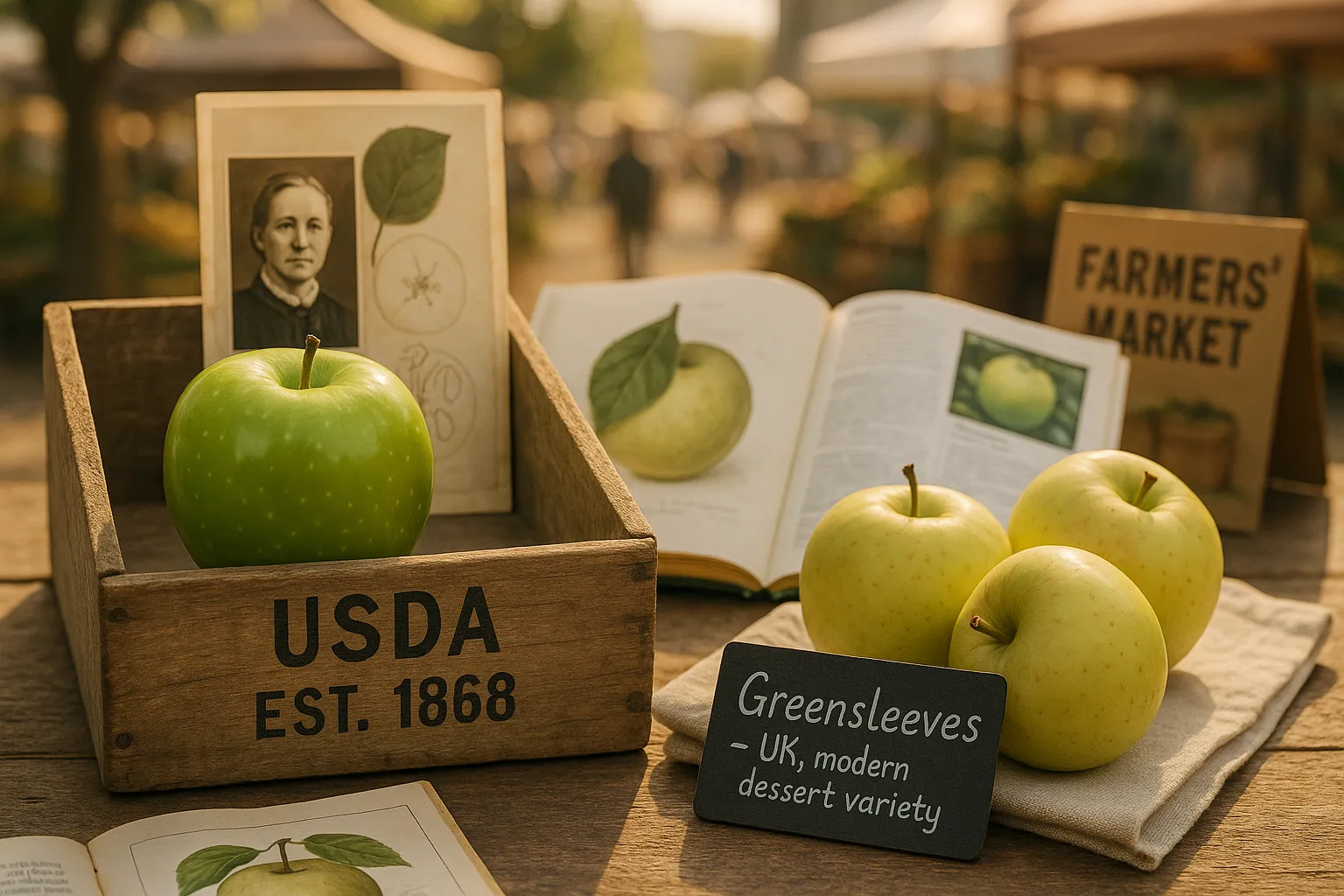
Fact: Granny Smith is older and historically influential: Greensleeves is newer and regionally developed. Granny Smith began with Maria Ann Smith in New South Wales, Australia, around 1868. The apple spread internationally through nursery propagation and commercial export. The USDA and horticultural records cite Granny Smith as a sport or seedling of French crab apples crossed with domesticated varieties.
Greensleeves is a cultivar that emerged in the United Kingdom during the late 1900s, developed by breeders interested in fresh-market qualities: balanced sugar-acid ratio and attractive appearance. The Royal Horticultural Society lists Greensleeves among modern dessert varieties favored by small-scale growers. Because it did not drive large-scale commercial plantings like Granny Smith, Greensleeves stayed more common in local British markets and specialty orchards.
You should note: history affects availability. Grocery chains source Granny Smith heavily because of shelf life and shipping resilience. Greensleeves will often show up at farmers’ stands, artisanal producers, and online nursery catalogues.
Appearance, Texture, And Flavor Profile
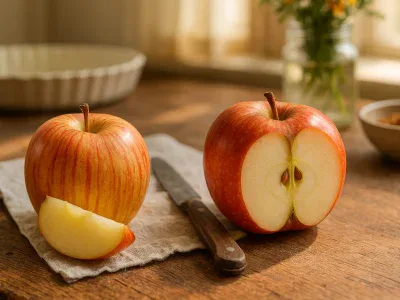
Fact: Appearance and texture set the first expectations: flavor confirms your choice. Both apples are green but differ in hue and sheen. Granny Smith typically has a bright, sometimes slightly yellowish green skin with a glossy finish and occasional small lenticels. Greensleeves tends to show a softer, pale green with a faint pink flush in some climates.
Flavor Notes And Culinary Strengths
Fact: Granny Smith delivers sharp acidity: Greensleeves offers a gentler, complex sweetness. Granny Smith gives a citrus-like tartness and lingering acid that holds up under sugar and heat, perfect for pies and chutneys. Greensleeves shows floral top notes, moderate sugar, and a rounded finish that elevates salads, cheese boards, and upscale desserts where you want apple flavor without aggressive tartness.
Texture, Flesh Color, And Browning Tendency
Fact: Granny Smith has firmer flesh and slower browning: Greensleeves browns faster but stays juicy. Granny Smith flesh is dense, pale cream, and resists collapsing when heated. Greensleeves has slightly greener-tinged flesh and a tender cell structure that releases more juice when cut. You should plan prep differently: Granny Smith slices keep shape in a tart: Greensleeves slices will brown faster and may need acidulated water or citrus to stay bright.
Growing Characteristics And Orchard Considerations
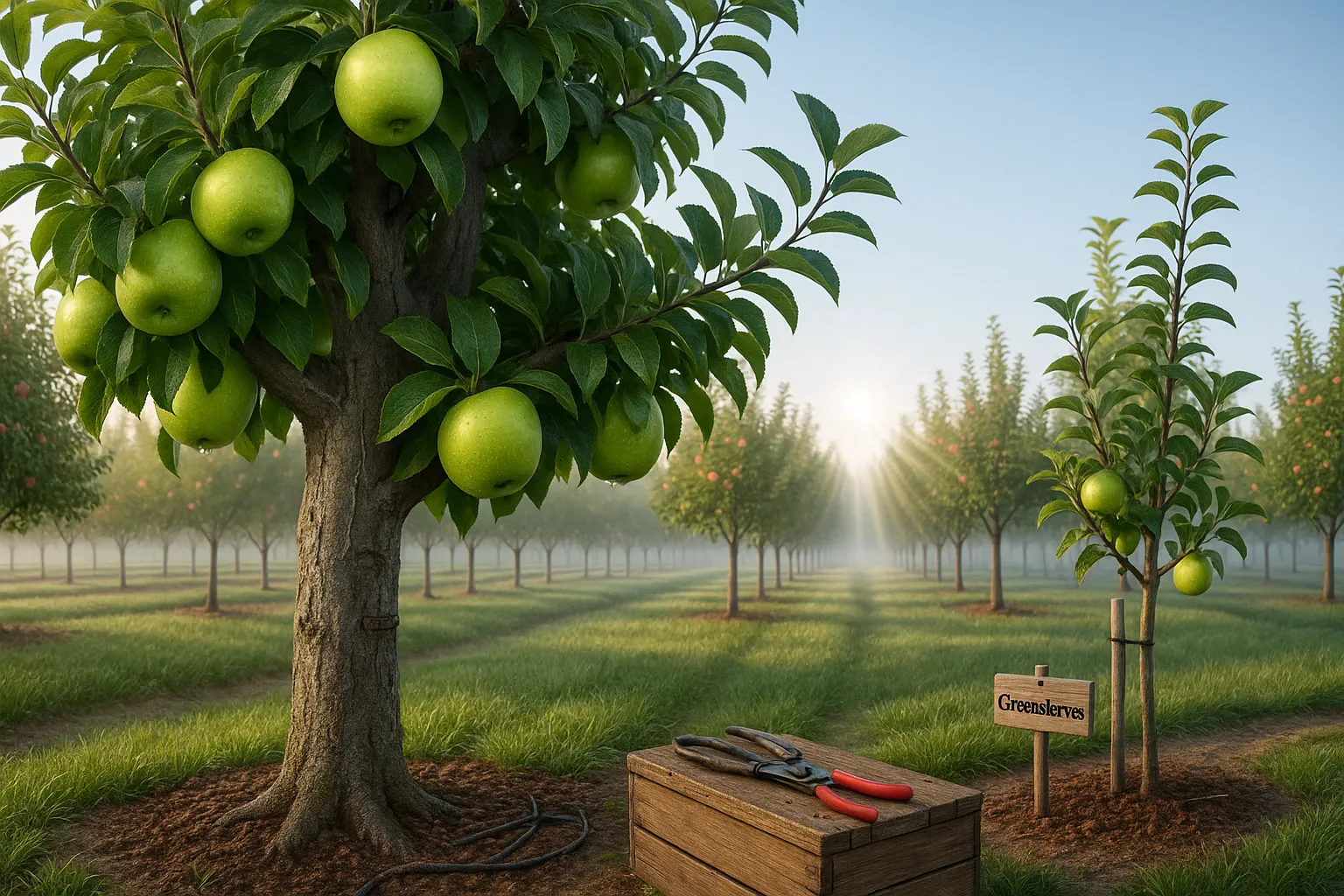
Fact: Granny Smith adapts to broad climates: Greensleeves prefers mild temperate sites. Granny Smith trees are vigorous, tolerate cooler winters, and often produce large yields. They have been planted widely in the U.S. (Washington state), Australia, and South Africa. Greensleeves shows better performance in milder UK-like climates and may struggle in regions with deep winter chill.
Climate, Chill Hours, And Disease Resistance
Fact: Chill requirement differs and affects fruit set. Granny Smith typically needs moderate chill hours but sets fruit reliably in many zones: it shows moderate resistance to common fungal diseases when managed well. Greensleeves often requires fewer chill hours and benefits from sites with good airflow to reduce powdery mildew risk. Both need standard apple care, sprays, pruning, and monitoring for codling moth.
Tree Size, Blooming Time, And Pollination Needs
Fact: Tree vigor and bloom timing affect orchard layout and yields. Granny Smith trees grow large and can produce heavy crops: they bloom mid to late season and often serve as pollinators for early-season varieties. Greensleeves tends to be semi-dwarf when grafted properly, blooms mid-season, and may require compatible pollinizers like Gala or Cox varieties. You should plan spacing, rootstock choice, and thinning strategies accordingly.
Harvest Timing, Storage Life, And Postharvest Behavior
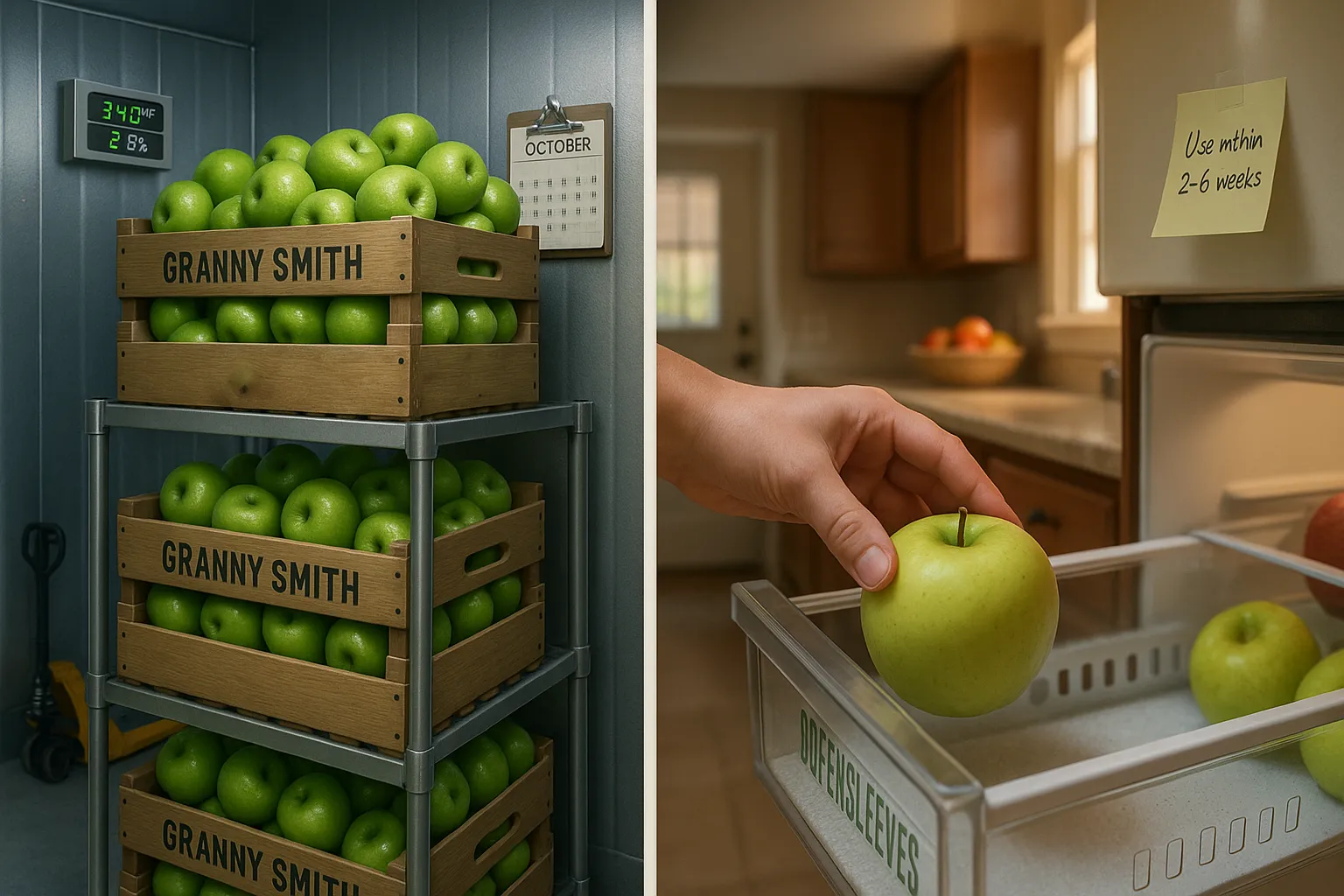
Fact: Granny Smith stores longer: Greensleeves has shorter shelf life but excellent fresh quality. Granny Smith harvests late in the season, often October in the Northern Hemisphere, and can store for many months under controlled atmosphere, which is why supermarkets favor it. USDA postharvest data show that Granny Smith maintains firmness and acidity during long storage.
Greensleeves is usually harvested earlier to mid-season and tastes best within weeks to a couple of months after harvest. It respires faster and is more sensitive to cold injury, so you should avoid very cold storage and use gentle handling. When you store Greensleeves at home, keep them in a cool, humid drawer and use within 2–6 weeks depending on ripeness.
Best Culinary Uses And Recipe Pairings
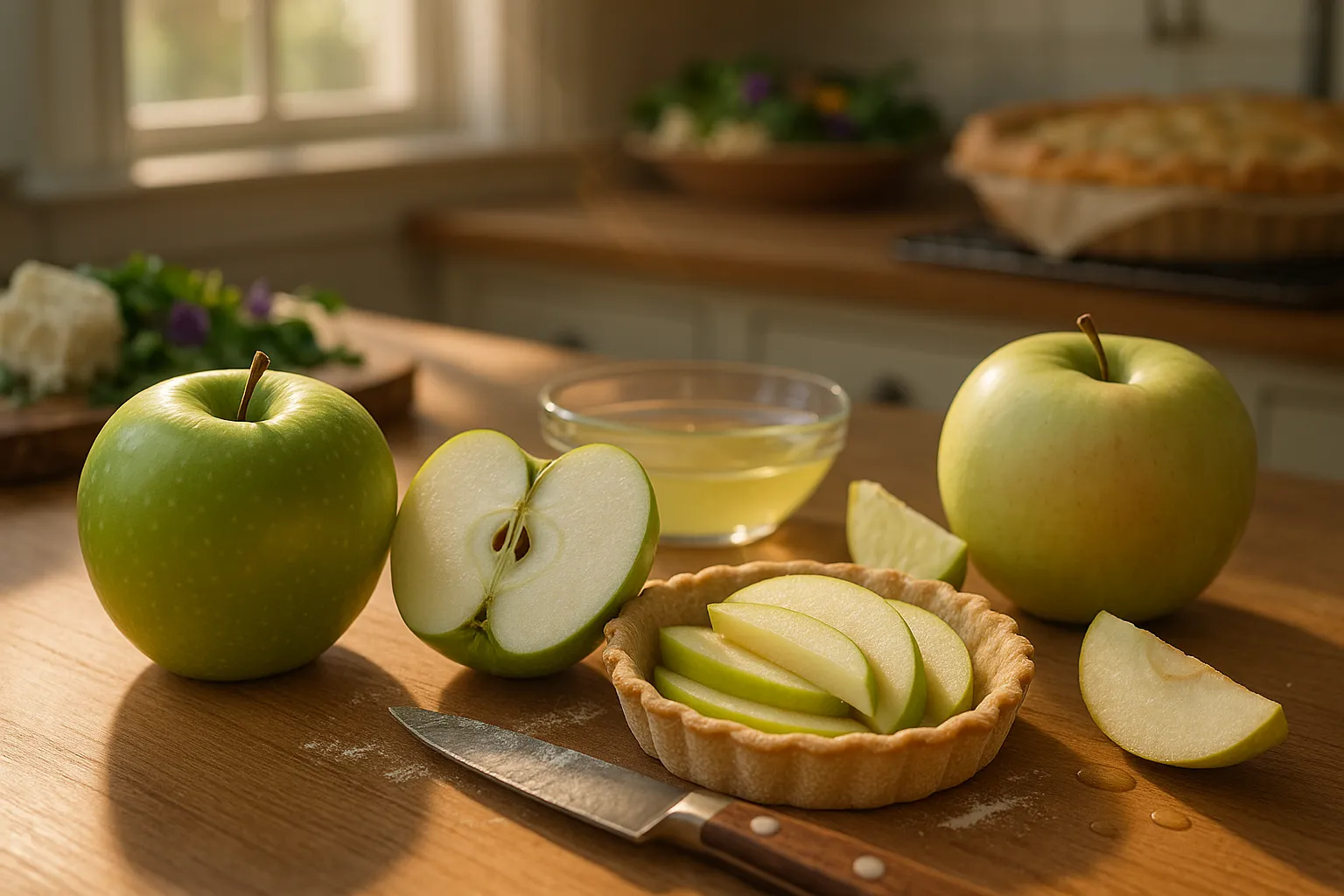
Fact: Use Granny Smith where you need acid and structure: use Greensleeves for eating fresh and delicate recipes. For pies, tarts, and crisps, Granny Smith holds its shape and balances sugar. In chutneys, pickling, and vinaigrettes, its acid gives brightness. For a simple salad with arugula, walnuts, and goat cheese, Greensleeves brings subtle sweetness that complements creamy cheese without overwhelming.
Pairings:
Granny Smith: cheddar, caramel, cinnamon, ginger, pork. Works with robust cheeses and sweet syrups.
Greensleeves: brie, blue cheese, fennel, honey, elderflower liqueur. Works with delicate cheeses and light dressings.
You can also substitute carefully: halve the sugar when swapping Greensleeves for Granny Smith in desserts, or add a squeeze of lemon to temper Granny Smith’s acid when serving fresh.
Storage Tips, Ripening, And Shelf Life Comparisons
Fact: Storage strategy depends on cultivar. Keep Granny Smith in cold storage (32–36°F) with high humidity: it tolerates long-term storage. Store Greensleeves in the refrigerator crisper at slightly higher temps (34–40°F) to avoid chilling injury. Use plastic bags with ventilation or perforated containers to maintain humidity. If you want to slow browning on sliced Greensleeves, soak slices in diluted lemon juice for 1–2 minutes.
Nutrition, Health Benefits, And Allergen Notes
Fact: Both apples offer fiber, vitamin C, and polyphenols: Granny Smith has slightly lower sugar. Per 100 g, Granny Smith typically has about 52 calories, 11 g carbs, and lower sugar than sweeter varieties: Greensleeves will sit a little higher on sugar but still provides comparable fiber and antioxidants. Apples supply quercetin and catechins, compounds linked in studies to heart health and reduced inflammation. See USDA food composition databases for precise numbers.
Allergen notes: Apple allergy (oral allergy syndrome) affects some people, especially those allergic to birch pollen: symptoms cause itching or mild swelling in the mouth. Cooking apples usually reduces these proteins, so many people tolerate baked apples even if raw apples cause reactions. If you have a known fruit allergy, consult an allergist before trying new cultivars.
How To Choose Between Them: Consumer And Cook Guides
Fact: Choose by use-case: baking and long storage = Granny Smith: fresh-eating and nuanced flavor = Greensleeves. First decide your main goal. If you make pies or preserve apples, you want acid and firmness, Granny Smith is the safe choice. If you are assembling a cheese board, mixing a salad, or serving apples raw at a tasting, choose Greensleeves.
Tips For Buying, Tasting, And Substituting In Recipes
Fact: Use sight, sniff, and touch when buying. Select apples with firm flesh, without soft spots, and with fresh stem area. Taste a slice if you can, Granny Smith will make your mouth pucker: Greensleeves will taste milder and floral. When substituting, match acid and texture: add lemon or reduce sugar when swapping Greensleeves into a Granny Smith recipe. For sauce, blend varieties to get acid, sweetness, and texture that you like.
Vulnerable moment: I once used Greensleeves in a Thanksgiving pie without adjusting sugar, guests called the filling “bland.” I learned to taste and tweak. You’ll save time if you taste raw slices before you start cooking.
If you grow trees, ask local nurseries about rootstock and pollination: mention brands like Stark Bro’s or Raintree for ordering. If you shop, check farmers’ markets and specialty grocers for Greensleeves: supermarkets will usually carry Granny Smith year-round.
To provide the best experiences, we use technologies like cookies to store and/or access device information. Consenting to these technologies will allow us to process data such as browsing behaviour or unique IDs on this site. Not consenting or withdrawing consent, may adversely affect certain features and functions.
Functional
Always active
The technical storage or access is strictly necessary for the legitimate purpose of enabling the use of a specific service explicitly requested by the subscriber or user, or for the sole purpose of carrying out the transmission of a communication over an electronic communications network.
Preferences
The technical storage or access is necessary for the legitimate purpose of storing preferences that are not requested by the subscriber or user.
Statistics
The technical storage or access that is used exclusively for statistical purposes.The technical storage or access that is used exclusively for anonymous statistical purposes. Without a subpoena, voluntary compliance on the part of your Internet Service Provider, or additional records from a third party, information stored or retrieved for this purpose alone cannot usually be used to identify you.
Marketing
The technical storage or access is required to create user profiles to send advertising, or to track the user on a website or across several websites for similar marketing purposes.