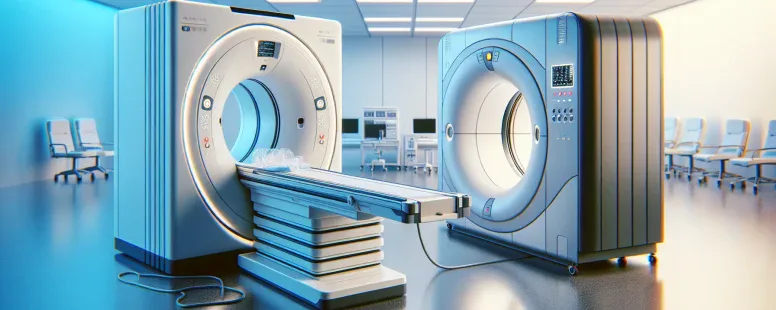
Picture lying in a quiet room as a gentle hum fills the air and a machine whirs to life around you. Now picture the sharp flash of light that captures the hidden architecture of your bones in a single heartbeat. Both moments promise answers but in strikingly different ways. what really sets an X-ray apart from an MRI—beyond the intimidating machines and sterile exam rooms?
Choosing between these two technologies isn’t just about what’s faster or more comfortable. Each reveals secrets your body keeps tucked away, offering surprising benefits you might not expect. Whether you’re dealing with a stubborn ache or searching for peace of mind, understanding the unique strengths of X-rays and MRIs can help you make smarter, more confident decisions about your health.
What Is an X‑Ray?
You see, an X-ray lets you peek inside your body without making a single cut. Maybe you’ve wondered how doctors can almost ‘see through’ you to find broken bones or hidden issues—that’s the quiet power of an X-ray.
How X‑Rays Work
X-rays use electromagnetic radiation to create images of bones and other dense structures. When an technologist aims X-ray beams at your body, the rays pass through soft tissues like skin or muscle but get blocked by dense materials such as bone or metal. That’s why bones appear white while muscles look darker in the resulting radiograph image. Wilhelm Röntgen discovered X-rays in 1895, and this scientific breakthrough changed medicine quickly (Mayo Clinic, 2023). Can you picture someone seeing their hand bones for the first time? That’s the impact X-ray brought to healthcare.
Common Uses of X‑Rays
Doctors rely on X-rays in hospital emergency rooms, dental clinics, and surgical suites. For example, physicians check for broken bones, dentists spot cavities, and surgeons confirm objects left in a body after surgery. It also helps detect pneumonia in a child’s lungs or track the progress of osteoporosis in a elderly patient. The versatility lets doctors decide quickly under pressure. According to the World Health Organization, over 3 billion medical imaging exams include X-rays each year, making it a vital tool in diagnostic medicine.
Have you ever had an X-ray after a fall or at the dentist? That moment when you stare at your insides—it’s both strange and reassuring.
What Is an MRI?
MRI gives you a look inside the body using powerful magnets, not X-ray radiation. Unlike an X-ray, MRI offers crisp details of soft tissues and organs, showing what hides beneath your skin with striking clarity.
How MRI Works
MRI works by aligning hydrogen atoms in your body with a large magnetic field. For example, the main magnet in a clinical MRI scanner often reaches 1.5 or 3 Tesla, which is about 30,000 times Earth’s magnetic field (RadiologyInfo, 2024). When radio waves pulse through, these atoms flip their orientation. When the radio burst stops, the atoms snap back, giving off signals that a computer transforms into precise anatomical images.
Picture you searching for a book in a vast, noisy library. X-ray gives you a glimpse of a book’s spine, but MRI lets you read its chapters and see dog-eared pages. You might wonder, why doesn’t everyone just use MRI? The answer is in the technology’s complexity—MRI scans takes longer, and the machines makes loud knocking noises, sometimes unsettling for people with anxiety or claustrophobia.
Common Uses of MRI
Doctors use MRI for examining soft tissue and complex conditions. For instance, brain MRI can reveal a tumor or multiple sclerosis, while knee MRI exposes ligament tears invisible to X-ray. Neurosurgeons rely on MRIs to map regions before delicate operations, and sports physicians track healing of muscle injuries with serial images over weeks.
Common organs and tissues scanned include:
Brain, such as for stroke, tumors, or epilepsy
Spine, such as for herniated discs, infection, or nerve damage
Joints, such as for ligament injuries or arthritis
Abdomen, such as for liver, pancreas, and kidney diseases
Heart, such as for myocarditis or congenital defects
The number of MRI exams performed worldwide now exceeds 100 million each year, according to OECD health data (2023). Do you think you’d choose the detailed view of MRI over the speed of X-rays, if it meant a doctor could see every thread in the tapestry of your health?
Key Differences Between X‑Ray and MRI
Key differences between X‑ray and MRI shape your experience from the minute you step into the imaging suite. These technologies contrast sharply in nearly every aspect: how they work, what they see, and how safe and accessible they are.
Imaging Technology and Mechanism
X‑ray imaging uses electromagnetic radiation, sending high-energy photons through your body to capture images of dense tissues. X‑ray machines generate quick snapshots, similar to taking a photo, making them ideal for emergencies—think a fractured arm after a fall at the playground. MRI scanners operate differently, using strong magnetic fields and radio waves to align the hydrogen atoms in your tissues, then convert the signals into detailed digital slices. While an X‑ray might reveal the crack, an MRI uncovers microtears in ligaments or subtle swelling invisible to X‑ray beams.
Areas of the Body Imaged
X‑rays most frequently target rigid structures. Emergency departments depend on X‑rays for skeletal surveys, chest imaging for pneumonia or tuberculosis, and dental examinations for hidden cavities. MRIs specialize in soft tissues—brain, spinal cord, muscles, ligaments, and internal organs—detecting brain tumors, herniated discs, or ACL tears. For example, an athlete with persistent knee pain may walk away from an X‑ray with no clear diagnosis but leave an MRI with images pinpointing cartilage damage.
Safety and Risks
X‑rays exposes you to ionizing radiation, which increases cumulative risk over your lifetime—especially relevant if you’re pregnant, young, or need frequent scans (CDC, FDA). One chest X‑ray delivers about 0.1 mSv, a small fraction of yearly background radiation, but repeat exposure carries additive risk. MRI doesn’t use radiation, so it’s safer for repeated scans or sensitive populations, but strong magnets can pose hazards. People with metal implants, pacemakers, or certain tattoos may experience complications or be ineligible for MRI exams. Loud noises during an MRI also make ear protection necessary.
Cost and Accessibility
X‑ray exams are cheaper, quicker, and more widely available. Hospitals, urgent cares, and dental offices perform X‑rays daily, typically charging $100‑$1,000 per exam. MRI machines are bigger, noisier, and costlier to run—leading to prices from $400‑$3,500 and longer wait times for scheduling. In rural clinics or smaller hospitals, an X‑ray machine might be the only imaging equipment on hand. Insurance policies often cover both, but out-of-pocket costs vary by region and provider.
Imaging Test
Radiation Exposure
Typical Exam Time
Best for
Cost Range
X-Ray
Yes (ionizing)
< 15 minutes
Bones, chest, teeth, joint injuries
$100-$1,000
MRI
No
30-90 minutes
Brain, spine, muscles, organs, soft tissue tears
$400-$3,500
Choosing Between X‑Ray and MRI: Which Is Right for You?
Deciding between an X-ray and MRI doesn’t feel like picking between apples and oranges—instead, it’s choosing the lens through which you’ll view the root cause of your symptoms. Think of these imaging tests as different experts each holding a flashlight to reveal your inner landscape.
Factors Your Doctor Considers
Your doctor weighs multiple factors before recommending either X-ray or MRI. Severity often dictates urgency. If you enter the ER with a twisted ankle during a rainy football night, your doctor might pick an X-ray first—it’s fast, portable, and cracks in bones light up like neon on the film. In contrast, when joint pain lingers for weeks and X-rays offer no answers, MRI steps in, revealing torn ligaments or hidden cartilage damage that X-rays couldn’t show.
Medical history shapes decisions. If you’ve got a metallic pacemaker or cochlear implant, MRI’s powerful magnets could cause harm (Cleveland Clinic, 2023), so X-ray wins by default. Pregnant patients may also be offered MRI to avoid radiation, unless urgency demands otherwise.
Diagnostic goals guide imaging choices. Fracture, pneumonia, or dental infection? X-ray offers a quick, affordable peek. Mysterious migraines, subtle spinal injuries, or possible tumors? MRI’s clarity and depth lets your doctor spot issues that X-rays can’t expose. Did you know? While over 3 billion X-rays are performed each year, only about 3%–4% of imaging exams globally are MRIs (IMV Medical Information Division, 2022).
Patient Experience and Comfort
Experience with X-rays usually feels like a pit stop—snap a picture, you’re out in minutes. But let’s say you’re claustrophobic and the thought of lying inside a humming MRI tube gives you chills. MRI sessions often lasts 15–90 minutes, requiring complete stillness, sometimes with earplugs to muffle the thumping sound. Younger kids or anxious adults might need sedation, adding complexity to the scan.
Questions sometimes rise: “Can I keep my earrings on?” For MRI, even small metal can be dangerous, attracting the magnet or distorting the images. This isn’t an issue with X-rays, where prep is fast and you rarely remove more than what’s practical for clear images.
Costs and accessibility play into your experience. Most urgent care clinics perform X-rays on-site, while MRIs might means waiting days or traveling to a larger hospital. Insurance coverage also varies—on average, X-rays cost $100–$1,000 while MRIs runs $400–$3,500 in the United States (RadiologyInfo.org, 2023).
Torn between swift answers and detailed insight, you’re not alone. Thousands of patients each year weigh these choices with their doctors, sharing stories that stretch from little league mishaps to marathon runners sidelined by mysterious pain. Which path will your diagnosis take? The one that fits your unique story and the images you and your doctor need to finally see.
Conclusion
When you’re faced with the choice between an X-ray and an MRI it’s important to think about what your body needs and what your doctor recommends. Every situation is unique and the right imaging test can make all the difference in your diagnosis and treatment.
Don’t hesitate to ask questions and share your concerns with your healthcare provider. By staying informed and involved in your care you’ll be better equipped to make decisions that support your health and peace of mind.
To provide the best experiences, we use technologies like cookies to store and/or access device information. Consenting to these technologies will allow us to process data such as browsing behaviour or unique IDs on this site. Not consenting or withdrawing consent, may adversely affect certain features and functions.
Functional
Always active
The technical storage or access is strictly necessary for the legitimate purpose of enabling the use of a specific service explicitly requested by the subscriber or user, or for the sole purpose of carrying out the transmission of a communication over an electronic communications network.
Preferences
The technical storage or access is necessary for the legitimate purpose of storing preferences that are not requested by the subscriber or user.
Statistics
The technical storage or access that is used exclusively for statistical purposes.The technical storage or access that is used exclusively for anonymous statistical purposes. Without a subpoena, voluntary compliance on the part of your Internet Service Provider, or additional records from a third party, information stored or retrieved for this purpose alone cannot usually be used to identify you.
Marketing
The technical storage or access is required to create user profiles to send advertising, or to track the user on a website or across several websites for similar marketing purposes.