Picture the sizzle of onions hitting a hot pan—the aroma fills your kitchen, promising something delicious. But as you reach for that familiar bulb, do you ever wonder if your choice truly matters? White and yellow onions may look similar, yet each holds secrets that can transform your next dish.
Choosing between the two isn’t just about color. It’s about unlocking layers of flavor, texture, and even unexpected health perks that most home cooks overlook. Whether you’re chasing the perfect caramelization or a subtle crunch, the right onion can make all the difference. Let’s peel back the layers and discover what sets these kitchen staples apart.
Overview of White and Yellow Onions
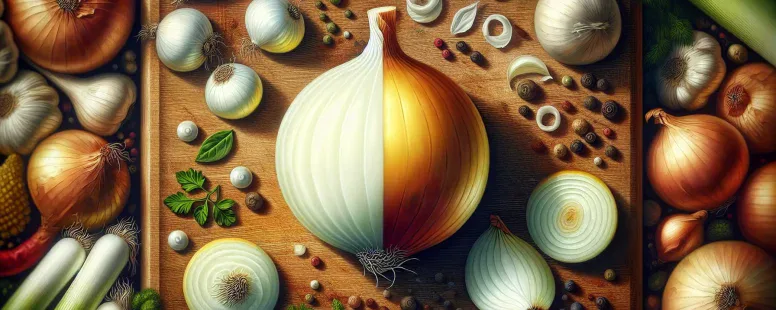
White and yellow onions differ in appearance, flavor profile, and culinary uses, which shape your cooking choices. If you slice into a white onion, its papery skin peels revealing crisp, bright flesh. These onions show up freshest in salsas and salads, bringing a sharp, clean bite that stands out, for instance, in Mexican pico de gallo or a Greek salad. White onions, unlike yellow ones, often taste milder raw but release considerable pungency when cooked quickly.
By contrast, the yellow onion – called the “kitchen staple” by Bon Appétit – wears a pale golden-brown skin and has a milky hue inside. You’ll find them starring in slow-cooked dishes like French onion soup and stews, where natural sugars transform into a rich, sweet undertone through caramelization. Has anyone ever noticed the aroma that fills your kitchen when you cook them low and slow? It’s unmistakably heartwarming.
People sometimes think these onions can swap in recipes — could you just switch one for another? If you do, the results often surprise you. A chili prepared with yellow onions gives a mellow foundation, while white onions cut sharper, more assertive. Ask ten chefs which to use for guacamole, and most say white, pointing out its lack of aftertaste, yet a rare few advocate yellow for their caramel flavor depth.
Nutrition-wise, both onions offer vitamin C, fiber, and antioxidants, supporting heart health and immunity (USDA, 2022). Yet yellow onions may hold more flavonoids, like quercetin, thanks to their pigmented layers (Journal of Food Science, 2016).
Through centuries, cooks worldwide selected onion varieties by need: in Asia, soups favor yellow onions for their robustness; in Central America, ceviche usually features raw white onions for snap and clarity. Would guests at your next dinner spot the difference? Try a taste test, compare both raw and cooked, and watch reactions shift.
Curious which onion truly fits your recipe? Let your dish type and flavor goal guide the choice—each onion brings distinct texture, aroma, and balance to your table.
Appearance and Texture
Appearance and texture define your expectations before you take your first bite. Examining these onions side by side reveals clear contrasts, both outside and in, that guide how they’ll perform in your recipes.
Exterior and Flesh Color
White onions, with thin, papery skin glistening like frosted glass, practically dare you to bite into their crisp, pale flesh. You notice a snow-white interior that hardly hides its sharp aroma. In contrast, yellow onions wears a golden-brown, leathery jacket, hiding ivory-colored layers tinted with a hint of yellow. Home cooks sometimes mistake their slightly duller, denser flesh for a sign of age, though it’s their secret to deep sweetness.
You might’ve wondered why these differences exist. Botanists trace onion hues to differing sulfur compound concentrations and pigment genes (source: University of Georgia Extension). When you slice through a yellow onion, its deeper tones often signal richer, more caramelizable sugars. If you keep both types in your pantry, you’ll see their colors stand out even after long storage.
Texture Differences
Texture shapes every mouthful. White onions desire to be noticed—raw dice snaps loudly in pico de gallo, lending a salad a crisp authority that wakes up every ingredient around. The firm, almost squeaky flesh will keeps its form, even after a quick toss in vinaigrette. But, yellow onions submit to the slow magic of the pan, losing their edges as they sweat and soften into a jammy sweetness perfect for French onion soup.
Cooks often ask, “Are white onions always crunchier?” If you’ve tasted fajitas at a street vendor or tried a Tex-Mex salsa, you’ve probably bitten into their uncompromising bite. Yellow onions, on the other hand, break down, mellow, and blend seamlessly—picture them melting into risottos or roasts, their rough chop disappearing until only flavor’s left behind.
Wondering which one to pick next time? Compare their jaw feel—white onions speak in a snap, yellow onions whisper in a sigh. That texture might not just affect your enjoyment—it influences how each onion’s nutrients are absorbed during cooking (source: Harvard T.H. Chan School of Public Health).
Flavor Profile Comparison
Flavor, aroma, and pungency set white and yellow onions apart in any dish you try. Each onion variety carries a distinct flavor fingerprint—shaped by sulfur compounds, sugars, and phytochemicals—that can transform the taste experience in fresh or cooked recipes.
Taste Characteristics of White Onions
White onions taste sharp and clean, with high sulfur levels that deliver a quick, zesty bite when raw. You notice this boldness most in pico de gallo, guacamole, or classic Mexican street tacos: the crisp slices radiate freshness and almost sparkle across your palate. , you might even say white onions shout compared to their golden cousins, giving crunch and a nose-tingling sting. When you sauté them, the sharp edge somewhat mellows—though the flavor don’t ever dissolve into complete sweetness. Street vendors in Mexico, where white onions are preferred for raw salsas, say that white’s “bite” cuts through creamy avocados or acidic tomatoes. Ever wondered why your eyes water so quickly when chopping white onions? Blame the high-alliinase activity, which boosts syn-propanethial-S-oxide—the compound responsible for tears and that initial punch.
Taste Characteristics of Yellow Onions
Yellow onions develop rich, nutty, and subtly sweet flavors when cooked slowly. Caramelizing a diced yellow onion in a pan for 15-20 minutes turns simple starches into deep sugars, building complexity much like roasted garlic or brown butter. You’ll notice the transformation in French onion soup or classic casserole: the raw, almost peppery bite softens, unveiling a rounded warmth that lingers. Yellow onions taste assertive, yet gentle enough to go unnoticed when cooked into stew or curry. Professional chefs lean on yellow onions for mirepoix—think carrot, celery, and onion base—knowing their flavor softens into the background, lifting other ingredients. Researchers from the Journal of Food Science report higher quercetin and flavonoid content in yellow onions, which subtly influences both health properties and the signature sweetness. Can you recall a holiday gravy or hearty stew where the flavor builds on itself? The caramelized layers and evolving aroma often start with a humble yellow onion.
If you ever swapped yellow for white on accident, remember the outcome likely shifted more than color—the whole dish’s balance changed, sometimes for the better, sometimes not so much.
Culinary Uses
Choosing between white and yellow onions will shape the entire feel of your dish. Every chef, home cook, and food lover relies on these onions for staple flavor and unparalleled versatility.
Best Uses for White Onions
White onions pack a crisp crunch and sharp bite, which energizes raw dishes like pico de gallo, guacamole, and fresh summer salads. Mexican and Southwestern cuisines highlight white onions in classics such as ceviche or tacos because their pronounced flavor doesn’t get lost among herbs, avocados, and citrus. Fresh salsas glow with bright acidity when you dice white onions finely, as the higher sulfur content keeps the flavor distinct, even when blended with tomatoes or jalapeños.
Sliced thin, white onions lend snap and clarity to burgers, sandwiches, and pickled garnishes—try layering them onto grilled fish tacos or soaking rings in vinegar for a quick pickle that wakes up any plate. Southeast Asian dishes, including Thai larb and Vietnamese banh mi, often spotlight their punch to enliven each bite, where softness or sweetness would fall flat. When caramelized, white onions get mellow but stay less sweet than their yellow cousins; your stir-fries or barbecue sauces retain brightness, avoiding syrupy undertones.
Best Uses for Yellow Onions
Yellow onions reign in kitchens worldwide, where patience turns their humble layers into gold. Slow-cooking or roasting—think French onion soup, beef stew, and classic mirepoix (onion, carrot, celery base)—unlocks yellow onions’ natural sugars and rich umami, deepening every spoonful. Their denser flesh withstands long simmering, so your casseroles, braises, and risottos interpolate sweetness without losing body. Julia Child once declared that yellow onions gave her boeuf bourguignon gravitas and soul, transforming ordinary meat into an aromatic masterpiece.
Want to coax a jammy finish for caramelized onions that’s unforgettable on pizza or steak? Choose yellow onions for results that delight. Indian curries and biryanis also rely on their robust, yet balanced character to carry spices and ghee across every grain of rice. Professional kitchens keep yellow onions on hand for roasted vegetable platters, gravies, and pan sauces, where their subtlety supports—never overshadows—the main event.
If you’re ever in doubt, think about the cooking time and flavor backbone you want. Quick and raw? Let white onions take the stage. Slow-cooked and sublime? Yellow onions sing. Both kinds offers delicious possibilities, but only you could find the balance your recipe craves.
Nutritional Differences
Glance at the grocery shelf and you’ll notice—white and yellow onions look alike, but their nutrients tell a different story. Your curiosity may spark when you learn: yellow onions usually pack more flavonoids than the white kind. Flavonoids? Think antioxidant warriors. These compounds, studied by the USDA, help your body combat oxidative stress, which links to cell aging and chronic disease [USDA FoodData Central, 2021]. Picture your salad sprinkled with white onion—crisp, cool, almost biting back. That’s not just crunch; it’s quercetin, but yellow onions often claim more, lending anti-inflammatory benefits to stews and stocks.
Let’s break that down:
Type
Calories (per 100g)
Carbs (g)
Vitamin C (mg)
Flavonoids
Notable Minerals
White Onion
40
9
7
Lower
Potassium, Calcium
Yellow Onion
40
9
8
Higher
Potassium, Iron
(Values: USDA FoodData Central; actual content varies by region and grow method.)
Ever chopped both? Yellow onions bring tears quicker and stronger. That’s sulfur—the sly molecule behind flavor and pungency. Some cooks whisper that more sulfur equals more prebiotic fiber. That means yellow onions can support your gut bacteria, giving them the edge for stews and braises where nutrients seep slow into the broth.
White onions, though, sometimes get overlooked. In fresh salsas or vivid relishes, their slightly lower sugar and flavonoid content makes ‘em gentler for raw eaters. A family taco night with extra white onion on top—crisp, less likely to linger on your breath—might make memories for those who’re sensitive to the sharper, denser yellow onion.
Ask yourself: are you craving sweetness or snap? Looking for nutrients that might lower inflammation or for ones that build a milder, cleaner taste? Every onion bite, from picnic potato salads to hearty French onion soup, brings subtle yet measurable shifts to your meal’s nutrition profile.
Doctors sometimes argue about onion health perks, but researchers at the National Onion Association agree—both varieties contribute fiber, vitamin C, and micronutrients, with yellow onions edging out their cousins in antioxidants. Next time you’re slicing onions, maybe you’ll wonder: what’s your dish aiming for—a burst of sharpness, or deep, gentle nourishment?
Storage and Shelf Life
Picture your pantry as a stage—on one side, yellow onions wait, layers thick and old-gold, while on the other, white onions gleam crisp, eager for their fleeting moment in the spotlight. How long do each can wait before the curtain falls? If you ask any chef who’s lost a bag of onions to rot after only a week, they might tell you: not long enough, unless you know the tricks.
Yellow onions, sturdy as seasoned actors, last up to 2-3 months under cool, dry conditions; NPR food scientist Harold McGee explains their thicker, more substantial skins help fend off rot and moisture. You can toss them in a mesh basket or hang them in pantyhose—yes, seriously, pantyhose!—because air circulation slows decay. When stored in a fridge, they’re prone to turn mushy because condensation collects inside their papery layers.
White onions, though, are more delicate. Their higher water content, which makes them pop in fresh pico de gallo, also means they’ll turn soft and moldy much faster. Your white onions often will only stick around for 2-4 weeks when undisturbed in a well-ventilated pantry. If you stuff them in a closed plastic bag, you’re inviting spoilage, not freshness.
What about when you’ve sliced or diced? Leftover onions—whether white for tacos or yellow for stew—are best sealed tight and chilled. According to the USDA, both types last up to 7-10 days cut, though yellow tends to outlast white by a day or two before their aroma overpowers your fridge. By the way, there’s a myth in some circles that cut onions absorb toxins from the air, but Penn State’s Department of Food Science confirms that’s untrue; what gets absorbed are just fridge odors.
If you think onions are forever, think again: onions sprouting green shoots aren’t unsafe, but flavor turns bitter, signaling their star turn has ended. Have you ever opened a forgotten pantry drawer to find onions collapsed into sticky mush? That’s the cost if humidity gets too high.
Your kitchen—whether cluttered or orderly, high-tech or barebones—isn’t just a space for onion storage, it’s also a test kitchen. Whether you’re stocking up for soup season or planning fresh summer salads, ask yourself: Where do your onions sleep best? And, might the right storage method mean the difference between tears of frustration and tears of flavor?
Conclusion
Your choice between white and yellow onions can truly shape the outcome of your favorite recipes. Paying attention to their unique qualities lets you fine-tune both flavor and texture in every dish.
Experimenting with both types gives you a better sense of what works best for your tastes and cooking style. With a little curiosity and the right storage tips you’ll get the most out of every onion you bring into your kitchen.
To provide the best experiences, we use technologies like cookies to store and/or access device information. Consenting to these technologies will allow us to process data such as browsing behaviour or unique IDs on this site. Not consenting or withdrawing consent, may adversely affect certain features and functions.
Functional
Always active
The technical storage or access is strictly necessary for the legitimate purpose of enabling the use of a specific service explicitly requested by the subscriber or user, or for the sole purpose of carrying out the transmission of a communication over an electronic communications network.
Preferences
The technical storage or access is necessary for the legitimate purpose of storing preferences that are not requested by the subscriber or user.
Statistics
The technical storage or access that is used exclusively for statistical purposes.The technical storage or access that is used exclusively for anonymous statistical purposes. Without a subpoena, voluntary compliance on the part of your Internet Service Provider, or additional records from a third party, information stored or retrieved for this purpose alone cannot usually be used to identify you.
Marketing
The technical storage or access is required to create user profiles to send advertising, or to track the user on a website or across several websites for similar marketing purposes.