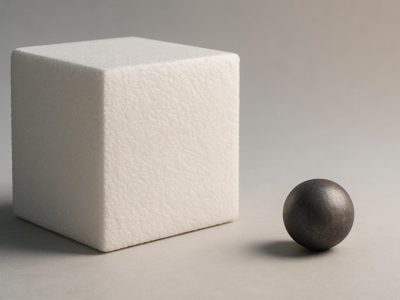
Picture holding a glass of water in your hand. You can see how much space the water takes up, but if that’s the same as how much liquid the glass could hold? These subtle differences between volume and capacity often go unnoticed, yet they shape so many aspects of our daily lives—from cooking measurements to designing storage solutions.
Understanding the distinction isn’t just about science; it’s about clarity in communication and practical use. Whether you’re filling a suitcase for travel or measuring ingredients for a recipe, knowing when to think about volume versus capacity can save you time and effort. So what truly sets these two concepts apart? Let’s jump into their unique definitions and explore why grasping this difference matters more than you might expect.
Understanding Volume
Volume refers to the three-dimensional space an object occupies. It’s a fundamental concept in mathematics and science, providing a way to quantify how much space something takes up.
Definition Of Volume
Volume is the total amount of space enclosed within an object or substance. It measures physical dimensions—length, width, and height—and is expressed in cubic units such as cubic centimeters (cm³), cubic meters (m³), or cubic inches (in³). For liquids, volume often relates to liters or milliliters.
How Volume Is Measured
You measure volume using formulas based on shape. For example:
Cubes: Multiply side length by itself three times (s³).
Cylinders: Use πr²h where r is radius and h is height.
Irregular Objects: Submerge them in water; the displaced liquid’s quantity equals their volume.
In practical settings, graduated cylinders, measuring cups, or volumetric flasks are used for precise calculations.
Examples Of Volume In Everyday Life
Everyday examples include filling a swimming pool with water, determining fuel in your car’s gas tank, or packing items into boxes during moving. In cooking recipes that mention “2 cups of milk,” they’re referencing liquid volume measured accurately for consistency across dishes.
Understanding Capacity
Capacity refers to the maximum amount a container can hold, focusing on its potential rather than the space it occupies. While often associated with liquids, capacity also applies to solids or gases when discussing storage limits.
Definition Of Capacity
Capacity is defined as the measure of how much substance (like liquid or gas) a container can contain when full. It’s typically measured in units like liters, milliliters, gallons, or cubic meters. Unlike volume—which describes the physical space an object takes up—capacity expresses usability in terms of filling and holding.
For instance, a water bottle might have a labeled capacity of 500 milliliters. This value represents the most it can hold without overflowing.
How Capacity Is Measured
Measuring capacity involves using standard tools designed for accuracy. Graduated cylinders or measuring jugs are common for small quantities of liquids. For industrial applications like fuel tanks or reservoirs, larger calibrated instruments ensure precision.
If exactness matters, especially in cooking or scientific experiments, use marked containers with clear unit increments. When dealing with irregularly shaped objects that store substances (e.g., barrels), assessing internal dimensions aids in determining their full capacity.
Examples Of Capacity In Everyday Life
Kitchen Use: Measuring cups help determine how much milk to add while baking cakes.
Transportation: Fuel tank capacities indicate how far vehicles might travel before refueling.
Storage Solutions: Labeled bins show whether they’ll fit all your clothes during seasonal organizing.
Key Differences Between Volume And Capacity
Understanding the key differences between volume and capacity helps you apply these concepts correctly in various contexts. While both deal with space and substance, their distinctions lie in definitions, applications, and measurement.
Conceptual Differences
Volume represents the amount of three-dimensional space an object occupies. It’s intrinsic to the object’s structure, regardless of whether it’s empty or filled. For instance, a cube with sides measuring 3 inches has a fixed volume of 27 cubic inches (calculated as length × width × height).
Capacity indicates how much material—like liquid or gas—a container can hold at maximum when full. It focuses on potential containment rather than physical dimensions. A glass jar might have a capacity of 500 milliliters but occupy less or more physical space depending on its shape.
If you’re distinguishing between the two, think about this: while volume describes “what is,” capacity considers “what could be.”
Practical Applications
Everyday scenarios often require understanding either volume or capacity for precise actions. Calculating pool water involves knowing its volume; determining how many gallons your fuel tank holds relies on capacity.
In industries like shipping, workers consider both terms carefully. The box’s internal holding limit corresponds to its capacity, whereas its external size relates to its overall volume.
For example: when packaging goods for transit, ensuring items fit inside based on container capacities avoids wastage while optimizing resources based on volumetric limits prevents overloading transport vehicles.
Units Of Measurement
Volume uses cubic units for solids (e.g., cubic centimeters) and liters for liquids (e.g., milliliters). Mathematically derived formulas calculate it accurately based upon shapes.
Capacity employs practical units like liters or gallons suitable for everyday use cases like kitchen measurements or industrial storage estimations. Tools such as measuring jugs help measure small amounts precisely; larger tanks rely upon factory-calibrated instruments displaying results digitally in real-time interfaces!
Why It’s Important To Understand The Difference
Understanding the difference between volume and capacity helps you navigate both practical and theoretical scenarios more effectively. These concepts influence everyday tasks, scientific exploration, and even problem-solving strategies.
Real-World Implications
Recognizing how volume differs from capacity enables accurate judgments in real-world situations. For example, when storing liquids like juice or oil, knowing a bottle’s capacity ensures it doesn’t overflow while understanding its volume informs how much space it occupies on a shelf.
In construction or renovation projects, calculating the volume of materials like concrete is essential for estimating costs and resources. Similarly, determining water tank capacity prevents underestimating storage needs during emergencies or irrigation planning.
Marketing professionals also rely on these distinctions when designing product packaging. A label stating “500 ml” reflects capacity; but, the container’s physical dimensions involve its volume. Misunderstanding this could lead to inefficient designs that waste material or mislead consumers.
Problem-Solving Benefits
Grasping these differences enhances your analytical skills by providing clarity in measurements and calculations. In science experiments involving liquid displacement methods, recognizing that displaced fluid corresponds to an object’s volume rather than capacity improves accuracy in results interpretation.
When troubleshooting technical issues—like fuel shortages—you assess whether the tank’s remaining volume aligns with its maximum capacity. This differentiation simplifies diagnosing issues related to leaks or inefficiencies in filling systems.
Conclusion
Understanding the difference between volume and capacity equips you with practical knowledge that’s applicable in countless everyday situations. Whether you’re measuring ingredients, filling a container, or calculating storage needs, recognizing these distinctions ensures accuracy and efficiency.
By mastering these concepts, you enhance your ability to solve problems effectively while improving precision in both personal and professional tasks. This clarity not only simplifies daily activities but also sharpens your analytical skills for more complex challenges.
To provide the best experiences, we use technologies like cookies to store and/or access device information. Consenting to these technologies will allow us to process data such as browsing behaviour or unique IDs on this site. Not consenting or withdrawing consent, may adversely affect certain features and functions.
Functional
Always active
The technical storage or access is strictly necessary for the legitimate purpose of enabling the use of a specific service explicitly requested by the subscriber or user, or for the sole purpose of carrying out the transmission of a communication over an electronic communications network.
Preferences
The technical storage or access is necessary for the legitimate purpose of storing preferences that are not requested by the subscriber or user.
Statistics
The technical storage or access that is used exclusively for statistical purposes.The technical storage or access that is used exclusively for anonymous statistical purposes. Without a subpoena, voluntary compliance on the part of your Internet Service Provider, or additional records from a third party, information stored or retrieved for this purpose alone cannot usually be used to identify you.
Marketing
The technical storage or access is required to create user profiles to send advertising, or to track the user on a website or across several websites for similar marketing purposes.