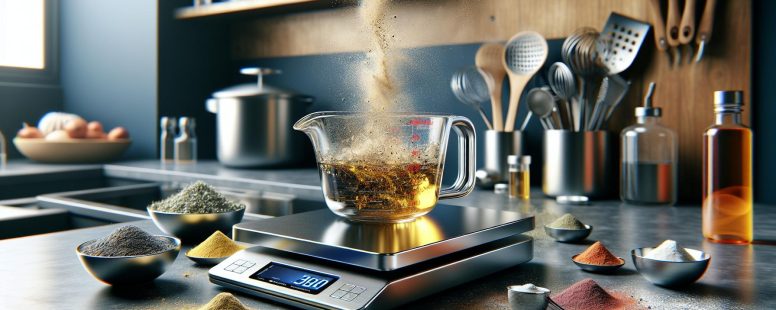
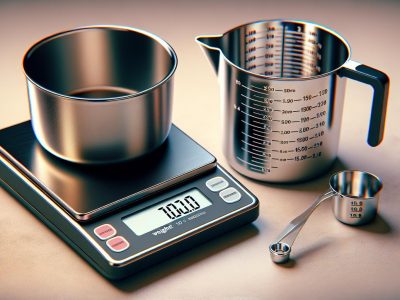
Imagine you’re cooking a delicious recipe and suddenly, you’re faced with a perplexing measurement: ml or mg. While both are units of measure, they belong to entirely different worlds. Milliliters (ml) measure volume, often used for liquids like water or oil. Milligrams (mg), on the other hand, measure weight, crucial for ingredients like spices or medication.
Understanding the difference between these two can save you from culinary disasters and ensure accurate dosages. Whether you’re a home chef or just someone looking to decode a medicine label, grasping these basic units can make your life a lot easier. Immerse to discover how ml and mg play distinct yet equally important roles in our daily routines.
Understanding the Basics
Let’s jump into the fun world of measurements. First up, milliliters or ml. Picture this: you’re filling a measuring cup with water for a recipe. Yeah, those little lines on the cup? They’re milliliters. A milliliter measures volume, like how much liquid fits in a cup, bottle or any container. It comes in handy when you’re whipping up a storm in the kitchen or hydrating with a refreshing drink.
Switch gears to milligrams or mg. Imagine you’re measuring out a pinch of spice for your dish. That tiny amount? Measured in milligrams. A milligram measures weight which is how heavy something is. When you see mg on a medication label, it tells you how much of the active ingredient is in there. It keeps you from overdosing or underdosing. Safety first, right?
Ever tried to compare ml and mg? It’s like apples and oranges. Milliliters deal with how much space a liquid takes up, milligrams with how much a solid ingredient weighs. It’s crucial to not mix these up or your cake might have too much flour or your soup will be too salty.
Have you ever wondered why this matters? Think about medicine; getting the dosage right might not just make your flu fade but could actually be life-saving. In cooking, knowing the difference avoids a culinary disaster. So, next time you’re in the kitchen or reading a medicine label, remember, ml is for volume and mg is for weight.
Key Differences Between ML and MG
You’re not alone if you’ve ever wondered about the difference between ml and mg. They play distinct roles in our daily lives, particularly in cooking and health.
Unit of Measurement
Milliliters, abbreviated as ml, measure volume. You’ll see ml used when talking about liquids. Imagine filling a measuring cup with milk or water; those little lines on the side? They’re usually measured in ml. This unit represents how much space the liquid occupies.
Enter milligrams, or mg for short. They measure weight. Think about that tiny pill you might take for a headache. Its weight is measured in milligrams. Unlike ml, mg represent the mass or heaviness of an item, usually solids like spices or medication.
Contextual Usage
You’ll mostly find ml in the kitchen and health: When a recipe calls for a splash of broth or 250 ml of cream. You’re dealing with volume. This helps ensure you use the right amount of liquid to get that perfect taste or texture. In a medication context, liquid medicines like cough syrup might show dosage in ml, ensuring you take the correct amount.
mg, on the other hand, often show up on nutrition labels and in prescriptions. Ever wondered why your vitamin bottle lists the content in mg? Because it’s essential to know the exact weight and composition of what’s going into your body. This unit is critical when dealing with small quantities of potent substances, ensuring safety and effectiveness, especially in pharmacology.
So next time you’re cooking or popping a pill, you’ll likely find yourself double-checking ml and mg to avoid any mix-up. Mixing these up can lead to culinary mishaps or, worse, medication mistakes.
Common Applications
Understanding the difference between ml and mg helps you in many real-world situations. Let’s jump into where you encounter these units most.
Medical Field
In medicine, accurate measurement is critical. Medication dosages often use both units. For example, liquid medicines are measured in ml, ensuring you get the correct volume. Meanwhile, the active ingredients in those medications are often in mg. This dual usage makes sure patients receive both the right volume of liquid and the precise amount of active substance.
Medications like cough syrups and liquid antibiotics come in ml dosages. A typical prescription might say “take 5 ml twice daily,” ensuring proper liquid intake. At the same time, the package often details the mg of medicine per ml, like “contains 250 mg per 5 ml,” to show the concentration.
Plus, many prescriptions require solids measured in mg. Tablets and capsules list the mg per dose, essential for effective treatment. For instance, an antihistamine might be prescribed as “20 mg once daily.”
Food and Beverages
Cooking and baking often depend on accurate measurements. Recipes use ml for liquids and mg for spices and dry ingredients. For example, coffee recipes specify “30 ml of water” for brewing, ensuring consistency in flavor. Ingredients lists for soups or sauces might call for “200 ml of broth,” providing the right liquid base.
Nutrition labels on food products give vital information in mg. Vitamins and minerals listed in mg help you understand the nutritional value of the food. A cereal box might say “contains 200 mg of calcium,” helping you gauge daily nutritional intake.
Even when mixing beverages, you encounter these units. Cocktail recipes might specify “60 ml of rum,” balancing flavors and ensuring the right alcohol content.
Milliliters and milligrams play distinct roles but often come into play together in your daily life.
Conversion Methods
Grasping the knack of converting milliliters to milligrams, or vice-versa, can save yer sanity in the kitchen or the pharmacy. Now, get your thinking caps on, because this isn’t just a straight-up swap.
Liquid to Solid: Milliliters to Milligrams
To start converting milliliters (ml) to milligrams (mg), understand that these two measure different things. One tells you how much space a liquid takes up, the other tells you how heavy a solid is. Since we’re talking about different states of matter, you’ll need the substance’s density to make the switch.
Let’s say you’re converting 5 ml of a liquid with a density of 1 g/ml to mg. First, convert the volume to grams using the density (5 ml * 1 g/ml = 5 g). Next, since there are 1,000 mg in a gram, multiply by 1,000 to get your final answer (5 g * 1,000 = 5,000 mg).
Solid to Liquid: Milligrams to Milliliters
Reversing the process might look different but the logic remains. When switching from milligrams (mg) to milliliters (ml), go backwards using the substance’s density. Imagine you have 2,000 mg of salt and its density is 2.16 g/ml. First, convert milligrams to grams (2,000 mg / 1,000 = 2 g). Then, divide by density (2 g / 2.16 g/ml = 0.93 ml).
Density: The MVP of Conversions
Density is key in these conversions. Without knowing it, you’re stuck. Density lets you understand how packed a substance’s molecules are, bridging the gap between weight and volume. For instance, oil and water don’t just mix funny—they differ in densities too. Water’s density is 1 g/ml, while oil’s is around 0.9 g/ml. This difference affects their conversion results.
Here’s a handy table for quick reference:
Substance
Approximate Density (g/ml)
Water
1
Olive Oil
0.92
Alcohol
0.789
Honey
1.42
Real-World Cases
These conversions aren’t purely academic. Cooking and medicine thrive on knowing this stuff! In a recipe, you might see “10 ml of milk” which probably weighs around 10 g considering milk’s density is close to water. But if it’s honey, 10 ml becomes 14.2 g.
In medicine. dosages can be a matter of life and death. A prescription that says “5 ml of syrup contains 250 mg of active ingredient” needs you to get those numbers right to avoid underdosing or overdosing.
Tips for Accuracy
For more precise measurements, always check the substance’s specific density. Kitchen scales and ml measuring cups can be your best friends for this task. Calibrate them properly, so they give accurate readings. For meds, consult pharmacists and use provided measuring tools for liquid medicines.
So next time you’re about to mix up milliliters with milligrams, remember, density’s got your back.
Pros and Cons
When it comes to measuring stuff, milliliters (ml) and milligrams (mg) each have their pros and cons. Let’s break it down.
Pros of Milliliters
Consistency: Milliliters provide a consistent way to measure liquids. Your coffee, your soup, heck, even your laundry detergent, all benefit from a trusty ml measurement.
Standardization: In recipes, ml ensures you get the right amount of liquid. Ever wonder why your soup doesn’t taste quite right? Might be you used too much or too little water.
Ease of Use: Easy to measure using tools like measuring cups or syringes. No more guessing games.
Cons of Milliliters
Limited to Liquids: You can’t use ml for solids. Try measuring flour in milliliters and, yeah, good luck with that.
Volume vs. Weight: ml measures volume, not weight. This difference matters; 1 ml of water and 1 ml of honey don’t weigh the same.
Potential Confusion: People often confuse ml with other measurements like ounces or teaspoons, especially when switching between metric and imperial systems.
Pros of Milligrams
Precision: Milligrams offer precise measurement for tiny quantities, essential for tasks like cooking or taking medicine.
Universal: You can measure both solids and some liquids. For instance, spices or powdered medications are often listed in mg.
Clarity in Dosage: In medications, mg provides clear dosage info. Ever checked a pill bottle? You’ll see mg on there, not ml.
Complexity: Measuring mg isn’t as straightforward. Requires scales and more thought.
Confusion: Mixing up mg with g (grams) can lead to serious issues. One small zero can make a huge difference.
Resource dependence: Specialized tools like scales are often necessary for accurate measurement.
Have you ever mixed these units and faced a disaster? Not uncommon. So it’s kinda crucial to get a handle on these measurements in everyday life. Bad measurements can ruin a recipe or worse, mess up your meds.
Conclusion
Understanding the difference between milliliters and milligrams is crucial for accuracy in both cooking and healthcare. Misinterpreting these units can lead to significant errors, whether you’re following a recipe or taking medication. Always pay attention to whether you’re measuring volume or weight and use the appropriate tools to ensure precision. By doing so, you’ll avoid potential pitfalls and achieve the best outcomes in your culinary and health-related endeavors. Stay informed and double-check your measurements for a safer, more effective approach to everyday tasks.
To provide the best experiences, we use technologies like cookies to store and/or access device information. Consenting to these technologies will allow us to process data such as browsing behaviour or unique IDs on this site. Not consenting or withdrawing consent, may adversely affect certain features and functions.
Functional
Always active
The technical storage or access is strictly necessary for the legitimate purpose of enabling the use of a specific service explicitly requested by the subscriber or user, or for the sole purpose of carrying out the transmission of a communication over an electronic communications network.
Preferences
The technical storage or access is necessary for the legitimate purpose of storing preferences that are not requested by the subscriber or user.
Statistics
The technical storage or access that is used exclusively for statistical purposes.The technical storage or access that is used exclusively for anonymous statistical purposes. Without a subpoena, voluntary compliance on the part of your Internet Service Provider, or additional records from a third party, information stored or retrieved for this purpose alone cannot usually be used to identify you.
Marketing
The technical storage or access is required to create user profiles to send advertising, or to track the user on a website or across several websites for similar marketing purposes.