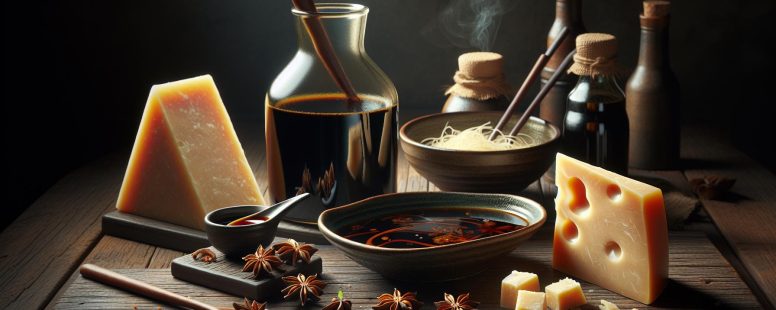
Ever found yourself lost in the delicious depths of a bowl of ramen, or biting into a juicy steak and wondering what makes it so irresistibly tasty? You’re likely experiencing umami – that rich, deep flavor often described as ‘savory’. But wait! Isn’t savory just another word for umami? Not quite.
While both terms are used to describe certain flavors we experience while eating, they aren’t interchangeable. Dive with us into this flavorful journey where we’ll unravel the difference between these two gastronomic giants: Umami and Savory. Prepare your taste buds; you’re about to begin on an exploration like no other.
Understanding Umami and Savory Flavors
Delving deeper into the culinary world, it’s crucial to grasp two often misinterpreted flavor profiles: umami and savory. Contrary to common perception, these terms aren’t synonyms.
Defining Umami
Umami represents one of the five basic tastes humans can detect—alongside sweet, sour, bitter, and salty. It’s an authentic Japanese word meaning “pleasant savory taste.” This flavor profile emanates from glutamate—a type of amino acid present in foods such as tomatoes, cheese (particularly Parmesan), mushrooms, soy sauce or dashi broth—an essential component in many Asian dishes.
You’d be right associating umami with a meaty essence; but this doesn’t mean that only non-vegetarian items possess this quality—it is found abundantly even within plant-based sources like seaweed or green tea!
An example for further clarity: imagine savoring sushi dipped generously in rich soy sauce—that depth you sense on your tongue? That’s pure umami magic at work!
Defining Savory
Savory refers more broadly to flavors associated with spices/herbs but without any hint of sweetness involved—not quite identical with “umaminess”. You might liken it best perhaps when relishing a robust stew brimming over with rosemary & thyme—with no sugared undertones interrupting its herbal delightfulness! Now while yes both ‘savory’ & ‘umamic’ food experiences share certain similarities—they aren’t simply interchangeable concepts.
Origins and Cultural Significance
Historical Background of Umami
Jump into the past, you’ll discover that umami’s discovery hails from Japan. Kikunae Ikeda, a Japanese scientist in 1908, pinpointed this fifth taste after extracting glutamate – an amino acid responsible for the distinct flavor – from kelp seaweed used in dashi broth. This sparked his invention of monosodium glutamate (MSG), popularly used as a food additive to enhance umami flavors.
Umami is integral within various cultures’ cuisines beyond Japan too; consider Chinese with their soy sauce or Italians using tomatoes and Parmesan cheese – all rich sources of natural MSG!
Throughout history, chefs have leveraged these ingredients unaware they were enhancing dishes with umami essence until its scientific revelation later on. Today’s culinary world recognizes it as a fundamental element contributing to palatable satisfaction and complexity in many recipes worldwide.
Historical Background of Savory
Rewind back centuries ago when herbs like rosemary, thyme or spices such as black pepper gave meals their savory profile primarily due to absence sweetness rather than presence any specific compound akin to what defines umami.
The term ‘savory’, stemming originally from Old English roots implies something tasty satisfying but also interestingly had medicinal associations early usage periods where flavorful plants bore healing properties according Roman Greek lore.
Chemical Composition and Sensory Experience
Having journeyed through the unique characteristics, historical origins of umami and savory flavors, it’s time to investigate deeper into their chemical compositions. Both terms pertain to taste but derive from different sets of molecules that interact with our taste receptors.
Chemical Sources of Umami
The primary molecule responsible for the umami flavor is glutamate, a type of amino acid found in foods high in protein like meat or cheese. Two other nucleotides—inosinate and guanylate—also contribute to this fifth basic taste. You’ll find them abundantly present in certain types of fish (for example: mackerel), mushrooms such as shiitake, tomatoes ripe enough bursting at seams ready-to-eat; all are prime examples where these chemicals naturally occur.
Further investigation reveals monosodium glutamate (MSG) as an artificial source contributing significantly towards enhancing dishes’ savoriness by supplementing natural sources if they fall short on your palate radar—a direct influence following Kikunae Ikeda’s discovery back 1908 Japan times!
Chemical Sources Of Savory
Savory isn’t dictated by specific compounds unlike its counterpart ‘umami’. It’s rather created by a blend – complex mixtures derived from herbs spices void sweetness commonly used across culinary traditions worldwide since ancient Roman Greek cultures.
Culinary Applications of Umami and Savory
Now that we’ve navigated the distinct characteristics, origins, and chemical compositions of umami and savory flavors let’s jump into their practical uses. You’ll discover how these two unique taste profiles contribute to various dishes in different cuisines.
Examples in Asian Cuisine
Asian cuisine offers a rich world where both umami and savory tastes weave seamlessly. Consider soy sauce—a ubiquitous ingredient across East Asia—it exemplifies an excellent source of glutamates responsible for the unmistakable hint of umami flavoring present in many stir-fry recipes or sushi preparations.
Take miso soup as another example; it owes its depth largely to dashi broth—an infusion containing kombu seaweed (rich in glutamate) contributing to the delightful sense of savoriness inherent with every sip.
Beyond Japanese cookery, if you examine Chinese culinary tradition—specifically Szechuan cooking—you’d encounter liberal usage spices like star anise or Sichuan pepper creating robust aromatic layers suggestive more towards savory than outrightly falling under ‘umami’.
Examples in Western Cuisine
In western kitchens too, chefs wield this duo deftly enhancing overall palate appeal while balancing diverse ingredients harmoniously within individual dishes. Parmesan cheese is one such classic item from Italian fare bursting with naturally occurring glutamates offering plenty on the ‘umami’ front besides just adding creaminess onto pastas or pizzas!
Health Implications of Umami and Savory Consumption
Understanding the health implications involves diving into a detailed analysis of umami and savory flavors. As highlighted in previous sections, these two taste profiles stem from different sources: glutamate gives rise to umami while herbs and spices create savory notes.
Umami foods like soy sauce or Parmesan cheese provide an array of beneficial nutrients such as protein, calcium, vitamin B6, among others. These components serve essential functions for your body’s growth and maintenance processes. For example, protein aids muscle development; calcium strengthens bones; Vitamin B6 promotes brain function.
But caution comes with over-consumption – excess sodium intake can lead to high blood pressure if you’re not mindful about portion sizes when consuming products like miso soup or other processed goods rich in umami flavorings.
On the flip side are savory ingredients found commonly within Szechuan cooking – star anise being one such spice that’s integral to this cuisine style. Apart from adding depth to dishes’ flavor profile they also carry significant medicinal properties according to traditional Chinese medicine practices that have been validated by modern scientific studies.
For instance Star Anise contains Shikimic Acid which has antiviral capabilities against influenza viruses making it a potential preventive measure during flu season!
Conclusion
So you’ve journeyed through the world of umami and savory flavors. It’s been a flavor-filled exploration that has taken us from Asia to the West, revealing how these tastes shape our culinary experiences. You now understand why foods rich in umami like soy sauce or Parmesan cheese are more than just taste enhancers – they’re also packed with essential nutrients your body needs.
At the same time, you know it’s crucial to watch sodium levels when indulging in delicious bowls of miso soup or other dishes bursting with umami goodness. And let’s not forget about those hidden health gems found within savory ingredients such as star anise used widely across Szechuan cooking.
The knowledge you’ve gained today can enrich both your palate and wellbeing by allowing for informed food choices that maximize pleasure while promoting health benefits! Enjoy this newfound wisdom on every plate – after all, eating well is living well.
To provide the best experiences, we use technologies like cookies to store and/or access device information. Consenting to these technologies will allow us to process data such as browsing behaviour or unique IDs on this site. Not consenting or withdrawing consent, may adversely affect certain features and functions.
Functional
Always active
The technical storage or access is strictly necessary for the legitimate purpose of enabling the use of a specific service explicitly requested by the subscriber or user, or for the sole purpose of carrying out the transmission of a communication over an electronic communications network.
Preferences
The technical storage or access is necessary for the legitimate purpose of storing preferences that are not requested by the subscriber or user.
Statistics
The technical storage or access that is used exclusively for statistical purposes.The technical storage or access that is used exclusively for anonymous statistical purposes. Without a subpoena, voluntary compliance on the part of your Internet Service Provider, or additional records from a third party, information stored or retrieved for this purpose alone cannot usually be used to identify you.
Marketing
The technical storage or access is required to create user profiles to send advertising, or to track the user on a website or across several websites for similar marketing purposes.