Imagine holding a piece of fabric that feels as flexible as a dancer’s leap yet as sturdy as a fortress wall. The secret lies in whether it was knitted or woven. These two ancient techniques shape fabrics in entirely different ways, influencing not just their look but their strength and stretchiness.
Knowing the difference can transform your craft from guesswork into artistry, revealing hidden advantages like how woven fabrics breathe better or how knitted materials adapt to movement. Dive in, and discover how these methods craft fabrics that tell their own stories—each stitch and thread pulling you closer to mastery.
What Are Knitting and Weaving? An Overview
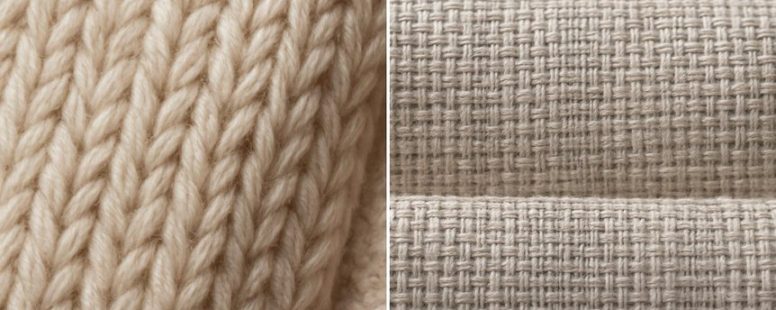
Knitting and weaving are two main ways to make fabric, and each creates different types of textiles. Knitting is when yarns are looped together to make fabric. This makes the fabric stretchy and soft. That’s why knitted fabrics are comfortable and good for clothes that need to stretch, like sweaters and socks.
Weaving, on the other hand, involves crossing yarns at right angles to make fabric. This creates a fabric that is stronger and feels more structured. Woven fabrics are often used for things like denim jeans or tablecloths because they hold up better over time.
Both methods have their advantages. Knitted fabrics stretch more and are more flexible, but they can be less durable. Woven fabrics are stronger and keep their shape longer, but they don’t stretch as much. When choosing fabric for a project, think about if you want it to be stretchy or more sturdy.
For example, if you want a comfortable t-shirt, knitting might be best. But for a pair of durable work pants, weaving could be the better choice. Knowing the difference between knitting and weaving helps you pick the right fabric for your needs.
How Do Knitting and Weaving Create Different Fabrics
Knitting and weaving are two ways to make fabric, and they create different textures and stretches because of how the yarns are arranged.
Knitting is a method where yarns are looped together in stitches. The way the yarns are pulled tight or left loose affects the fabric. If the stitches are tight, the fabric becomes firm and less stretchy. If the stitches are loose, the fabric is softer and more stretchy. Knitting can be simple with basic stitches or very complicated with detailed patterns. For example, a plain sweater is usually knitted with simple stitches, while intricate scarves may have fancy designs.
Weaving, on the other hand, involves crossing yarns at right angles. The vertical yarns are called warp, and the horizontal yarns are called weft. These yarns are interlaced to form a grid. This makes weaving fabrics more stable and less stretchy. The pattern in weaving depends on how the yarns are woven, but the fabric generally feels firmer than knitted fabric. Think of weaving as creating a strong net or grid, which is different from the more flexible loops in knitting.
Some people prefer knitted fabrics for their stretch and comfort, like in socks or hats. Others might choose woven fabrics for their durability, like in jeans or upholstery. Both methods have their strengths and limits. For example, knitted fabrics can stretch out over time if not made carefully, while woven fabrics are less flexible but often more durable.
Key Differences Between Knitting and Weaving Techniques
Knitting and weaving are two main ways to make fabric, but they work very differently. Knitting is a method where yarns are looped together to create fabric. The person knitting controls the tension of the yarn by moving their hands, which forms loops. This method can create many different patterns and textures because each stitch can be changed easily. For example, sweaters, scarves, and socks are often made with knitting because it allows for detailed designs.
Weaving is different. It uses a loom to interlace horizontal yarns called weft with vertical yarns called warp. The loom keeps the yarns tight and even, which makes the fabric strong and stable. However, weaving usually produces a more uniform fabric with less pattern variety than knitting. It’s often used for making cloth for clothing or upholstery that needs to be durable.
Some people prefer knitting for its flexibility in creating complex patterns. But weaving is better if you want a firm, steady fabric. Both methods have their strengths and limits. Knitting can be tricky because controlling the tension of each stitch is important, and mistakes can happen. Weaving is faster for making large pieces but offers fewer design options.
In the end, whether you choose knitting or weaving depends on what kind of fabric you want to make. If you want detailed designs and flexibility, knitting is the better choice. If you need a strong, consistent fabric, weaving is the way to go. Both techniques are useful, but understanding their differences helps you decide which one fits your project best.
Best Textiles for Knitting and Weaving Projects
Choosing the right textiles is key for good knitting and weaving projects. Different fibers have different textures, from smooth and silky to thick and fuzzy. These differences affect how your finished piece looks and feels.
For knitting, soft fibers like merino wool or alpaca are best because they are comfortable to wear and easy to work with. They slide smoothly through your needles and make cozy scarves or sweaters. On the other hand, weaving often needs stronger fibers such as cotton or linen. These hold their shape well and create sturdy fabrics. For example, cotton is great for making tablecloths because it’s strong and easy to dye.
Dyeing is another factor to think about. Natural fibers like wool and silk soak up dyes better, giving bright, long-lasting colors. Synthetic fibers may not take dye as well, which can limit your color choices. So, if you want vibrant colors, choosing natural fibers can be a smart move. But be warned, natural fibers can sometimes shrink or stretch more than synthetic ones, so they need careful handling.
Some people prefer soft fibers for all projects, while others want tougher fibers for durability. For example, a fluffy mohair yarn might be perfect for a delicate shawl but not for a fabric that needs to last long. Knowing what fiber works best for your project helps you get the best results, whether it’s a warm scarf or a strong piece of fabric.
Tools and Skills Needed for Knitting and Weaving
Getting started with knitting or weaving means knowing the right tools and learning some basic skills. For knitting, you’ll need needles, which can be made of bamboo, metal, or plastic. Choose needles that match your yarn type so your project feels right and lasts. For example, soft wool yarn works well with larger needles, while fine cotton might need smaller ones. Weaving needs a loom, which holds the threads in place, and a shuttle to pass yarn through the loom. Sometimes, heddles are used for more complex patterns, but for simple designs, they might not be necessary.
Skills are also important. Knitting requires learning basic stitches like knit and purl, which are the building blocks of most projects. Weaving involves understanding how to create different weave patterns, like plain or twill weave. As you get better, you can try more complicated designs that need more skills and precise tools. The type of project you want to make influences what tools and skills you should learn. Simple scarves or dishcloths need fewer tools and less skill, while intricate blankets or wall hangings require more practice and special techniques.
Knowing about fiber types is helpful too. Different fibers, like wool, cotton, or acrylic, behave differently when you work with them. Wool is warm and stretchy, but can felt if not handled carefully. Cotton is smooth and strong but can be less elastic. Choosing the right tools and learning the proper techniques help you make fabrics that match your ideas and needs. With time and practice, you will get better at picking the right tools and skills to create beautiful handmade crafts.
How Knitting and Weaving Impact Fabric Properties
Knitting and weaving create fabrics with different properties because of how they are made. Knitted fabrics are more stretchy because the loops of yarn can move and stretch. This makes knitted textiles soft and flexible, which is why they are good for clothes like t-shirts and socks that need to stretch. Weaving makes fabrics that are firmer and less stretchy because the yarns are woven tightly together. This results in a stronger fabric that keeps its shape better, like in denim jeans or upholstery fabric.
Dye absorption is also different in these fabrics. Woven fabrics usually take in dyes more evenly because their surface is tighter and more uniform. Knitted fabrics may have uneven coloring because of their looped structure, which can create streaks or patches. This difference affects how the fabric looks and feels, and it can influence how well it holds color over time.
Some people prefer knitted fabrics for comfort and stretch, especially in sportswear. Others choose woven fabrics for their strength and smooth surface, which is better for formal clothes or home furnishings. However, knitted fabrics might stretch out or lose their shape after many washes, so they need careful care. Woven fabrics are more stable but may feel less soft and flexible.
Knowing these differences helps you pick the right fabric for your needs. For example, if you want a shirt that moves with you, knitting might be best. If you need sturdy pants or curtains, weaving could be a better choice. Both have their strengths and limitations, so understanding them can help you make smarter choices when buying or making clothes.
Getting Started With Knitting and Weaving: Tips and Resources
Getting started with knitting or weaving is simple once you know the basics. Knitting is making fabric with two or more needles, while weaving involves crossing threads on a loom. These crafts can seem hard at first, but with some tips, you can learn quickly.
First, find beginner-friendly tutorials online or in local classes. You can watch videos from brands like Lion Brand or visit craft stores such as Michaels for workshops. These lessons show you how to hold needles or set up a loom. Start with small projects like a scarf or coaster. They help you practice without feeling overwhelmed.
Invest in good tools. For knitting, choose comfortable needles made of plastic or wood. For weaving, pick a simple loom from a craft store. Using the right tools makes your work easier and more fun.
Joining online groups or forums like Ravelry gives you support and ideas. You can ask questions and see what others create. Reading books like “The Knitter’s Handbook” or “Weaving Made Easy” can also increase your understanding. These resources explain techniques and share craft history, which helps you appreciate the art more.
Learning these crafts takes patience. You won’t get perfect stitches right away, and that is okay. Practice regularly, and don’t be afraid to make mistakes. Sometimes, trying different patterns or styles helps you find what you enjoy most. Some prefer traditional designs, while others like modern, colorful styles.
To provide the best experiences, we use technologies like cookies to store and/or access device information. Consenting to these technologies will allow us to process data such as browsing behaviour or unique IDs on this site. Not consenting or withdrawing consent, may adversely affect certain features and functions.
Functional
Always active
The technical storage or access is strictly necessary for the legitimate purpose of enabling the use of a specific service explicitly requested by the subscriber or user, or for the sole purpose of carrying out the transmission of a communication over an electronic communications network.
Preferences
The technical storage or access is necessary for the legitimate purpose of storing preferences that are not requested by the subscriber or user.
Statistics
The technical storage or access that is used exclusively for statistical purposes.The technical storage or access that is used exclusively for anonymous statistical purposes. Without a subpoena, voluntary compliance on the part of your Internet Service Provider, or additional records from a third party, information stored or retrieved for this purpose alone cannot usually be used to identify you.
Marketing
The technical storage or access is required to create user profiles to send advertising, or to track the user on a website or across several websites for similar marketing purposes.