Imagine a world where every living thing, from the tiniest microbe to the largest mammal, owes its existence to two fundamental cell types. These microscopic powerhouses—prokaryotic and eukaryotic cells—are the very building blocks of life, yet they’re worlds apart in complexity and function. Their differences shape everything from how organisms grow to how they adapt and thrive in their environments.
Have you ever wondered what sets the simplicity of bacteria apart from the intricate design of your own cells? The answer lies in the fascinating contrasts between these two cell types. Understanding these differences not only unravels the secrets of life itself but also reveals how evolution has crafted the diversity of living organisms around you. Whether you’re diving into biology for the first time or seeking a deeper appreciation of life’s inner workings, exploring the divide between prokaryotic and eukaryotic cells is nothing short of captivating.
Overview Of Prokaryotic And Eukaryotic Cells
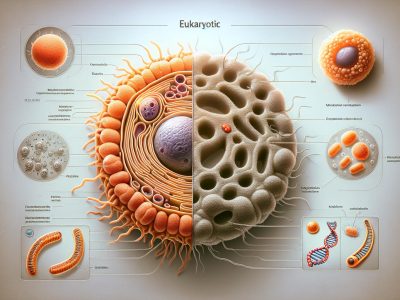
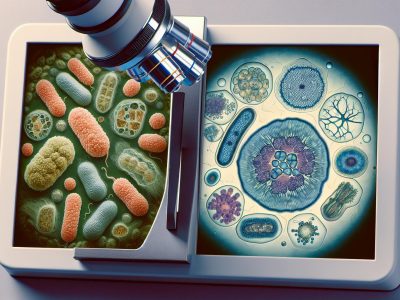
Prokaryotic and eukaryotic cells form the basis of all living organisms, shaping life’s complexity. Prokaryotic cells, seen in bacteria and archaea, lack a nucleus, while eukaryotic cells, found in plants, animals, fungi, and protists, are nucleus-containing.
Prokaryotic cells are small, typically 0.1–5.0 µm, and simpler in structure. They have genetic material in a nucleoid and lack membrane-bound organelles. In contrast, eukaryotic cells average 10–100 µm and contain organelles, like mitochondria and the endoplasmic reticulum, each playing a specialized role.
The reproduction process also differs significantly. Prokaryotes use binary fission, dividing quickly, while eukaryotes undergo mitosis or meiosis for more complex replication. For example, bacteria reproduce in hours, aiding their rapid adaptation.
Even though differences, both cells share essential features like DNA, ribosomes, and cytoplasm. This commonality suggests an evolutionary link dating back billions of years, underlining life’s interconnected nature.
Key Structural Differences
Prokaryotic and eukaryotic cells differ significantly in their structural organization, impacting their functions and complexity. Key distinctions in the nucleus, organelles, and size provide insight into their roles in diverse organisms.
Nucleus And Genetic Material
Prokaryotic cells lack a membrane-bound nucleus, keeping their genetic material in the nucleoid, which isn’t enclosed. On the other hand, eukaryotic cells house DNA within a well-defined nucleus surrounded by a nuclear envelope, ensuring separation from the cytoplasm. In eukaryotes, DNA is linear and paired with histone proteins, forming organized chromatin structures. In contrast, prokaryotic DNA, often circular, exists in a simpler state without histones or associated complexities.
For example, bacteria like Escherichia coli (a prokaryote) store their genetic code in a single ring-shaped chromosome, while human cells (eukaryotic) store theirs across 23 chromosomal pairs within the nucleus. The presence of introns and exons in eukaryotes aids in gene regulation, an advantage absent in prokaryotic cells.
Organelles And Cell Components
Prokaryotic cells have no membrane-bound organelles, relying on ribosomes for protein synthesis and a semi-fluid cytoplasm for metabolic functions. Their structure includes components like the cell wall, plasma membrane, and sometimes plasmids or flagella for specific roles.
Eukaryotic cells host specialized organelles, with each performing distinct functions. The mitochondria generate energy via cellular respiration, the rough endoplasmic reticulum aids protein synthesis, and the Golgi apparatus processes and packages proteins. Plant eukaryotic cells uniquely contain chloroplasts for photosynthesis and rigid cell walls for support.
Consider the role of lysosomes, which degrade waste in eukaryotic cells, an absence that prokaryotes offset by direct release of waste into the environment. This compartmentalization in eukaryotes enhances efficiency but adds complexity.
Size And Shape
Prokaryotic cells measure 0.1-5 μm in diameter, remaining relatively uniform in size. Eukaryotic cells range between 10-100 μm, with variation based on type and function. For instance, red blood cells are specialized to maximize oxygen transport, while neurons extend to connect distant body parts.
Prokaryotic shapes include cocci (spherical), bacilli (rod-shaped), and spirilla (spiral). In contrast, eukaryotic cells exhibit irregularity, adapting to tissue requirements. The actin cytoskeleton in eukaryotes provides dynamic shape alterations, unlike the rigid structure of prokaryotes.
Functional Differences
Prokaryotic and eukaryotic cells exhibit distinct functional capabilities, shaping the biological activities of organisms. Their mechanisms for reproduction, energy production, and protein synthesis highlight critical variations.
Reproduction And Cell Division
Prokaryotic cells rely on binary fission for reproduction. This simple process involves replicating circular DNA and dividing the cytoplasm to form two daughter cells. For example, Escherichia coli can multiply in 20 minutes under ideal conditions. In contrast, eukaryotic cells use mitosis or meiosis, depending on whether they produce somatic or gamete cells. These processes involve multiple stages like prophase, metaphase, and anaphase to ensure accurate chromosomal segregation.
Prokaryotic division lacks spindle fibers, while the eukaryotic system employs a spindle apparatus. This apparatus ensures proper alignment and separation of chromosomes. Comparing these mechanisms showcases the complexity of eukaryotes.
Energy Production
Prokaryotes generate energy in the cytoplasm or across the cell membrane. For example, aerobic bacteria use the electron transport chain in their plasma membrane to produce ATP. Conversely, eukaryotic cells leverage organelles like mitochondria for efficient energy conversion through oxidative phosphorylation.
Cyanobacteria exemplify photosynthetic prokaryotes, using thylakoid membranes to capture light energy. But, in eukaryotes, chloroplasts with organized grana and stroma perform photosynthesis in plants. The compartmentalization in eukaryotic cells contributes to higher energy production efficiency.
Protein Synthesis
Protein synthesis occurs on ribosomes in both cell types, but their ribosomal structures differ. Prokaryotic ribosomes (70S) are smaller than eukaryotic ones (80S). In prokaryotes, transcription and translation are coupled, with ribosomes translating mRNA even before transcription concludes. For instance, E. coli produces essential enzymes directly within the cytoplasm.
In eukaryotes, these processes are compartmentalized. Transcription occurs in the nucleus, where mRNA is processed, and translation happens in the cytoplasm. Membrane-bound ribosomes in rough endoplasmic reticula give eukaryotes an added edge in producing and exporting proteins. This difference impacts protein targeting and diversity in functions.
Examples Of Prokaryotic And Eukaryotic Organisms
Prokaryotic and eukaryotic organisms display the structural and functional characteristics of the cells they are composed of. Organisms belonging to each category provide unique insights into their biological complexity and ecological roles.
Prokaryotic Examples
Prokaryotic organisms include bacteria and archaea. Bacteria, such as Escherichia coli (E. coli) and Staphylococcus aureus, thrive in diverse environments, from the human gut to soil and water. E. coli plays a critical role in digestion and is also studied extensively in genetic research. Archaea, like Halobacterium and Methanogens, exist in extreme conditions, such as highly saline water or oxygen-deprived environments.
Cyanobacteria, a group of photosynthetic bacteria, significantly contribute to oxygen production and nitrogen fixation. This showcases the adaptability and ecological importance of prokaryotes in sustaining ecosystems.
Eukaryotic Examples
Eukaryotic organisms vary widely, encompassing plants, animals, fungi, and protists. Plants, such as Arabidopsis thaliana, are model organisms crucial in genetics and molecular biology. Animals include species ranging from humans (Homo sapiens) to unicellular eukaryotes like Paramecium, a ciliate protist found in freshwater.
Fungi like yeast (Saccharomyces cerevisiae) are used in bread making and alcohol production, highlighting their economic and biological value. Multicellular fungi such as mushrooms also illustrate the structural complexity of eukaryotes. Algae, like Chlamydomonas, are protists that exhibit photosynthesis, bridging characteristics of plants and simpler eukaryotes.
Eukaryotes excel in adaptability and efficiency due to their specialized organelles, supporting complex living systems and performing diverse ecological functions.
Conclusion
Understanding the differences between prokaryotic and eukaryotic cells helps you appreciate the incredible diversity and complexity of life. These cell types, though distinct, share common features that highlight their evolutionary connection and essential roles in sustaining life on Earth.
Whether you’re exploring the simplicity of prokaryotic cells or the specialized structures of eukaryotic cells, this knowledge deepens your insight into how organisms grow, adapt, and thrive. By recognizing these distinctions, you gain a clearer perspective on the intricate balance that drives biological systems and evolution.
Published: July 25, 2025 at 9:15 am by Ellie B, Site owner & Publisher
To provide the best experiences, we use technologies like cookies to store and/or access device information. Consenting to these technologies will allow us to process data such as browsing behaviour or unique IDs on this site. Not consenting or withdrawing consent, may adversely affect certain features and functions.
Functional
Always active
The technical storage or access is strictly necessary for the legitimate purpose of enabling the use of a specific service explicitly requested by the subscriber or user, or for the sole purpose of carrying out the transmission of a communication over an electronic communications network.
Preferences
The technical storage or access is necessary for the legitimate purpose of storing preferences that are not requested by the subscriber or user.
Statistics
The technical storage or access that is used exclusively for statistical purposes.The technical storage or access that is used exclusively for anonymous statistical purposes. Without a subpoena, voluntary compliance on the part of your Internet Service Provider, or additional records from a third party, information stored or retrieved for this purpose alone cannot usually be used to identify you.
Marketing
The technical storage or access is required to create user profiles to send advertising, or to track the user on a website or across several websites for similar marketing purposes.