When I first learned about cells, I thought they all had a nucleus—it seemed like the control center every cell would need. But as I dug deeper into biology, I realized that not all cells are created equal. Some break the mold entirely by operating without this so-called “command center.”
This raises an intriguing question: is it true or false that all cells have a nucleus? Understanding the answer isn’t just about memorizing facts; it’s key to grasping how life functions on both microscopic and macroscopic levels. Let’s explore what makes some cells unique and why the presence—or absence—of a nucleus matters so much in biology.
Understanding Cells And Their Structure
Cells, as the building blocks of life, exhibit diverse structures and functions. Not all cells share identical components, which affects their roles in living organisms.
The Role Of The Nucleus In A Cell
The nucleus acts as the command center of eukaryotic cells. It stores genetic material (DNA) within chromosomes and regulates gene expression, ensuring proper cellular function. By controlling protein synthesis and cell division, it maintains organismal growth and repair processes. However, prokaryotic cells lack a membrane-bound nucleus; instead, their DNA resides in a nucleoid region without structural confinement.
Common Misconceptions About Cells And Nuclei
Many believe all cells contain nuclei due to the prominence of eukaryotic cells in animals and plants. This view overlooks prokaryotes like bacteria and archaea that lack nuclei but still perform vital biological activities efficiently. Another misconception is equating cellular complexity with the presence of a nucleus when other organelles or adaptations can also contribute to functionality in these simpler organisms.
True Or False: All Cells Have A Nucleus
Not all cells have a nucleus. While eukaryotic cells contain a membrane-bound nucleus, prokaryotic cells function without one, demonstrating the diversity in cellular structures.
Examples Of Cells With A Nucleus
Eukaryotic cells include plant, animal, and fungal cells. In plant cells, the nucleus controls photosynthesis-related gene expression. Animal cell nuclei regulate processes like repair and reproduction. Fungal nuclei manage both growth and nutrient acquisition.
Examples Of Cells Without A Nucleus
Prokaryotic organisms like bacteria lack a true nucleus. Instead, their DNA resides in the nucleoid region. Red blood cells in mammals also lose their nuclei during maturation to optimize oxygen transport efficiency within the body.
Classification Of Cells Based On The Presence Of A Nucleus
Cells are categorized into two main types based on the presence or absence of a nucleus: eukaryotic and prokaryotic. This classification highlights fundamental differences in their structure and function.
Eukaryotic Cells
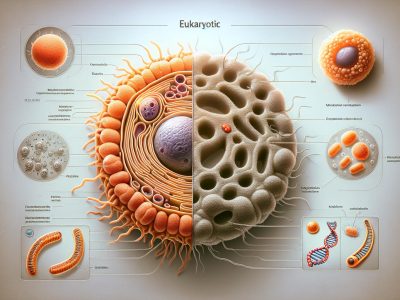
Eukaryotic cells possess a membrane-bound nucleus where genetic material (DNA) is stored. These cells exhibit compartmentalization, with organelles like mitochondria and the endoplasmic reticulum performing specific functions. Examples include plant, animal, fungal, and protist cells.
The nucleus in eukaryotic cells regulates vital processes such as gene expression, cell division, and metabolic activities. In plants, it controls photosynthesis via chloroplasts. Animal cells rely on their nuclei for reproduction and repair mechanisms.
Prokaryotic Cells
Prokaryotic cells lack a true nucleus; instead, their DNA resides within an unbound nucleoid region in the cytoplasm. These simpler structures enable rapid growth and adaptation to diverse environments. Bacteria and archaea represent this category.
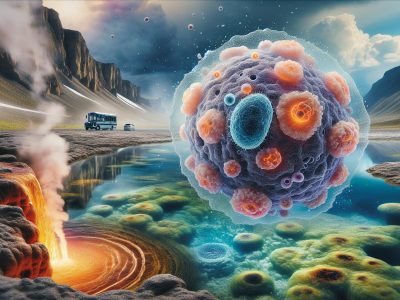
Despite lacking a nucleus, prokaryotes thrive by efficiently replicating genetic material during binary fission. Their streamlined design supports survival under extreme conditions like high heat or acidity.
Why Some Cells Lack A Nucleus
Some cells lack a nucleus due to evolutionary adaptations and functional requirements. These variations enable them to thrive in diverse environments or perform specialized tasks.
Evolutionary Perspective
Prokaryotic cells, like bacteria and archaea, evolved without a true nucleus. Their genetic material resides in a nucleoid region instead of being enclosed by a nuclear membrane. This simpler structure emerged approximately 3.5 billion years ago and supports rapid replication and adaptation in harsh conditions. Eukaryotic cells appeared later with complex compartmentalization but didn’t replace prokaryotes due to the latter’s efficiency in specific niches.
In multicellular organisms, some eukaryotic cells also lose their nuclei during development. For example, mammalian red blood cells eject their nuclei to maximize oxygen transport capacity, an evolutionary adaptation critical for survival.
Functional Advantages
Cells without nuclei often exhibit enhanced functionality tailored to specific roles. Prokaryotes benefit from streamlined replication processes since transcription and translation occur simultaneously without compartmental separation. This efficiency helps them multiply quickly under favorable conditions.
In mammals, enucleated red blood cells carry more hemoglobin molecules because they lack internal organelles, improving oxygen delivery across the body. Similarly, certain lens fiber cells in the eye remove their nuclei for transparency and optimal light refraction essential for vision clarity.
Conclusion
Understanding whether all cells have a nucleus sheds light on the incredible diversity of life at the cellular level. From the streamlined efficiency of prokaryotic cells to the complex organization of eukaryotic cells, each structure serves a purpose tailored to its environment and function. This knowledge not only deepens our appreciation for biology but also highlights how life has adapted in remarkable ways over billions of years.
By recognizing these differences, we can better understand how organisms thrive and evolve, from simple bacteria to highly specialized human cells. It’s a fascinating reminder that life’s complexity doesn’t always depend on having more—it often lies in how well something is suited to its role.
To provide the best experiences, we use technologies like cookies to store and/or access device information. Consenting to these technologies will allow us to process data such as browsing behaviour or unique IDs on this site. Not consenting or withdrawing consent, may adversely affect certain features and functions.
Functional
Always active
The technical storage or access is strictly necessary for the legitimate purpose of enabling the use of a specific service explicitly requested by the subscriber or user, or for the sole purpose of carrying out the transmission of a communication over an electronic communications network.
Preferences
The technical storage or access is necessary for the legitimate purpose of storing preferences that are not requested by the subscriber or user.
Statistics
The technical storage or access that is used exclusively for statistical purposes.The technical storage or access that is used exclusively for anonymous statistical purposes. Without a subpoena, voluntary compliance on the part of your Internet Service Provider, or additional records from a third party, information stored or retrieved for this purpose alone cannot usually be used to identify you.
Marketing
The technical storage or access is required to create user profiles to send advertising, or to track the user on a website or across several websites for similar marketing purposes.