about the subtle yet significant distinctions between pottery and ceramics? While both stem from the ancient craft of shaping and hardening clay, the nuances of their definitions and applications can surprise even the most curious minds. This article delves into the intriguing realm of pottery and ceramics, uncovering their unique characteristics and diverse roles in our lives. Join us as we explore their origins, materials, and modern significance.
Defining Pottery and Ceramics
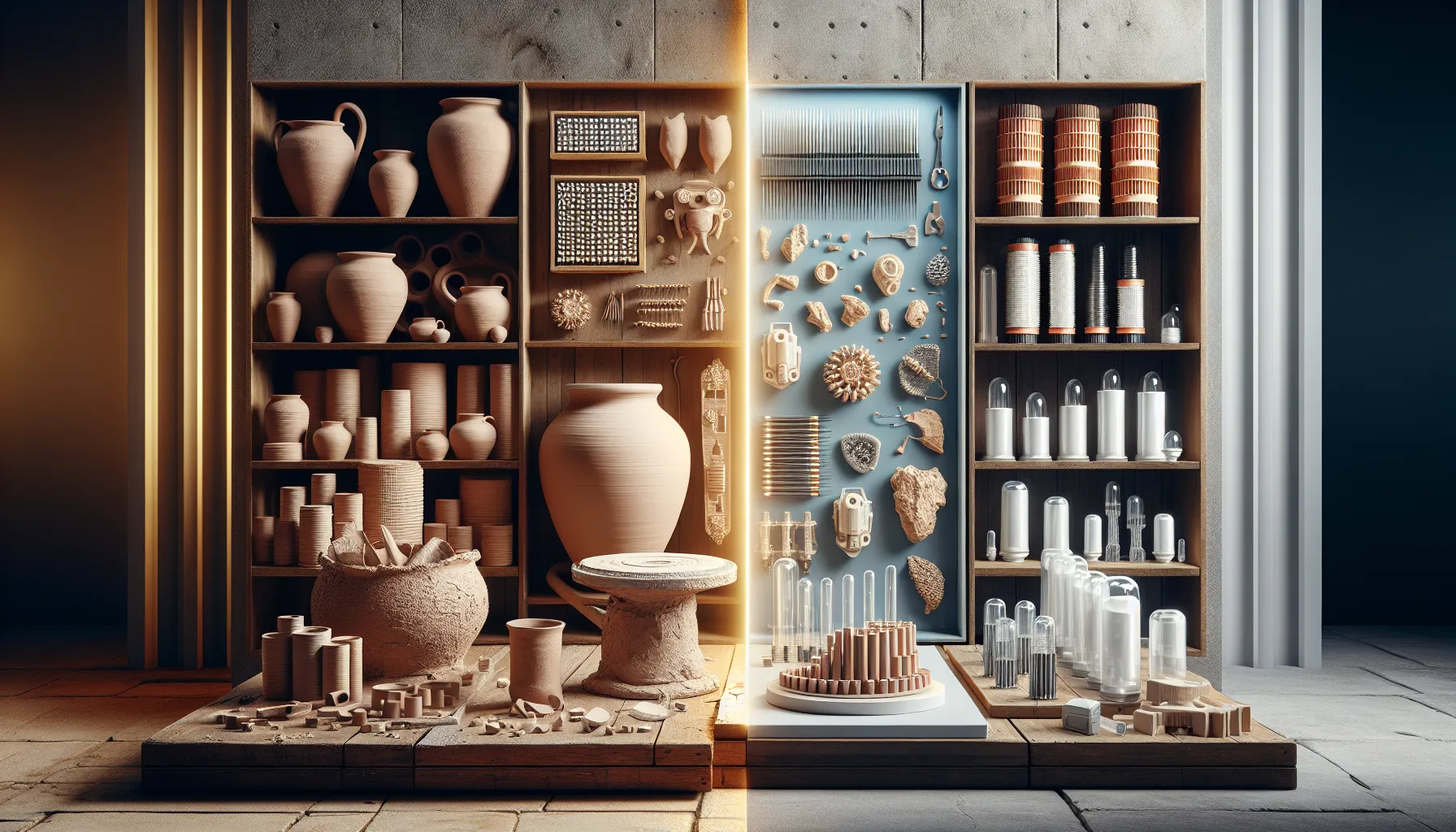
The terms “pottery” and “ceramics” are often used interchangeably in casual conversation: but, they encompass distinct categories within the broader scope of clay-based arts. Pottery specifically refers to items crafted from clay that are shaped and then hardened by firing. This includes everyday objects such as bowls, jars, and tiles. On the other hand, ceramics is an umbrella term encompassing all items made from fired inorganic materials, which includes but isn’t limited to pottery. As such, while all pottery items are ceramics, not all ceramics are considered pottery. This distinction becomes clearer when exploring the historical and technical aspects of these crafts.
Historical Context of Pottery and Ceramics
The history of pottery and ceramics stretches back thousands of years, reflecting the evolution of human ingenuity and creativity. Ancient pottery artifacts, such as those unearthed from Mesopotamian and Minoan civilizations, reveal its significance in daily life and ritualistic practices. Ceramics, as a broader category, played a pivotal role in art, technological innovation, and even architecture. From intricate Chinese porcelain to Early Modern advancements in ceramic insulation, the scope and complexity of ceramics have expanded significantly over time.
Material Composition and Techniques
The creation of pottery and ceramics relies on specific materials and procedures that define their unique characteristics and uses.
Pottery: Characteristics and Uses
Pottery involves the use of natural clay mixed with water and occasionally other additives to enhance workability. Shaping techniques such as coil building, slab forming, and wheel throwing are used to craft the desired forms. These pieces are then dried and fired at varying temperatures to achieve hardness and durability. Functional pottery, like storage vessels and cookware, often undergoes additional treatments such as glazing to improve moisture resistance and aesthetics.
Ceramics: Characteristics and Uses
Ceramics employ a diverse range of raw materials beyond clay, including silica, zirconia, and alumina. Modern ceramic manufacturing incorporates advanced techniques like slip casting and additive manufacturing to produce an array of items, from decorative figurines to aerospace components. This diversity allows for the creation of products that span industries, highlighting ceramics’ versatile and critical role in today’s world.
Applications in Modern Practices
In modern contexts, both pottery and ceramics feature prominently across various fields. Pottery continues to enrich culture and utility, with handcrafted items celebrated as artistic and functional objects. Ceramics, but, extend their influence far beyond traditional pottery. The material properties, being heat resistant, insulative, and durable, have led to their usage in electronics, medical implants, and cutting-edge engineering projects. This constellation of applications showcases ceramics as vital contributors to technological and artistic growth.
To provide the best experiences, we use technologies like cookies to store and/or access device information. Consenting to these technologies will allow us to process data such as browsing behaviour or unique IDs on this site. Not consenting or withdrawing consent, may adversely affect certain features and functions.
Functional
Always active
The technical storage or access is strictly necessary for the legitimate purpose of enabling the use of a specific service explicitly requested by the subscriber or user, or for the sole purpose of carrying out the transmission of a communication over an electronic communications network.
Preferences
The technical storage or access is necessary for the legitimate purpose of storing preferences that are not requested by the subscriber or user.
Statistics
The technical storage or access that is used exclusively for statistical purposes.The technical storage or access that is used exclusively for anonymous statistical purposes. Without a subpoena, voluntary compliance on the part of your Internet Service Provider, or additional records from a third party, information stored or retrieved for this purpose alone cannot usually be used to identify you.
Marketing
The technical storage or access is required to create user profiles to send advertising, or to track the user on a website or across several websites for similar marketing purposes.