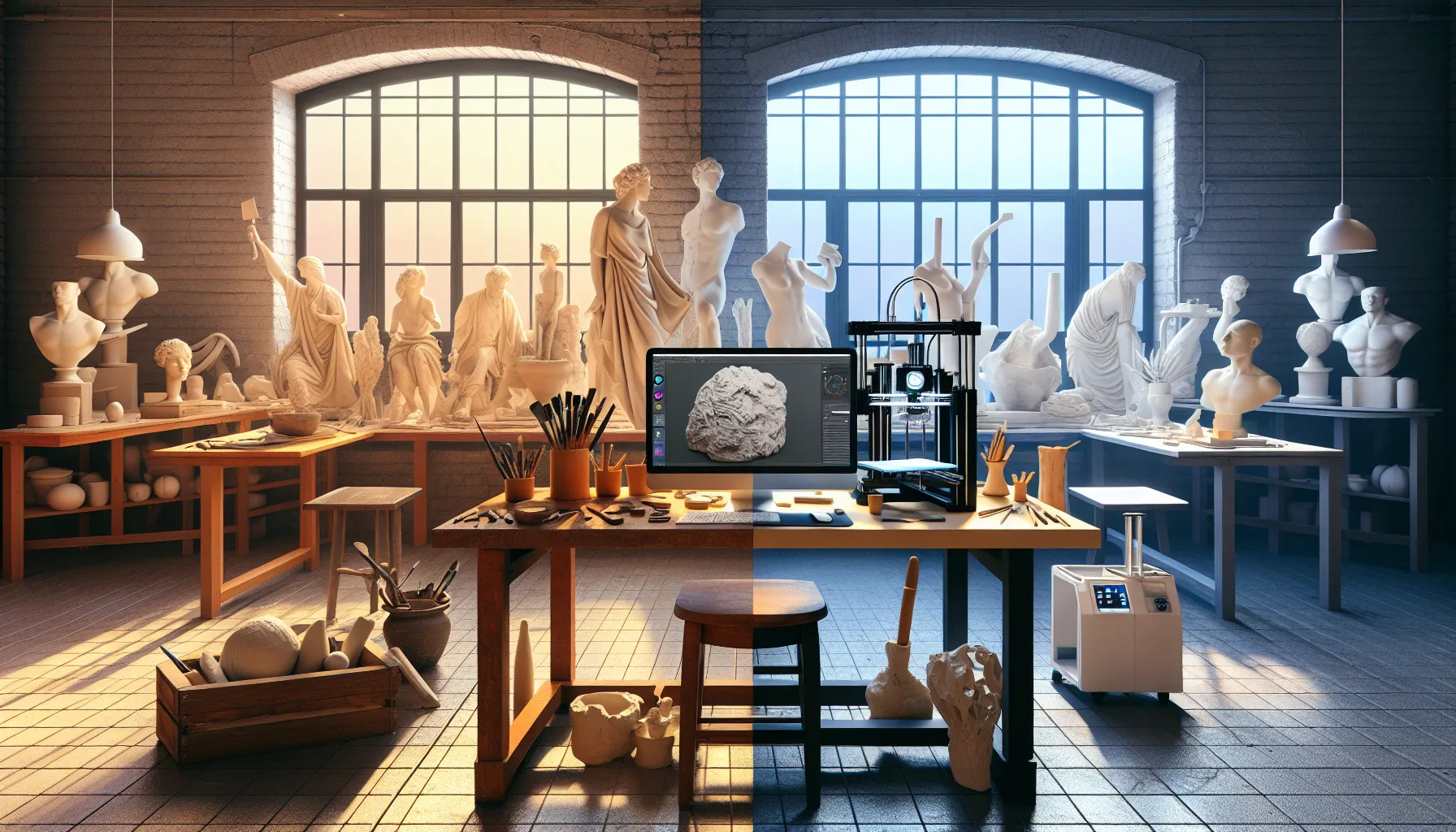
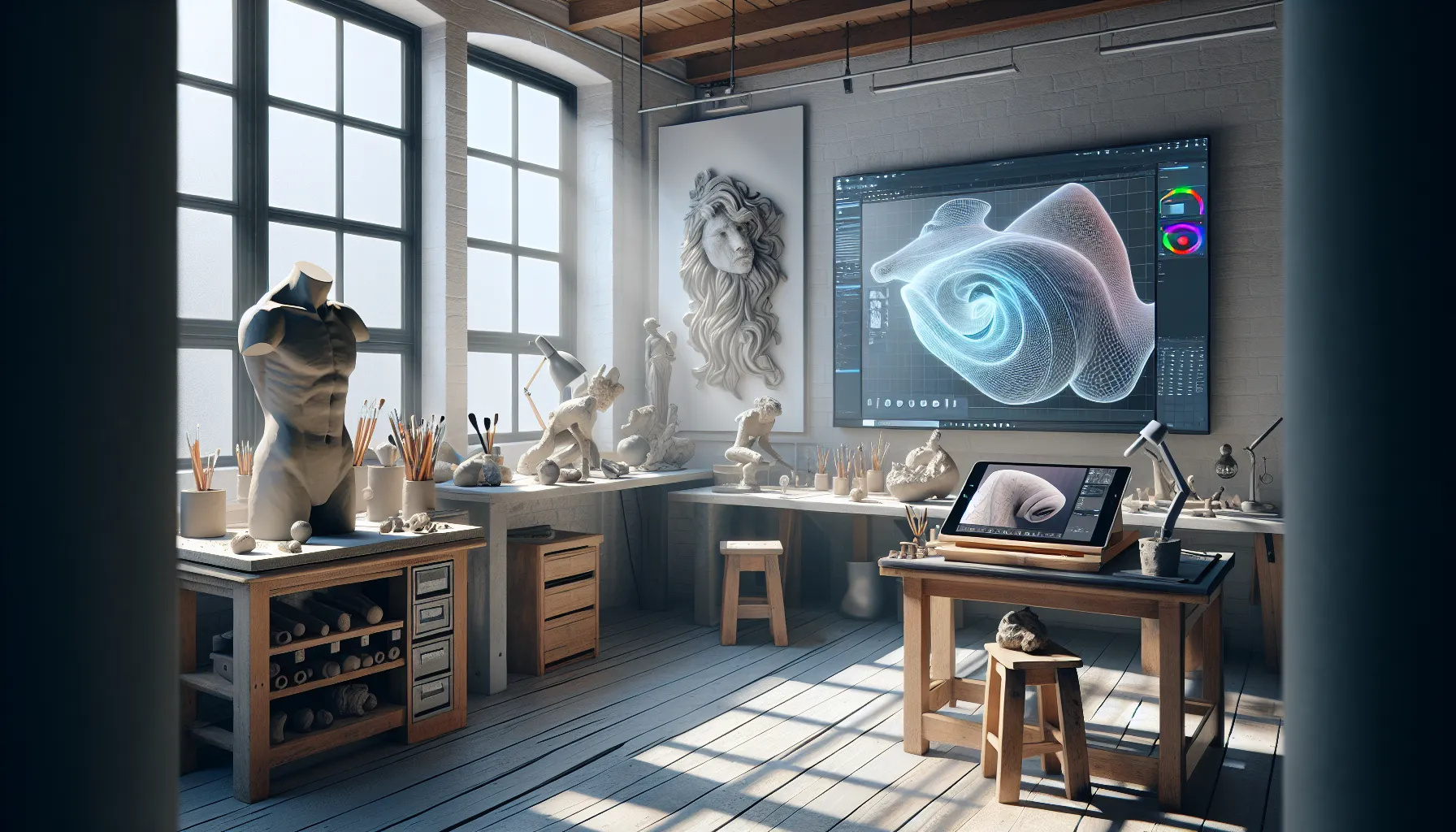
Visual art forms often carry an incredible ability to capture imagination, preserve memories, and express culture, ideas, or emotions. creating tangible and three-dimensional art, two primary approaches stand out: sculpting and modeling. Although they might seem similar on the surface, each holds unique aspects and purposes. In this text, we’ll investigate into their distinctions, helping you identify which method resonates best with your artistic objectives.
Understanding the Basics
What Is Sculpting?
Sculpting involves carving out or shaping materials like stone, wood, or clay to create a structure. This process is largely subtractive, as it often involves removing parts of the material to reveal the intended form.
Key Characteristics of Sculpting
Material Types: Sculptors work with solid mediums such as marble, granite, wood, and clay.
Tools Used: These include chisels, hammers, and knives.
Artistic Approach: Focuses primarily on subtraction and fine detailing.
Significance in Art and Design
Sculpting has historically been central to human culture, serving as a medium to document events, honor individuals, and spread religious or political messages.
What Is Modeling?
Modeling refers to building three-dimensional forms by adding materials together, typically soft, malleable substances like clay or wax. This process is additive, as materials are often applied and shaped incrementally.
Key Characteristics of Modeling
Material Types: Common materials include wet clay, wax, and plaster.
Tools Used: Sculptors use tools like palette knives, modeling tools, and shaping boards.
Artistic Approach: Modeling emphasizes the additive process and can be highly versatile in design creation.
Applications in Different Fields
Modeling is prevalent in various industries, such as character design for entertainment, prototype development in manufacturing, and anatomical representations in medical fields.
Key Differences Between Sculpting and Modeling
Material Utilization
Sculpting employs hard, solid mediums that necessitate a subtractive approach, whereas modeling focuses on pliable and versatile materials suitable for an additive process.
Techniques and Tools
Sculptors often carry out carving, chiseling, or engraving techniques, contrasting with modelers who work within frameworks of addition and shaping to create forms. Toolsets for both also showcase different specializations.
Purpose and Outcomes
While both artforms aim to create three-dimensional objects, sculpting often ties closely to permanence and durability, making it ideal for monuments or lifetime exhibitions. Modeling tends to align with prototyping or dynamic artwork due to its flexible basis.
Historical and Modern Context
Evolution Through Time
Sculpting has roots tracing back to ancient civilizations, serving ritualistic or instructional roles. Meanwhile, modeling evolved significantly during the Renaissance, eventually acquiring prominence in conceptualization stages of creation.
Integration with Technology
Modern technology has revolutionized both fields. Sculptors now use tools like laser cutters, while modelers benefit substantially from software like CAD and 3D modeling programs, allowing them to produce detailed virtual prototypes readily.
How to Choose Between Sculpting and Modeling
Factors to Consider
Your choice should revolve around your intended output, available resources, and preferred artistic process. Sculpting delivers permanence, while modeling provides adaptability.
Personal Preferences and Goals
Assess whether you value long-lasting artistic expression or dynamic prototyping capabilities, aligning these aspects with your professional objectives or hobbies to guide your decision.
To provide the best experiences, we use technologies like cookies to store and/or access device information. Consenting to these technologies will allow us to process data such as browsing behaviour or unique IDs on this site. Not consenting or withdrawing consent, may adversely affect certain features and functions.
Functional
Always active
The technical storage or access is strictly necessary for the legitimate purpose of enabling the use of a specific service explicitly requested by the subscriber or user, or for the sole purpose of carrying out the transmission of a communication over an electronic communications network.
Preferences
The technical storage or access is necessary for the legitimate purpose of storing preferences that are not requested by the subscriber or user.
Statistics
The technical storage or access that is used exclusively for statistical purposes.The technical storage or access that is used exclusively for anonymous statistical purposes. Without a subpoena, voluntary compliance on the part of your Internet Service Provider, or additional records from a third party, information stored or retrieved for this purpose alone cannot usually be used to identify you.
Marketing
The technical storage or access is required to create user profiles to send advertising, or to track the user on a website or across several websites for similar marketing purposes.