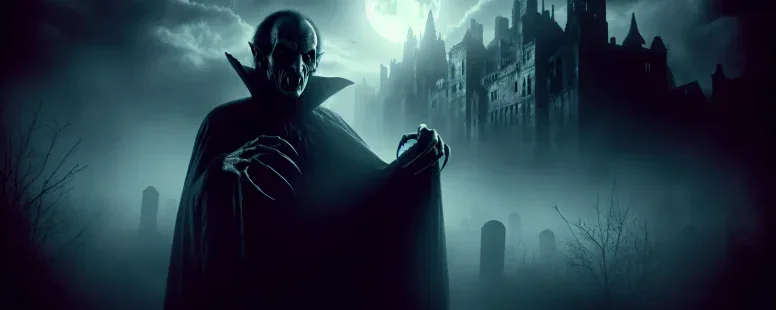
Picture yourself wandering through a fog-laced alley at midnight—the air tingles with secrets as shadows stretch and twist. Suddenly you catch a glimpse of two figures lurking at the edge of legend: Nosferatu with his gaunt silhouette and Dracula cloaked in aristocratic mystery. Both promise chills yet each whispers a different kind of fear.
You might think all vampires are cut from the same cloth but these icons couldn’t be more distinct. Unraveling the differences between Nosferatu and Dracula isn’t just about fang length or fashion choices—it’s about discovering how horror evolves and why these creatures still haunt your imagination. Get ready to explore the unexpected as you step into their world.
Origins of Nosferatu and Dracula
When you trace the shadows behind Nosferatu and Dracula, a web of interwoven influences comes alive. These two creatures swept from centuries-old folklore into the bright gaze of global cinema, shaping the modern image of the vampire.
The Literary and Cinematic Roots
Nosferatu’s legacy starts in 1922 with F.W. Murnau’s silent film “Nosferatu, eine Symphonie des Grauens.” You see, this unauthorized adaptation of Bram Stoker’s “Dracula” cast Max Schreck as Count Orlok, whose grotesque features—rat-like teeth, pointed ears—invoked primal fears, not romantic allure. The producers tried to dodge Stoker’s estate by changing names and details, but the essence lingered.
Dracula, by contrast, emerges from Bram Stoker’s 1897 novel, crystallizing the Count as a figure at once aristocratic and predatory. Stoker drew on Eastern European legends about Vlad the Impaler, who had a historical reputation for brutality. The character instantly gained literary immortality, spawning plays, films, and endless reinterpretations—Christopher Lee and Bela Lugosi’s performances added layers of charm, malice, and mystery to the archetype.
How might cinema have changed, if Murnau had gotten permission to use Stoker’s character names? If Orlok had stalked the screen as “Dracula,” would he have become less monstrous? You notice how these questions ripple through vampire mythology even now.
Influences and Inspirations
You’ll find both vampires anchored in the same pool of dark folklore, but they draw on different mythic streams. Nosferatu’s creators pulled from Mittel European tales about the nosferatu creature—a revenant that brings plague and dread. The very name, “Nosferatu,” echoes a Romanian term meaning “infected” or “plague-bearer.” Directors like Werner Herzog would later revisit these roots, insisting on the vampire as a bringer of decay.
Dracula, meanwhile, blends folk horror with Victorian anxieties. Scholars like Elizabeth Miller link the Count’s predatory behavior to contemporary fears of foreignness, disease, and sexuality. Stoker mashed real figures—Vlad Dracula, Elizabeth Bathory—into a new species of villain. Later adaptations, from Murnau to Coppola, keep remixing these themes, each era reflecting its own shadows through the figure of Dracula.
Ask yourself: is Nosferatu what haunts you from the dark corners of folklore, or is Dracula the mask you see in the city’s refined salons? Both icons answer different questions about fear and desire. According to scholar Nina Auerbach (“Our Vampires, Ourselves”), the stories you tell about vampires reveal as much about yourself as about them. That’s why these origins matter: they keep morphing with each retelling.
Character Traits and Representation
You encounter Nosferatu and Dracula in shadowed halls and fog-laden graveyards, but your reaction to each is shaped by fundamental differences in their representation. These differences emerge starkly across their physical forms and behaviors, echoing the worlds of German Expressionism and Victorian Gothic literature.
Physical Appearance
You see Count Orlok in “Nosferatu” and meet a figure designed to unsettle. His bald scalp, hooked nose, and long rat-like teeth contrast Dracula’s almost courtly elegance. Orlok’s body stretches grotesquely, resembling a shadow on a peeling wall, his elongated fingers arched like spider legs. F.W. Murnau’s film designers used these features to embody death and disease, mimicking plague-bearers from old European tales (Lane, 2015).
By contrast, Dracula steps into your vision as an aristocrat shrouded in tailored evening clothes. His aquiline features, sharply parted hair, and canine fangs hint at danger, but it’s danger wrapped in silk and seduction. Lugosi’s 1931 Dracula, for example, flashes a hypnotic gaze and wears a medallion—a visual metaphor for his charm and authority. Later versions, like Gary Oldman’s 1992 Dracula, play with both monstrous and beautiful forms, sliding between animal and human shapes. Viewers often ask—why do these aesthetic choices matter? They decide how close you dare let the monster get. Nosferatu pushes you away; Dracula draws you nearer.
Personality and Behavior
You watch Nosferatu move in silence, acting like a predatory animal instead of a man. Orlok obsesses, stalks, and isolates—his gestures abrupt, his motives simple, almost single-minded. If he shares screen time with others, a cold wind of dread seems to follow, and you sense the threat of apocalypse. Murnau relayed no lines for Orlok, yet every movement whispers death—disease infecting the town, not seduction.
Dracula, on the other hand, enters your parlor with words, wit, and calculated charm. He mingles with his victims, seducing Mina and Lucy through psychological manipulation as much as supernatural powers. Bram Stoker’s original text describes him as possessing “a mighty brain, a learning beyond compare, and a heart that never beats.” Modern adaptations explore this duality, questioning if his sophistication make him more terrifying. You maybe notice how his dark charisma blurs the line between monster and victim. In some stories, like in Anne Rice’s vampire chronicles, the Count even becomes a tragic antihero—someone to pity as well as fear.
Both vampires thrive on dread, but Dracula operates through allure and complexity, while Nosferatu dominates through corruption and primal horror. Their traits force you to ask: which monster haunts more deeply—the one lurking in the shadows, or the one already invited through your door?
Lane, Anthony. “Nosferatu at 100.” The New Yorker, 2022.
Stoker, Bram. Dracula, 1897.
Skal, David J. Hollywood Gothic, 1990.
Cultural Impact and Legacy
Cultural impact and legacy shape the way Nosferatu and Dracula echo through generations. Their names slip into your daily language like shadows on city walls, each conjuring a different spectral chill.
Influence on Pop Culture
Nosferatu and Dracula influence pop culture, but in divergent vectors. Nosferatu seeps into art and alternative music—check Bauhaus’s “Bela Lugosi’s Dead”, a gothic anthem naming the iconic star of Dracula, not Orlok. Still, Orlok’s image grins from T-shirts at horror conventions, reinterpreted in films like “What We Do in the Shadows” (2014), forever etching his elongated claws and rodent features into visual memory.
Dracula saturates mainstream media. Versions of the Count appear in over 200 movies (Britannica), from Bela Lugosi’s 1931 debut to Gary Oldman’s 1992 role. Writers adapt Dracula into comic books, anime, and even breakfast cereals. You may have watched Sesame Street’s “The Count” teaching math—a remnant of Dracula’s allure recast as family-friendly fun. Which depiction haunt you, the leering monster at the edge, or the elegant predator in a velvet cape?
Legal and Copyright Issues
Legal and copyright issues forge distinct destinies for Nosferatu and Dracula. Nosferatu’s production in 1922 sparked a lawsuit, because F.W. Murnau used Bram Stoker’s Dracula story without authorization. Stoker’s widow sued and nearly all Nosferatu negatives were ordered destroyed (The Guardian, 2022). Yet prints survived, letting Orlok skitter from the graveyard of history into your nightmares.
Dracula, public domain in many countries, freely mutates across thousands of pages and screens. Studios, writers, and artists reimagine the Count, sometimes reshaping or subverting his character. Copyright debates persist when adaptations blur lines between homage and plagiarism, but you see Dracula’s form thrive within this legal ambiguity.
Will you follow the legal echoes or the lingering cultural traces—each shadow tells a different story.
Key Differences Between Nosferatu and Dracula
Nosferatu and Dracula dwell in shadows, yet they conjure hauntingly different nightmares for you. Their contrasts, woven into both narrative and imagery, create separate branches within the vampire mythos.
Storyline and Setting
Storyline and setting distinguish Nosferatu and Dracula through distinct time periods and cultural backdrops.
Nosferatu unfolds in early 19th-century Germany, its silent film world is bleak, expressionist, and rife with poverty and plague; director F.W. Murnau sets Count Orlok in Wisborg, a town choked by death’s grip—each shadow a harbinger. Orlok’s arrival reads like a fever dream: rats swarm, coffins stack, and every lamplight flickers out. This isn’t your velvet-draped manor. Instead, Nosferatu’s scenes breathe dread, blurring the line between reality and nightmare.
Dracula, as Stoker crafts, prowls Victorian and Carpathian landscapes—think of candlelit parlors, gothic castles, and steam-powered locomotives slicing through night fog. Dracula’s London isn’t scary for its plagues, it’s terrifying for what it represents about the unknown: industrial anxieties, xenophobia, and fears of seductive corruption. He steps from crumbling Transylvanian ruins into proper English society, flipping polite conversation into a hunt.
Which would unsettle you more, a noseless, rodent-like vampire sneaking down your street, or a refined count who can waltz through your front door with a smile?
Symbolism and Themes
Symbolism and themes in Nosferatu and Dracula diverge, shaping your perception of evil in strikingly disparate ways.
Nosferatu distills horror to its barest elements. Orlok rarely speaks, his body language screams of plague and famine and death. He embodies Europe’s historical terrors: the spectral shadow gliding up a staircase isn’t just scary, it’s an echo of epidemics—he’s a living miasma, a contagion carried by vermin. Every frame tells you, “You can not reason with what’s already claiming your world.”
Dracula, but, brims with subtext. He’s Victorian anxieties wrapped in a cape: sexual taboo, fears of foreignness, and the collapse of rational society. Seduction and power become infectious. Dracula’s bite doesn’t simply kill; it corrupts identity and invites forbidden desire. Some scholars (see: David J. Skal in “Hollywood Gothic”) argue that Dracula’s spread through society mirrors the spread of moral panic over “degenerate” influences in rapidly modernizing cultures.
Both monsters symbolize death, but with unique grammar—Orlok as famine’s march, Dracula as temptation’s whisper.
Ask yourself which frightens deeper: a silent specter that signals unstoppable doom, or a charming predator who weaponizes your own curiosity? Authority figures and folklore experts clash on their meanings, but each vampire leaves a different mark in your imagination.
Conclusion
When you look at Nosferatu and Dracula side by side you’re not just comparing two vampires—you’re exploring the roots of our deepest fears. Their stories remind you that horror is never one-size-fits-all. Whether it’s the grotesque shadow creeping across your wall or the charismatic stranger at your door both figures invite you to question what truly unsettles you.
Their legacies prove that the monsters we create often reveal more about ourselves than we realize. As you revisit their tales you’ll find new layers of meaning each time—proof that these icons will always have a place in the darkest corners of your imagination.
To provide the best experiences, we use technologies like cookies to store and/or access device information. Consenting to these technologies will allow us to process data such as browsing behaviour or unique IDs on this site. Not consenting or withdrawing consent, may adversely affect certain features and functions.
Functional
Always active
The technical storage or access is strictly necessary for the legitimate purpose of enabling the use of a specific service explicitly requested by the subscriber or user, or for the sole purpose of carrying out the transmission of a communication over an electronic communications network.
Preferences
The technical storage or access is necessary for the legitimate purpose of storing preferences that are not requested by the subscriber or user.
Statistics
The technical storage or access that is used exclusively for statistical purposes.The technical storage or access that is used exclusively for anonymous statistical purposes. Without a subpoena, voluntary compliance on the part of your Internet Service Provider, or additional records from a third party, information stored or retrieved for this purpose alone cannot usually be used to identify you.
Marketing
The technical storage or access is required to create user profiles to send advertising, or to track the user on a website or across several websites for similar marketing purposes.