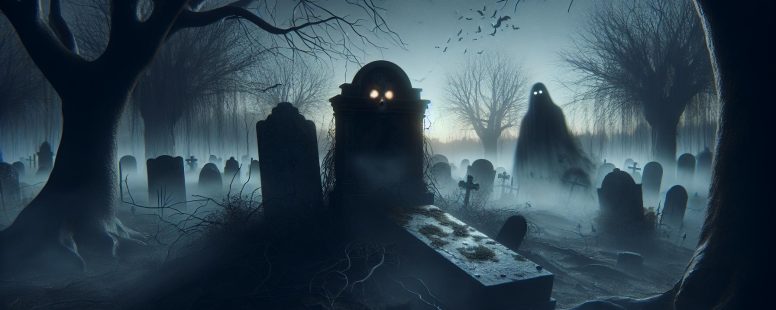
When the moon hangs high and shadows stretch long, you might wonder what truly lurks in the dark. Are those whispers on the wind the lament of a restless ghost, or is something far more sinister—like a ghoul—waiting just out of sight? These two eerie beings have haunted folklore for centuries, yet they’re often misunderstood or mistaken for one another.
Understanding the difference between ghosts and ghouls isn’t just about unraveling spooky tales—it’s about diving into their distinct origins, behaviors, and roles in mythology. While one might evoke sorrowful chills with its ethereal presence, the other stirs primal fear with its macabre hunger. Knowing what sets them apart not only deepens your appreciation for these haunting legends but also makes their stories all the more captivating. So, are you ready to uncover how these creatures differ at their very core?
Understanding Ghosts
Ghosts, rooted deeply in folklore, are often described as the spirits of deceased individuals lingering in the physical world. They evoke emotions ranging from sorrow to curiosity, with their presence tied closely to human experiences and beliefs.
Characteristics Of Ghosts
Ghosts are traditionally seen as ethereal beings. They lack a physical form but can manifest visually or audibly, like sudden cold drafts or faint whispers. Their connection to specific locations or objects is common; haunted houses and cursed artifacts serve as prime examples. These entities often represent unresolved emotions or unfinished business from their past life.
Their behavior varies widely. Benevolent spirits may protect loved ones, while malevolent ghosts might seek revenge for perceived injustices. Poltergeists illustrate another subset known for chaotic activity—moving objects or causing disturbances without visible intervention.
Types Of Ghosts In Folklore
Folklore features diverse ghostly types across cultures:
Apparitions: Visible forms resembling humans, such as the “White Lady” appearing near tragic sites.
Wraiths: Ominous harbingers of death often cloaked in shadowy forms.
Phantoms: Distorted remnants of individuals who died under traumatic circumstances.
Residual Hauntings: Repetitive actions imprinted on environments post-death, like footsteps heard along old corridors.
Examples include Japan’s yūrei (vengeful spirits wearing white burial attire) and Latin America’s La Llorona (the weeping woman searching for her lost children).
Cultural Perceptions Of Ghosts
Different societies interpret ghosts through unique lenses influenced by religion and tradition:
In Western culture, ghosts symbolize loss or serve as cautionary figures warning against moral failings.
Hindu beliefs view them as preta, souls trapped due to improper rituals after death.
African traditions regard ancestral spirits with reverence rather than fear.
Media portrayals shape modern perceptions significantly—movies like The Sixth Sense amplify intrigue around unseen presences while emphasizing emotional connections between living people and spectral entities.
Exploring Ghouls
Ghouls are creatures of macabre lore, distinct from the spectral nature of ghosts. They embody physicality and savagery, often portrayed as sinister beings that prey on the living or desecrate the dead.
Characteristics Of Ghouls
Ghouls exhibit corporeal forms, unlike ghosts which are immaterial. They’re commonly depicted with decayed flesh, sharp claws, and glowing eyes. Their behavior centers around graveyards or desolate areas where they scavenge human remains.
These entities symbolize moral decay, fear of death, and societal taboos surrounding burial practices. While some legends describe ghouls as mindless scavengers, others depict them as cunning predators capable of luring victims to isolated locations.
Origins Of Ghouls In Mythology
The term “ghoul” originates from Arabic folklore where it’s spelled “ghūl.” Early accounts in Arabian Nights describe ghouls as shape-shifting demons inhabiting deserts and devouring travelers or corpses. They were considered jinn-like entities tied to darkness and malevolence.
In Western interpretations during the 18th century, authors like William Beckford introduced ghoulish figures in Gothic literature. These adaptations shifted their portrayal into more grotesque yet less supernatural forms compared to their Middle Eastern roots.
Ghouls In Popular Culture
Popular culture frequently reimagines ghouls across horror genres. Movies such as Night of the Living Dead classify zombie-like figures with ghoul characteristics—feeding on human flesh while retaining a semblance of humanity’s form.
Video games like Dark Souls and Diablo incorporate ghoulish enemies characterized by unrelenting aggression in eerie settings. Literature also revisits these monstrous beings; H.P Lovecraft’s works portray intelligent ghouls that dwell underground and interact with humans under grim circumstances.
You encounter variations in modern depictions depending on cultural influences or creative liberties taken by creators designing these chilling antagonists for entertainment mediums worldwide.
Key Differences Between Ghosts And Ghouls
Physical Appearance
Ghosts are typically described as ethereal and translucent, often appearing as faint outlines or human-like figures. They lack physical form, making them intangible and incapable of interacting physically with their surroundings. For example, in folklore, ghosts are depicted wearing clothes from the period they lived in, such as Victorian-era garments.
Ghouls, on the other hand, possess a grotesque corporeal form. They exhibit decayed flesh, distorted features like sharp claws and glowing eyes, and an overall monstrous appearance. Originating from Arabic tales describing shape-shifting demons lurking in deserts or graveyards, ghouls evoke fear through their terrifying physicality rather than spectral presence.
Behavior And Motives
Ghosts behave based on unresolved emotions or unfinished business tied to their past lives. Their motives range from seeking closure to protecting loved ones or exacting revenge for wrongdoings. Poltergeists represent chaotic entities that disturb environments by moving objects or creating noise without clear intent.
Ghouls act purely on predatory instincts or malevolent desires. They prey on corpses in burial grounds and occasionally attack the living if provoked. Unlike ghosts’ emotional ties to humanity, ghouls symbolize primal savagery and moral decay associated with desecration of death rituals.
Cultural Roles And Depictions
Cultural contexts influence how you perceive ghosts and ghouls differently across societies. Ghosts often embody sorrowful themes linked to loss or spiritual beliefs—examples include Japan’s yūrei symbolizing unfulfilled duties or Latin America’s La Llorona mourning her children eternally.
In contrast, ghouls symbolize fears surrounding mortality and taboo subjects like cannibalism or improper burials. Western adaptations shaped modern portrayals into zombie-like creatures seen in films (e.g., Night of the Living Dead) while Arabic folklore highlights demonic aspects targeting travelers near desolate areas.
Why Understanding The Difference Matters
Grasping the distinction between ghosts and ghouls enhances your comprehension of folklore, mythology, and cultural narratives. These entities reflect human emotions, fears, and societal values in distinct ways.
Ghosts often represent unresolved grief or longing. Knowing their symbolic role helps you better understand cultural practices surrounding death and mourning. For instance, in Eastern traditions like Japan’s Obon Festival, ghostly spirits are honored with rituals to guide them peacefully into the afterlife. Recognizing these beliefs fosters a deeper appreciation of diverse spiritual customs.
Ghouls embody humanity’s darker fears about mortality and taboo subjects like desecration or cannibalism. By differentiating them from ghosts, you can explore how societies address anxieties tied to death’s physicality through monstrous figures. Arabic folklore describes ghouls as shape-shifting demons preying on travelers—a narrative warning against isolation in desolate landscapes.
Failing to discern these differences could lead to misconceptions when engaging with literature or media. Films like Paranormal Activity portray ghostly hauntings driven by emotional turmoil, whereas productions such as Night of the Living Dead depict ghoulish creatures feeding on human flesh. Distinguishing between these depictions enriches your understanding of storytelling tropes across genres.
In academic contexts or casual discussions about supernatural lore, identifying key traits—such as a ghost’s ethereal nature versus a ghoul’s corporeal savagery—demonstrates critical thinking skills and attention to detail. This nuanced perspective allows you to analyze themes more effectively within historical texts or modern entertainment.
Also exploring these differences sharpens your ability to connect fictional narratives with real-world psychological concepts: loss for ghosts; primal fear for ghouls. Such insights deepen not only personal knowledge but also meaningful conversations around universal human experiences encapsulated in myths and legends.
Conclusion
Understanding the difference between ghosts and ghouls offers you a richer perspective on supernatural lore and cultural narratives. These two entities, though often confused, reflect distinct fears, emotions, and societal beliefs that have shaped storytelling for centuries.
By recognizing their unique traits—whether it’s the sorrowful presence of ghosts or the primal terror evoked by ghouls—you can engage more thoughtfully with folklore, literature, and media. This deeper appreciation not only enhances your knowledge but also allows you to explore humanity’s timeless fascination with life, death, and the unknown.
To provide the best experiences, we use technologies like cookies to store and/or access device information. Consenting to these technologies will allow us to process data such as browsing behaviour or unique IDs on this site. Not consenting or withdrawing consent, may adversely affect certain features and functions.
Functional
Always active
The technical storage or access is strictly necessary for the legitimate purpose of enabling the use of a specific service explicitly requested by the subscriber or user, or for the sole purpose of carrying out the transmission of a communication over an electronic communications network.
Preferences
The technical storage or access is necessary for the legitimate purpose of storing preferences that are not requested by the subscriber or user.
Statistics
The technical storage or access that is used exclusively for statistical purposes.The technical storage or access that is used exclusively for anonymous statistical purposes. Without a subpoena, voluntary compliance on the part of your Internet Service Provider, or additional records from a third party, information stored or retrieved for this purpose alone cannot usually be used to identify you.
Marketing
The technical storage or access is required to create user profiles to send advertising, or to track the user on a website or across several websites for similar marketing purposes.