Picture stepping into a world where light reveals secrets invisible to the naked eye—where warmth shimmers beyond what you can see and technology harnesses invisible waves to transform your daily life. You might not realize it but two types of light play a silent role in everything from remote controls to cutting-edge medical scans: near infrared and infrared.
What if understanding the difference between these two could help you make smarter choices about your health gadgets or even boost your photography skills? Jump into the subtle dance of wavelengths and discover how these unseen forces shape the way you experience comfort, security, and innovation. The line between near infrared and infrared isn’t just science—it’s the key to unlocking a world of hidden possibilities.
Understanding Infrared and Near Infrared
Infrared light surrounds you, hiding just beyond what your eyes can see. You use it every time you point a remote at your TV, or snap a dramatic photo with your smartphone’s night mode. But did you ever wondered why some security cameras catch things invisible to street lights, or how your smartwatch measures your heart rate in the dark? The answer sits in the narrow lanes of the electromagnetic spectrum: infrared (IR) and near infrared (NIR).
Physicists say infrared stretches from about 700 nanometers (nm) to 1 millimeter, while near infrared takes up the slice between roughly 700 nm and 1400 nm (NASA, 2023). For context, sunlight carries visible wavelengths from about 400 nm to 700 nm—so near infrared sits just above red light, making it almost visible. That’s why night vision goggles glow a ghostly green, capturing energy where your eyes can’t.
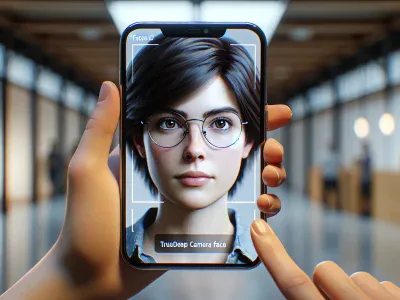
Infrared energy travels in more ways than one. In thermography, police helicopters track suspects by their body heat radiating in the mid-infrared band—a totally different realm than the near infrared used by your phone’s facial recognition feature. If you ever aimed a TV remote at a digital camera, you’ve seen a blip of pale-purple NIR light on the screen, proving your own senses miss entire stories.
Have you noticed hospitals using finger clips to measure oxygen? Those pulse oximeters flash NIR and red lights through skin, exploiting the fact that hemoglobin absorbs these wavelengths differently—it’s a silent conversation between molecules and light, revealing if your blood carries enough oxygen. The next time you use a fitness band, remember there’s a covert dialogue happening on your wrist, lit by near infrared rays.
Engineers in agriculture rely on near infrared, too. Sensors scan leaves and fruit, reading invisible signatures that reveal ripeness or stress. Would you trust a robot that “sees” in wavelengths you can’t? Some farmers bet their harvests on it.
Is infrared all the same? Not even close. Mid and far infrared (longer wavelengths, more heat energy) power devices like heating panels and thermal cameras, while NIR (shorter, less energetic) unlocks secrets in digital imaging and biomedical sensing. They’re branches of the same family tree, but each speaks a different dialect.
What would it mean for your daily life if you could sense these wavelengths yourself? Maybe you’d spot the wireless networks blanketing a subway, or see invisible bruises under fruit skin at the store. Infrared and near infrared let you—through technology—peek into worlds just out of reach, expanding your sense of what’s really there. Sources like IEEE and NASA confirms these principles, showing that the future is illuminated by rays you don’t even see.
Key Characteristics of Infrared
Infrared light forms a bridge, invisible yet pivotal, between the colors you see and the microwaves all around. You navigate daily environments awash with this silent actor—tracking heat signatures, carrying device commands, and, sometimes, revealing hidden art beneath a masterpiece’s paint.
Wavelength Ranges
Think of infrared as a broad boulevard split into districts, each with a unique address. The full range stretches from about 700 nanometers (nm) up to 1 millimeter (mm), connecting visible red light to microwaves (NASA, 2023). Near infrared (NIR) claims the stretch from 700 to 1400 nm, like the vibrant downtown where biomedical sensors and digital cameras bustle. Mid infrared, ranging 1400 to 3000 nm, supports thermal imagers and gas analyzers, like a business hub humming with activity. Far infrared, the outer district spanning 3000 nm to 1 mm, covers heating devices and atmospheric science orbiters.
Infrared Band
Approximate Wavelength Range
Common Uses
Near Infrared
700–1400 nm
Biometrics, Imaging
Mid Infrared
1400–3000 nm
Gas Detection, Thermals
Far Infrared
3000 nm–1 mm
Heaters, Space Study
Applications of Infrared
You find infrared woven into the tapestry of modern life. Security cameras draw on its power to see in total darkness, like owls spying field mice on moonless nights. Medical imaging leverages it to detect inflammation and blood flow variations, a story as dramatic as an ER reveal. Remote controls, with signals beamed in the NIR range, conduct silent symphonies with TVs and projectors, making your thumbs the baton.
Ever squinted at a TV and wondered how the channel changes with no strings? Tiny IR LEDs, hidden inside remotes, blink unique codes, invisible to your eye (IEEE Spectrum, 2022). In agriculture, drones scan vast fields with NIR sensors, revealing diseases before bare eyes even suspect trouble. Photographers tune near infrared filters to create ghostly landscapes where foliage glows white and skies turn charcoal—a view normally denied to human vision.
Ever think if we could see the world in infrared, how much more might you notice every day?
When you look at the world, near infrared sits just past what your eyes grab from visible light. This region isn’t just about what you can’t see, it’s what powers some of the biggest advances in tech and science.
Unique Properties of Near Infrared
Near infrared wavelengths range from 700 nm to 1400 nm and bridge the familiar world of visible colors with the unseen currents of traditional infrared. You see, NIR photons got less energy than visible light but they’re more energetic than mid and far infrared photons. This trait means NIR can penetrate organic tissue deeper than visible light—scientists, like those at the NIH, use this property for advanced non-invasive imaging.
Surfaces, for example, reflect NIR differently than visible light. Healthy leaves reflect more NIR than stressed ones—which is why satellite companies, like Planet Labs, use NIR for vegetation analysis. Water, in contrast, absorbs NIR fast, making this range perfect for distinguishing dry from wet zones in remote sensing. Isn’t it curious how something invisible can reveal secrets about the health of a forest or the presence of hidden water?
NIR photons don’t leave heat signatures like far infrared does, so your skin can absorb NIR in sunlight, yet you won’t feel the same warmth as with a heat lamp. That little difference helps doctors peer under your skin using NIR sensors, while heat lamps warm you with invisible far IR.
Common Uses of Near Infrared
Digital cameras, farm drones, wearable health monitors—these everyday examples all link to NIR’s diverse uses. Some digital sensors rely on NIR to capture sharper nighttime images, while fitness trackers, like the Apple Watch, send NIR light into your wrist to measure blood oxygen. how auction houses can spot a forged painting? They shine NIR light to see under old paint layers, revealing what the artist covers or changes.
Industrial sectors tap NIR for process monitoring—think of food factories using NIR scanners to grade fruit ripeness or pharmaceutical labs using it to check chemical purity without unsealing bottles. Even airports leverage NIR, scanning ID chips or verifying paper authenticity. According to NASA Earth Observatory, earth-orbiting satellites map fires, floods, and farmland with NIR modules, seeing through smoke and cloud that block visible light.
What if you could see through the skin or peer across a smoky field? With near infrared technology in your gadgets, you already do—quietly, every day, while the wavelengths remain unseen.
Major Differences Between Near Infrared and Infrared
Near infrared (NIR) and infrared (IR) stand as distinct, yet closely related, regions of the electromagnetic spectrum—each carving out unique roles in day-to-day life and high-tech domains. Their distinctions are more than scientific trivia: knowing these can shape your choices in gadgets, health, and even your view of the natural world.
Spectral Range Comparison
Spectral ranges set near infrared apart from its broader infrared family. NIR covers wavelengths from about 700 nm to 1400 nm, while the entire infrared spectrum stretches out from 700 nm to 1 mm. That’s the width of a hair compared to the breadth of a road! Think about your TV remote: it operate within IR, but its signal doesn’t reach into NIR territory. In this context, near infrared acts like an energetic little sibling, hugging close to visible red light, while infrared sprawls further, covering mid (1400–3000 nm) and far (3000 nm–1 mm) regions.
Region
Wavelength Range
Example Applications
Near Infrared
700–1400 nm
Digital imaging, biomedical sensing
Mid Infrared
1400–3000 nm
Gas detection, water analysis
Far Infrared
3000 nm–1 mm
Heating panels, thermal cameras
Practical and Industrial Applications
Applications of near infrared and general infrared take diverging paths in technology and industry. NIR shows up in agricultural drones, inspecting plant health using reflectance, and swoops into your wearables, measuring heart rates without a pinch. NIR, unlike broader IR, brings sharper details to nighttime digital photos, letting you see the world from a new angle—even after sunset.
Conversely, broader infrared strides into thermal imaging—detecting heat loss in buildings or helping firefighters with smoky rescues. IR’s longer wavelengths pierce fog and smoke far better than NIR, painting vivid pictures of heat even in total darkness. In manufacturing, mid and far IR check for material flaws or guide robotic welders by tracing temperature anomalies. So, when someone says “infrared thermometer,” they’re talking about a wider band than the near cousin who just checks oxygen in your smartwatch.
Health and Safety Considerations
Health and safety factors split sharply between NIR and the wider IR spectrum. NIR, with its penetrating but non-heating properties, makes noninvasive medical diagnostics safer—think MRI companions or blood oxygen sensors in hospitals [NIH, 2023]. NIR barely warms tissue, so its gentle touch fits medical and cosmetic uses without discomfort.
Bigger, bolder IR can raise a sweat. Far infrared saunas flood you with thermal rays—users experience intense, comforting heat, which is effective for relaxation but requires careful design to prevent overheating [Mayo Clinic, 2022]. Safety standards differ: NIR’s lower energy means less risk of burns, but direct or prolonged exposure to some IR sources, like industrial heaters or lasers, can cause injury or eye damage.
When you’re picking a device, peek at the label—does it harness NIR’s stealthy, diagnostic magic, or is it using the broader IR spectrum for heat and imaging? The answer matters: it connect your gadget choice with your own health and safety, as well as determining what invisible worlds you might see or feel.
Choosing Between Near Infrared and Infrared
Picture standing in front of two doorways—one glows faintly, barely seen by the naked eye, and the other radiates a subtle, comforting warmth. Both are portals to the unseen electromagnetic world, yet each leads to a different destination. Choosing between near infrared (NIR) and infrared (IR) isn’t just splitting hairs: it’s about finding the right wavelength for your journey, whether that means sharper health data or a cozy winter evening.
NIR’s narrow spectral window (700–1400 nm) acts as a silent investigator in health and agriculture. Have you ever watched as a wearable fitness band measured your heart rate? That’s NIR at work, slipping invisibly through your skin, returning with clues about your blood flow—no heat, just pure information. Medical researchers at Harvard Medical School have demonstrated how NIR spectroscopy non-invasively detects tissue oxygenation, meaning you can diagnose problems before you even feel symptoms. Farmers, on the other hand, fly drones over golden fields, catching NIR reflections from healthy leaves—each burst of light is a data point. Wonder why healthy plants shimmer brighter in satellite images? That’s the NIR spectrum outing chlorophyll’s secret energy.
Gaze at the wider IR landscape (700 nm–1 mm) if you’re seeking practical heat or night vision. When you curl up with a heating pad for sore muscles, it’s likely mid or far infrared enveloping you, not the NIR that powers biometric monitors. Military and security professionals trust IR thermal cameras to spot hidden threats in darkness, while building inspectors scan for invisible leaks and weaknesses. Would a NIR camera catch a prowler in the dark? Not quite—the broader IR spectrum tracks body heat, revealing warm outlines where visible light fails. According to FLIR Systems, leaders in thermal imaging, IR sensors regularly save lives during search-and-rescue missions by seeing through smoke and darkness.
Ask yourself: Are you chasing precision or comfort, data or detection? If you’re a hospital administrator choosing diagnostic tools, NIR-based pulse oximeters protect patients without risk of burns. If you’re designing a smart home thermostat, the far IR spectrum delivers actionable heat data for efficiency. Artists, ever wondered how experts uncovered a hidden signature on a priceless painting? NIR imaging can see layers below the paint, offering art historians insights that’d remain invisible otherwise.
Yet, don’t discount the safety booklet. As NASA points out, exposure to high-powered IR can mean real risks—burns or overheating—while NIR’s lower energy passes harmlessly through tissue. Still, ask questions before choosing. Is your device rated for safety? Is its purpose clinical, industrial, or security? Regulatory labels and device specifications, verified by agencies like FDA or the European Medicines Agency, anchor your decision in safety, not just innovation.
Through this tangled electromagnetic garden, your choice rests on purpose, risk, and imagination. Sometimes, picking the right wavelength is like tuning a radio—precision and clarity come from finding the exact signal, not just any channel.
Conclusion
Understanding the difference between near infrared and infrared opens up new ways to use technology more effectively in your daily life. Whether you’re interested in improving your health monitoring or enhancing your photography, knowing which wavelength suits your needs can make all the difference.
By paying attention to how these invisible light waves work, you can choose smarter devices and get the most out of modern tech. Let your next purchase be guided by insight, not guesswork, and you’ll unlock benefits you might not have realized were possible.
To provide the best experiences, we use technologies like cookies to store and/or access device information. Consenting to these technologies will allow us to process data such as browsing behaviour or unique IDs on this site. Not consenting or withdrawing consent, may adversely affect certain features and functions.
Functional
Always active
The technical storage or access is strictly necessary for the legitimate purpose of enabling the use of a specific service explicitly requested by the subscriber or user, or for the sole purpose of carrying out the transmission of a communication over an electronic communications network.
Preferences
The technical storage or access is necessary for the legitimate purpose of storing preferences that are not requested by the subscriber or user.
Statistics
The technical storage or access that is used exclusively for statistical purposes.The technical storage or access that is used exclusively for anonymous statistical purposes. Without a subpoena, voluntary compliance on the part of your Internet Service Provider, or additional records from a third party, information stored or retrieved for this purpose alone cannot usually be used to identify you.
Marketing
The technical storage or access is required to create user profiles to send advertising, or to track the user on a website or across several websites for similar marketing purposes.