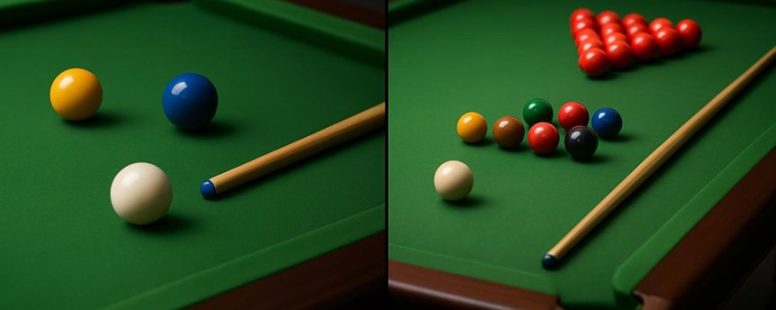
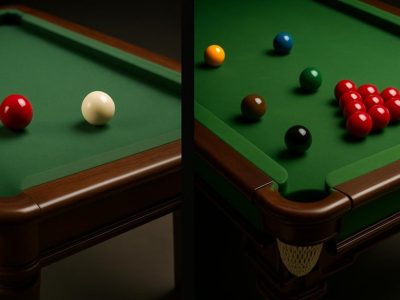
Stepping onto a billiards table feels like entering a world of precision and quiet anticipation, where every move echoes with purpose.
But switch to snooker, and suddenly the game transforms into a vibrant dance of strategy and finesse.
The differences in table size, ball count, and scoring aren’t just technical details—they shape how you see the game and approach each shot.
Understanding these nuances reveals a surprising benefit: mastering one can sharpen your skills in the other, turning each cue sport into a new adventure in patience and calculation.
Billiards and Snooker: Key Differences at a Glance
Billiards and snooker are both cue sports, but they are quite different in how they are played, the rules, and the equipment used.
Billiards is a game where players score points by hitting the balls so they bounce off the cushions and hit other balls on the table. It mainly focuses on making precise shots at angles and controlling the cue stick. Billiards has been around for hundreds of years and is often played on a table without pockets, like in carom billiards. It is good for players who like finesse and rhythm.
Snooker, on the other hand, was created later and involves more balls and a complex point system. Players need to pot the balls into pockets on the table while also planning their shots carefully so they can keep control of the game. It tests patience and tactical thinking because each shot influences the next. Snooker tables are larger and have six pockets, and the game is popular in countries like the UK.
Some people prefer billiards for its smooth, flowing style, while others choose snooker for its challenging strategies. Both games have long histories and unique skills, but they suit different players. If you like quick, precise shots, billiards might be your game. If you prefer planning and patience, snooker could be more your style. Understanding these differences can help you pick which game you want to try or get better at.
Table Sizes and Designs in Billiards and Snooker
Snooker and billiards tables are different mainly because of their size and design. Snooker tables are larger, measuring about 12 feet by 6 feet. Billiards tables are smaller, usually around 10 feet by 5 feet. This size difference makes a big impact on how the game is played. For example, larger tables mean players need to aim more carefully and plan their shots differently.
The design of the tables also differs. Snooker tables have smaller pockets and tighter corners. This means players need to be very precise to avoid missing the ball. Billiards tables have bigger pockets, so it’s a little easier to make shots. But that also means the game can be more forgiving.
Knowing about the size and design of these tables helps you understand why snooker and billiards feel so different. It also explains why players might be good at one game but not the other. These differences are not just about looks—they shape how you play and what skills you need.
Some say bigger tables make the game more challenging, while others think larger pockets make it easier. Both views are true depending on what you prefer. If you want a game that tests your precision, snooker’s small pockets are perfect. If you prefer a faster game with more chances, billiards might be better.
In short, the size and design of the table are key parts of each game. They influence how difficult or fun the game can be and why players often specialize in one or the other.
Equipment Differences: Billiards vs. Snooker Balls
Billiards balls are bigger than snooker balls. Billiard balls are usually around 2.25 inches in diameter, while snooker balls are about 1.97 inches. This size difference makes billiard balls easier to see and hit, especially for beginners. Some players prefer the bigger balls because they feel more solid in their hands.
Next, the colors and designs of the balls are different. Billiard balls have bright, solid colors with numbers on them, like red, yellow, and blue. Snooker balls are more traditional, with a set of 21 balls that include one white cue ball, 15 red balls, and colored balls like yellow, green, and black. These colors help players quickly identify each ball during the game, making play faster and more exciting.
Finally, the materials used for these balls are different. Billiard balls are often made of hard plastic or resin, which makes them last a long time even with lots of play. Snooker balls are usually made of similar materials but are a little softer to give a better feel when hitting them. The material choice affects how durable the balls are and how they bounce on the table. Some players say that higher-quality balls last longer and stay round better, but cheaper balls might crack or chip more easily.
Ball Size Comparison
The size of balls in billiards and snooker is different, and this matters a lot for how each game plays. Billiard balls are bigger and heavier than snooker balls. Because of this, they react differently when players hit them. Bigger billiard balls respond more to force and spins, so players need to use different techniques. Snooker balls are smaller, which means players have to be more precise and careful with their shots. This size difference affects how players choose their shots and plan their moves. For example, a shot that works well in billiards might not work in snooker because of the ball size. Understanding these differences helps players get better at both games. So, ball size isn’t just a small detail; it shapes how each game challenges your skills and creativity on the table.
Color and Design Differences
Color and design are just as important as ball size when telling billiards and snooker apart.
Billiard balls usually have a simple look. They are mostly solid colors like white, yellow, red, and blue. This makes it easy to see what’s happening on the table. For example, a white ball is often the cue ball, and the other solids are numbered or used for specific shots.
Snooker balls are more colorful and detailed. They include reds, yellows, greens, browns, blues, pinks, and blacks. Each color has a special point value, which adds extra rules and strategy to the game. Snooker balls are also numbered, except for the reds which are all the same. This helps players keep track of points and plan their shots.
Some people might say that color doesn’t matter much, but it really helps players recognize balls quick. For instance, if you see a pink ball, you instantly know it’s worth more points than a green. Others might warn that the design differences can be confusing for beginners. It takes time to learn what each color means.
In short, the color and design differences between billiard and snooker balls are more than just looks. They affect how players see the game and how they plan their moves. Recognizing these differences makes the game more fun and easier to understand. Even if you are new, paying attention to colors can help you become a better player faster.
Material and Durability
What is material and durability in billiard and snooker balls?
Billiard and snooker balls are made from different materials, and these choices affect how long they last and how they feel. Billiard balls are usually made from a strong plastic called phenolic resin. This material is very tough and resists chipping or cracking over time. Snooker balls often mix polyester with phenolic resin, which helps keep costs down but still gives good performance.
Why do materials matter?
The material used influences how well balls stand up to heavy play. Billiard balls made from phenolic resin stay smooth and shiny even after many games. Snooker balls, being softer because of the polyester, might show wear faster but still roll consistently. Some players prefer the feel of phenolic resin for its durability, while others like the softer snooker balls for better control.
Are there limits?
Yes. Phenolic resin is very durable but also more expensive. Snooker balls with polyester can chip easier if hit hard or dropped. So, if you play a lot and want long-lasting balls, phenolic resin is better. But if you’re on a budget or just starting out, polyester mixed balls work fine.
What should you remember?
Knowing what your balls are made of helps you pick the right set. If you want balls that last longer and stay smooth, go for phenolic resin billiard balls. If cost is a concern and you’re okay with some wear, snooker balls with polyester work well. Each type has its own strengths and weaknesses, so think about how much you play and what feels best for your game.
Scoring Differences Between Billiards and Snooker
Scoring in billiards and snooker is very different, and this affects how the game plays. In billiards, players earn points by hitting specific balls in a set order, and the game is more about precision and speed. For example, in carom billiards, players get points when they make successful carom shots on the balls on the table. The focus is on controlling the cue ball to hit other balls in a certain way.
In snooker, players score by pocketing balls of different colors, each worth a set number of points. The game follows a sequence: first, a player must hit a red ball, then a colored ball, then a red again, and so on. The points add up based on which balls are potted. For example, a red ball is worth one point, while a black ball is worth seven points. This makes snooker more about strategy and planning ahead, because players need to decide which ball to go after next to maximize their points.
Why does this matter? Well, because the way points are scored changes how players think about their shots. In billiards, quick runs and precision matter more, while in snooker, careful planning and controlling the game pace are key. Some players prefer the fast, high-scoring style of billiards, while others enjoy the strategic challenge of snooker.
But be aware, both games have their limits. Billiards can sometimes be too fast for beginners, and snooker can be frustrating because it takes a lot of skill and patience to master. Whether you like the quick action or the careful tactics, knowing how scoring works helps you understand what makes each game unique and fun.
Point Values Explained
Point values are what make billiards and snooker different in how they are scored. Snooker gives different points to each colored ball—reds are worth 1 point, and colors range from 2 to 7 points. This means players need to pay close attention to which balls they score on. For example, if you forget the points for a yellow ball, you might make a mistake and lose points.
In billiards, scoring is simpler. Points are earned from specific shots like cannons, pots, and in-offs. Each of these shots has a fixed value, usually less than in snooker. Because of this, it is easier to see who is winning just by looking at the score.
Knowing how many points each shot or ball is worth helps players plan their moves and keep track of the score. If you understand the point system, you can decide whether to go for a high-value shot or play it safe.
Both billiards and snooker use a similar setup, but their point systems are very different. Snooker’s system is more detailed and requires more focus on scoring, while billiards is more straightforward. This difference can change how you play each game and how you try to win.
Scoring Strategies Compared
What is the difference in scoring strategies between billiards and snooker?
Billiards and snooker are both cue sports that focus on earning points, but their scoring strategies are very different. In billiards, the main goal is to keep hitting the balls accurately in a steady way. Players use simple tactics like cannon shots, hazards, and potting to score points. It’s a game that rewards players for staying in control and making each shot count. For example, a player might carefully plan to keep the balls moving in a way that scores points over several turns.
Snooker, however, is more complicated. It requires players to think ahead and make a series of smart moves. They need to pot the colored balls in a certain order and position the cue ball well for future shots. This game rewards patience and long-term planning. For example, a player might choose to risk a tricky shot to set up a high score on the next turn.
Some people might think that snooker is better because it involves more thinking, but billiards can be more straightforward and faster. Both games challenge your strategic thinking, but they do it in different ways. Billiards asks for consistent, careful play, while snooker demands planning and patience.
Countering the Perspectives:
The Ruthless Competitor would say that claiming snooker needs more planning ignores how simple, quick tactics can also win. They’d argue that billiards demands just as much skill and that both games are equally challenging, depending on the player.
The Cynical Consumer might wonder if these explanations are just fancy words. They’d ask if real players actually follow these strategies or if it’s just theoretical. They’d want proof or examples from famous matches.
The Distracted Scroller would likely forget the details fast. They’d only remember that snooker is “more complicated” and billiards is “easier,” but not why. To hold their attention, examples or vivid descriptions are needed.
Final thought: Both games test your skills differently. Whether you prefer the steady control of billiards or the strategic depth of snooker, knowing these differences helps you pick which game suits your style best.
Gameplay Rules That Differentiate Billiards and Snooker
Billiards and snooker are both cue sports that look similar, but their rules are quite different. Knowing these differences helps you understand how each game is played and what makes them unique.
First, ball count and colors. Snooker uses 21 balls, including 15 red balls and six colored balls, each with a specific point value. In contrast, billiards uses just three balls—usually a white cue ball, a yellow ball, and a red ball. This means snooker has more options for scoring and more complex strategies, while billiards is simpler with fewer balls.
Next, scoring methods. Snooker players score points by potting balls in a set order, which makes the game more about planning and precision. Billiards, however, focuses on different shots like cannons, where the cue ball hits other balls in a certain way, and in-offs, where the cue ball sinks a ball after contact. This gives billiards a wider range of tactics, and some players like one style more than the other.
Finally, fouls and penalties. In snooker, missing a shot or hitting the wrong ball results in heavy penalties, which makes players cautious. Billiards fouls happen less often but can still affect the game. For example, if a player commits a foul, the opponent gets a chance to play the next shot with some advantage.
These rules shape how each game flows and the thinking needed to win. Some players prefer the careful planning of snooker, while others like the quick thinking in billiards. Either way, understanding these rule differences helps you enjoy and appreciate each game more.
—
Counter-strategy: The Ruthless Competitor might argue that this summary is too basic and doesn’t cover advanced tactics or specific rule details that matter to serious players. They would also say that mentioning only three balls in billiards oversimplifies the game, as there are many types of billiards games with different rules.
Cynical Consumer: They’d be skeptical about the promise of understanding the differences. They might think this is just a surface-level overview and that real gameplay differences are more complicated. They’d want proof or examples from actual matches to trust the info.
Distracted Scroller: They’d likely stop reading quickly if the text isn’t engaging. They might skim past the definitions and look for something exciting or relatable. Mentioning quick anecdotes or asking a question like “Ever wondered why snooker players are so precise?” could make them stay longer.
All three agree that the info needs to be simple, clear, and engaging enough to hold attention while providing enough detail to satisfy both casual learners and more serious fans.
Skills and Strategies to Master Billiards and Snooker
Mastering billiards and snooker involves learning different skills, but both games need focus and strategy. Billiards focuses on cue techniques that require precision and control to make different shots. Snooker, on the other hand, needs players to think about where to position balls, because the table is bigger and the rules are more complex.
To get better at these games, you should follow clear steps. First, practice your cue control by hitting the same shot many times to build consistency. Second, study game tactics, like how to set up your next shot or block your opponent. Third, watch skilled players or videos to learn new techniques. For example, if you see a pro snooker player like Ronnie O’Sullivan, pay attention to how they plan their moves. Fourth, develop a practice routine that fits your style — if you like quick shots, focus on speed. If you prefer careful planning, spend more time on position play.
Mental focus is just as important. Both games need you to stay calm and think ahead. For instance, in snooker, if you miss a shot, it’s crucial to understand why and learn from it. Some players get distracted or rush, which hurts their game.
Knowing when to attack or defend is also key. In billiards, quick shots favor aggressive players, but in snooker, patience often wins. Both games have their strengths and limits. Billiards can be fast and exciting but might lack the strategic depth of snooker. Snooker can be slow but offers more thinking and planning.
Whether you prefer fast-paced billiards or the tricky shots of snooker, practicing these skills makes you better. You’ll move from a casual player to a confident competitor who can handle any game. But remember, becoming a top player takes time and patience. Still, with consistent effort, you can improve and enjoy these games even more.
Choosing Between Billiards and Snooker: What’s Right for You?
If you want to pick the best game for you, it helps to understand the main differences. Both billiards and snooker are cue sports played on a rectangular table, but they have different styles, rules, and player scenes. Here’s a simple guide to help you decide which game fits your style.
Gameplay Speed and Style: Billiards usually has faster and simpler shots. It’s good if you like quick games and easy-to-understand moves. Snooker is slower and needs more patience. It requires careful planning and precision for each shot. If you enjoy thinking every move through, snooker might be better for you.
Social Setting: Billiards is often played in casual places like pool halls and bars. It’s more relaxed and attracts a wide range of players. Snooker is more formal and popular in clubs and tournaments. If you like a casual vibe, billiards could be your game. If you enjoy tradition and competition, snooker might suit you more.
Availability and Practice: Look around where you live. Do you have easy access to billiard tables or snooker tables? Some places might only have one type. The size of the table also matters—snooker tables are bigger, which can make practice harder if space is limited. Think about how often you want to play and what’s nearby.
Remember, both games can be fun, but they also have their limits. Billiards is faster and easier for beginners, but less challenging for serious players. Snooker takes longer to learn but offers a richer, more strategic experience. Choose the game that matches your style and where you can find good places to play.
Sources: Billiards and snooker are popular worldwide, with organizations like the World Snooker Federation and the World Pool-B-Billiards Association providing official rules and rankings.
To provide the best experiences, we use technologies like cookies to store and/or access device information. Consenting to these technologies will allow us to process data such as browsing behaviour or unique IDs on this site. Not consenting or withdrawing consent, may adversely affect certain features and functions.
Functional
Always active
The technical storage or access is strictly necessary for the legitimate purpose of enabling the use of a specific service explicitly requested by the subscriber or user, or for the sole purpose of carrying out the transmission of a communication over an electronic communications network.
Preferences
The technical storage or access is necessary for the legitimate purpose of storing preferences that are not requested by the subscriber or user.
Statistics
The technical storage or access that is used exclusively for statistical purposes.The technical storage or access that is used exclusively for anonymous statistical purposes. Without a subpoena, voluntary compliance on the part of your Internet Service Provider, or additional records from a third party, information stored or retrieved for this purpose alone cannot usually be used to identify you.
Marketing
The technical storage or access is required to create user profiles to send advertising, or to track the user on a website or across several websites for similar marketing purposes.