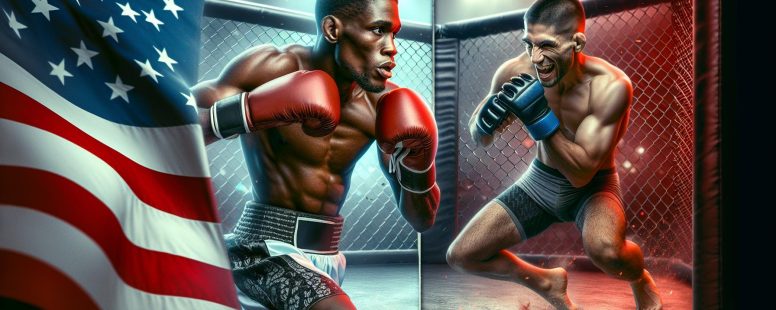
Picture this: the roar of the crowd, the intensity in the air, and two fighters stepping into the ring—or perhaps the cage. While both MMA and boxing captivate audiences with their raw energy and athleticism, they couldn’t be more different in style, strategy, and skillset. Whether you’re a fan or just curious, understanding these differences can deepen your appreciation for each sport.
Boxing is often seen as the sweet science, a dance of precision and power, where punches are the sole weapon. MMA, on the other hand, is a combat melting pot, blending striking, grappling, and submissions into an unpredictable spectacle. These contrasts shape not only the way matches unfold but also the training, rules, and culture behind each discipline.
So, what truly sets these two apart? Let’s jump into the key differences that make MMA and boxing unique in their own right.
Overview Of MMA And Boxing
Mixed Martial Arts (MMA) and boxing have distinct rules, techniques, and styles. Both sports attract millions of fans worldwide for different reasons and offer unique physical and mental challenges to the athletes involved.
What Is MMA?
MMA combines various martial arts disciplines, including Brazilian Jiu-Jitsu, wrestling, Muay Thai, and karate. Fighters use striking, grappling, and submission techniques to win matches. The sport takes place in an octagonal cage, allowing competitors to incorporate the full range of combat skills. MMA’s versatility gives fighters the ability to adapt to different opponents and situations.
Major organizations like the UFC (Ultimate Fighting Championship) promote MMA events globally. In MMA rules, athletes can strike with fists, elbows, knees, and feet. Ground fighting plays a significant role, opening opportunities for submissions like armbars or chokeholds. This dynamic nature keeps the sport exciting, requiring diverse training and strategies.
What Is Boxing?
Boxing is a combat sport focused solely on punches. Fighters aim to land clean shots on opponents while defending against incoming punches. The sport is conducted in a square ring with a limited rule set emphasizing stand-up striking. Boxers wear padded gloves to protect their hands and minimize facial injuries.
Victory in boxing can result from knockouts, technical knockouts, or points decided by judges. Prominent examples include iconic athletes like Muhammad Ali and Mike Tyson, who have elevated the sport’s global status. In boxing training, you concentrate heavily on footwork, head movement, and hand speed to outmaneuver and outstrike opponents.
Both sports have a rich cultural impact, but MMA’s comprehensive techniques contrast boxing’s precision-focused approach.
Rules And Regulations
MMA and boxing have distinct rule sets that define their gameplay, permissible moves, and combat environment. These differences highlight contrasting approaches to combat and strategy, influencing how fighters train and compete.
Differences In Fighting Techniques
MMA incorporates striking, grappling, and submission techniques. Fighters can use punches, kicks, elbows, knees, and takedowns to defeat their opponent. Movements like submissions, such as arm bars or chokes, play a significant role in MMA bouts. The octagonal cage provides space for diverse fighting styles, allowing a blend of stand-up and ground-based combat.
Boxing focuses solely on punches, favoring precision and timing. Fighters stay upright, using combinations and footwork to outmaneuver opponents. Clinching is limited and broken by the referee. The square ring with its ropes limits mobility compared to MMA’s cage.
Variations In Attire And Equipment
MMA fighters wear lightweight gloves with open fingers, allowing for grappling and submissions. Their attire typically includes shorts designed for maximum flexibility. No shirts or shoes are worn, and protective gear is limited to a mouthguard and groin protector.
Boxers use padded gloves meant to cushion punches and reduce hand injuries. Attire includes boxing shorts, shirts are not worn, and footwear consists of boxing shoes for enhanced mobility. The focus on hand strikes makes glove design critical for power and defense.
Scoring Systems In MMA Vs. Boxing
MMA matches are scored based on a 10-point must system. Judges evaluate effective striking, grappling, aggression, and Octagon control. A fighter earning dominance in these areas scores higher in the round. This multifaceted scoring reflects the sport’s complexity and variety of techniques.
Boxing also uses the 10-point system but emphasizes clean punches and defensive skills. Points are deducted for fouls, such as low blows or headbutts. Judges focus on accuracy, power, and control of the round. Unlike MMA, there’s no weight given to grappling or submissions since they’re prohibited.
Fighting Styles And Techniques
Boxing and MMA showcase vastly different fighting methodologies, driven by unique techniques and strategies that cater to the rules and environments of each sport.
Striking Vs. Grappling
Boxing focuses exclusively on striking with punches. Your hands become the primary tools, requiring mastery over powerful jabs, hooks, and uppercuts. Footwork and head movement are critical for both defense and setting up clean shots. Fighters like Muhammad Ali and Mike Tyson have demonstrated how precise striking and evasion define boxing’s art.
MMA incorporates a blend of striking and grappling. You use punches, kicks, elbows, and knees as striking tools, drawing from techniques in Muay Thai, karate, or kickboxing. Grappling includes takedowns, submissions, and ground control, influenced by Brazilian Jiu-Jitsu and wrestling. Iconic MMA fighters like Khabib Nurmagomedov excel in dominating opponents through superior grappling, whereas strikers such as Israel Adesanya rely on stand-up striking.
Legal Moves In Each Sport
Boxing’s rule set allows striking with gloves above the waist only. Punches to the head and torso are permitted, while elbows, kicks, and grappling result in penalties or disqualification. Clinching is allowed momentarily but must be broken by the referee to keep the fight flowing.
MMA enables a wider arsenal of techniques. You can punch, kick, knee, elbow, and execute takedowns or submissions. Ground strikes and transitions are legal unless targeting restricted areas like the back of the head. Though diverse, regulations ensure fighter safety; for instance, 12-to-6 elbow strikes or kicks to grounded opponents remain banned across major MMA promotions like the UFC.
Duration And Rounds
Boxing matches usually span 4 to 12 rounds, with each round lasting 3 minutes for men and 2 minutes for women. A 1-minute rest period is granted between rounds. Championship bouts often feature 12 rounds, testing endurance, technical prowess, and mental resilience.
MMA fights comprise three 5-minute rounds, with championship bouts or main events extending to five rounds. The clock runs uninterrupted unless the fight stops for referee intervention, adding a strategic layer to the sport. While boxing tests sustained footwork and combinations, MMA demands adaptability across striking, grappling, and conditioning over varied tempos.
Training And Preparation
Both MMA and boxing demand rigorous training regimens, but the methods reflect the unique demands of each sport. Their preparation highlights the diverse physical and technical requirements athletes face.
Training Regimens For MMA Fighters
MMA fighters engage in multifaceted training programs due to the sport’s diverse skill set. They incorporate disciplines like Brazilian Jiu-Jitsu (BJJ), wrestling, Muay Thai, and boxing. For example, a fighter may train ground techniques in BJJ while improving striking accuracy in kickboxing. Sessions often include strength and conditioning to develop power and endurance, vital for handling the dynamic nature of MMA bouts. Fighters also practice sparring within rules to simulate real fights.
Cross-functional skills are crucial for MMA success. Athletes prepare to transition between striking and grappling seamlessly. Practicing explosive takedowns, defensive maneuvers, and submission holds ensures readiness in unpredictable scenarios. Mental preparation, including situational drills, builds strategic thinking and composure.
Training Regimens For Boxers
Boxers follow structured programs emphasizing striking precision and defensive techniques. Workouts often involve heavy bag drills, focus mitts for accuracy, and shadowboxing to refine movements. For instance, a boxer may spend hours perfecting a jab-cross combination to enhance timing. Training includes cardio workouts, like running or jumping rope, to build stamina.
Footwork drills are central to boxing conditioning. You practice constant movement within the ring to maintain an advantage against opponents. Dedicated sparring sessions help improve timing, range control, and counterpunching skills. Core strength exercises enhance stability, crucial for executing powerful punches.
Boxing regimens rarely address grappling or ground-based techniques, contrasting with MMA’s holistic approach. This focused preparation ensures boxers master the art of stand-up combat.
Popularity And Audience Appeal
Both MMA and boxing boast massive followings, yet their global appeal and fan engagement stem from distinct factors. Each sport resonates uniquely based on cultural, technological, and generational influences.
Global Reach Of MMA
MMA enjoys widespread recognition across continents, primarily due to the efforts of organizations like the UFC. These promotions use digital streaming platforms and social media to engage global audiences. Fighters like Conor McGregor and Khabib Nurmagomedov contribute to the sport’s mainstream appeal, with McGregor’s bouts drawing millions of Pay-Per-View (PPV) purchases.
Asia plays an important role in MMA’s success, with promotions like ONE Championship delivering high-octane events in countries like Singapore, Thailand, and Japan. In regions like Europe and South America, younger audiences embrace MMA for its rapid nature and diverse techniques. MMA’s incorporation of martial arts traditions such as Brazilian Jiu-Jitsu and Muay Thai further strengthens its worldwide appeal.
Economic factors also drive MMA’s popularity, with organizations targeting multiple markets through large-scale sponsorships, international fight cards, and bilingual commentary teams. Global accessibility ensures MMA continues to attract viewers from varied demographics.
Fanbase And Appeal Of Boxing
Boxing maintains a deep-rooted history, attracting multigenerational fans through its storied legacy and iconic athletes. Legendary boxers like Muhammad Ali, Mike Tyson, and Floyd Mayweather became household names, elevating the sport’s prestige.
While boxing’s fanbase remains solid in countries like the United States, the UK, and Mexico, it extends into Asia and Africa with champions representing diverse nations. The allure of title fights, such as heavyweight and welterweight bouts, adds to its global resonance. Historic rivalries, like that of Ali vs. Frazier, continue to captivate audiences.
Boxing promotions often thrive in traditional broadcast formats, with high-profile events aired on cable networks and modern PPV options. Fans are attracted by the sport’s emphasis on technical skills, disciplined training, and the high stakes of each match.
Conclusion
Whether you’re drawn to the precision and tradition of boxing or the versatility and dynamic nature of MMA, both sports offer unique experiences for athletes and fans alike. Each discipline demands immense skill, dedication, and strategy, showcasing the incredible physical and mental capabilities of its fighters.
Your preference may depend on what excites you more—boxing’s calculated stand-up battles or MMA’s all-encompassing combat techniques. Both sports have carved out their own space in the world of combat sports, captivating audiences with their distinct styles and unforgettable moments.
Understanding the differences between MMA and boxing not only deepens your appreciation for each sport but also highlights the diverse ways fighters push boundaries and inspire fans worldwide.
To provide the best experiences, we use technologies like cookies to store and/or access device information. Consenting to these technologies will allow us to process data such as browsing behaviour or unique IDs on this site. Not consenting or withdrawing consent, may adversely affect certain features and functions.
Functional
Always active
The technical storage or access is strictly necessary for the legitimate purpose of enabling the use of a specific service explicitly requested by the subscriber or user, or for the sole purpose of carrying out the transmission of a communication over an electronic communications network.
Preferences
The technical storage or access is necessary for the legitimate purpose of storing preferences that are not requested by the subscriber or user.
Statistics
The technical storage or access that is used exclusively for statistical purposes.The technical storage or access that is used exclusively for anonymous statistical purposes. Without a subpoena, voluntary compliance on the part of your Internet Service Provider, or additional records from a third party, information stored or retrieved for this purpose alone cannot usually be used to identify you.
Marketing
The technical storage or access is required to create user profiles to send advertising, or to track the user on a website or across several websites for similar marketing purposes.