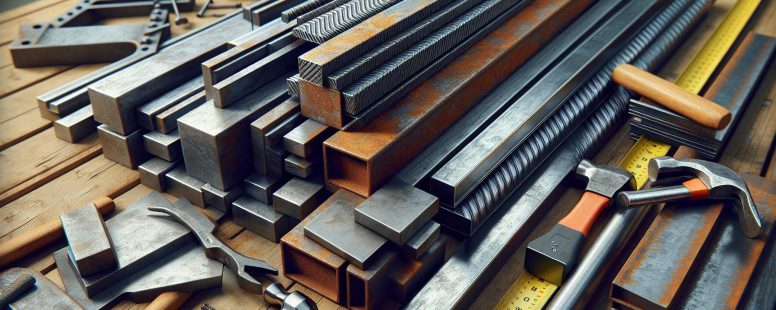
Imagine a world without towering skyscrapers, sturdy bridges, or reliable tools. The materials behind these marvels—iron and steel—have shaped civilizations and industries for centuries. But have you ever paused to wonder what sets them apart? While they may seem similar at first glance, their differences are the key to their unique roles in our daily lives.
Iron, with its raw strength, feels ancient and unyielding, like the backbone of early human innovation. Steel, on the other hand, is iron’s refined and versatile counterpart, engineered to withstand modern challenges. Understanding how these two materials differ not only deepens your appreciation for their uses but also reveals why they’re essential to everything from construction to the smallest household items. Ready to uncover the fascinating distinctions that make iron and steel indispensable? Let’s immerse.
What Is Iron?
Iron is a chemical element represented by the symbol “Fe.” It’s one of the most abundant metals on Earth, making up about 5% of the planet’s crust. As a raw material, it’s essential in various industries due to its inherent strength and durability.
Characteristics Of Iron
Iron has a high density of 7.87 g/cm³, giving it significant strength. It’s malleable and ductile, allowing it to be shaped into wires or sheets without breaking. Its melting point of 1,538°C makes it suitable for high-temperature applications. Iron is usually magnetic, which helps in manufacturing motors and transformers. But, it oxidizes easily, forming rust, unless protected by coatings.
Pure iron is relatively soft and rarely used in its natural state. When extracted from ores like hematite (Fe₂O₃) or magnetite (Fe₃O₄), impurities are removed through smelting to create metallic iron. As a ferrous metal, it often serves as a base for alloys.
Uses Of Iron
Iron is a crucial material in construction due to its load-bearing capabilities. It’s used in beams, columns, and reinforcement bars (rebar). Major infrastructure like bridges and buildings relies heavily on its structural properties.
In the transportation industry, iron forms the backbone of vehicles, ships, and railway tracks. It provides the strength needed for durability and safety. Cast iron is extensively applied in making engine blocks, pipes, and cookware due to its heat resistance.
Iron also plays a vital role in manufacturing tools, agricultural equipment, and machinery. Its versatility extends to chemical industries, where iron catalysts are employed in ammonia production. Beyond these, iron supports life as an essential component of hemoglobin, enabling oxygen transport in your blood.
What Is Steel?
Steel is an alloy primarily composed of iron and carbon, along with varying quantities of other elements like manganese, chromium, or nickel. Its composition enhances its strength, durability, and resistance to corrosion compared to pure iron. Steel’s adaptability makes it indispensable across industries.
Characteristics Of Steel
Steel exhibits unique mechanical and physical properties due to its chemical composition and molecular structure. Its tensile strength, which allows it to withstand heavy loads and forces, is higher than iron. It possesses hardness, reducing wear from friction, and malleability, enabling it to be shaped into different forms.
Steel resists rusting and corrosion better than iron, especially when alloyed with chromium to create stainless steel. Its melting point is lower than pure iron’s but still ranges between 2,500°F and 2,800°F, depending on the alloy. These qualities make steel a reliable material for demanding applications such as skyscrapers or automotive parts.
Uses Of Steel
Steel’s versatility supports countless applications globally. In construction, it’s essential for structural frames, roofing systems, pipelines, and tools. Skyscrapers, for instance, rely on high-strength steel for support beams and reinforcements. In manufacturing, everyday items like appliances, utensils, and furniture often feature steel components.
The automobile industry depends on steel for engine parts, body panels, and safety structures. Its rigidity and impact resistance ensure vehicle durability and occupant safety. Steel is also crucial in the energy sector, from wind turbines to oil pipelines.
Key Differences Between Iron And Steel
Understanding the distinctions between iron and steel helps you appreciate their unique roles in vital industries. Each material possesses distinct characteristics suited for specific applications.
Composition And Properties
Iron, a chemical element with the symbol Fe, is primarily extracted from ores through smelting. It’s pure but reactive, prone to oxidation when exposed to moisture or air. Steel, on the other hand, is an alloy of iron and carbon, often enhanced with elements like chromium or nickel to improve strength and resistance. This compositional difference allows steel to possess higher tensile strength and corrosion resistance.
For example, while pure iron bends easily due to malleability, steel combines hardness with ductility, making it ideal for structural frameworks. This variance in mechanical properties defines their applicability, from construction beams to intricate automotive parts.
Strength And Durability
Steel surpasses iron in both strength and durability, largely due to its alloying elements. While iron can bear substantial weight, its tendency to deform under continuous stress makes it unsuitable for high-load environments. Steel’s tensile strength and hardness ensure long-lasting performance even under extreme conditions.
Consider skyscrapers like the Burj Khalifa, where steel provides structural integrity against wind loads and seismic forces. Meanwhile, iron might serve in less demanding roles, such as ornamental railings.
Cost And Availability
Iron, being abundant and easier to extract, is often cheaper than steel. But, steel’s production involves alloying processes that increase its cost. Factors like element additions (e.g., manganese, carbon) and specialized treatments also contribute to higher prices.
While rural building projects may favor iron for its affordability, urban industrial zones prefer the costlier yet superior qualities of steel. Budget constraints often dictate which material gets chosen for specific needs.
Applications In Industries
Iron finds extensive use in applications like cast iron cookware, pipelines, and fences. Its inherent qualities suit manufacturing needs that don’t require extreme durability. Steel, but, dominates industries demanding high performance, such as aerospace, automotive manufacturing, and construction.
For instance, aviation relies on lightweight yet strong stainless steel, while household appliances like refrigerators use steel’s corrosion resistance. The adaptable properties of steel drive its selection in scenarios where pure iron falls short, enhancing reliability across sectors.
Iron Versus Steel: Pros And Cons
Iron Pros
Iron’s natural abundance makes it a cost-effective resource. Its malleability and ductility allow for easy shaping into complex structures. Industrial applications benefit from its high density, ensuring stability in construction. For example, iron is commonly used in bridges and heavy machinery. Its essential biological role, such as in hemoglobin for oxygen transport, underscores its significance in both human life and industry.
Iron Cons
Iron is prone to oxidation, which leads to rust and compromises durability. Without protective coatings or alloying, iron structures can deteriorate rapidly in humid environments. Its lower tensile strength compared to steel limits its use in high-stress applications like skyscraper frames or large bridges.
Steel Pros
Steel’s alloying process enhances its mechanical properties. Its higher tensile strength and ductility make it ideal for demanding applications. Skyscrapers, ship hulls, and automotive parts rely on steel’s resilience. Stainless steel, with chromium, offers superior corrosion resistance, suitable for kitchens and medical equipment. These properties expand steel’s usability across industries.
Steel Cons
Steel’s production involves more energy-intensive processes, increasing its cost. For instance, refining iron ore into high-grade steel requires advanced technologies. Steel’s susceptibility to fatigue under repetitive stress might affect its long-term performance if improperly maintained.
Choosing Between Iron and Steel
Your choice largely depends on the application and environmental conditions. For a decorative fence, iron’s aesthetic appeal may suffice. In contrast, a bridge needs steel’s strength and durability to handle dynamic loads.
Conclusion
Understanding the differences between iron and steel helps you make informed decisions based on your needs. Each material brings unique strengths to the table, whether it’s iron’s natural abundance or steel’s superior durability and versatility. By recognizing their distinct characteristics and applications, you can choose the right material for your projects, ensuring efficiency and reliability.
To provide the best experiences, we use technologies like cookies to store and/or access device information. Consenting to these technologies will allow us to process data such as browsing behaviour or unique IDs on this site. Not consenting or withdrawing consent, may adversely affect certain features and functions.
Functional
Always active
The technical storage or access is strictly necessary for the legitimate purpose of enabling the use of a specific service explicitly requested by the subscriber or user, or for the sole purpose of carrying out the transmission of a communication over an electronic communications network.
Preferences
The technical storage or access is necessary for the legitimate purpose of storing preferences that are not requested by the subscriber or user.
Statistics
The technical storage or access that is used exclusively for statistical purposes.The technical storage or access that is used exclusively for anonymous statistical purposes. Without a subpoena, voluntary compliance on the part of your Internet Service Provider, or additional records from a third party, information stored or retrieved for this purpose alone cannot usually be used to identify you.
Marketing
The technical storage or access is required to create user profiles to send advertising, or to track the user on a website or across several websites for similar marketing purposes.