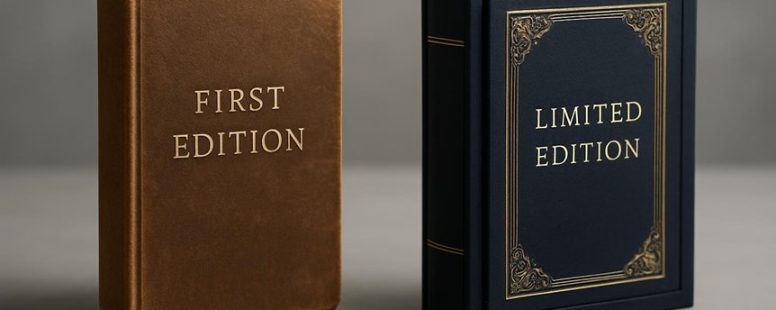
In the whirlwind of a busy day, it’s easy to overlook what makes a book truly special. Have you ever wondered if a first edition or a limited edition is worth more or easier to collect?
Knowing the difference isn’t just about labels—it’s like unlocking a secret map that guides your collection to shine brighter and hold more value. Understanding these nuances can save you time and money, and surprisingly, a well-chosen edition can become a rare gem that appreciates in worth over time.
Let’s uncover what sets each apart and why it might matter more than you think.
What Is a First Edition and Why Does It Matter?
A first edition is the very first time a book is made available to the public. It is important because it shows the original release of the book. First editions often have special features like the author’s signature or unique markings, which can make them more valuable. Knowing the publishing date helps collectors be sure they own an authentic first edition. Sometimes, later printings look very similar but are not true first editions. Usually, a true first edition is printed only once, making it rarer and more sought after.
Why does this matter? Because a rare first edition with the author’s signature can be worth a lot of money, especially if the book is popular or written by a famous author like J.K. Rowling or Ernest Hemingway. For collectors, owning a first edition is like holding a piece of history. It shows the book’s original release and the author’s first vision.
However, not all first editions are worth the same. Some are common and not very valuable. It depends on the book, how many copies were printed, and if it has special features. Also, sometimes scammers try to sell fake first editions, so it’s good to check the publishing date and look for signs of authenticity.
How to Identify a First Edition in a Book
Want to know if a book is a first edition? Here’s a simple way to find out. First, look at the copyright page. Most publishers write “First Edition” or have a number line with numbers like 1 2 3 4 5. If the number line starts with a 1 then it’s likely a first edition. But sometimes later printings try to look like the first, so check carefully.
Next, look at the dust jacket. Many first editions have a special cover design or a price listed that matches the original release. Sometimes the dust jacket has a different look or price in later printings. Compare it to pictures or descriptions from trusted sources or the publisher’s website.
Another clue is the author’s signature. If the book has a signed page, it can help confirm if it’s a first edition, especially if the signature matches known examples of the author’s autograph. But be careful, because signatures can sometimes be faked.
It’s also smart to compare your book with verified first editions from libraries or online resources. Some books have subtle differences, like the font or cover details, that tell if it’s a true first edition or a later print.
What Makes a Limited Edition Unique?
A limited edition is a special version of a product that is made in small amounts. This makes it more exclusive than regular editions. Because fewer copies exist, collectors see these editions as more valuable and unique. Sometimes, limited editions have extra details like special cover art, signatures from the creator, or fancy packaging. These features make them stand out. Many collectors also make sure to take good care of these editions to keep them in perfect condition over time. Handling them carefully shows respect for their rarity. Since only a few are made, each limited edition becomes more than just a product; it turns into a rare collectible. Some people love limited editions because they feel special or think they might be worth more later. But remember, limited editions can be expensive and sometimes hard to find. Overall, their rarity, special features, and need for careful handling make limited editions unique and desirable.
Key Differences Between First and Limited Editions
First editions are the original copies of a book when it was first published. They are valuable because they show the book in its earliest form. These editions usually have traditional binding styles that are meant to last a long time and keep the book looking authentic. The paper used in first editions is often higher quality, which helps the book stay in good shape over many years. For example, a first edition of a famous novel like “To Kill a Mockingbird” might be printed on thick, creamy paper and bound in a classic cloth cover.
Limited editions are special copies made in small amounts. They stand out because they often have unique or fancy features. Sometimes, publishers use unusual binding styles or luxurious materials like leather or gold foil to make these books look more appealing. The paper in limited editions can also be decorative or made from special types of paper to make the book feel more exclusive. For example, a limited edition of a popular comic book might include embossed covers or hand-numbered pages.
Some collectors prefer first editions because they value the originality and historical importance. Others like limited editions because they are rare and visually impressive. Both types of editions appeal to different tastes, but they serve different purposes. First editions focus on keeping the book as close to the original as possible, while limited editions aim to stand out with their looks and uniqueness.
It is worth warning that limited editions can sometimes be less durable if they use delicate materials, and first editions may sometimes be hard to find if they are very old. Still, both can be great additions to a collection if you know what to look for.
How to Determine the Value of a First or Limited Edition
To figure out the value of a first or limited edition, you need to follow some clear steps. First, make sure the item is genuine. Check for signs like signatures, seals, or unique markings that prove it’s real. For example, a signed limited edition book should have the author’s signature in the correct place.
Next, look at recent sales of similar editions. You can do this by searching online marketplaces like eBay, auction sites, or specialty stores. Comparing prices will give you a good idea of what people are willing to pay right now. For example, a limited edition comic book sold for $200 last month might be worth about the same today.
The condition of the item is very important. A pristine edition with no damage or marks will usually sell for more. If the book or artwork has tears, stains, or missing parts, its value drops a lot. Imagine a brand new toy versus one with scratches – the new one is worth more.
Limited editions with special features or numbers are often more valuable. For example, a limited print numbered 1 out of 100 is more rare than one numbered 50 out of 100. Rarity and how much people want the item are big factors in how much it’s worth.
Some people might think a limited edition has more value just because it’s rare. Others argue that if nobody wants it, the rarity does not matter. So, it’s good to check what collectors are actually buying.
How Are Limited Editions Created and Numbered?
Limited editions are special items made in small quantities to make them more valuable and rare. The process to create these editions involves clear steps. First, publishers and artists decide how many copies they want to produce, like 500 or 1,000. This size affects how much people want to buy them and how much they cost.
Next, they use special printing methods to make sure each piece looks high quality and unique. For example, some prints might use special inks or paper to stand out. Each item is then numbered, such as 23 out of 500, to show its place in the total run. This number can be written by hand or printed by machines, depending on the artist or publisher.
Numbering makes collectors feel the item is authentic and rare. Some collectors prefer a certain number, like the first or last one, while others like a specific style of numbering or adding a signature. Sometimes, limited editions even include small markings or symbols to add to their uniqueness.
Creating a limited edition involves careful planning. Artists and publishers think about what collectors want most. They might choose a smaller edition to increase its exclusiveness or add special features to attract more buyers. But, a smaller edition can also be more expensive and harder to find.
In the end, the goal is to make each item feel special and worth collecting. Some people see limited editions as a good investment because they can become more valuable over time. Others warn that if the edition is too small or too expensive, it might not sell well. So, making limited editions is about finding the right balance between quality, size, and appeal.
Common Myths About First and Limited Editions Debunked
First editions and limited editions are not always highly valuable or rare. Many people think that just because an edition is labeled as first or limited, it will automatically be worth a lot. But this isn’t true. A print that is rare does not always mean it will be a good collectible. Sometimes, first editions become common over time if they were printed in large numbers or if they weren’t kept in good condition.
Limited editions can be worth a lot if they have special qualities. For example, a limited edition book signed by the author or printed on high-quality paper might be more valuable. But if a limited edition is just a small print run with no special features, it might not be worth much.
Many people get fooled into paying too much for editions that aren’t really valuable in the long run. Just because something is rare does not mean it will stay valuable. It’s smarter to look at the condition of the item, what makes it special, and whether many people want it.
For example, a first edition of a popular book that is in poor shape might not be worth much. On the other hand, a slightly less rare edition that is in perfect condition can be more valuable.
Some collectors warn that buying editions just because they are limited can be risky. You may end up with something that isn’t worth much later. It’s better to do research and understand what makes an edition desirable, instead of assuming rarity alone makes it valuable.
Tips for Buying First and Limited Editions Confidently
Buying first and limited editions can be tricky if you don’t know what to look for. To buy with confidence, follow these simple steps:
Check the Bookbinding: Authentic editions usually have good quality binding. Look for sewn signatures, which mean the pages are stitched together, making the book stronger and more valuable. If the binding feels flimsy or glued, it could be a fake.
Verify the Signatures: Signed editions are often worth more. Make sure the signature looks real. Sometimes, you can find proof or certificates that show the signature is genuine. Be cautious because some signatures can be faked.
Research the Publisher and Edition Details: Know the publisher’s reputation. Limited editions often have numbered copies, like “123 of 500,” printed on the page. First editions have specific marks or print details you can check. For example, a first edition of a J.K. Rowling book might have certain ISBN numbers or printing codes.
Understanding these points can help you avoid buying fake editions. Remember, some limited editions are very rare and valuable, but others are common and not worth much. Always do a little research before buying.
If you’re unsure, ask a collector or expert for advice. They can tell if a book is the real deal or not. Buying a first or limited edition can be a fun way to grow your collection, but it’s better to be cautious than disappointed later.
Which Edition Is Best for Your Collection or Investment?
The best edition for your collection or investment depends on what you want to achieve. If you want something rare that could increase in value, limited editions are often the best choice. These editions are made in small numbers, making them more exclusive and attractive to investors. For example, a limited edition comic book or collectible toy might become more valuable over time because few exist.
On the other hand, first editions are usually more important for collectors who want authenticity and a piece of history. A first edition of a famous book, like the first Harry Potter or a classic novel, can be very desirable because it’s the original printing. These editions often hold value because of their historical significance and provenance.
Market trends also matter. Sometimes, certain editions go up in value quickly, while others stay stable. If you’re looking for a piece that might grow in worth fast, limited editions can be better. But if you want something that’s culturally important and will likely stay steady, first editions could be the way to go.
Ask yourself what you want most. Do you prefer a unique item that might increase in price or a piece with historical or cultural meaning? The right choice depends on your goals. If you want to build a investment portfolio, focus on editions that tend to appreciate. If you want to enjoy or display items that tell a story, pick editions that have significance.
Stay up to date on market trends and prices. Sometimes, a certain edition can suddenly become very popular. Keeping informed helps you make smart decisions. Remember, every collector or investor has different goals, so choose the edition that best fits your long-term plan.
To provide the best experiences, we use technologies like cookies to store and/or access device information. Consenting to these technologies will allow us to process data such as browsing behaviour or unique IDs on this site. Not consenting or withdrawing consent, may adversely affect certain features and functions.
Functional
Always active
The technical storage or access is strictly necessary for the legitimate purpose of enabling the use of a specific service explicitly requested by the subscriber or user, or for the sole purpose of carrying out the transmission of a communication over an electronic communications network.
Preferences
The technical storage or access is necessary for the legitimate purpose of storing preferences that are not requested by the subscriber or user.
Statistics
The technical storage or access that is used exclusively for statistical purposes.The technical storage or access that is used exclusively for anonymous statistical purposes. Without a subpoena, voluntary compliance on the part of your Internet Service Provider, or additional records from a third party, information stored or retrieved for this purpose alone cannot usually be used to identify you.
Marketing
The technical storage or access is required to create user profiles to send advertising, or to track the user on a website or across several websites for similar marketing purposes.