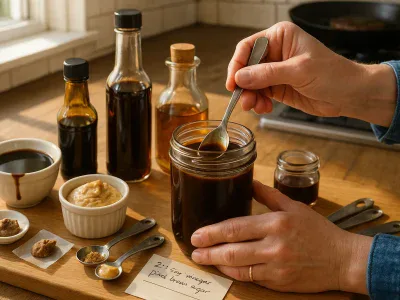
Imagine whipping up your favorite recipe, only to pause and wonder—what’s the real difference between a tsp and a tbsp? These tiny abbreviations may seem harmless, but in the world of cooking, they can make or break your dish. A dash too much or too little could completely alter the flavor, texture, or balance of your meal. Precision matters, and understanding these measurements is the secret ingredient to culinary success.
Whether you’re a seasoned chef or a kitchen newbie, confusing teaspoons with tablespoons is a common pitfall. But here’s the thing: mastering this small but significant distinction can save you from kitchen disasters and elevate your cooking game. Ready to transform your recipes with confidence? Let’s jump into the key differences that every cook needs to know.
Understanding Tsp And Tbsp
Tsp and tbsp are standard abbreviations for teaspoon and tablespoon in recipes. These units measure small quantities of ingredients but differ significantly in volume.
What Does Tsp Mean?
Tsp stands for teaspoon, a unit of measure commonly used in cooking and baking. A teaspoon equals roughly 4.93 milliliters in volume. Recipes use tsp for precise quantities of spices, extracts, and liquids. For instance, if a cookie recipe calls for 1 tsp of vanilla extract, adding too much may overpower the flavor balance.
Standard sets of measuring spoons usually include a teaspoon. Using these ensures accuracy. A kitchen spoon, although convenient, varies in size and can lead to inconsistent results.
What Does Tbsp Mean?
Tbsp indicates a tablespoon, another widely-used cooking measurement. One tablespoon equals about 14.79 milliliters, making it three times the size of a teaspoon. Recipes often rely on tbsp for bulkier ingredients like milk, oil, or sauce. For example, pancake batter recipes might list 2 tbsp of sugar, ensuring sweetness without overdoing itt.
Measuring spoons are also essential for tbsp quantities. Estimating with regular silverware can result in errors, especially when scaling recipes.
Key Differences Between Tsp And Tbsp
Teaspoons (tsp) and tablespoons (tbsp) differ significantly in size and purpose, affecting how ingredients influence your recipes.
Measurement Variations
A teaspoon equals approximately 4.93 milliliters, while a tablespoon measures about 14.79 milliliters, making a tablespoon three times the size of a teaspoon. Failing to use standard measuring tools, such as relying on everyday spoons, could lead to inaccurate results and alter the intended flavors of your dish.
Common Uses In Cooking
Teaspoons typically measure small quantities, such as spices, extracts, or leavening agents like baking powder. For example, a recipe might require 1 tsp of vanilla extract for subtle flavor enhancement. Tablespoons are used for larger, bulkier ingredients, like oil, sauces, or serving components in marinades—e.g., 2 tbsp of olive oil can act as a sufficient base for salad dressings or grilling.
Conversion Between Tsp And Tbsp
Standard conversions clarify that 1 tbsp equals 3 tsp. If a recipe calls for 6 tsp of sugar, you could combine this into 2 tbsp instead. Using this mathematical ratio ensures accuracy while scaling recipes or adopting substitutions, streamlining your cooking process.
Importance Of Accurate Measurements
Precise measurements act as the backbone of any recipe, shaping its structure and final outcome. A small error in distinguishing between tsp and tbsp can alter flavors, textures, and overall dish quality, leaving your meal far from what you intended.
Impact On Recipe Outcomes
Inconsistent measurements disrupt the balance of ingredients, directly affecting the dish’s taste, texture, or appearance. For example, using 1 tbsp of salt instead of 1 tsp triples the saltiness, making the food nearly inedible. In baking, precision is even more critical because recipes rely on chemical reactions. Substituting tsp for tbsp when adding baking powder may lead to collapsed or overly dense cakes. On the other hand, under-measuring oil might result in dry, crumbly textures.
Incorrect usage of measuring tools creates challenges when scaling recipes. Suppose you’re doubling a recipe and mistake 3 tsp (1 tbsp) for only 2 tsp. Such miscalculations skew ingredient proportions, negatively impacting consistency between batches or servings.
Tips For Measuring Correctly
Relying on accurate tools eliminates chances of errors. Standard measuring spoons are explicitly calibrated for tsp and tbsp volumes, making them superior to everyday spoons. Always level off each spoonful when measuring dry ingredients like sugar or spices. This ensures no excess overflows, maintaining precise quantities.
For liquids, choosing the correct spoon is vital. For example, when recipes call for 1 tbsp of oil, pour until the liquid barely reaches the edges of the spoon without spilling. Switching to a liquid measuring cup for such small quantities can lead to inaccuracies due to spillage or difficulty judging exact volumes.
Verify conversions when scaling. Remember 1 tbsp equals 3 tsp, and always replicate this ratio for larger or smaller measurements. Practicing conversions ensures you deliver accurate proportions across recipes, whether adjusting for few or many servings.
Tools To Simplify Measurement
When precision is essential, having the right tools ensures your tsp and tbsp measurements are accurate. Incorrect measurements can lead to drastic changes in flavor or texture, so investing in reliable tools prevents errors.
Measuring Spoons
Standard measuring spoons, often made of metal or plastic, provide consistent measurements for tsp and tbsp. These spoons are pre-sized to ensure you’re not guessing quantities. For instance, a calibrated 1 tsp measuring spoon ensures precise measurements for spices or extracts. Similarly, a 1 tbsp spoon helps with bulkier ingredients like oil or honey.
Using stacked measuring spoons organized by size keeps preparation hassle-free. Sets usually include 1/4 tsp, 1/2 tsp, 1 tsp, and 1 tbsp, allowing flexibility for various recipes. Avoid substituting ordinary kitchen spoons, as their sizes vary significantly and result in inaccurate quantities.
Magnetic measuring spoons are practical for space-saving and easy storage. Dual-ended designs often feature round and narrow ends, fitting into spice jars or scooping dry ingredients efficiently.
Conversion Charts
Conversion charts simplify scaling recipes and converting measurements between tsp and tbsp. If a recipe requires scaling up or down, referencing a chart avoids calculation errors. For example, knowing that 1 tbsp equals 3 tsp ensures proper proportions while adjusting serving sizes.
Printable charts or digital kitchen apps provide quick access to conversion formulas for various units beyond tsp and tbsp. Some feature multipliers for larger conversions, like tablespoons into fluid ounces or grams, making them versatile for international recipes.
Placing a printed chart on your fridge or saving it on your phone guarantees accessibility during meal prep. For frequent bakers, laminated versions are ideal for durability in kitchens where spills are common.
Conclusion
Understanding the difference between tsp and tbsp is a simple yet essential skill that can elevate your cooking and baking. By using the right tools, following accurate conversions, and paying attention to measurements, you can ensure your recipes turn out just as intended.
Precision in the kitchen not only prevents mistakes but also boosts your confidence with every dish you prepare. With a little practice and the right resources, you’ll master these measurements and create consistently delicious results.
To provide the best experiences, we use technologies like cookies to store and/or access device information. Consenting to these technologies will allow us to process data such as browsing behaviour or unique IDs on this site. Not consenting or withdrawing consent, may adversely affect certain features and functions.
Functional
Always active
The technical storage or access is strictly necessary for the legitimate purpose of enabling the use of a specific service explicitly requested by the subscriber or user, or for the sole purpose of carrying out the transmission of a communication over an electronic communications network.
Preferences
The technical storage or access is necessary for the legitimate purpose of storing preferences that are not requested by the subscriber or user.
Statistics
The technical storage or access that is used exclusively for statistical purposes.The technical storage or access that is used exclusively for anonymous statistical purposes. Without a subpoena, voluntary compliance on the part of your Internet Service Provider, or additional records from a third party, information stored or retrieved for this purpose alone cannot usually be used to identify you.
Marketing
The technical storage or access is required to create user profiles to send advertising, or to track the user on a website or across several websites for similar marketing purposes.