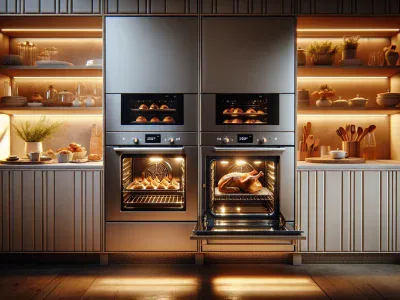
Picture the aroma of freshly baked cookies wafting through your kitchen or the satisfaction of reheating last night’s leftovers in seconds. Whether you’re whipping up a gourmet meal or grabbing a quick bite, your choice between a microwave and an oven can make all the difference. But how do you decide which one suits your needs best?
Microwaves and ovens may share space on your countertop, but they serve entirely different purposes. One offers speed and convenience, while the other delivers precision and depth of flavor. Understanding their unique strengths not only helps you cook smarter but also ensures every dish turns out just right.
Understanding Microwaves And Ovens
Microwaves and ovens differ in their functionality, design, and usage. Each serves distinct cooking purposes, making them essential in modern kitchens.
What Is A Microwave?
A microwave uses electromagnetic waves to heat food quickly. This appliance excites water molecules within food items, generating heat from the inside out. It’s ideal for reheating leftovers, defrosting frozen goods, or cooking simple meals like oatmeal or popcorn.
Modern microwaves often include presets for common dishes such as baked potatoes or steamed vegetables. Compact designs make microwaves suitable for small spaces like studio apartments or dorm rooms. But, they don’t brown or crisp foods effectively due to the absence of direct heat.
What Is An Oven?
An oven circulates dry heat around food using either gas burners or electric elements. This method ensures even cooking over extended periods, which is essential for baking cakes, roasting meats like turkey or chicken, and broiling foods such as steaks.
Convection ovens enhance efficiency by employing fans to distribute hot air evenly throughout the cavity. Unlike microwaves, ovens can caramelize sugar on desserts (e.g., crème brûlée) and create crispy crusts on pizzas.
Ovens require more time and energy than microwaves but offer greater versatility in preparing complex recipes needing precise temperature control.
Key Differences Between Microwave And Oven
Microwaves and ovens differ significantly in their heating methods, cooking functions, energy usage, and time efficiency. Understanding these differences helps you decide which appliance meets your culinary needs.
Heating Mechanisms
Microwaves use electromagnetic waves to agitate water molecules within food. This rapid vibration generates heat internally, making microwaves effective for fast and even reheating or cooking of moist dishes like soups or casseroles.
Ovens rely on convection (gas or electric) to circulate hot air around the food. This dry heat enables browning, crisping, and caramelization—essential for baking bread, roasting vegetables, or grilling meats.
Cooking Functions And Uses
Microwaves excel at quick tasks such as reheating leftovers, defrosting frozen items, steaming vegetables in microwave-safe containers. But their inability to brown or crisp limits them for baking pastries or roasting proteins.
Ovens offer versatility across a wide range of recipes including cakes that rise evenly due to consistent heat distribution; roasted chicken with golden skin; pizzas with perfectly melted cheese and crusty bases.
Energy Efficiency
Microwaves consume less electricity by focusing energy directly into the food instead of heating an entire chamber. According to Energy.gov data from 2023 microwaves use approximately 30%-80% less energy than conventional ovens depending on the dish type prepared.
Ovens typically require higher power consumption since they need sustained heating over longer periods especially when preheating large capacities for family-sized meals or batch cooking sessions
Cooking Time
Microwave cook times are substantially shorter because they target internal moisture instantly reducing overall preparation durations ideal for time-sensitive scenarios like busy weekday mornings
Pros And Cons Of Microwaves
Microwaves offer speed and practicality in modern kitchens. They excel at simple tasks but come with limitations that impact their versatility.
Advantages
Time Efficiency
Cooking or reheating food takes significantly less time compared to traditional ovens. For example, warming soup in a microwave may take 2 minutes, while an oven could require over 15 minutes.
Energy Efficiency
Microwaves consume 30%-80% less electricity than ovens because they heat only the food, not the surrounding space.
Ease of Use
Operating microwaves is straightforward with preset options for tasks like defrosting frozen items or preparing popcorn.
Compact Size
Most models fit easily on countertops, making them suitable for small kitchens or dorms where space is limited.
Retains Nutrients in Food
Quick cooking times help preserve vitamins such as C and B during reheating or steaming vegetables.
Disadvantages
Limited Cooking Techniques
Microwaves can’t brown, crisp, or caramelize food due to their reliance on electromagnetic waves rather than dry heat.
Uneven Heating
Some foods heat unevenly if not stirred frequently; for instance, reheated casseroles might have cold spots.
Smaller Capacity
Their interior size limits cooking large portions or baking dishes like lasagna efficiently.
Material Restrictions
Only microwave-safe containers can be used; metal objects cause sparks and damage the appliance.
Texture Limitations
Foods such as pizza lose their crispy crust when reheated in a microwave instead of an oven capable of maintaining texture integrity.
Pros And Cons Of Ovens
Ovens offer precision, versatility, and the ability to enhance flavors through cooking techniques like baking and roasting. Understanding their advantages and disadvantages helps you decide if they align with your culinary needs.
Advantages
Versatile Cooking Techniques
Ovens support a wide range of cooking methods such as baking, roasting, grilling, and broiling. For example, you can bake cakes or roast vegetables at specific temperatures for desired results.
Enhanced Flavor Development
The dry heat in ovens caramelizes sugars and crisps textures, improving flavor profiles. Roasting meat in an oven creates a golden crust that enhances taste.
Even Heat Distribution
Convection ovens circulate air for uniform cooking results across dishes. For instance, casseroles cook evenly without cold spots when using this feature.
Large Capacity
Standard ovens accommodate multiple trays or large dishes simultaneously, ideal for family meals or events requiring bulk preparation.
Precise Temperature Control
Temperature settings allow detailed control over recipes needing exact measurements—like soufflés that depend on stable heat levels to rise correctly.
Disadvantages
Time-Consuming Cooking Process
Ovens typically require preheating before use and longer cooking times compared to microwaves; baking bread may take hours from start to finish.
Higher Energy Consumption
They consume more electricity due to prolonged operation times—conventional ovens often use up 2000-5000 watts per hour depending on size (US Department of Energy).
Bulkier Design
Freestanding ovens occupy significant kitchen space compared to compact microwave units; smaller kitchens might find them challenging to integrate seamlessly into layouts.
Maintenance Requirements
Cleaning interior walls stained by grease splatter demands effort—they’re not easy-to-clean like microwave surfaces lined with removable plates or covers.
Limited Portability Options
Choosing The Right Appliance For Your Needs
Selecting between a microwave and an oven depends on your cooking habits, kitchen space, and the types of meals you prepare. By evaluating these factors, you can match the appliance to your requirements efficiently.
Cooking Purpose
If speed matters most, such as reheating leftovers or preparing instant meals, you’ll find microwaves more suitable. Their quick heating mechanism saves time for busy schedules. On the other hand, ovens excel in baking cakes, roasting meats, or creating dishes that require even heat distribution and browning.
Kitchen Space
Microwaves typically fit onto countertops due to their compact size. They are ideal for small kitchens or dorm rooms where space is limited. Ovens often occupy built-in slots or larger areas and may not suit those with restricted kitchen layouts unless designed as smaller convection models.
Energy Efficiency
Energy consumption varies significantly between the two appliances. Microwaves consume 30%-80% less electricity than traditional ovens since they work faster and use direct electromagnetic waves for heating food (source: U.S Department of Energy). But, for long-duration cooking like slow roasting, ovens become indispensable even though higher energy usage.
Meal Quantity
Large families benefit from an oven’s spacious interior capable of handling bulk portions simultaneously—like multiple pizza trays or a whole turkey roast during holidays—for example! Conversely microwaves serve single servings better due to their limited capacity constraints.
Dietary Preferences
Conclusion
Understanding the differences between microwaves and ovens allows you to choose the appliance that best aligns with your cooking habits and lifestyle. Each offers unique benefits, whether it’s the speed of a microwave or the versatility of an oven.
By evaluating your space, energy needs, and preferred cooking techniques, you’re better equipped to decide which appliance fits seamlessly into your kitchen routine. Whether you prioritize quick meals or culinary precision, there’s a solution tailored just for you.
Published: July 25, 2025 at 9:11 am by Ellie B, Site owner & Publisher
To provide the best experiences, we use technologies like cookies to store and/or access device information. Consenting to these technologies will allow us to process data such as browsing behaviour or unique IDs on this site. Not consenting or withdrawing consent, may adversely affect certain features and functions.
Functional
Always active
The technical storage or access is strictly necessary for the legitimate purpose of enabling the use of a specific service explicitly requested by the subscriber or user, or for the sole purpose of carrying out the transmission of a communication over an electronic communications network.
Preferences
The technical storage or access is necessary for the legitimate purpose of storing preferences that are not requested by the subscriber or user.
Statistics
The technical storage or access that is used exclusively for statistical purposes.The technical storage or access that is used exclusively for anonymous statistical purposes. Without a subpoena, voluntary compliance on the part of your Internet Service Provider, or additional records from a third party, information stored or retrieved for this purpose alone cannot usually be used to identify you.
Marketing
The technical storage or access is required to create user profiles to send advertising, or to track the user on a website or across several websites for similar marketing purposes.