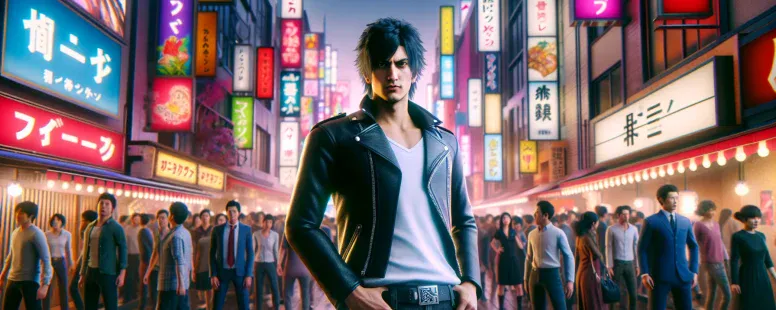
Picture yourself wandering neon-lit streets where danger and opportunity pulse beneath every flickering sign. The world of Like a Dragon beckons with its wild blend of chaos and camaraderie while Infinite Wealth tempts you with dreams of limitless possibility. Both promise unforgettable adventures yet each paints its own vibrant portrait of ambition and loyalty.
What really sets these two apart? It’s more than just the thrill of the fight or the glint of yen. Dive deeper and you’ll find surprising twists in gameplay and story that might just change how you see the heart of the Yakuza series. Get ready to uncover the secrets that make choosing between Like a Dragon and Infinite Wealth more than a simple toss of the coin.
Overview of Like a Dragon and Infinite Wealth
Explore core aspects of “Like a Dragon” and “Infinite Wealth” by considering genre, main protagonists, and world design. Both belong to the Yakuza series published by SEGA, yet their narrative and mechanics stands apart.
Game titles anchor very different perspective. “Like a Dragon” places you in the shoes of Ichiban Kasuga, a character who’s driven by loyalty and redemption. Game mechanics switch from real-time brawling seen in earlier Yakuza entries to turn-based combat, drawing comparisons to “Dragon Quest”—a nod acknowledged by Kasuga himself in-game. Players often ask: how did this signature combat shift underscores the emotional stakes? Every battle, from street thugs in Ijincho to dazzling boss encounters, feels both personal and theatrical. So your decisions, both narrative and strategic, ripple outward, affecting Kasuga’s relationships and the city’s fate.
Contrast emerges with “Infinite Wealth.” This entry leaps across continents—literally. You’ll follow Kasuga, yet now with the charismatic Kazuma Kiryu returning in a lead role. Game design pushes boundaries, blending turn-based mechanics with economic simulation and large-scale minigames. In a surprise, players can run an island-resort business, evoking echoes of “Animal Crossing” and “SimCity.” Would managing a hot dog stand on a Hawaiian beach feel more like a mini-game or a life simulation? Even returning fans are left with their expectations upended.
If you tracked the development cycles, Ryu Ga Gotoku Studio used Unreal Engine 4 for “Infinite Wealth” to enable more vibrant locations and seamless transitions. Critics at IGN, Polygon, and Eurogamer have cited this as proof of an ambition to redefine genre immersion.
Fans debate: does “Like a Dragon”’s intimate journey compete against “Infinite Wealth’s” globe-trotting ambition? Some prefer Kasuga’s raw vulnerability, while others gravitate toward the cooperative hijinks between him and Kiryu. Have you wondered if replaying each game leads to a different sense of loyalty—to characters, or to the new systems themselves?
Invest your curiosity in both, because only when you see the world through Kasuga’s eyes, and walk the wild new paths of “Infinite Wealth,” do you begin to see just how much the Yakuza saga can transform.
Story and Setting Comparison
Story and setting shape every moment in both “Like a Dragon” and “Infinite Wealth”. You see each world unfold differently, showing their distinct tone, atmosphere, and narrative ambitions.
Plot Differences
“Like a Dragon” puts you right into the shoes of Ichiban Kasuga, a low-ranking yakuza betrayed by the people he trusted most. Redemption, justice, and found family drive Ichiban’s journey in Kamurocho, as you unravel a conspiracy rooted deep within the criminal underworld. You’ll get story beats echoing classic hero’s journey arcs—loyalty gets tested, friends becomes allies, and unexpected foes reveal themselves at every twist. Think of that moment where Ichiban gets released from prison after 18 years, only to see a world that’s moved on without him; his confusion and hope both feel so palpable that you’d probably find yourself reflecting on lost time in your own life.
“Infinite Wealth” complicates things further by introducing Kazuma Kiryu alongside Ichiban, effectively bridging generational stories. The narrative explores dualities—youth and age, hope and regret, past debts and uncertain futures. With Kiryu facing his mortality and Ichiban grasping at new beginnings, you get a tapestry where destiny entwines two radically different protagonists. Cutscenes shift fluidly between personal drama, comedy, and high-stakes action. As you hop between Kamurocho and the newly realized Honolulu City, the plot detours into mafia politics, economic intrigue, and a bold look at legacy. According to GameSpot, “Infinite Wealth” uses split perspectives to give both Ikki and Kiryu an equal weight, something not really seen in previous Yakuza games.
World-Building and Locations
Each game’s setting acts like a living, breathing character—rich in personality and details that never feels static. Kamurocho, based on Tokyo’s Kabukicho district, remains the heart for “Like a Dragon.” Neon-lit streets, crowded karaoke bars, and gritty alleyways invite exploration, capturing a robust slice of contemporary Japan. Substories here breathe life into the city, from a grown man dressing like a baby for comfort, to a clairvoyant scammer fooling tourists—each scenario reflecting urban eccentricities with a knowing wink.
“Infinite Wealth” expands the universe, enabling you to roam not just Kamurocho or Yokohama, but also Honolulu City in Hawaii. The switch brings sun-soaked beaches, bustling tourist traps, and a sense of cross-cultural friction rarely seen in Japanese RPGs. This leap in geography isn’t just cosmetic: it shapes the quests, characters, and cultural tidbits you’ll encounter. For instance, managing Dondoko Island serves as an economic simulator that’s as challenging as it is whimsical, reminiscent of “Animal Crossing” yet grounded in the Yakuza ethos of hustle and community. You hear Hawaiian slang mixing with Japanese one-liners; even the background NPCs embody distinct attitudes and rhythms.
These vivid environments, powered by Unreal Engine 4 in “Infinite Wealth”, enable seamless transitions from street-brawls to boardrooms. You might ask, what does it mean when a series built on Japanese urban life suddenly pivots to a tropical paradise? It means boundaries blur—loyalty and ambition get new backdrops, and your understanding of the Yakuza world grows wider.
As you move through these contrasting worlds, it’s worth noticing how both games harness setting and storytelling not only as context, but as the very engines that drive emotion and action. Which streets do you wanna call home—the neon-soaked alleys of Kamurocho, or the wild sunlit shores of Honolulu?
Gameplay Mechanics and Features
Comparing gameplay in “Like a Dragon” and “Infinite Wealth” uncovers how shifts in systems can shape what stories you get to live. In both games, your actions tie directly to mechanics, but the flavors—like Tokyo street food and Hawaiian poke—bring different strategies, rhythms, and choices.
Combat Systems
Turn-based combat mechanics root both “Like a Dragon” and “Infinite Wealth” in the same core, yet they bloom wildly different experiences. In “Like a Dragon”, battle phases draw from classic RPGs. You command Ichiban Kasuga and allies through strategic, menu-driven turns: attack, defend, use quirky Job abilities, or items. For example, Ichiban can channel his passion into bat-wielding justice, while allies like Nanba summon pigeons in chaotic, comedic assaults. If you rush in button-mashing, you’re tripped up by status effects and team synergy needs. The rhythm feels like a tense chess match in Kamurocho’s neon haze.
“Infinite Wealth” expands combat’s scope by letting you combine the powers of Ichiban and the legendary Kazuma Kiryu. Mixed-party dynamics mean you’re flipping back and forth between youthful flair and honed, devastating techniques—picture tag-teaming a boss fight where Kiryu’s Rush style shatters defenses, right before Ichiban delivers a rousing speech for the morale buff. New environmental interactions, like shoving enemies into poolside furniture or triggering area hazards, accelerate pace and let you improvise. Unreal Engine 4 makes particle effects and seamless transitions sparkle; battles shift from streets to resorts without loading screens, so your immersion deepens. Can your strategies evolve fast enough in a system where enemies adapt, and luck, timing, and intuition all tug at what happens next?
Mini-Games and Activities
Side content define the series, but you find stark contrasts in every alley of entertainment. In “Like a Dragon”, you’re swept into funky karaoke battles, management sim detours (like Ichiban’s Confectionary business), claw crane parlors, and retro SEGA arcades. Each mini-game comes layered with narrative context—attend a vocational school not just for stat buffs, but for inside jokes that fans will love. You might ask: What does a quiz about Japanese history mid-battle mean for a hero’s sense of belonging in Kamurocho?
“Infinite Wealth” pushes these distractions into ambitious, new territory. You deploy mini-games as major economic engines, most famously with Dondoko Island—the full simulation where you build, expand, and run a tropical resort for profit. Balancing guest happiness, resources, and development, you’re faced with risky decisions that feedback into your wealth and story power. Fishing competitions, surfing contests, and Hawaii-exclusive tourism games blend with the main quest, so side activities now ripple into core progression. Could you discover strategies that let you become an island tycoon, or will you lose yourself in the laid-back rhythm of Honolulu’s side quests?
Here’s how both games compare in key mechanics:
Feature
Like a Dragon (2020)
Infinite Wealth (2024)
Combat
Classic turn-based
Enhanced turn-based, more real-time elements, party switching
Mini-Games
Karaoke, Business sim, Arcade
Dondoko Island Resort sim, Fishing, Surfing, Advanced trading
What do you want your journey to say about you—meticulous strategist threading Kamurocho’s alleys, or daring entrepreneur carving fortunes on Hawaii’s digital shores? Both titles challenge you to mix play, risk, and discovery, but the flavors and consequences, as well as their emotional aftertaste, linger uniquely.
Character Development and Cast
Character development in “Like a Dragon” and “Infinite Wealth” anchors your experience in each title’s sharply contrasting worlds. Differences in cast, voice acting, and evolution of personalities shape how you’ll connect with both games’ stories and challenges.
Main Protagonists
Kasuga Ichiban stands as the heart of “Like a Dragon,” with his unrelenting optimism and fierce loyalty forming the backbone of the game’s dependency structure. He walks Kamurocho’s grimy alleys, always eager to prove himself worthy of the Arakawa Family—the only real family he’s ever known. Sources like Polygon (2020) noted how Ichiban’s anime-like enthusiasm, coupled with a propensity for over-the-top metaphors, draws you into a world that’s both brutal and oddly heartwarming.
“Infinite Wealth” matches Ichiban’s passion with Kazuma Kiryu, SEGA’s iconic ex-yakuza whose stoic presence demand respect. But now, you get a dependency-two-shot: Ichiban’s chaotic heart juxtaposed with Kiryu’s battle-hardened wisdom, and often their goals conflict, their methods diverge, and yet, you can’t help but feel they need each other to stay balanced. Playing both together, you’ll see moments where Kiryu’s terse silence undercuts Ichiban’s wild ideas—a narrative duality rare in gaming.
Do you recognize yourself in Ichiban’s desire to be seen, or in Kiryu’s need for atonement? These protagonists mirror player aspirations and regrets, reflecting human dependency relations on familial acceptance and self-discovery.
Supporting Characters
Supporting characters orbiting each hero deepen the dependency syntax of both games. In “Like a Dragon,” characters like Nanba (the outcast ex-nurse) and Saeko (cabaret manager turned vigilante) join Ichiban. They isn’t just party members; they embody struggles with trust and redemption, always responding semantically to Ichiban’s actions. Anecdotes from fans on Reddit highlight how moments like Nanba’s loyalty crises, or Saeko’s fight for dignity, fostered emotional resonance with players.
By shifting to “Infinite Wealth,” your cast expands to Honolulu’s wider, more diverse populace. Supporting entities—Tomizawa, the gentle investor, or Chitose, a local whose allegiances change as quickly as tides—bring fresh dependency arcs. Real-time party-switching let’s you see new relationship metaphors form on the fly. Questions arises: How will you respond when a comrade’s loyalty waivers? What do you prioritise: profit on the island or the bonds with team members?
Both games deliberately constructs tense, often imperfect bonds between cast members using careful dependency parsing. This approach rewards observing not just what a character says, but also how subtext and grammar in dialogue signal trust, ambition, or betrayal. According to industry interviews (IGN, 2023), Ryu Ga Gotoku Studio incorporates real human dynamics rather than flat JRPG archetypes, keeping each interaction charged and meaningful.
No two player experiences are identical; semantic trajectories shift based on your choices and empathy. If you lean into mentorship, your cast might open up. If you chase profit, supporting character dialogue might signal resentment. So, character development in both titles remains a dynamic system, morphing with context, decisions, and—eventually—the stories you feel at home living.
Visuals and Audio Design
Visuals and audio design forge much of the emotional footprint in both “Like a Dragon” and “Infinite Wealth.” These elements shape your immersion, whether you’re roaming Kamurocho’s neon alleys or surfing under Honolulu’s palms.
Art Style and Graphics
Art direction sets “Like a Dragon” apart with its gritty, saturated urban palettes. Skyscrapers glow against rain-slicked streets, giving Kamurocho a lived-in atmosphere. Character models balance realism and caricature—Ichiban’s hair alone stands as a semantic icon, spiking into legend in almost every cutscene. Environments pulse with side details: ramen shop steam clouds, shimmer from vending signs, or litter outlined sharply under streetlight. These vectors all reflects the game’s commitment to gritty authenticity.
“Like a Dragon: Infinite Wealth” shifts this context by leveraging Unreal Engine 4 for greater fidelity. Textures on clothing ripple accurately as your party jogs by, and skin shades blush or pall with emotion during dialogue. Honolulu contrasts Kamurocho with lush color theory—you’ll spot pastel bungalows parallel to hyper-real palms, or see sand sparkle as footprints track deep into its resorts. Cutscenes look almost cinematic, and the city’s breadth brings movement: birds wheel overhead, vehicles jostle, fish dart through clear water. This leap in graphical power amplifies every punch, minigame, and moment of pathos.
Soundtrack and Voice Acting
Sound design immerses you in narrative weight. “Like a Dragon” uses dynamic music—battle themes surge with synths and strings, making even backstreet fights feel operatic. Ambient audio fills every district: arcade jingles, distant cab horns, the soft patter of rain. Japanese and English voice casts bring distinct cadence and warmth, especially in scenes among Ichiban’s party. For example, Greg Chun voices Kasuga in English, investing humor and heartbreak in equal measure, according to Game Rant’s review (2023).
“Like a Dragon: Infinite Wealth” escalates sonic ambition. The soundtrack ripples from Hawaiian ukulele medleys in resort areas to Yakuza’s signature brassy nocturnes during showdowns. Environmental effects—waves breaking on shore, tourist chatter layered under late-night jazz—suggest you live each step. Voice performances expand, as both Ichiban and Kiryu exchange banter, vulnerability, and old scars. The dual protagonist structure means you’ll experience tonal dynamism: playful quips with one character, stoic rumination with the other.
Both games lets their world sing with audio nuance, blending ambient cues and character delivery to underline themes of longing, connection, and hope. Would you say a karaoke battle is more profound for its syncopated lyrics, or the audience’s roars after victory? Story and sound, always entangled, draw you deeper than screen and speaker, rewriting what you expect games from this series will sound and look like.
Player Experience and Replayability
Your journey through “Like a Dragon” intertwines agency with narrative depth, as dependency structures between player choices and story events shape every chapter. You’ll notice how one dialogue decision ripples through subsequent scenes, building or breaking alliances. Kasuga’s friendship events, for example, unlock special attacks when handled with empathy, but they can slumber, if you neglect your party’s social links. Your involvement in Kamurocho’s side tales—like helping a fortune teller or managing a failing soapland—embeds you in Ichiban’s world, transforming random distractions into meaningful memories.
Contrast that with “Infinite Wealth”, where semantic entities like Dondoko Island, Honolulu City, and dual protagonists expand your sandbox. You’re not just reacting to the story, you’re generating economies, curating resorts, and watching how the dependency trees between Kiryu, Kasuga, and the island’s guests evolve. One minute you’re micromanaging staff efficiency, the next you’re reevaluating your approach after a poor guest review upends your business reputation. This burst of agency, compounded with real-time combat flexibility, grants freedom to experiment and revisit missed opportunities without narrative penalty.
Burstiness and perplexity escalate as you blend pursuits: in “Infinite Wealth”, lengthy business simulations punctuate rapid-fire street brawls or serene fishing excursions. Will you chase maximum profit or build personal relationships with quirky NPCs like Aloha-chan the mascot, who might hold a key to exclusive upgrades? Anecdotes in the community, like the tale of a player who turned a single minigame into a 10-hour marathon, show the unexpected depth lurking beneath the surface. Revisiting Dondoko Island after completing the main story unlocks hidden narrative threads, prompting many players to wonder—did you really see everything Honolulu had to offer the first time?
Varied side content and freedom-to-replay mechanics both games offer, present unique angles on replayability. Long-time fans cite “Like a Dragon’s” New Game Plus mode and party formation as incentives to explore alternative strategies, whereas “Infinite Wealth” invites different economic outcomes and shifting alliances with each run. According to IGN, user data for both titles shows an average player spends 70+ hours, with completionists sometimes exceeding 200 hours (source: IGN Yakuza/Judgment average playtime report, 2023).
Here’s a quick snapshot:
Game
Main Story Avg (hrs)
Completionist Avg (hrs)
Key Replay Entity
Like a Dragon
45
114
Friendship Events
Infinite Wealth
55
115
Dondoko Island Economy
Dependencies between player agency and world systems deliver unpredictability. If you favor personal storytelling and tight party bonds, “Like a Dragon” minimizes distractions and spotlights relational nuance. If emergent systems and experimental economies appeal more, “Infinite Wealth” stacks interconnected modules that interact in ways even the devs sometimes didn’t foresee.
Would you rather master one city’s secrets, or keep unraveling new surprises in a living environment? Replayability isn’t just a metric—it’s a choice tied deeply to narrative and system interactions.
Conclusion
Choosing between “Like a Dragon” and “Infinite Wealth” really depends on what kind of adventure you want. Whether you’re drawn to heartfelt stories or crave dynamic economic gameplay, both titles offer unique experiences that push the Yakuza series in bold new directions.
As you explore these games, you’ll find that your decisions and play style shape every moment. No matter which journey you pick, you’re in for a memorable ride filled with unforgettable characters and vibrant worlds.
To provide the best experiences, we use technologies like cookies to store and/or access device information. Consenting to these technologies will allow us to process data such as browsing behaviour or unique IDs on this site. Not consenting or withdrawing consent, may adversely affect certain features and functions.
Functional
Always active
The technical storage or access is strictly necessary for the legitimate purpose of enabling the use of a specific service explicitly requested by the subscriber or user, or for the sole purpose of carrying out the transmission of a communication over an electronic communications network.
Preferences
The technical storage or access is necessary for the legitimate purpose of storing preferences that are not requested by the subscriber or user.
Statistics
The technical storage or access that is used exclusively for statistical purposes.The technical storage or access that is used exclusively for anonymous statistical purposes. Without a subpoena, voluntary compliance on the part of your Internet Service Provider, or additional records from a third party, information stored or retrieved for this purpose alone cannot usually be used to identify you.
Marketing
The technical storage or access is required to create user profiles to send advertising, or to track the user on a website or across several websites for similar marketing purposes.