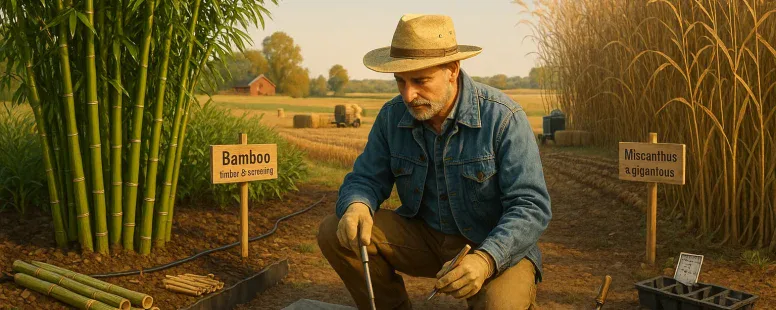
You can grow a carbon sink that doubles as fence posts, or a high-yield grass that fuels a boiler, but your choice will shape soil, cash flow, and risk for decades. Bamboo and Miscanthus are both fast-growing biomass crops, yet they behave very differently. This article gives you clear, actionable contrasts so you can match plant biology to your goals. Expect hard facts first, then practical context, plus real-world trade-offs you might not hear from suppliers.
Plant Profiles: Biology, Species, And Variants
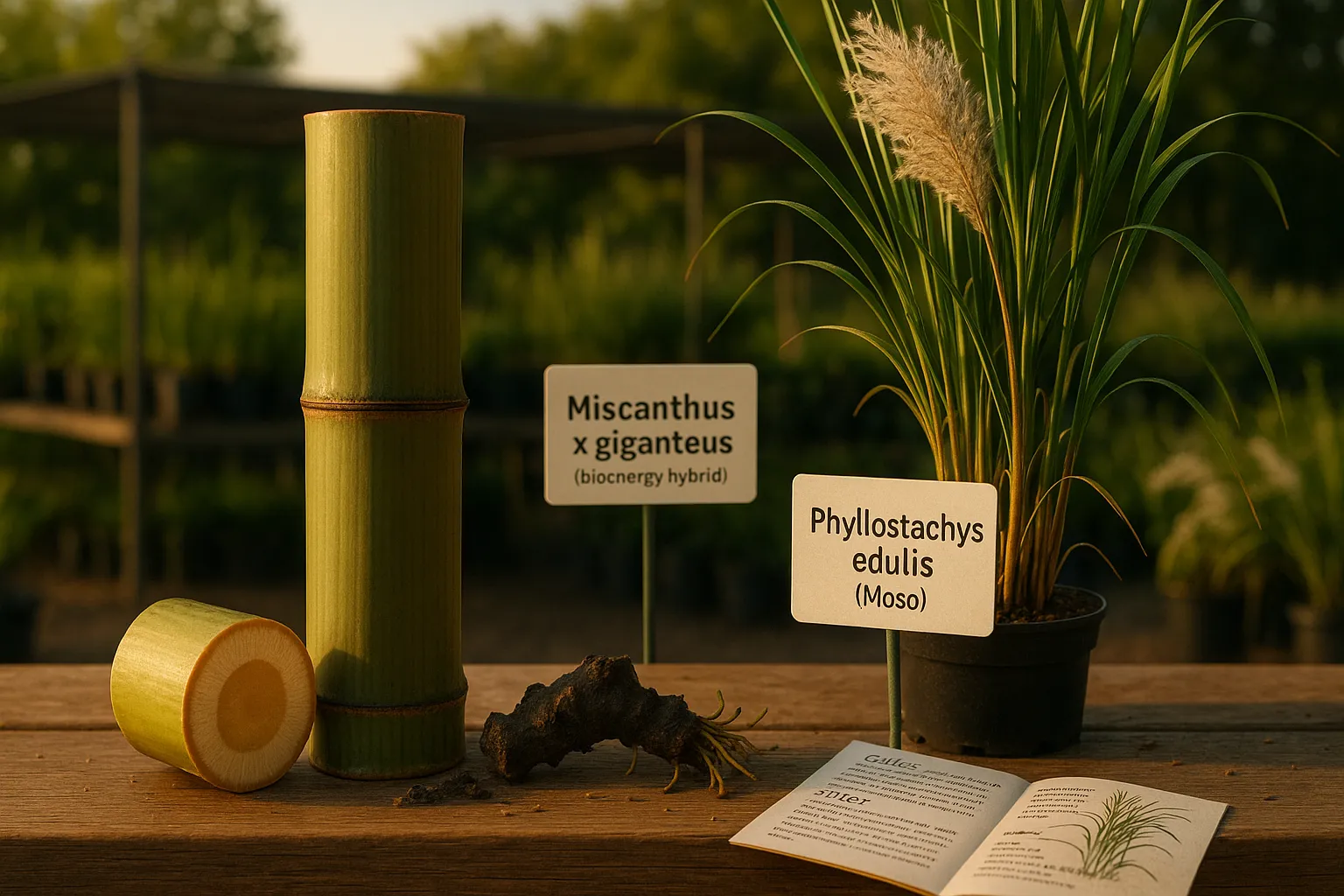
Fact: Bamboo is a woody grass in the Poaceae family: Miscanthus is a perennial C4 grass. Bamboo includes genera such as Phyllostachys (running types) and Bambusa (clumping types). Popular commercial species include Moso (Phyllostachys edulis) for timber and Phyllostachys aureosulcata for landscaping. Miscanthus is dominated by hybrids like Miscanthus × giganteus, a sterile triploid derivative widely used for bioenergy.
Bamboo: You see stems called culms. Culms are lignified and can reach several inches in diameter and many meters tall in species like Moso. New shoots emerge from rhizomes or culm buds: growth often completes in a single season for each culm.
Miscanthus: You see tall hollow stems with a tufted crown. Miscanthus shoots come from rhizomes producing tillers: the plant forms dense stands with high aboveground biomass of dry, reed-like stems.
Semantic entities: Phyllostachys, Bambusa, Moso, Miscanthus × giganteus, Poaceae, rhizome, culm. These names help you identify nursery stock and research literature. If you buy plants, ask for species and provenance: nursery labels often omit cultivar detail.
Growth Characteristics And Cultivation Requirements
Fact: Bamboo often grows faster aboveground: Miscanthus produces more uniform annual biomass across temperate zones.
Bamboo growth: Bamboo can shoot up several feet in weeks during the growing season. Clumping types expand slowly laterally: running bamboos spread via long rhizomes and can colonize large areas. Bamboo favors well-drained soils with steady moisture and benefits from high nitrogen. Some species tolerate shade: many prefer full sun.
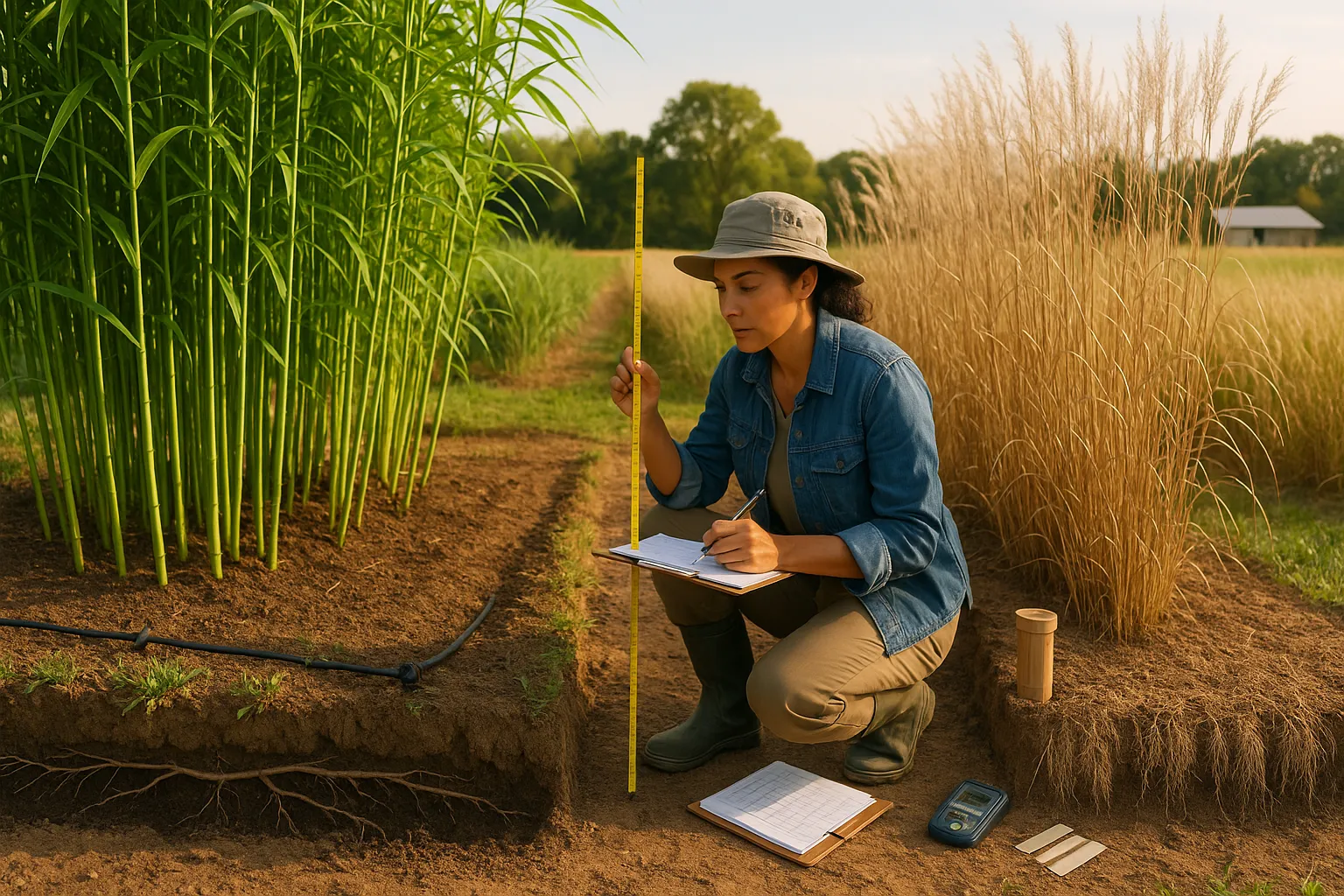
Miscanthus growth: Miscanthus establishes slower in year one but delivers large yields from year two onward. It prefers full sun, fertile loams, and good drainage. Miscanthus uses the C4 photosynthetic pathway, giving high water- and nitrogen-use efficiency in warm seasons. It tolerates colder winters better than many tropical bamboos but is sensitive to waterlogging.
Practical tip: You will need irrigation for bamboo in dry summers: Miscanthus often survives on rainfall once established. For either crop, test soil pH and fertility and correct deficits before planting.
Environmental Impacts And Ecosystem Services
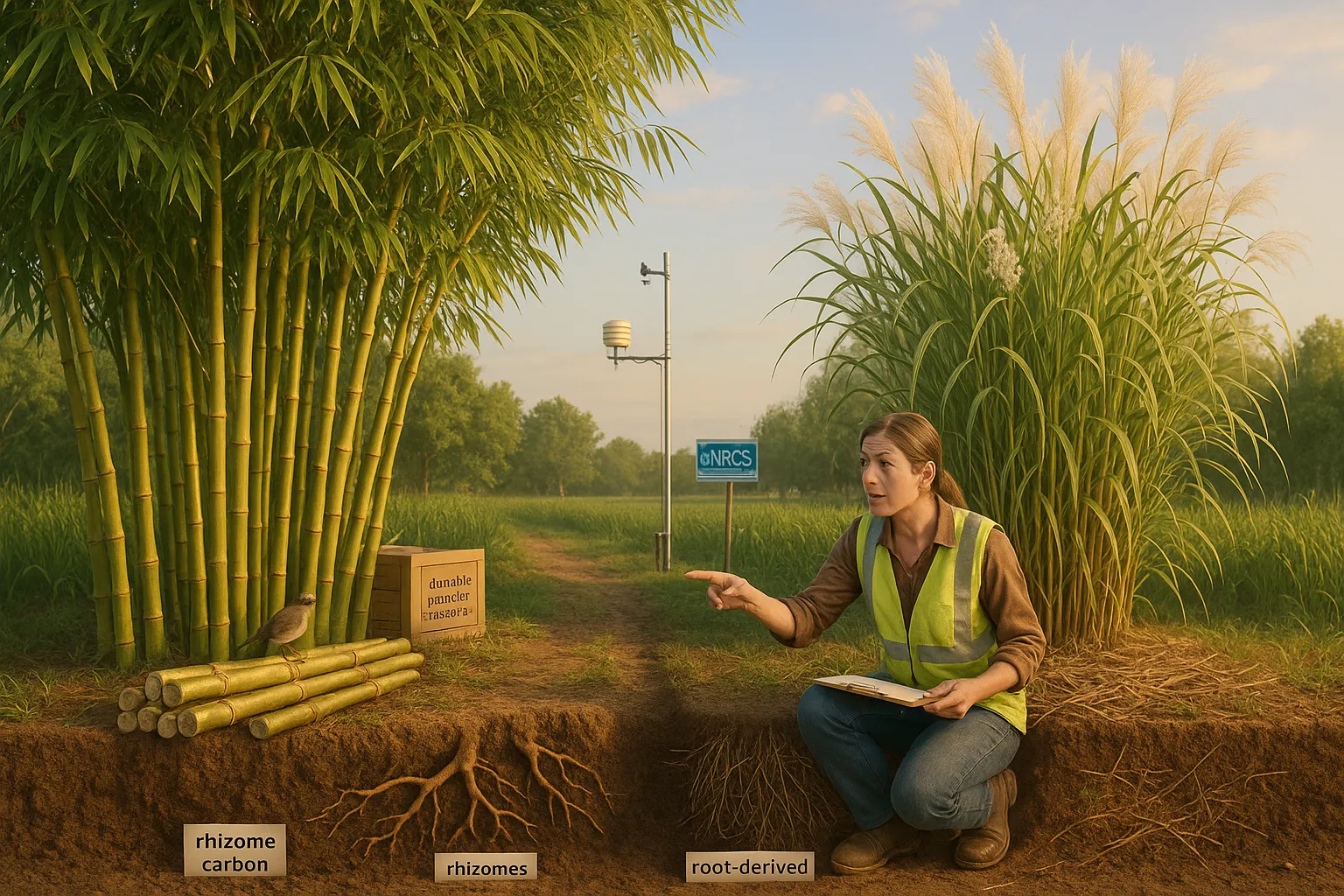
Fact: Both crops sequester carbon but in different pools and timelines. Bamboo stores carbon in woody culms and rhizomes: Miscanthus stores carbon mainly in soil via root turnover and rhizomes.
Bamboo benefits: Fast aboveground carbon accumulation can be harvested and locked in durable products (flooring, poles). Bamboo provides year-round canopy cover, reduces wind speed, and offers habitat for some birds. But, running species can displace native vegetation if unmanaged.
Miscanthus benefits: High root biomass increases soil organic carbon over several years, improving soil structure and water infiltration. Miscanthus stands reduce erosion and provide pollen resources for insects in late summer. Because Miscanthus × giganteus is sterile, it carries low seed-based invasion risk in most regions.
Trade-offs: Bamboo’s woody biomass is valuable but can export nutrients when harvested. Miscanthus returns more residues to soil when harvest removes only straw. Check regional conservation guidance: for example, the USDA Natural Resources Conservation Service (NRCS) publishes guidelines for biomass crops in some states.
Common Uses And Product Applications
Fact: Bamboo is used for structural lumber, crafts, and landscaping: Miscanthus is used mainly for bioenergy, animal bedding, and fiber applications.
Bamboo applications: Bamboo culms serve as poles, scaffolding, furniture, flooring, and veneer. Smaller species are popular in residential landscaping and for privacy screens. Engineered bamboo products (cross-laminated bamboo) have entered the construction market.
Miscanthus applications: Miscanthus serves as feedstock for combustion, pelletizing, and anaerobic digestion. It converts to fiberboard, insulation, and bio-based composites. Companies like Drax (UK) and Enercon use biomass pellets: smaller operators convert Miscanthus to on-farm heat value.
Consideration: If you want high-value solid products, bamboo gives material options. If you need bulk low-cost fuel or bedding, Miscanthus often wins on yield per hectare.
Productivity, Economics, And Lifecycle Costs
Fact: Miscanthus typically gives higher, predictable annual dry-matter yields: bamboo offers variable returns but higher per-unit product value for certain uses.
Yields: Miscanthus × giganteus yields commonly range from 10 to 20 oven-dry tonnes per hectare per year in temperate regions. Bamboo yield depends on species and end-use: timber-grade bamboo may take years to produce harvestable culms but commands higher prices.
Costs and returns: Miscanthus has higher establishment cost per hectare (rhizome or plug costs) but low annual maintenance: breakeven often occurs by year 3–5. Bamboo planting costs vary with species and planting density: maintenance (rhizome barriers, pruning) can increase labor costs. Capital costs include planting, irrigation, and harvest equipment. Revenue streams: biomass sales, carbon credits, ecosystem service payments, and product sales (bamboo lumber).
Lifecycle note: Include end-of-life for products. Bamboo products can sequester carbon long-term: Miscanthus used for combustion returns CO2 quickly but can supply renewables to displace fossil fuels.
Management, Pests, Invasiveness, And Regulatory Considerations
Fact: Bamboo poses higher invasiveness risk with running types: Miscanthus has low seed spread risk when sterile hybrids are used.
Management: For bamboo you must manage rhizomes, barriers (HDPE sheets), regular tilling at borders, or choose clumping species. Miscanthus needs weed control in year one, and periodic nutrient checks.
Pests and diseases: Bamboo can suffer from bamboo mite, borers, and fungal culm rot. Miscanthus faces rusts and stem borers in some regions. Both crops need monitoring: maintain diversity in farm landscapes to reduce disease pressure.
Regulation: Several jurisdictions restrict planting some invasive bamboos. Miscanthus × giganteus is often easier to permit. Check local extension services and plant health agencies like the USDA APHIS or your state plant board for specific rules.
How To Choose Between Bamboo And Miscanthus For Your Site
Fact: Match the crop to your goals: durable products and rapid aboveground growth point to bamboo: predictable biomass yield and soil carbon gains point to Miscanthus.
Bamboo: Growth Habit, Carbon Sequestration, And Soil Effects
Bamboo grows aboveground quickly and stores carbon in woody culms. It alters surface litter and can increase coarse woody carbon pools. Some species improve slope stability with dense root mats: others can deplete shallow soil moisture.
Miscanthus: Growth Habit, Carbon Sequestration, And Soil Effects
Miscanthus builds belowground carbon through rhizome turnover and root death. It improves soil organic matter and reduces erosion. It tends to leave more fine residues that feed soil microbes.
Climate, Soil, And Water Needs Compared
Bamboo prefers warmer, moist climates for high growth: some temperate bamboos tolerate frost. Miscanthus thrives in temperate zones with warm growing seasons. Miscanthus is more drought efficient during peak season due to C4 photosynthesis.
Propagation, Establishment Time, And Rotation Lengths
Bamboo propagation uses rhizome divisions, culm cuttings, or tissue culture: establishment to harvestable timber can take 3–7 years depending on species. Miscanthus propagation uses rhizomes or plugs: establishment to full yield takes 2–3 years, with productive stands lasting 10–20 years.
Yield Ranges, Harvest Frequency, And Energy Density
Miscanthus yields 10–20 t/ha/yr: harvest is typically annual in late winter. Energy density of dried Miscanthus is similar to switchgrass. Bamboo yield by mass is lower for annual harvests but culms have higher material density for construction uses.
Capital Costs, Maintenance Costs, And Revenue Streams
Expect higher up-front planting costs for both. Miscanthus needs harvest and transport logistics (choppers, balers). Bamboo requires containment and sometimes irrigation. Revenue: Miscanthus from fuel contracts: bamboo from niche product markets and landscaping sales.
Invasiveness Risk, Containment Strategies, And Legal Status
Use clumping bamboo to reduce spread. Install rhizome barriers for running bamboo. Prefer sterile Miscanthus cultivars to minimize seed dispersal. Consult local regulations before planting.
Pests, Diseases, And Long‑Term Stand Health
Monitor both annually. Rotate adjacent crops where possible. Keep records of pest outbreaks and treatment outcomes. Long-term health depends on soil fertility management and timely interventions.
Use Cases: Bioenergy, Biomaterials, Erosion Control, And Landscaping
Choose Miscanthus for large-scale bioenergy, bedding, and erosion control. Choose bamboo for timber, poles, fast privacy screens, and specialty biomaterials.
Suitability Checklist: Farm, Commercial, Or Restoration Projects
Commercial: Bamboo may fit value-added product lines: Miscanthus fits pellet supply chains.
Restoration: Use non-invasive clumping bamboo or native grasses: Miscanthus only when sterile hybrids and local approvals exist.
If you need help evaluating your site, contact your county extension or use a soil test and climate-matching tool. Make a small test planting first, you’ll learn faster than from brochures, and avoid costly mistakes.
To provide the best experiences, we use technologies like cookies to store and/or access device information. Consenting to these technologies will allow us to process data such as browsing behaviour or unique IDs on this site. Not consenting or withdrawing consent, may adversely affect certain features and functions.
Functional
Always active
The technical storage or access is strictly necessary for the legitimate purpose of enabling the use of a specific service explicitly requested by the subscriber or user, or for the sole purpose of carrying out the transmission of a communication over an electronic communications network.
Preferences
The technical storage or access is necessary for the legitimate purpose of storing preferences that are not requested by the subscriber or user.
Statistics
The technical storage or access that is used exclusively for statistical purposes.The technical storage or access that is used exclusively for anonymous statistical purposes. Without a subpoena, voluntary compliance on the part of your Internet Service Provider, or additional records from a third party, information stored or retrieved for this purpose alone cannot usually be used to identify you.
Marketing
The technical storage or access is required to create user profiles to send advertising, or to track the user on a website or across several websites for similar marketing purposes.