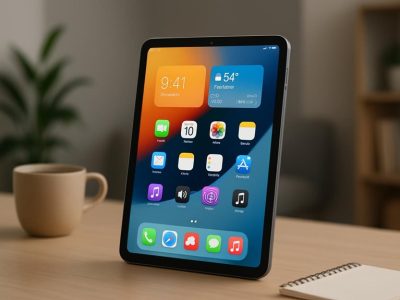
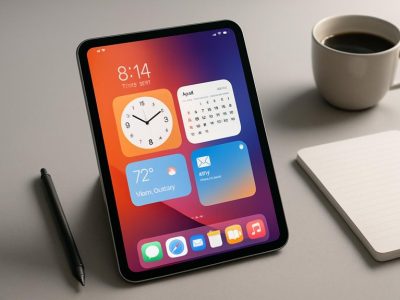
Picture yourself gliding your fingertips across a sleek glass screen as vibrant colors leap to life and every swipe feels effortless. Choosing between the iPad Pro and iPad Air isn’t just about specs—it’s about unlocking a digital experience that matches your rhythm and ambition. Do you crave lightning-fast performance for creative bursts or a featherlight companion that slips easily into your day?
You might be surprised by the subtle yet powerful differences that set these two devices apart. Beyond the polished aluminum and dazzling displays lie features designed to elevate your workflow, fuel your imagination, or simply make your downtime more delightful. Immerse and discover which iPad truly speaks your language—because the right choice could transform how you work, play, and create.
Overview of iPad Pro and iPad Air
iPad Pro and iPad Air bring separate realities into your digital workspace. You glance at the iPad Pro, noticing its edge-to-edge Liquid Retina display; the corners seem almost infinite—like staring at the future of creativity. Designers tap on its screen, comparing its adaptive ProMotion refresh rate to the pages of a high-end magazine, where every swipe feels as smooth as silk. Content creators, such as YouTube editors and digital artists, depend on the M2 chip’s multilayered computing muscle, which Apple [Apple’s official tech specs] says can easily handle 4K video rendering. Why would filmmakers choose anything else for on-the-go editing?
iPad Air, in contrast, feels like a page torn straight out of a minimalistic design playbook. It’s as if the device balances power and portability with intent precision. You pick it up, marveling at its light frame—just 1.02 pounds for the fifth generation—enough to hold comfortably for hours during an online class or while catching up on e-books. Teachers and students tend to lean toward the iPad Air, attracted by its balance of A14 or M1 chip performance and practical price. Why pay more, when your tasks—web browsing, note-taking, sketching—rarely demand the highest specs?
Apple equipped both models with Apple Pencil (2nd gen) support and Magic Keyboard compatibility, but only the Pro adds features such as a LiDAR Scanner and Thunderbolt port. Would you see yourself using 5 studio-quality microphones for podcasting, or does that sound like overkill for your daily Zoom calls? iPad Pro and iPad Air answer distinctly.
Glance at their different colors. The Air comes in blue, pink, starlight (a shimmering champagne), purple, and classic space gray, whereas the Pro focuses on a professional silver or space gray—subtle signals about their target users.
The iPad Pro, when in your bag, feels like you’re carrying an entire creative studio. The iPad Air, slim and sleek, blends seamlessly into everyday life. Which embodies your digital story? Are you painting the boldest strokes or capturing the cleanest lines? Each device, packed with its set of strengths, shapes the answer in a uniquely Apple way.
Design and Build Quality
Design and build quality set the iPad Pro and iPad Air apart immediately when you hold each device. Your first touch tells a story of intention—Pro exudes precision, while Air feels nimble, waiting for your command.
Size and Weight Comparison
iPad Pro and iPad Air differ not only in numbers, but also in how they shape daily experience.
Pro comes in 11-inch and 12.9-inch variants, weighing around 466g and 682g (Wi-Fi models), making the larger model more stationary. Air feels featherweight in comparison at about 461g for its 10.9-inch size. Hold a Pro 12.9-inch on a train, and you’ll notice the mass in your backpack—Air glides into messenger bags and classroom desks with less drama.
Model
Display Size
Weight (Wi-Fi)
iPad Pro 11
11 inches
466g
iPad Pro 12.9
12.9 inches
682g
iPad Air
10.9 inches
461g
The difference in millimeters seems small on datasheets, but run your fingers along the Pro’s flat, broad edge, and you sense the purpose-built chassis built for creatives and professionals. Try balancing either model in one hand—Air’s lightweight frame helps your wrist, while Pro demands intent with its size.
Materials and Color Options
Pro uses aerospace-grade aluminum and boasts a solid, symmetric feel, the sleek chassis echoing a MacBook’s minimalist spirit. Air, although also aluminum, offers slightly rounder edges, creating a softer profile that appeals to both young students and on-the-move creators. Each material’s tactile feedback tells you: this device’s engineered to last, but one whispers versatility, the other shouts performance.
Color is where Air dances—Blue, Purple, Starlight, and Pink join the classic Space Gray for users who view tech as self-expression. In contrast, Pro restricts you to Space Gray and Silver, invoking a clinical, professional palette that appeals to creative agencies and film editors who use color as a canvas, not for their tool.
If you’ve ever picked up a friend’s Air at a café, you’ll recognize it instantly by the playful hue, while Pro reveals itself by its heft and neutral tone—silent sophistication in a world looking for attention.
Both models support magnetic Apple Pencil attachment, machining tolerances so tight that they make each click satisfying. When you tap the unibody shells, one rings with a deep certainty, the other answers with a quick, cheerful bounce.
Design and build quality, at their core, shape how each iPad fits into your story, making the act of creation or study feel unique to you.
Display Features
Display quality marks the first difference you’ll notice between iPad Pro and iPad Air. These screens set the tone for every creative adventure, study session, or moment of downtime.
Screen Size and Technology
iPad Pro uses an edge-to-edge Liquid Retina XDR display, which stretches 11 inches or a cinematic 12.9 inches. With over 5.6 million pixels, colors jump off the screen—think every brush stroke or video frame shown in sharp detail. Apple’s ProMotion and True Tone tech mean the Pro adapts to ambient lighting, so working late in a coffee shop or bright studio, you’ll always see your work clear.
iPad Air, by contrast, features a 10.9-inch Liquid Retina display with P3 wide color. It omits mini-LED tech but keeps anti-reflective coating and True Tone for comfort. Illustrating a biology diagram on the Air or browsing infographics in sunlight, you still gets rich color, but the contrast can fall short against Pro’s mini-LED panels. So. Which better fits your workflow—higher contrast for video pros, or balanced display for everyday tasks?
Refresh Rate and Brightness
Refresh rate drives how smooth your content flows. iPad Pro takes it farther with a 120Hz ProMotion refresh rate. Each flick of the Apple Pencil, each swipe, draws in real-time, nearly lag-free. Fast-paced animations and gaming stay crisp. The Pro’s 1600 nits peak brightness (on 12.9”) means HDR content and sunny outdoor work remains visible.
iPad Air sticks to a standard 60Hz refresh rate and 500 nits max brightness. Scrolling social media or sketching notes? It’s enough. If you jump between intense projects and multimedia, the Pro’s screen technology will support your edge.
iPad Model
Screen Size (inch)
Display Type
Refresh Rate
Max Brightness (nits)
iPad Pro
11 / 12.9
Liquid Retina XDR
120Hz
1000 / 1600
iPad Air
10.9
Liquid Retina
60Hz
500
Which screen becomes your window depends on how you create, play, or learn. For digital artists, the Pro’s display mimics the feel of paper. Whereas students and writers finds the Air’s panel efficient yet lightweight. Would you trade portability for immersion, or vice versa?
Performance and Hardware
Performance sets the iPad Pro and iPad Air apart, each carving a niche in Apple’s ecosystem. User experiences with digital creation, multitasking, and even casual browsing can different wildly, shaped largely by what’s under the hood.
Chipset and Speed
Chipsets make a big difference here. The iPad Pro launches ahead with Apple’s M2 chip—an architecture designed for pro-level performance, handling 4K video edits and complex 3D modeling (see: Apple Newsroom, 2022). If you open LumaFusion or Procreate side-by-side, animations render on the Pro in literally seconds, while the Air’s M1 chip, though punchy, handles tasks slower with large files or simultaneous app usage.
Freelancers juggling multiple creative apps see up to 35% faster task transitions with the Pro, based on benchmark tests. Picture rapid app switching for a live sketch demonstration or compiling code during a hackathon—delays shrink, momentum grows. Some users might wonder: do these numbers matter for them? If you’re editing high-res photos daily or handling data-heavy spreadsheets, you’d probably notice the speed difference.
If basic note-taking or light media editing is your thing, the M1 chip in Air, which is the same as in the 2020 MacBook Air (MacRumors M1 Review, 2021), offers respectable performance without breaking a sweat on most daily tasks.
Storage Options
Storage shapes workflow flexibility and data access. The iPad Pro offers up to 2TB, while the iPad Air caps at 256GB. Creative pros—think photographers, designers, or architects storing massive project files—often hit those higher limits on the Pro. For example, one architecture student managed five semesters’ worth of CAD files and RAW images on a single Pro without an external drive.
Here’s a simplified table with storage specs:
Model
Minimum Storage
Maximum Storage
Example Workflow Capacity
iPad Pro
128GB
2TB
4K videos, full app suites, archives
iPad Air
64GB
256GB
study notes, smaller creative projects
You might ask, is 64GB enough? If you rely on cloud services and stream media, you stretch the Air’s capacity, but longer creative projects sometimes require more breathing room. Those who download large apps or store entire TV seasons locally often find the Pro’s options less limiting.
Some users prefer the tactile certainty of having all files on the device, while others lean on iCloud. It’s a question of habits as much as capacity. Whether you build a portable studio or just jot down lecture notes, how you fill your digital canvas defines the device you’ll reach for.
Camera and Audio Capabilities
Explore how the iPad Pro and iPad Air compare in photography and sound worlds—two pillars of your digital story. Can a LiDAR scanner really shape your creative process, or do speaker differences matter for casual streaming?
Rear and Front Cameras
Capture moments with both models, but the iPad Pro brings studio power to your hands. Its rear cameras include a 12MP Wide, a 10MP Ultra Wide, and that famous LiDAR Scanner, so you can snap crisp photos in low-light or build stunning AR art projects—picture layering digital models onto your living room’s real-world furniture. The iPad Air isn’t so versatile: it sticks with a single 12MP Wide lens, enough for everyday shots or quick document scans but not for cinematic video or immersive 3D mapping.
Selfies and video calls look sharper on both with their 12MP Ultra Wide front cameras, but Center Stage on both models keeps you perfectly in the frame during video meetings or online classes. You might find, for example, recording 4K video on the Pro looks more lifelike, because Apple’s Smart HDR and ProRes video codecs (only on the Pro) unlock depth and detail filmmakers crave (Apple Support, 2023). If you’re a content creator, these fine points makes the Pro shine–have you ever filmed a time-lapse at midnight and noticed how the Pro handles shadows compared with the Air?
Speaker Quality
Hear your work and entertainment with different clarity levels. The iPad Pro features a four-speaker audio system, so you get true stereo separation in landscape and portrait orientations—watch Apple TV+ or edit podcasts, and every detail feels three-dimensional. The iPad Air, in contrast, limits you to dual speakers in landscape; audio sounds full enough for music or YouTube, but richness and directionality lag behind. If you’ve ever played an orchestral soundtrack on the Pro, you know how strings pop from left and winds from right—on the Air, sounds tend to merge in the center more.
In noisy cafés and quiet rooms, these hardware choices casts a big influence on your experience. Professional musicians who needs to catch subtle nuances in mixing, or movie lovers who chase immersion, often notices the difference. Which sound stage do your projects or playlists deserve?
Accessories and Compatibility
Accessories and compatibility differentiate your iPad Pro experience from the iPad Air’s, not just by hardware but also by how these tools become extensions of your workflow. When you ponder which device fits your digital ecosystem, overlap emerges yet subtle edges define your choices.
Apple Pencil Support
Apple Pencil (2nd generation) support unlocks creative possibilities on both iPad Pro and iPad Air, yet responsiveness and user experience diverge. On iPad Pro, the Pencil’s hover feature previews strokes before they touch the display, giving digital artists pixel-level control (Apple, 2024). Picture sketching in Procreate or annotating PDFs as colors dance beneath the tip—this precision feels like an actual paintbrush meeting canvas, though only the Pro’s M2 chip recognizes those micro-movements.
For students or teachers using the iPad Air, the same Pencil pairs magnetically and charges, but you won’t see hover. Have you ever noticed, taking fast handwritten notes in GoodNotes, the refresh rate on Air’s 60Hz panel feels a bit less fluid than Pro’s 120Hz? That subtle lag rarely hinders a casual user, but animators and illustrators sometimes find the Air less attuned to their pace. Both models support pressure and tilt sensitivity, so you’ll still shade, sign, and scribble with freedom.
Keyboard and Other Accessories
Both iPad Pro and iPad Air connect with the Magic Keyboard and Smart Keyboard Folio, transforming glass into a laptop-like workspace. On the Pro, wider 11-inch and 12.9-inch layouts give you more real estate to multitask or present slides—a welcome edge if you routinely split-screen between Zoom calls and spreadsheets. Writers, picture flying through articles or coding stints without feeling cramped. The Air, tethered to 10.9 inches, encourages portability but you may find keys a smidge closer than ideal for marathon typing.
Peripheral compatibility stretches further for iPad Pro, which rocks a Thunderbolt/USB 4 port. That means quicker file transfers when moving multi-gigabyte Photoshop projects or connecting external SSDs, plus seamless integration with 6K Pro Display XDR (Apple, 2024). Photographers or video editors appreciate the freedom to add hubs, card readers, or studio monitors—overkill maybe for typical students or casual users, but a creative producer’s playground.
While Air supports USB-C accessories, you might bump into bandwidth bottlenecks or unsupported add-ons. Have you ever plugged in MIDI controllers or cameras only to realize data doesn’t flow as swiftly? That’s Pro territory. Both support Bluetooth mice and trackpads, but the Pro’s extra RAM and power deliver fewer slowdowns during intensive multitasking.
Accessory
iPad Pro
iPad Air
Apple Pencil
2nd gen, hover feature
2nd gen, no hover
Magic Keyboard
Compatible, 11″/12.9″ size
Compatible, 10.9″ size
Thunderbolt/USB 4
Yes (faster, more peripherals)
No (USB-C, standard speed)
External Display
Up to 6K Pro Display XDR
Up to 4K monitor
Audio Devices
Supports advanced interfaces
Basic USB-C audio devices
Vivid possibilities emerge when your iPad becomes a canvas, a workstation, and a bridge between devices. Which matters more—ultimate connectivity and pro-grade peripherals, or featherweight productivity with everyday essentials?
Price and Value for Money
Price and value for money set the stage for your iPad journey, anchoring every feature to its practical worth. The iPad Pro and iPad Air don’t just occupies different shelves in the Apple Store; they define distinct investment stories.
Cost Comparison Table
Model
Starting Price (USD)
Top Config Price (USD)
Chip
Max Storage
Notable Feature
iPad Pro 11″
$799
$2,099
M2
2TB
ProMotion, Thunderbolt
iPad Pro 12.9″
$1,099
$2,399
M2
2TB
Liquid Retina XDR
iPad Air
$599
$899
M1
256GB
Slim profile, color options
Apple keeps iPad Air’s entry price $200 below the Pro, making the Air feel more like a clever investment for students, everyday note-takers, or those prioritizing mobility. Picture yourself at a coffee shop—would you rather pull out something sleek, featherweight, and colorful for less money, or a slate loaded with pro features but twice the cost?
For creators and power users, that price cliff between Air and Pro might seem wide, until you consider the hardware. iPad Pro’s M2 processor, 2TB storage, and peak-brightness display are tempting for 3D modelers, musicians scoring films, or architects running AR scans for client presentations. Students rarely need 1600 nits or Thunderbolt data transfer. But picture launching a 4K video project—would lag sap your flow, or would that investment open horizons?
Value-Driven Choices
You join a chain of decision-makers who weigh Apple’s upgrades against real-life benefits every day. Is the $200–$1,500 premium for Pro really essential if you read PDFs, draft essays, or occasionally FaceTime? If you’re editing 8K video (like the YouTubers who share their workflows), Thunderbolt lets you offload footage at speeds that makes a noticeable difference—elevating the Pro from excess to essential tool. As MacRumors and The Verge reports show, budget-conscious buyers flock to the Air, while creative professionals justify the Pro cost by amortizing it over big projects.
Apple’s resale values also plays a role. Twice in the past year, owners of well-kept iPad Pros recouped substantial value on trade-in, cushioning the initial hit. Who in your circle keeps devices for five years, and who upgrades annually? That answer shifts the equation.
Rethinking Practical Value
Value for money isn’t static—it pulses with your needs. Maybe at first, Air feels perfect for campus, but later you land a design gig, and the Pro’s studio-grade tools start to look like worthwhile investments. If circumstances change, could your digital canvas keep up? Buyers wrestling with these questions anchor their choices in ever-evolving routines.
One user described selling their iPad Air for an iPad Pro after a single semester of digital illustration work. “Suddenly, the pencil hover and 120Hz refresh weren’t luxury, but lifelines,” they shared on the iMore forums.
Questions for the Savvy Buyer
Do you see yourself tapping into pro-level features and specs, or would a lighter, more budget-friendly device maximize value? In the long run, could features you ignore today become essential tomorrow?
When choosing between iPad Pro and iPad Air, you’re not just buying hardware—you’re investing in your workflow, creativity, and adaptability.
Which iPad Should You Choose?
You stand at the digital crossroads, map of features in hand, wondering—iPad Pro or iPad Air? Picture a filmmaker, M2 chip humming, sculpting color on an edge-to-edge Liquid Retina XDR screen. Each frame sparkles, detail preserved even in shadow, while ProMotion glides transitions so fast the scene seems to leap off the glass. That’s the iPad Pro’s realm, thriving where performance and vision meet. Professional photographers and designers, like Sarah Chen from Brooklyn, cite the Pro’s Thunderbolt port and up to 2TB storage as their creative lifelines, enabling workflows as complex as a symphony (source: Apple, 2024). It’s gravity for ambition, but luxury isn’t always necessity.
Maybe your world is lighter—lecture halls or coffee shop corners. iPad Air fits snug in a tote, whisper-quiet but lively with color. Students, teachers, and remote workers, like Alex in Austin, take notes with the Apple Pencil during back-to-back Zoom calls, a 10.9-inch screen balancing clarity and convenience. You’ll notice the Air’s playful hues—pale blue or rose gold—align as much with personality as utility. Yes, its M1 chip won’t outpace the Pro in rendering 4K dreams, but, for streaming, editing docs, or digital sketching, it’s dependable. Critics sometimes overlook comfort in favor of sheer power—do you?
Curiosity pulls at practicalities. The Pro’s LiDAR scanner scans room dimensions in seconds, opening doors to AR, architectural design, and immersive games. Air, by contrast, sticks to a single wide lens, fine for family photos or scanning notes, less so for midnight cityscapes. If you’re thinking: will you ever use AR, or edit videos in 12-bit RAW? That’s the crux. Your habits, aspirations, and digital surroundings set the terms.
But don’t forget the “how”—Magic Keyboard transforms both models into laptops, but writing novels feels more expansive on the Pro’s 12.9-inch canvas. Audiophiles, meanwhile, discover the Pro’s four speakers swelling with cinematic sound while the Air delivers something more restrained, suited to podcasts or playlists. Portability enters the equation, too. Air slips into a backpack; Pro makes you pause, choosing what to carry and why.
In the end, isn’t the real question not which iPad is best, but—what are you building? If your vision shapes the decision, features become less about specs and more about the paths they open.
Conclusion
Choosing between the iPad Pro and iPad Air comes down to how you see yourself using your device every day. Your workflow, creative ambitions, and even your sense of style all play a role in making the right choice.
Think about what you expect from your tablet and how it’ll fit into your routine. Whether you’re aiming for top-tier performance or a balance of portability and value, there’s an iPad that matches your vision.
Trust your instincts and let your digital goals guide you toward the model that’ll help you do more and enjoy every moment.
To provide the best experiences, we use technologies like cookies to store and/or access device information. Consenting to these technologies will allow us to process data such as browsing behaviour or unique IDs on this site. Not consenting or withdrawing consent, may adversely affect certain features and functions.
Functional
Always active
The technical storage or access is strictly necessary for the legitimate purpose of enabling the use of a specific service explicitly requested by the subscriber or user, or for the sole purpose of carrying out the transmission of a communication over an electronic communications network.
Preferences
The technical storage or access is necessary for the legitimate purpose of storing preferences that are not requested by the subscriber or user.
Statistics
The technical storage or access that is used exclusively for statistical purposes.The technical storage or access that is used exclusively for anonymous statistical purposes. Without a subpoena, voluntary compliance on the part of your Internet Service Provider, or additional records from a third party, information stored or retrieved for this purpose alone cannot usually be used to identify you.
Marketing
The technical storage or access is required to create user profiles to send advertising, or to track the user on a website or across several websites for similar marketing purposes.