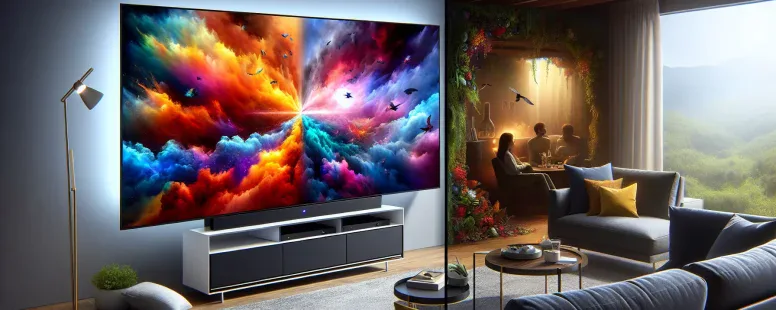
Picture settling into your favorite chair as the glow from your TV paints the room in vivid color—only to wonder what’s really lighting up your world. Is it the crisp brilliance of LED or the velvety blacks of OLED? The difference isn’t just technical jargon—it’s a leap in how you see, feel, and experience every scene.
You might think all screens are created equal, but there’s a hidden layer of innovation behind each pixel. OLED’s self-illuminating magic can make colors pop like never before, while LED’s sharp clarity brings every detail to life. Choosing between them isn’t just a tech decision—it’s about transforming your everyday viewing into something extraordinary.
Understanding LED and OLED Technologies
LED and OLED display technologies shape your viewing experience in distinct ways. You see, LED screens use a backlight of tiny light-emitting diodes. This backlight shines through layers of liquid crystals (LCD), filters, and glass. Think about a theater stage with powerful spotlights behind curtains, lighting up the performers—this backlight system enables bold colors and bright images, but can’t achieve true black since there’s always some light leakage (Samsung, 2023). Ever notice how, during a dark movie scene, the black areas sometimes look a little bluish or gray instead of pure black? That’s the backlight at work.
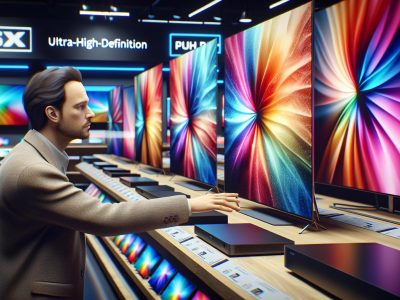
OLED, or organic light-emitting diode, takes its own approach. Each pixel is a self-contained light source, like a constellation stars sparkling independently in the night sky. When an OLED pixel turns off, it’s truly black, creating intense contrast and richer colors (LG Display, 2023). That’s why, if you’ve ever seen side-by-side demos in an electronics store, OLED’s blacks seem to vanish next to an LED’s glowing sections—almost magical!
You might ask, “Why don’t all manufactures use OLED then?” Each technology offers tradeoffs. LED displays usually last longer and cost less because their manufacturing processes are mature and less sensitive to pixel stress than OLED’s organic compounds. On the flip side, OLED panels can show burn-in if a static image stays too long. Gamers who display static icons or stock tickers, for example, sometimes prefer LED for peace of mind (Consumer Reports, 2023).
Ever paused Netflix on your TV and worried about that logo sticking around? That’s a real concern in OLED ownership, but new TVs now include pixel shifting or screen refresh features as safeguards.
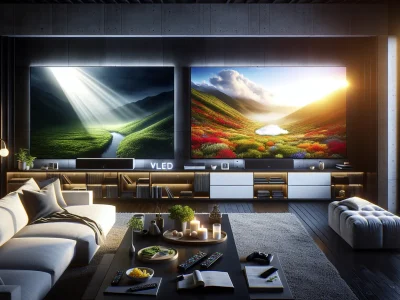
Not every place has the same lighting. LED sets often punch through sunny living rooms because their max brightness levels usually exceed those of OLED screens. OLED shines brightest in dark home theaters where shadow detail and color vibrancy matter more than raw luminosity.
What’s your home lighting like, and do you binge in the dark or with the curtains wide open? That context alone leads many buyers to weigh picture quality against price, longevity, and environment.
Display Type
Illumination
Black Levels
Lifespan
Burn-in Risk
Ideal Use Case
LED
Backlight
Moderate
High
Low
Bright rooms, long static sessions
OLED
Self-lit
Deepest
Moderate
Medium
Home theater, cinematic content
Key Differences Between LED and OLED
You’ll notice significant differences between LED and OLED displays in real-world use. These differences affect what you see, how you interact with your screen, and which technology fits your space best.
Display Technology and Structure
LED panels depend on light-emitting diodes arranged behind or around a liquid crystal display panel. OLED panels rely on each organic pixel emitting its own light source. LED backlighting often creates a uniform image but sometimes causes halo effects, especially when showing bright objects on dark backgrounds. OLED pixels switch off individually, creating true black levels and no light bleed. When you watch a movie like “Gravity” in a dark room, you may see stars pop on OLED while the same scene may reveal a faint glow on LED.
Color Accuracy and Contrast Ratios
OLED screens deliver perfect blacks and infinite contrast ratios. For example, in nature documentaries, deep shadows and rich colors render more vividly. LED screens produce high brightness, yet struggle with near-black scenes, resulting in grayer shadows. Tests from Consumer Reports (2023) show OLED TVs exceeded 98% DCI-P3 color accuracy, while premium LED TVs averaged about 92%. LED displays still serve well in brightly lit rooms, yet colors sometimes look less saturated under strong lighting.
Brightness and Viewing Angles
LEDs reach higher peak brightness—over 2000 nits in some flagship models—making them easier to use in sunlit or brightly lit rooms. OLED panels typically max out at 800–1000 nits. When you watch with friends from wide angles, OLED panels retain their color and contrast, so everyone sees the same image quality. LED screens fade or shift colors past 30–40 degrees off-axis, according to tests from RTINGS.com.
Response Time and Refresh Rates
OLED pixels respond in under 0.2 milliseconds, nearly instant vs top LED panels at 2–5 milliseconds. This quick response minimizes ghosting in fast-paced sports or gaming. For refresh rates, both OLED and premium LED models reach up to 120 Hz for smooth motion. Yet gaming enthusiasts favor OLED for the super-fast transitions and lower input lag. In eSports streams, rapid movement stays crisp and blur-free on OLED. Users worried about image retention may still prefer LED, since LCD panels don’t suffer burn-in over time.
Pros and Cons of LED and OLED Displays
Comparing LED and OLED displays reveals clear trade-offs for your screen experience. Your priorities—like cost, longevity, or picture realism—determine which technology fits best.
Advantages of LED
Lower cost
LED TVs consistently offer lower prices than OLEDs, especially in the 55-inch and 65-inch size. For instance, a 65-inch Samsung QLED often costs $600 less than an equivalent LG OLED (Best Buy, 2024).
Higher brightness
LED displays generate more peak luminance, useful for sunny living rooms or open spaces. If you like watching sports in daylight, LED’s punchy light output keeps the image visible.
Broader model variety
Major brands like Samsung, Sony, and TCL sell hundreds of different LED TVs yearly, offering nearly any size or style.
Lower risk of burn-in
You don’t need to worry about static logos or content, LED panels don’t suffer permanent image retention like OLEDs sometimes can.
Advantages of OLED
Perfect black levels
OLED pixels turn off individually, showing true black next to bright color. In a dark home theater, nothing beats the cinematic depth.
Wider viewing angles
OLED images look consistent even from the sides, while LED screens fade or discolor. When the family’s watching together, everyone gets the same clarity.
Faster response and refresh
Actions blur less on OLEDs. Gamers notice instant pixel changes during fast scenes or quick moves.
Thinner, flexible designs
OLED panels measure just millimeters thick and some even curve, giving your living room that futuristic touch.
Limitations of Each Technology
LED
Lower contrast
Scenes with shadows sometimes look grayish since LEDs can’t turn off light completely.
Narrower angles
Viewers sitting off-center will see color shifts or faded images.
OLED
Higher price
OLEDs cost a premium and manufacturers like LG or Sony control most of the market.
Burn-in risk
If you run static content for hours each day, logos or HUDs may leave faint marks after a few years (Rtings, 2024).
Lower peak brightness
OLEDs might struggle in rooms with strong sunlight, you may see glare or muted highlights.
Feature
LED
OLED
Price Range (65-in)
$500–$1,200
$1,300–$2,000
Contrast Ratio
4,000:1 (typical)
Infinite:1
Burn-in Risk
None
Moderate
Peak Brightness (cd/m²)
1,000–2,000
600–900
Lifespan (hours)
50,000–100,000
30,000–50,000
Consider the balance that fits your space. If night movie magic matters most, OLED brings cinema home but wants careful use. If versatility and price take priority, LED brightens any room at less cost.
Applications and Suitability
Applications for LED and OLED displays differ based on screen technology strengths, viewing conditions, and user needs. Both have distinct capabilities, real-world use cases, and market presences.
Best Uses for LED Displays
LED displays perform best in high-brightness environments, such as sunlit living rooms, conference rooms, or outdoor digital billboards. For example, digital menu boards outside fast-food chains and public information screens in airports typically uses LED technology due to superior luminance (Statista, 2023). You may notice LED TVs in big-box electronics stores look brighter than OLEDs under intense store lighting.
Choose LED in scenarios where screen longevity and affordability matter most, like classrooms, hotels, or offices that run displays up to 18 hours daily. LED’s average lifespan for panels exceeds 50,000 hours, according to Samsung, which outweighs the slightly muted contrast if lights is always on.
Gamers and sports fans, where fast-twitch imagery and little risk of static logo burn-in occurs, often select LED for its durability and cost efficiency. Variants like QLED or Mini-LED give extra color punch and peak brightness—great for graphical clarity in racing simulators or dynamic multiplayer games. Would you trade perfect blacks for a glare-free Super Bowl viewing party?
Ideal Situations for OLED Screens
OLED screens shine in dimly-lit home theaters, luxury bedrooms, or designer apartments that prize immersive cinematic displays. Because each pixel generates its own light, OLED achieves infinite contrast ratios and vibrant colors that paint each frame with drama—think nighttime movies or prestige TV dramas where shadow and subtle hues defines the story. CNET and Rtings found OLED masters in handling HDR scenes with nuanced light-dark transitions.
Photo editors and graphic designers gravitates toward OLED in creative studios, demanding pinpoint color precision for print or digital media. Wide viewing angles means collaborating groups sees consistent image quality from the side, not just dead center. Would you want every frame of your independent film to pop with lifelike detail?
For art installations, ultra-thin smart devices, or curved displays—such as LG’s rollable TV showcased at CES—OLED’s flexibility and sleekness enables architectural integration that LED panels can’t match. You’ll find them in luxury cars’ dashboards or flagship smartphones because weight and thinness matter.
If ambient light remains low and content changes frequently, OLED panels transform typical entertainment into a showcase experience. Yet, budget, static imagery, and sunlight exposure means it’s wise to match display technology to both how and where you watch.
Conclusion
Choosing between LED and OLED comes down to what matters most for your space and viewing habits. Both technologies offer unique strengths that can transform your entertainment setup. Think about your room’s lighting, the type of content you enjoy, and your budget before making a decision. By weighing these factors, you’ll find a display that fits your lifestyle and helps you get the most out of every viewing experience.
To provide the best experiences, we use technologies like cookies to store and/or access device information. Consenting to these technologies will allow us to process data such as browsing behaviour or unique IDs on this site. Not consenting or withdrawing consent, may adversely affect certain features and functions.
Functional
Always active
The technical storage or access is strictly necessary for the legitimate purpose of enabling the use of a specific service explicitly requested by the subscriber or user, or for the sole purpose of carrying out the transmission of a communication over an electronic communications network.
Preferences
The technical storage or access is necessary for the legitimate purpose of storing preferences that are not requested by the subscriber or user.
Statistics
The technical storage or access that is used exclusively for statistical purposes.The technical storage or access that is used exclusively for anonymous statistical purposes. Without a subpoena, voluntary compliance on the part of your Internet Service Provider, or additional records from a third party, information stored or retrieved for this purpose alone cannot usually be used to identify you.
Marketing
The technical storage or access is required to create user profiles to send advertising, or to track the user on a website or across several websites for similar marketing purposes.