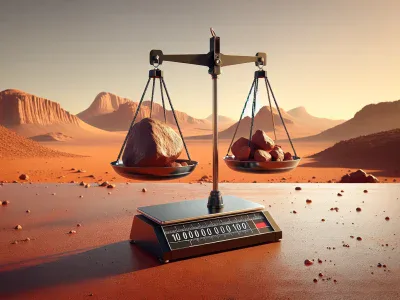
Imagine holding a smooth pebble and feeling its weight in your hand—this simple sensation reveals a hidden world of science. Mass measures how much matter is packed inside an object, while density shows how tightly that matter is squeezed together.
These subtle differences can turn everyday objects into fascinating puzzles—from boats that float effortlessly to rocks that sink with a thud. Surprisingly, understanding density can help you predict how things will behave in water or air, unlocking secrets of nature’s invisible rules.
Dive into this intriguing realm and see how the tiniest details can transform your view of the world around you.
What Are Mass and Density? Basic Definitions
Mass is the amount of matter in an object. It tells us how heavy or light something is. For example, a bowling ball has more mass than a tennis ball because it contains more matter. Scientists measure mass in units like grams or kilograms. Mass is important in many areas, such as weighing ingredients in cooking or understanding how planets move in space.
Density measures how tightly packed the matter in an object is. It is found by dividing the mass of the object by its volume. For example, a piece of wood and a piece of metal might be the same size, but the metal is usually denser because it has more matter packed into the same space. Density helps us tell apart objects that look the same but are made of different materials.
Some people think of mass like the weight of an object, while density is like how crowded the matter is inside it. Both are important in science. For instance, knowing the density of a substance can help engineers design stronger materials or help scientists identify unknown objects. However, measuring density accurately can sometimes be tricky because it requires precise measurements of both mass and volume.
How Mass Affects an Object’s Weight and Why It Matters
Your mass is the amount of stuff inside an object, like how much matter it has. An object’s weight is how heavy it feels because of gravity pulling on its mass. When gravity pulls harder, like on the Moon compared to Earth, the weight changes even if the mass stays the same. This means that an object with more mass will weigh more because there is more matter being pulled by gravity.
Understanding how mass affects weight is useful in many ways. For example, when you lift a box, knowing its weight helps you decide if you can lift it safely. Astronomers use this idea to figure out the size and weight of planets and stars. For example, the weight of a car on Earth is different from its weight on the Moon because of gravity differences.
Some people might wonder if mass and weight are the same. They are related, but not exactly the same. Mass stays the same no matter where you are, but weight can change depending on gravity. For example, astronauts in space have the same mass but seem weightless because they are in free fall.
Knowing how mass influences weight helps us understand everyday things and the universe. Whether you’re lifting groceries or studying planets, understanding this concept is very helpful. Just remember, weight depends on gravity, but mass remains constant no matter where you are.
Mass and Gravitational Force
Mass is the amount of matter in an object. It directly affects how heavy an object feels because gravity pulls harder on objects with more mass. For example, a big rock has more mass than a small pebble, so it weighs more. This explains why heavier objects weigh more than lighter ones.
Mass also stays the same no matter where the object is. This idea is called mass conservation. Whether you weigh a book on Earth or in space, its mass stays the same. When we figure out an object’s density, we divide its mass by its volume. But the gravitational force only depends on the mass, not on the shape or size of the object. That means two things can have the same volume but different weights if their masses are different.
Knowing how mass affects gravity helps us understand why some objects weigh more than others, even if they are the same size. For example, a metal ball and a plastic ball of the same size will feel very different because the metal ball has more mass.
This is why measuring mass carefully is important. It tells us about the gravitational force acting on an object. Some scientists say that mass is the most important factor in gravity, but others warn that location also matters because gravity varies in different places. For example, gravity is weaker on the moon than on Earth.
In simple terms, mass is what makes objects feel heavy, and it controls how gravity pulls on them. Knowing this helps us understand movement, weight, and forces in our universe.
Impact on Object Weight
The main thing that makes an object feel heavy is its mass. Mass is the amount of matter inside an object. The heavier something feels because gravity pulls more on objects with more mass. This means that no matter what shape or size the object is, its weight mainly depends on how much matter it contains.
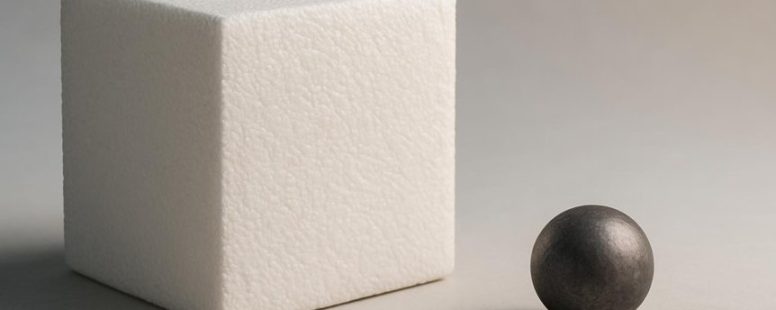
Understanding how mass works helps us see why some objects are heavier than others. For example, a small metal block can weigh the same as a large foam block if they have the same mass. Even though the foam looks bigger and lighter, the metal feels heavier because it has more mass.
People often think size or shape makes things heavier, but it really is about the amount of matter inside. For example, a big balloon filled with air is lighter than a small metal ball, because the metal has more mass, even if the balloon looks big.
Sometimes, the weight of an object can seem different because of how its material is spread out. This is called density. But density only changes how weight is distributed, not the total weight. For example, a dense metal block weighs the same as a less dense sponge of the same size because their mass is different.
Significance in Daily Life
Mass is what makes objects heavy or light. It is a measurement of how much matter is inside an object. For example, a watermelon has more mass than a tennis ball, so it feels heavier when you lift it. Understanding mass helps us know why some things are easier to carry or lift.
A long time ago, scientists like Archimedes learned about how mass and weight are connected. Archimedes found out that an object’s weight depends on its mass and the gravity pulling on it. This discovery helps engineers design things like ships and airplanes so they stay balanced and safe. For example, boat designers must think about the boat’s mass to keep it from tipping over.
Knowing how mass affects weight also helps in everyday life. When you pack your backpack, you might want to choose lighter items so it’s easier to carry. In transportation, knowing the weight of cars or planes helps keep everyone safe. For instance, a plane must be as light as possible without losing safety. If a vehicle is too heavy, it can be harder to control or use more fuel.
Some people see the importance of knowing about mass differently. Some argue that reducing weight is always better, especially in airplanes. But others warn that making things too light might make them less strong or durable. For example, a very light bike frame might break easily. So, it’s a balance between weight and strength.
How Density Determines If Objects Sink or Float
Density is what decides if an object floats or sinks in a liquid. An object will float if its density is less than the liquid’s density. For example, a piece of wood floats in water because wood is less dense than water. On the other hand, something like a rock sinks because it is denser than water.
Knowing how material makes up an object helps explain why some things float and others sink. If you want to test this yourself, you can do a simple experiment. Fill a clear glass with water and try dropping different objects in it. Notice which ones float and which ones sink. This shows how density affects behavior in liquids.
Some people might think that size matters, but it is really about density. A small, dense metal ball sinks faster than a large, less dense sponge. So, even if something is big, if it is less dense than the liquid, it will float.
There are two points to remember. First, objects that are less dense than water will float, like a boat made of wood. Second, objects that are more dense will sink, like a metal spoon. But keep in mind, some objects can be tricky. For example, a plastic bottle filled with air can float even if the plastic itself is dense because of the trapped air inside.
Understanding density is useful in many ways. For example, it helps in designing ships and submarines. Ships are made with materials that are less dense than water so they float, even though they are large and heavy. Submarines can change their density by taking in or releasing water, helping them sink or rise.
Buoyancy and Density
What is buoyancy and how does it work? Buoyancy is the upward force a fluid pushes on an object placed in it. This force makes objects float or sink. Whether an object floats or sinks depends mainly on its density compared to the fluid.
If an object is less dense than the fluid, it will float. For example, a boat made of wood floats because wood is less dense than water. On the other hand, if an object is denser than the fluid, it sinks. A metal nail sinks in water because metal is more dense than water.
Density is the amount of mass in a certain volume. When an object is placed in water, the water pushes up on it with a force called buoyant force. If the object’s density is lower than the water, the buoyant force is enough to keep it afloat. If it is higher, gravity pulls it down more than the water pushes up, so it sinks.
Sometimes, layers of fluid with different densities can affect floating objects. Lighter, less dense layers sit on top of heavier layers, helping support floating objects. Think of oil floating on top of water. The oil is less dense, so it stays on top, supporting objects that rest on it.
You can think of buoyancy like a see-saw. If the object is lighter than the fluid, it tips up and floats. If it is heavier, it tips down and sinks. This balance of forces explains why some things float while others sink. Although it seems simple, understanding buoyancy helps us design ships, submarines, and even measure how heavy objects are.
Material Composition Effects
Material composition is the main factor that affects how dense an object is. Density is what decides if something sinks or floats. Different materials have unique qualities, like strength and thermal conductivity, which influence their density.
For example, stronger materials like steel have tightly packed atoms. This makes them more dense and more likely to sink. On the other hand, materials with high thermal conductivity, such as copper, often have fewer air pockets inside. Fewer air pockets mean higher density, which can affect whether the object floats or sinks.
Lighter materials like wood or cork have lower density even if they are strong. That is why they float easily. Heavy metals like lead are very dense because their atoms are packed tightly. This high density makes lead sink in water.
Understanding how these properties work helps us know why some objects float and others sink, no matter how big they are. The atomic arrangement and physical traits like thermal conductivity play important roles in predicting buoyancy.
For example, a boat made of wood floats because its overall density is lower than water. But if you replaced the wood with a dense metal like lead, it would sink. So, material choice is crucial for whether objects stay afloat or go under.
Visual Clues: Recognizing High and Low-Density Materials
The easiest way to tell if a material has high or low density is to look at how it appears and feels. Low-density materials, like foam or certain plastics, usually look lightweight. They might feel soft or seem less tightly packed. For example, a foam cushion feels light and squishy, which shows it’s not very dense. High-density materials, such as metals or stones, look solid and often feel heavy compared to their size. Picking up a metal spoon or a small stone can help you tell if it’s dense, because it feels much heavier than a piece of plastic of the same size.
Some people use these visual clues to guess a material’s density before doing more exact tests. For example, if a material looks transparent and feels soft, it’s probably low density. If it looks heavy and feels solid, it’s probably high density. But remember, these clues aren’t always perfect. Sometimes, a material might look lightweight but be surprisingly dense, like certain plastics. So, while looking and feeling can give you a good idea, it’s best to do proper measurements if you need an exact answer.
Using visual clues is helpful but limited. For instance, a piece of wood might look lightweight but could be denser than expected if it’s a dense hardwood. Also, different lighting or surface finishes can change how a material looks, so don’t rely only on appearance. Sometimes, you might mistake a shiny plastic for a metal, which can lead to errors.
Everyday Examples of Mass and Density in Action
Mass and density are important parts of everyday life, even if we don’t realize it. Here’s what they are and how they matter in simple ways.
Mass is how much stuff is in an object. Density is how tightly packed that stuff is in a certain space. If two objects have the same size, the one with more mass is heavier. If they have the same mass but one is smaller, it’s more dense.
For example, a piece of lead feels much heavier than a piece of foam of the same size. The lead has more mass packed into the same space, making it denser and heavier. When you carry metal tools or jewelry, you’re feeling their mass and density.
In water, sugar dissolves and makes the water denser. This change affects how the water mixes with other liquids or how it reacts in experiments. For instance, if you add sugar to tea, the mixture becomes thicker and more dense, which influences how it tastes and feels.
In space, astronauts handle objects with different densities. A metal tool is very dense, so it feels heavy even in zero gravity. A sponge or foam object is less dense and floats easily. Knowing about density helps astronauts control objects better and avoid accidents.
Cooking also depends on density. When you mix ingredients, understanding how dense they are can predict how they will behave during heating or chemical reactions. For example, honey is denser than water, so it flows slower. Recognizing this helps in recipes and food science.
Measuring Mass and Density at Home or School
Measuring mass and density at home or school is simple and doesn’t need special tools. You only need basic items like a kitchen scale or a ruler.
First, what is mass? Mass is how much matter or stuff is inside an object. You can find this by weighing it on a scale. For example, if you put a toy car on the scale, you will see how heavy it is.
Next, what is density? Density tells us how tightly packed the matter in an object is. To find density, you divide the mass by the volume, or the space the object takes up. For example, a small, heavy rock has a higher density than a big, light foam block. You can measure volume by using a ruler to find the length, width, and height of an object, then multiply these numbers to get the total space it takes up.
Some people might worry that without fancy equipment they cannot learn about these ideas. But even with just a kitchen scale and a ruler, you can explore how different objects compare. Try weighing a spoon and a pencil, then measuring their size. Which has more mass? Which is more dense?
However, keep in mind that measuring density precisely can be tricky with simple tools. Small errors in measuring the volume or mass can change your results. For example, if the ruler isn’t accurate or the scale is not calibrated, your calculations could be off.
Why Understanding the Difference Between Mass and Density Matters
Mass is the amount of matter in an object, while density tells us how much mass is packed into a certain volume. Knowing the difference between these two helps us understand how objects behave, float, or sink in water, and how materials are made.
Scientists first learned that density explains why some things float and others sink. For example, a heavy ship made of steel floats because its overall density is less than water, while a small stone sinks because it’s denser than water. Today, engineers, scientists, and even forensic experts use this knowledge a lot.
Here are some ways understanding density helps us:
Building ships and submarines: Engineers use density to figure out if vessels will float or sink. They make sure the overall density of the ship is less than water so it stays afloat.
Forensic science: Detectives can identify materials by checking their density. For example, they might find out what a piece of metal is made of based on how dense it is.
Fluid mechanics: Scientists calculate how objects will float or sink in water or other liquids using density.
Making new materials: Researchers develop new materials with specific density and mass-to-volume ratios for special uses like sports equipment or medical devices.
Knowing the difference between mass and density helps us understand many physical phenomena accurately. Historically, understanding density led to important discoveries in science and technology. Today, it influences many areas like engineering and environmental science. For example, knowing how density works can help prevent ships from sinking or help find out what objects are made of in a crime scene.
However, it’s good to remember that density alone doesn’t tell the whole story. Sometimes, other factors like shape or temperature also matter. So, while it’s a helpful concept, it’s not the only thing to consider when studying objects and materials.
To provide the best experiences, we use technologies like cookies to store and/or access device information. Consenting to these technologies will allow us to process data such as browsing behaviour or unique IDs on this site. Not consenting or withdrawing consent, may adversely affect certain features and functions.
Functional
Always active
The technical storage or access is strictly necessary for the legitimate purpose of enabling the use of a specific service explicitly requested by the subscriber or user, or for the sole purpose of carrying out the transmission of a communication over an electronic communications network.
Preferences
The technical storage or access is necessary for the legitimate purpose of storing preferences that are not requested by the subscriber or user.
Statistics
The technical storage or access that is used exclusively for statistical purposes.The technical storage or access that is used exclusively for anonymous statistical purposes. Without a subpoena, voluntary compliance on the part of your Internet Service Provider, or additional records from a third party, information stored or retrieved for this purpose alone cannot usually be used to identify you.
Marketing
The technical storage or access is required to create user profiles to send advertising, or to track the user on a website or across several websites for similar marketing purposes.