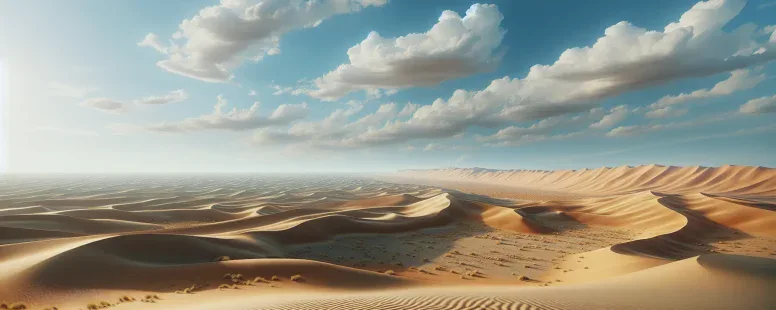
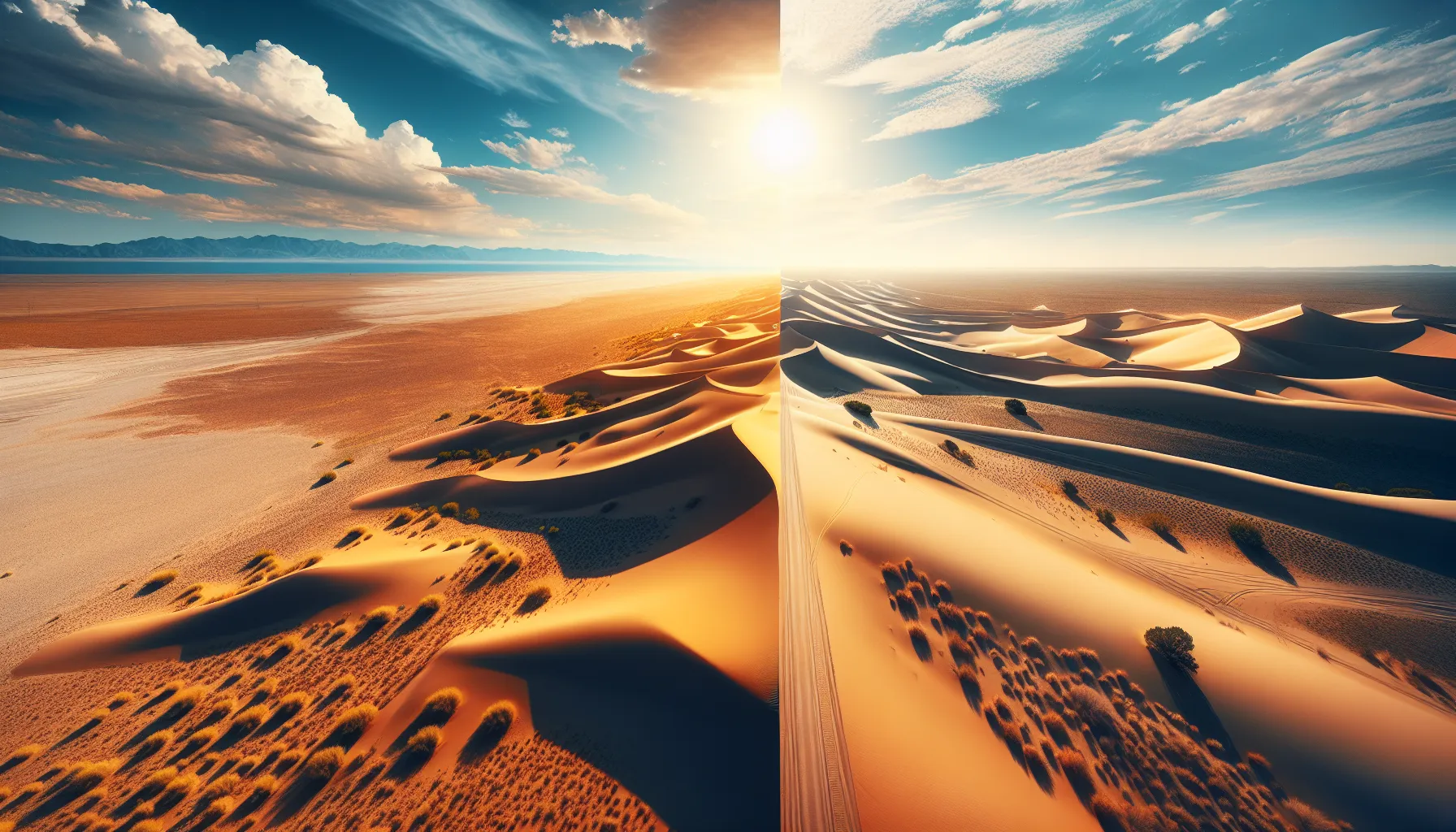
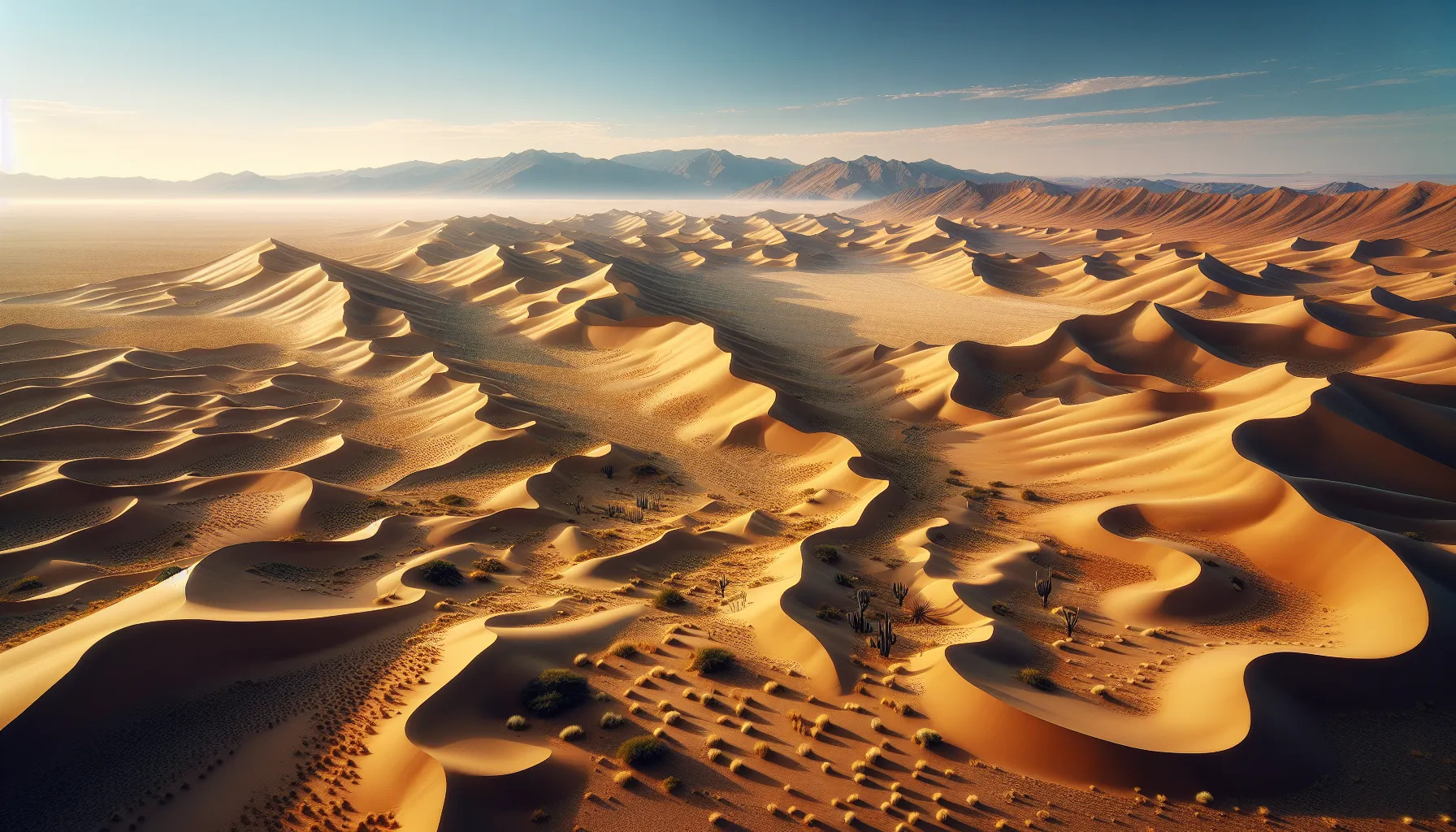
Picture standing amidst an vast expanse where the elements of earth and air collide, this is the realm of deserts and dunes, landscapes that captivate the imagination and defy human conquering. Even though similarities, deserts and dunes harbor distinctions that are integral to understanding our planet’s geophysical rhythm. Let’s uncover these differences and explore the unique characteristics and roles of each.
Understanding Deserts
Definition and Nature of Deserts
Deserts are expansive regions characterized by arid conditions, where the average annual precipitation is less than 250 millimeters. These landscapes are shaped by extreme climate, with temperatures often fluctuating between scorching days and chilled nights, resulting in unique and harsh environmental conditions.
Types of Deserts Based on Climate
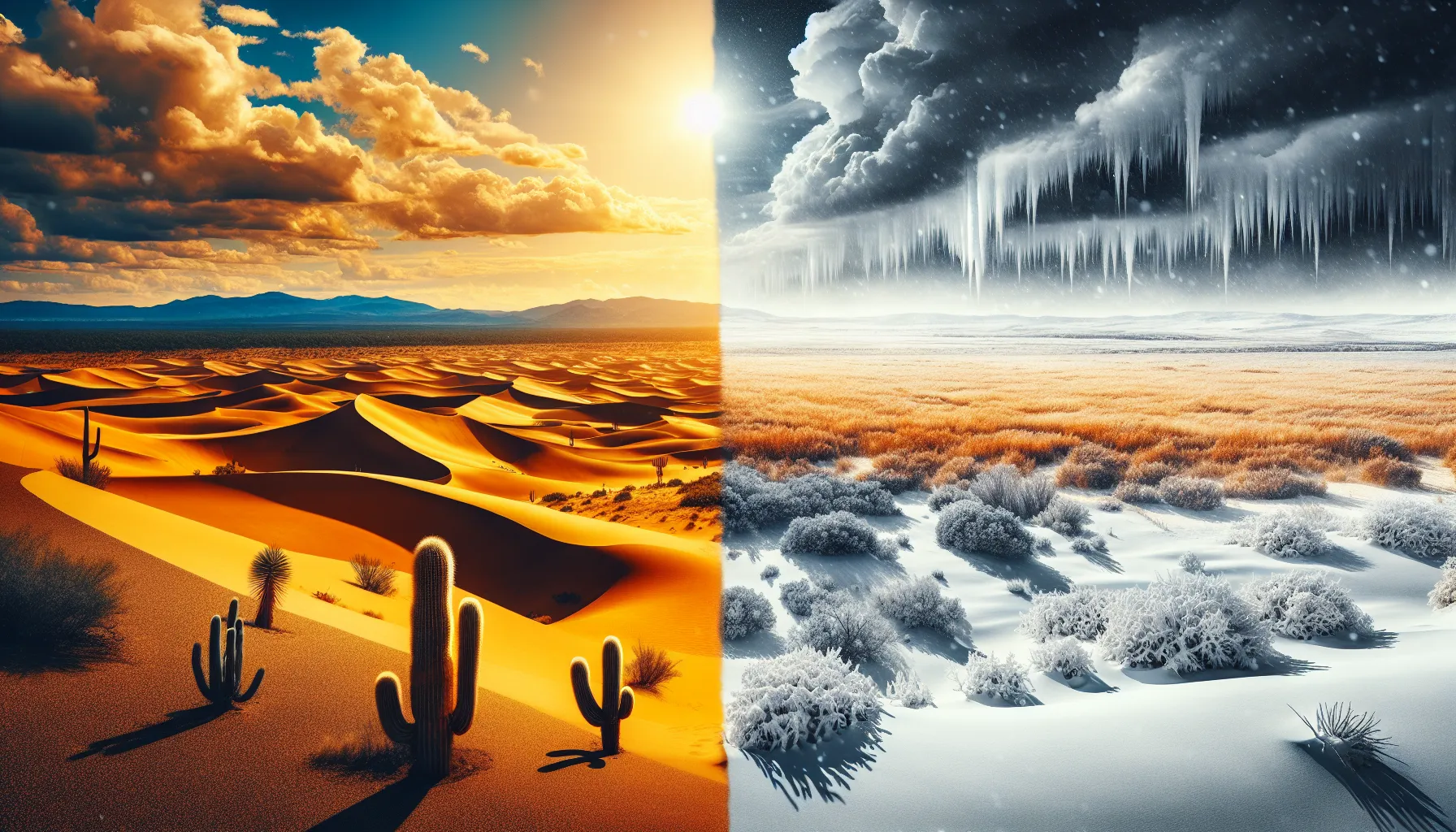
Deserts are classified based on their climatic conditions:
Hot Deserts: Examples include the Sahara, characterized by high temperatures and vast sandy expanses.
Cold Deserts: Examples include Antarctica, where temperatures remain frigid and precipitation occurs as snow.
Understanding Dunes
Formation and Structure of Dunes
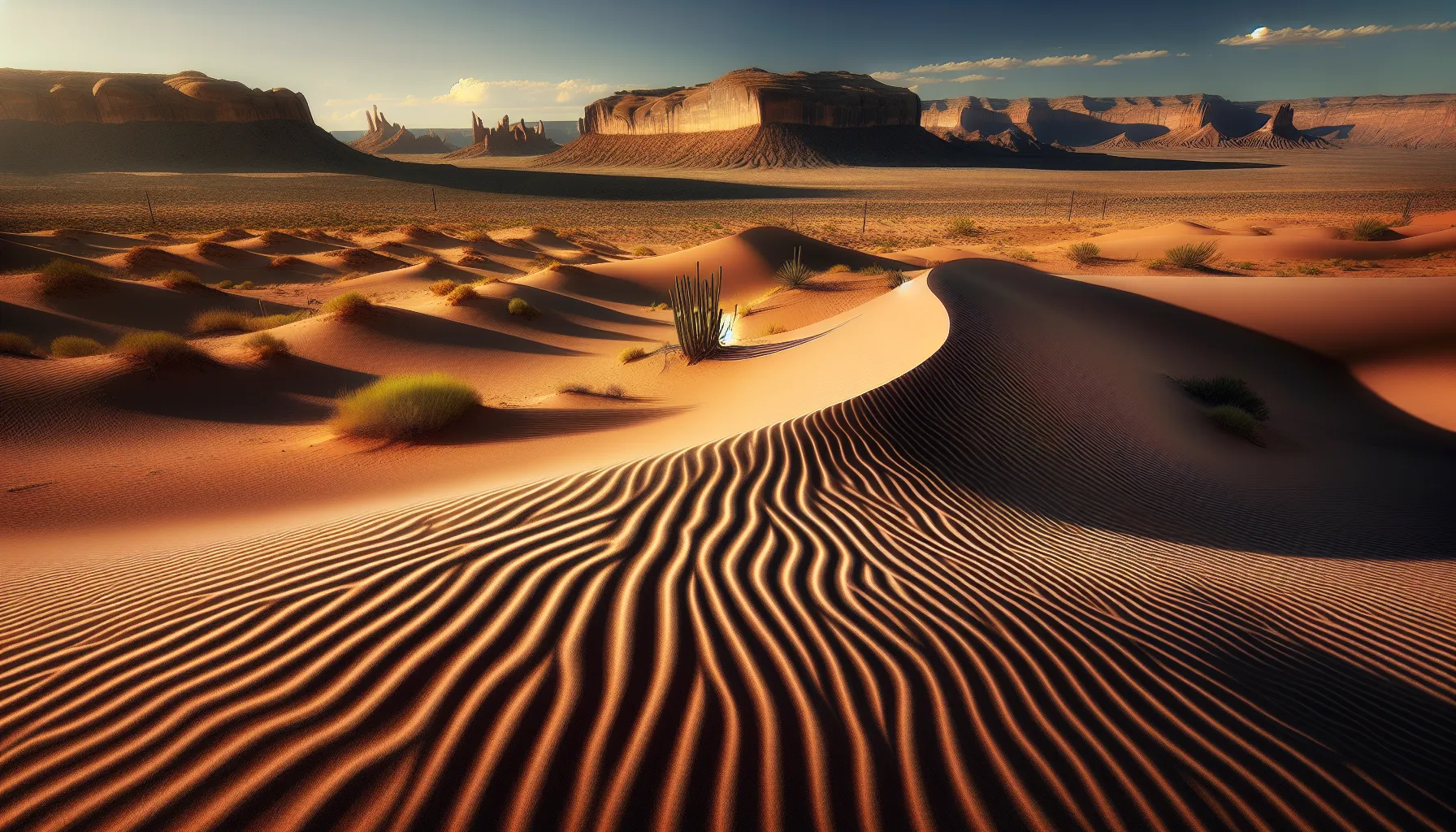
Dunes are landforms composed of wind-sculpted sand. Their formation occurs in environments where wind energy is sufficient to move loose, dry particles of sand. Over time, the accumulation and shifting of particles create ridges and hills with distinct shapes.
Various Types of Dunes
Dunes appear in several forms depending on wind direction and sand availability:
Barchan Dunes: Crescent-shaped and formed in unimodal wind conditions.
Star Dunes: Multiridged and shaped by multidirectional winds.
Linear Dunes: Long ridges aligned parallel to prevailing winds.
Differences Between Deserts and Dunes
Geological and Climatic Distinctions
Deserts encompass entire regions with specific climatic conditions, while dunes are singular features found within deserts or coastal areas. Deserts influence climate systems on a broader scale, while dunes reflect localized geological dynamics influenced by wind and sediment supply.
Impact on Ecosystems and Wildlife
While deserts support diverse ecosystems adapted to arid climates, dunes create microhabitats, serving as niches for specially adapted plants and animals. Dunes can also protect inland regions from sand movement and desertification effects.
Importance and Preservation of Deserts and Dunes
Deserts and dunes play crucial roles in maintaining ecological balance. Deserts act as carbon sinks and are sources of minerals and nutrients. Dunes stabilize coastal areas and prevent erosion. Preservation efforts are vital to combat desertification and preserve biodiversity in these fragile environments.
To provide the best experiences, we use technologies like cookies to store and/or access device information. Consenting to these technologies will allow us to process data such as browsing behaviour or unique IDs on this site. Not consenting or withdrawing consent, may adversely affect certain features and functions.
Functional
Always active
The technical storage or access is strictly necessary for the legitimate purpose of enabling the use of a specific service explicitly requested by the subscriber or user, or for the sole purpose of carrying out the transmission of a communication over an electronic communications network.
Preferences
The technical storage or access is necessary for the legitimate purpose of storing preferences that are not requested by the subscriber or user.
Statistics
The technical storage or access that is used exclusively for statistical purposes.The technical storage or access that is used exclusively for anonymous statistical purposes. Without a subpoena, voluntary compliance on the part of your Internet Service Provider, or additional records from a third party, information stored or retrieved for this purpose alone cannot usually be used to identify you.
Marketing
The technical storage or access is required to create user profiles to send advertising, or to track the user on a website or across several websites for similar marketing purposes.