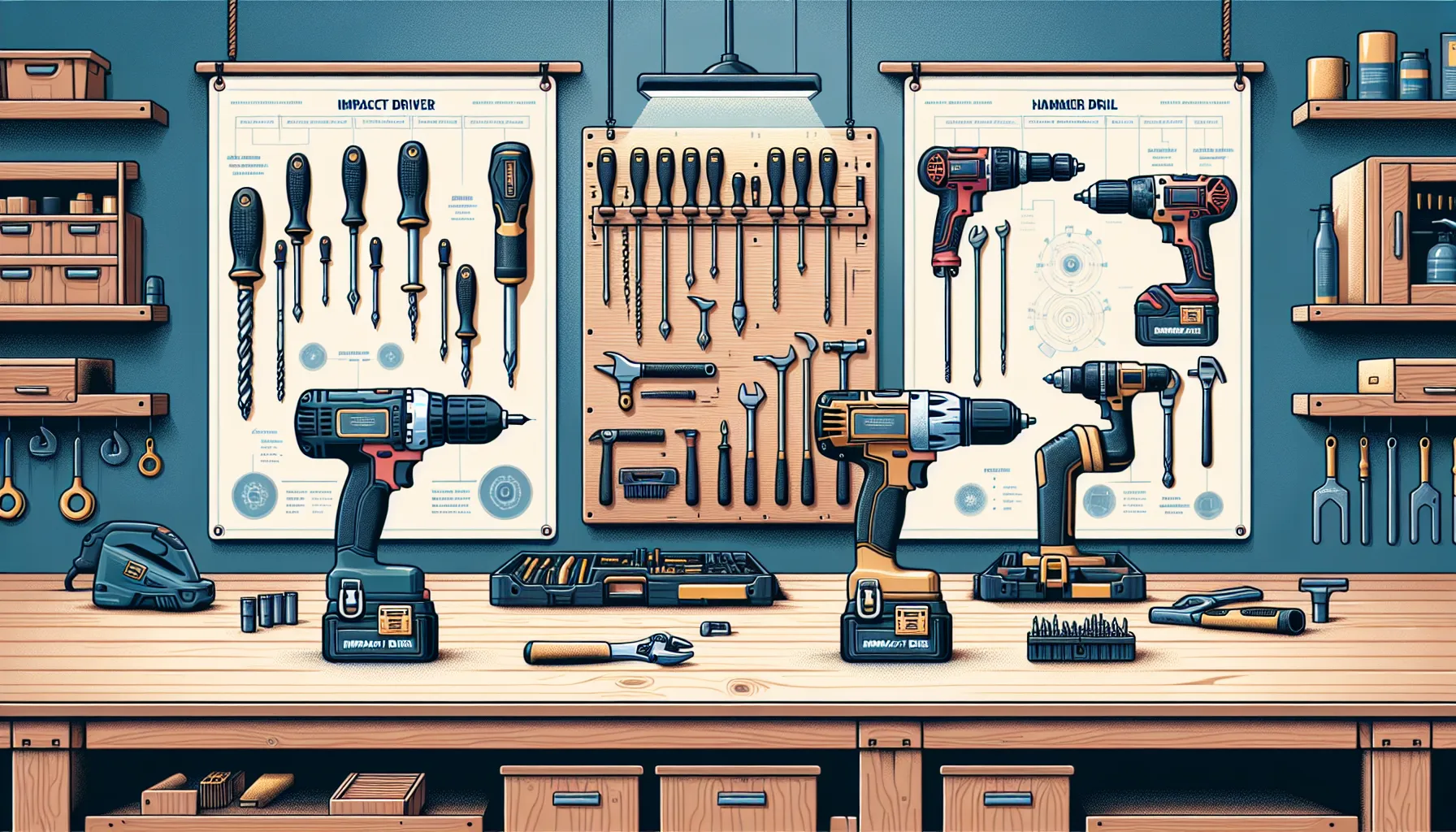
When embarking on a project that requires the use of power tools, choosing the right tool is essential for ensuring efficiency and achieving desired results. Among the most commonly compared tools are the impact driver and the hammer drill, two seemingly similar devices that serve distinctly different purposes. Understanding their unique features, operational mechanics, and primary applications can guide you toward making an well-informed choice tailored to your project’s demands.
Overview of Impact Driver and Hammer Drill
What Is an Impact Driver?
An impact driver is a compact and versatile power tool designed primarily for driving screws and bolts into various materials. It is appreciated for its high torque output and efficient performance, especially in tasks requiring precision where manual tools may fall short. By incorporating a specialized impact mechanism, this tool simplifies labor-intensive jobs.
Design and Mechanics
An impact driver operates using a motor that delivers rotational force combined with a concussive action in a rotational direction. This mechanism allows for greater torque without straining the operator’s wrist, making it ideal for demanding fastening tasks.
Primary Applications
Impact drivers excel in fastening screws into wood, metal, and other materials. They are particularly useful in construction, woodworking, and automotive repair for tasks such as assembling structures or securing heavy bolts efficiently.
What Is a Hammer Drill?
A hammer drill, on the other hand, is a tool designed for drilling into hard materials like concrete, brick, and stone. Its hammering action facilitates penetration by delivering rapid and forceful impacts along the drill bit’s axis.
Design and Mechanics
Hammer drills feature both rotational force and a pulsating percussive motion. This unique combination enables them to break through dense materials effectively while maintaining precision in drilling operations.
Primary Applications
Hammer drills are commonly used for masonry work, construction projects, and tasks that require boring holes into hard surfaces. They are essential tools for both professional builders and DIY enthusiasts.
Key Differences Between Impact Drivers and Hammer Drills
Operating Mechanism
The core operational difference lies in the motion mechanics: impact drivers generate high torque with rotational impacts driven by an internal hammer mechanism, while hammer drills combine rotary motion with percussive impacts to penetrate dense materials effectively.
Common Use Cases
Impact drivers find application in tasks that prioritize driving power, such as fastening screws and bolts. Hammer drills are optimal for tasks requiring drilling into tough materials like masonry or concrete.
Tool Design and Ergonomics
Impact drivers are generally more compact and lightweight, offering ease of handling and reduced user fatigue. Hammer drills, while larger and heavier, provide enhanced durability and power for demanding applications.
How to Choose Between an Impact Driver and a Hammer Drill
Considerations for Project Requirements
Evaluate the materials you’ll be working with and the nature of the task at hand. For fastening applications, an impact driver is the preferred choice. For drilling into hard or dense materials, a hammer drill is indispensable.
Practical Examples and Recommendations
Choose an impact driver for assembling wooden furniture and installing fixtures. Alternatively, opt for a hammer drill when installing anchors in concrete walls or constructing masonry works.
Maintenance and Tips for Prolonged Use
General Maintenance Guidelines
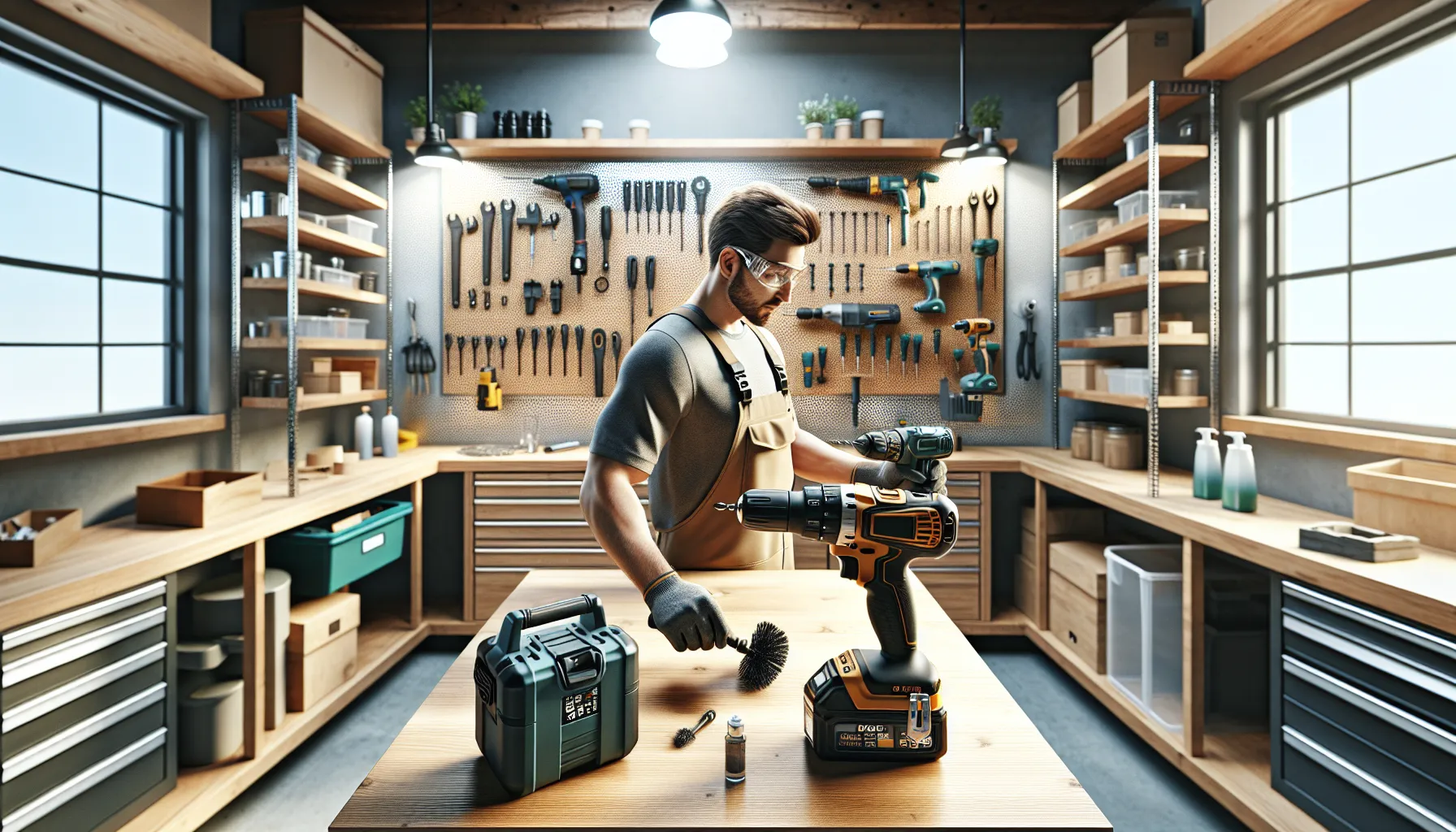
Regularly clean and inspect your tools. Remove debris buildup, especially around vents and moving parts. Lubricate critical components as specified in the user manual to ensure smooth functionality.
Safety Tips During Operation
Always wear protective gear, including goggles and gloves. Select the appropriate bit for the material and avoid applying excessive pressure, which may compromise both performance and safety.
To provide the best experiences, we use technologies like cookies to store and/or access device information. Consenting to these technologies will allow us to process data such as browsing behaviour or unique IDs on this site. Not consenting or withdrawing consent, may adversely affect certain features and functions.
Functional
Always active
The technical storage or access is strictly necessary for the legitimate purpose of enabling the use of a specific service explicitly requested by the subscriber or user, or for the sole purpose of carrying out the transmission of a communication over an electronic communications network.
Preferences
The technical storage or access is necessary for the legitimate purpose of storing preferences that are not requested by the subscriber or user.
Statistics
The technical storage or access that is used exclusively for statistical purposes.The technical storage or access that is used exclusively for anonymous statistical purposes. Without a subpoena, voluntary compliance on the part of your Internet Service Provider, or additional records from a third party, information stored or retrieved for this purpose alone cannot usually be used to identify you.
Marketing
The technical storage or access is required to create user profiles to send advertising, or to track the user on a website or across several websites for similar marketing purposes.