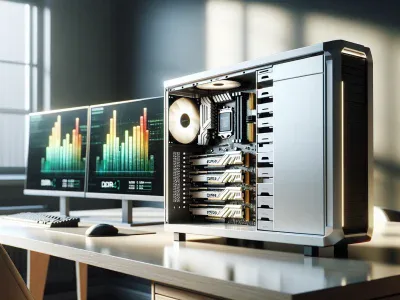
Imagine you’re upgrading your computer, eager to boost its performance. You’re faced with a decision: DDR3 or DDR4 RAM? At first glance, these technical terms might seem like a jumble of letters and numbers, but the choice you make can significantly impact your system’s speed and efficiency.
DDR3 and DDR4 aren’t just incremental updates; they’re leaps in technology. Think of DDR3 as a trusty old sedan—reliable and efficient. Now, picture DDR4 as a sleek sports car, designed for speed and cutting-edge performance. Understanding the differences between these two can help you make an informed choice, ensuring your computer runs smoothly and efficiently.
In this text, you’ll uncover the key distinctions between DDR3 and DDR4, from speed and power consumption to overall performance. By the end, you’ll know exactly which type of RAM best suits your needs.
Overview of DDR3 and DDR4
So you’ve heard about DDR3 and DDR4 RAM but aren’t quite sure what sets ’em apart? No worries, you’re in the right place.
Introduction to DDR3
DDR3 stands for Double Data Rate type 3. It’s been around since about 2007, yeah, that long! This trusty tech likely powers a lot of devices you use every day. DDR3 RAM can transfer data at speeds from 800 to 2133 MT/s (megatransfers per second). It uses 1.5V for standard modules, which might seem a bit power-hungry. Still, it perked up many systems back in its heyday.
Introduction to DDR4
On the other hand, DDR4, short for Double Data Rate type 4, entered the scene around 2014. This newer version offers speeds ranging from 2133 to 4266 MT/s. Quite the leap, right? And it does all this while consuming only 1.2V, making it more efficient. DDR4 modules also have greater density, meaning you can have more memory in the same space. So, if you’ve got a modern system, it’s probably rocking DDR4. But hey, not all motherboards support DDR4, so keep that in mind when you’re thinking of upgrading.
Key Differences
When it comes to choosing between DDR3 and DDR4, performance and compatibility are two big factors. Consider these key differences when deciding which RAM suits your system’s needs.
Performance and Speed
DDR4 likely tops DDR3 in many scenarios, offering higher data transfer rates. DDR3 runs at 800 to 2133 MT/s, while DDR4 operates between 2133 and 4266 MT/s. You could think of DDR4 as the fast lane in data transfer. Upgrading could mean faster load times and smoother multitasking. But, make sure your motherboard supports DDR4.
Power Consumption
If you’re into saving energy or just don’t like big electric bills, DDR4 probably has the edge. With a lower operating voltage of 1.2V compared to DDR3’s 1.5V, DDR4 tends to consume less power. This difference might seem small, but it can translate to a noticeable efficiency boost, especially in laptops and other devices running on batteries.
Latency
Latency, or the delay before a transfer of data begins, plays a role in system performance. DDR3 generally exhibits lower latency numbers compared to DDR4. But here’s a twist: the higher speeds of DDR4 typically offset its slight increase in latency, making it generally faster overall. It’s kinda like waiting a bit longer for a much faster train.
Capacity and Density
DDR4 memory modules offer higher capacity and density than DDR3. Think of DDR4 as the bigger closet that can store more items, with common DDR4 modules reaching up to 64GB and beyond, whereas DDR3 typically maxes out at 16GB or 32GB. This can be especially useful for heavy-duty applications like video editing or running Virtual Machines. But, not all systems can handle such high capacities, so check compatibility before upgrading.
Compatibility
When choosing between DDR3 and DDR4 RAM, compatibility is key. Not all systems support both types, so you should know the details before making a decision.
Motherboard Compatibility
Motherboards are picky about RAM types. DDR3 and DDR4 aren’t interchangeable, so you gotta check what your motherboard supports. If your board’s for DDR3, then sadly DDR4 sticks won’t fit. Likewise DDR3 won’t match a DDR4 slot. This isn’t just about physical connection; it’s also about signal standards and power requirements.
System Requirements
Before diving into RAM swaps, peek at your system’s requirements. Older systems likely support DDR3, while newer setups probably go with DDR4. Your processor and chipset must handle the specific RAM type. Even if your motherboard meets the specs, your processor might not. So, match your components carefully to avoid headaches.
Switching to DDR4 could require a motherboard upgrade. If your system’s quite dated, think about how this upgrade might affect other parts. It could be an all-or-nothing deal. So getting clear with your system specs ahead of time saves you the hassle later.
Is your system crying for more speed and efficiency Maybe DDR4 is your answer. But first ensure all parts of your machine align with what DDR4 demands.
Cost Considerations
When debating DDR3 versus DDR4, considering the cost is crucial. Here’s what you need to know to make an informed choice.
Price Comparison
DDR3 is generally cheaper than DDR4. For example, a 16GB DDR3 kit might cost around $60, while an equivalent DDR4 kit could be priced at about $80 to $90. This price difference can add up, especially if you’re upgrading or building a new system.
But don’t forget to factor in the cost of a compatible motherboard if you’re upgrading from DDR3 to DDR4. DDR4 memory often requires a more recent motherboard, which means you’ll need to shell out additional bucks.
Ask yourself, are you after better performance at a higher cost, or is sticking with DDR3 to save money more your style? The choice eventually depends on your budget and computing needs.
Future-Proofing
DDR4’s higher price tag comes with benefits that may justify the cost in the long run. As technology progresses, DDR4 will likely remain standard for a longer period than DDR3. This future-proofing aspect might save you money down the line, reducing the need for frequent upgrades.
Newer applications and games are more likely to take advantage of DDR4’s improved speed and efficiency. If you want your system to handle future software without hiccups, investing in DDR4 can be a smart move.
So, where does that leave you? Think about how long you intend to keep your current system. If you’re planning for a tech refresh soon, DDR4 should probably be on your radar.
Real-World Applications
DDR3 and DDR4 RAM show significant differences in various real-world applications. When deciding which to choose, you should consider your primary uses.
Gaming
Gaming has evolved into an intense, visually-rich experience. If you’re into gaming, you know how annoying lag can get. DDR4 often beats DDR3 in this area, offering faster data transfer rates. Games with high graphical demands or large open worlds load quicker and run smoother on DDR4. Newer games are optimized for the higher bandwidth DDR4 provides. For instance, popular titles like “Cyberpunk 2077” and “Red Dead Redemption 2” benefit significantly from DDR4’s enhanced speed.
Although DDR3 can handle many games, it might struggle with the latest ones. Multitasking, like streaming or running multiple background apps while gaming, is where DDR4 shines over DDR3. You got a high-refresh rate monitor? DDR4 will more likely take full advantage of it.
Professional Workstations
Professional applications like video editing, 3D rendering, and software development demand robust performance. DDR4 offers greater memory capacities and faster data transfer rates than DDR3, making it a better choice for these tasks. For example, if you’re working with large datasets or high-resolution video files, DDR4’s efficiency can significantly reduce processing times.
Software like Adobe Premiere Pro, AutoCAD, and MATLAB benefits from DDR4’s abilities, allowing for smoother performance and quicker project completion. DDR3 might suffice for less demanding tasks but won’t perform as efficiently under heavy loads compared to DDR4.
In sum, DDR4 improves the overall user experience in gaming and professional tasks, making it preferable if you want to enhance performance and future-proof your setup.
Conclusion
Choosing between DDR3 and DDR4 RAM depends on your specific needs and budget. DDR4 offers superior speed and efficiency, making it ideal for gaming and professional workstations. But, DDR3 can still be a viable option for older systems or those looking to save money. Always check your motherboard’s compatibility before making a decision. Investing in DDR4 might cost more upfront but can future-proof your setup for years to come. Eventually, the right choice will enhance your computer’s performance and meet your computing demands effectively.
To provide the best experiences, we use technologies like cookies to store and/or access device information. Consenting to these technologies will allow us to process data such as browsing behaviour or unique IDs on this site. Not consenting or withdrawing consent, may adversely affect certain features and functions.
Functional
Always active
The technical storage or access is strictly necessary for the legitimate purpose of enabling the use of a specific service explicitly requested by the subscriber or user, or for the sole purpose of carrying out the transmission of a communication over an electronic communications network.
Preferences
The technical storage or access is necessary for the legitimate purpose of storing preferences that are not requested by the subscriber or user.
Statistics
The technical storage or access that is used exclusively for statistical purposes.The technical storage or access that is used exclusively for anonymous statistical purposes. Without a subpoena, voluntary compliance on the part of your Internet Service Provider, or additional records from a third party, information stored or retrieved for this purpose alone cannot usually be used to identify you.
Marketing
The technical storage or access is required to create user profiles to send advertising, or to track the user on a website or across several websites for similar marketing purposes.