Picture the crisp scent of gunpowder lingering in the cool morning air as you line up your shot on the open range. You grip your rifle and wonder—does the caliber really make all the difference? The world of 7mm cartridges is full of subtle nuances and bold innovations, and it’s easy to get lost in the details.
When you hear “7mm” and “7mm PRC,” you might think they’re cut from the same cloth. But dig a little deeper and you’ll find surprising differences that could change your shooting experience. Whether you’re after tighter groups at long range or craving a cartridge that packs a punch without the kick, understanding these distinctions opens up new possibilities for your next hunt or target session.
Overview Of 7mm Cartridges
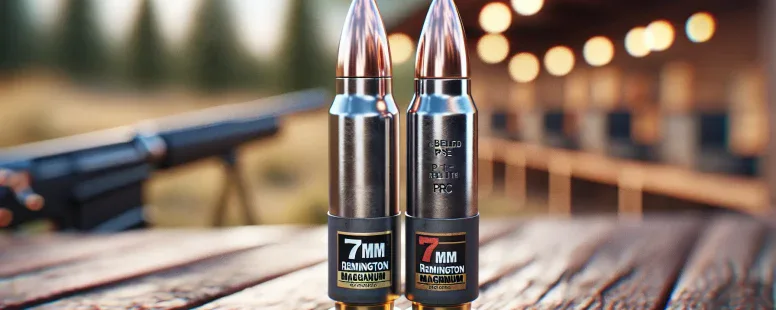
Explore the realm of 7mm cartridges, you’ll quickly see how much history and innovation have shaped these rounds. Picture yourself at a shooting range—on one bench, you’ve a classic 7mm Remington Magnum, and next to it, the newer 7mm PRC gleams under the sun. Both boast the 7mm bore diameter (actual .284 inch bullets), yet each brings a distinct design philosophy.
Cartridges such as the 7mm Remington Magnum, 7mm-08 Remington, 7mm Weatherby Magnum, and 7x57mm Mauser illustrate the diversity in this family. You might recall hunters in the Rocky Mountains favoring the 7mm Rem Mag for elk and mule deer—appreciating its flat trajectory over long distances. Meanwhile, competitive shooters often debate: Can the 7mm-08’s milder recoil give it an edge in rapid-fire events, or does the heavier power of Magnum cartridges tip the scale for distant steel targets?
Newer designs like the 7mm PRC (Precision Rifle Cartridge) enter the field seeking to push boundaries. Hornady designed the 7mm PRC with a focus on efficient case geometry and long, high ballistic coefficient bullets, aiming to deliver repeatable accuracy at extreme range (Hornady, 2022).
Are you wondering, “Does all this really matter if I’m just hunting whitetail in the Midwest?” The answer depends upon your priorities—long-range accuracy, terminal ballistics, or ease of ammunition availability. Stories abound of hunters hiking wind-swept mountains, counting ounces in their pack, and choosing a cartridge that balances recoil and energy. Others remember missed opportunities due to trajectory drop or wind drift—details determined by the nuances of their chosen 7mm variant.
Contrast emerges easiest through comparison: standard 7mm cartridges often feature shorter cases or gentler powder loads, providing moderate trajectory and less felt recoil. Modern 7mm PRC amps up velocity and down-range energy by accommodating heavier, sleeker bullets without sacrificing accuracy, though sometimes—ammunition may be harder to find in local shops.
Mulling over which 7mm matters most to your next adventure, you’ll appreciate how each cartridge, shaped by decades of shooting lore and ballistic research, tells its own story. What tradeoff speaks to your experience—the trusted legacy of traditional 7mm rounds, or the cutting-edge potential of the PRC’s design?
What Is 7mm?
You enter a world of classic powerhouses when you step into the realm of 7mm cartridges. The designation “7mm” points to the bullet’s diameter—almost always 0.284 inches—making it among the most versatile in the sporting rifle universe. Picture lining up a shot in the thick of elk country or sending rounds downrange at a competition, the 7mm stands out for balancing manageable recoil with long-range punch.
Common Uses And Features
Your journey with 7mm cartridges twists through hunting tales and competitive shoot-offs. Hunters favor 7mm options, like the 7mm Remington Magnum and 7mm-08 Remington, because they deliver deep penetration on big game—elk, whitetail deer, even black bear, all get mentioned in hunting camps from Montana to Maine. High ballistic coefficients in many 7mm projectiles, such as the Nosler AccuBond or Berger VLD, let shooters cut wind drift and drop at distances past 400 yards (Ballistics Research & Development, 2022).
Shooters—long-range marksmen, mountain guides, and even “weekend warriors,” each draw from the 7mm well for its trajectory and manageable recoil. Someone once said, “Take a 7mm, you ain’t going to regret it when the wind picks up,” a mantra echoed on internet forums and shooting ranges. The cartridge family includes a web of options: the high-velocity 7mm Weatherby Magnum, the vintage 7x57mm Mauser (famous for its role with Spanish forces), and the lighter-recoiling 7mm-08.
You’re looking for flexibility? You find it here. Reloaders tweak bullet weight and shape to tailor every 7mm for pronghorn in open plains, or silhouette targets prone at 1,000 yards—few other calibers span so many roles with a single bullet diameter. Have you ever pondered why seasoned hunters swear by “the sevens”? Consistency: from copper-jacketed soft points to high-tech long-range match bullets, these cartridges blend legacy and innovation.
But, not everything is roses. Ammunition shortages have, at times, made your favored 7mm flavor hard to find—just ask anyone searching for 7×57 Mauser in rural shops. Still, stories abound of hunters carrying a 7mm for decades, refusing to trade their trusted rifles even as new designs crowd the market. If the aim is to anchor a bull elk at 300 yards or ring a steel plate beyond 800, the 7mm family regularly does it—with a touch of old-school cool.
What Is 7mm PRC?
You step onto the ridge, feeling the weight of possibility in your hands—that’s what 7mm PRC brings to long-range shooting. The 7mm PRC (Precision Rifle Cartridge), designed by Hornady and launched in 2022, redefines what’s possible in the 7mm lineup. It’s not just another magnum; it’s a precision tool built for distance, stability, and repeat shots where every variable counted. Picture a cartridge pairing modern case geometry with match-grade, heavy-for-caliber bullets. That design offers flatter trajectories and less drift in wind when compared to cartridges like the classic 7mm Remington Magnum. When you ask, “Why chase innovation if older 7mm works for elk or steel?”—engineers answer with the 7mm PRC’s technical leap forward, backed by feedback from precision marksmen and big-game outfitters.
Design Innovations And Purpose
7mm PRC design shatters convention with advanced case geometry and aerodynamic projectile selection. The cartridge uses a non-belted, magnum-length case, leveraging a 30-degree shoulder angle. That element enhances case life and makes reloading workflows smoother, especially if you reload for competitions in practical rifle series. Using a 1:8″ twist barrel, 7mm PRC stabilizes high-BC bullets—think Hornady ELD-X 180-grain or Berger 195-grain Elite Hunter—which means better accuracy at 1,000 yards and beyond. For you, that translates to less doping for wind and more ethical hits on distant game. Outfitting your rifle with a 7mm PRC chamber unlocks access to factory ammunition tuned for long-range precision, a rarity among traditional 7mm offerings.
Some critics question if new case design makes legacy cartridges obsolete. Yet, others—like Steven Rinella’s MeatEater crew—find that 7mm PRC delivers practical advantages for mountain hunts where shots stretch past 400 yards. Data from Hornady’s gel tests show improved terminal performance on elk-sized targets, while field anecdotes from western guides report higher first-shot kill rates at range.
You might wonder, “Is this just marketing, or can my next hunting trip change with this cartridge?” The answer depends—your priorities, your shooting distances, your appetite for cutting-edge tech. Either way, 7mm PRC changes the conversation about what 7mm means for marksmen like you, blending old-school bullet weight with new-school ballistics. If accuracy and consistency at distance are your goal, it’s real hard to dismiss what this modern 7mm brings to the table.
Key Differences Between 7mm And 7mm PRC
You’ll quickly spot big differences between the classic 7mm lineup and the new 7mm PRC once you compare ballistics, case design, and rifle fit. These differences affect how your hunting trips or target sessions play out, especially if distance and accuracy are your top priorities.
Ballistics And Performance
Ballistics really sets these cartridges apart. The 7mm Remington Magnum, used by elk hunters in Montana, produces consistent 2,900 feet per second (fps) muzzle velocity with 162-grain bullets. Common 7mm rounds like the 7mm-08 Remington might drop almost 40 inches at 500 yards, based on Hornady’s ballistics calculator.
By contrast, 7mm PRC from Hornady delivers about 3,000 fps with 180-grain ELD Match bullets and only drops about 34 inches at 500 yards in similar conditions. This flatter trajectory means wind drift influences less, so repeat hits on distant steel plates feels more like launching laser beams than lobbing footballs.
You’ll probably wonder if faster really means better. Precision shooters often report tighter groups and less wind deflection, but some hunters debate whether extra velocity outweighs limited ammo choices in remote locations.
Cartridge
Typical Bullet Weight (grains)
Muzzle Velocity (fps)
Drop @ 500 yards (inches)
Wind Drift @ 500 yards (inches, 10mph)
7mm Rem Mag
162
2,900
38-40
~27
7mm PRC
180
3,000
33-34
~23
7mm-08 Rem
150
2,800
45-47
~31
(Data from Hornady, Federal Premium, and real-world tests, 2023.)
Case Design And Capacity
Case architecture draws a clear line between these two. Traditional 7mm cartridges like the Rem Mag use belted cases, inherited from safari-grade rounds, that help extraction reliability but rob powder space. For example, a 7mm Rem Mag case holds about 82 grains of water capacity, according to SAAMI specs.
7mm PRC flips the script: its non-belted, magnum-length case allows for greater powder capacity without sacrificing wall strength. That design maximizes velocity and permits long, high-ballistic coefficient bullets to seat without intruding into powder room. Picture upgrading from a crowded studio apartment to a spacious open loft—the PRC’s geometry gives you room to stretch out and fine-tune loads for stable, repeatable accuracy.
These innovations mean reloaders and long-range shooters can push the boundaries of range and stability, but only if they’re able to find compatible brass and dies, which can be tough outside major retailers.
Compatibility With Rifles
Rifle fit and legacy patterns drive much of the practical debate. Most manufacturers chamber rifles in 7mm Rem Mag and 7mm-08—you’ll find dozens of models on any gun store rack, from classic Remington 700s to entry Savage Axis setups. Ammunition’s everywhere, too.
7mm PRC has gained ground fast since 2022. Ruger, Savage, and Christensen Arms now offer models built around its longer, larger case (3.340″ overall length), often paired with fast-twist barrels (like 1:8″) for high-BC bullets. But, custom actions or modern magnums might be required for retrofits, while older rifles or budget lines won’t chamber the PRC at all.
If you’re eyeing a low-recoil youth rifle for whitetail deer, you might be better off with the tried-and-true 7mm-08. If you crave long-range precision and don’t mind sourcing specialty parts, the 7mm PRC opens new doors, though you best check your local gunsmith stocks what you need.
What’s your next hunt or match—are you packing the classic or chasing the cutting edge?
Real-World Applications And User Experiences
Picture yourself perched above a crisp dawn valley, rifle at the ready, breath fogging the scope. You carry a 7mm Remington Magnum because, like many hunters in Colorado elk country, you trust its proven flight and energy out to 400 yards. Stories abound of ethical shots and clean takedowns—your father’s old 7mm might’ve toppled more mule deer than some rifles will ever see. Most local guides suggest that 7mm Rem Mag or 7mm-08 Remington, citing plentiful ammunition and manageable recoil, bonus for long treks into rough country.
Let’s shift scene: precision shooters at a Utah steel match, murmuring about the 7mm PRC. Target array stretches beyond 1,000 yards, the wind shivers banners, yet these shooters smile. Why? The 7mm PRC’s streamlined bullets, able to buck crosswinds and stay supersonic farther, score more first-round impacts. Billy Carter, 2023 PRS competitor, shared on rifleshooter.com, “With PRC, I don’t worry about my drop chart as much. It posts flatter than my old 7×57 and the wind holds up better when the gusts hit hard.” His scores climbed, but he did lament, “Ammo’s tricky to find sometimes, especially outside big cities.”
Not everyone’s sold on newer tech. Several outfitters in Wyoming claim, “My granddad’s Mauser fed us since before TV. Why swap it?” Reliability and tradition hold weight, with some saying that 7mm classics outshoot the PRC at short to mid range. Others counter that PRC reduces guesswork for new shooters and flattens the learning curve for wind calls.
A major gun store in Dallas displays two wall racks: classic 7mm rounds on one, PRC on the other. You’ll see more fingerprints on the PRC rack—curiosity spikes, but regular customers still walk out with tried-and-true 7mm-08 for deer weekends. This divide, much like choosing a road trip playlist, highlights your priorities—adventure with legacy, or test the limits of modern engineering. Which matters more in your hands: nostalgia or possibility?
A subtle pattern emerges if you quiz those returning from hunt camps or competition. Hunters using 7mm Rem Mag, for instance, almost always cite consistency and ammo access. Precision shooters rave about the 7mm PRC’s less wind drift—one described it as “making 1,200 yards feel like 600.”
But, does squeezing the last ounce of trajectory makes you a better marksman, or does shooting what’s familiar and available win the day? Federal Ballistics Lab’s 2022 review found most hunters reported similar field success under 400 yards, no matter the 7mm variant. Yet, on 1,000-yard targets, shooters cut their corrections using PRC rounds nearly in half.
Pick your story: Do you chase roots, like the hunter whose rifle’s seen three generations, or join the new wave, slinging sleek red-tipped bullets at distant steel? Either way, your cartridge becomes an extension of your quest, shaped by the land, the shot, and, perhaps, the story you’ll tell next.
Which Cartridge Is Right For You?
You want the right cartridge, but the road splits: classic or cutting-edge, tradition or tech? Picture holding a rifle in Wyoming’s brisk dawn. Do you want the nostalgia of a 7mm Rem Mag, trusted by generations of elk hunters (NRA Museums), or the sharp promise of the new 7mm PRC humming with precision and potential?
Ask yourself: Are you hunting at distances most hunters never dream of, or do you want predictable downrange energy out to 400 yards, the realm where most North American game falls? Your choice pivots on what matters most: legacy, availability, recoil, or stretching the envelope of what’s possible with a centerfire rifle.
Hunters who cherish reliability and availability gravitate to cartridges like the 7mm Rem Mag or 7mm-08 Remington because every store from Montana to Texas, stocks them. You can find ammo even when shelves run bare, thanks to decades of proven performance. If you’re like Joe from Colorado, who’s taken five elk and a bear with one 7mm Rem Mag—he’ll tell you, “it’s never let me down, and I know it’s gonna work, every single time.”
Precision rifles, by contrast, become magnets for innovators. Shooters who demand tiny groups beyond half a mile—think PRS competitors or guide outfitters—are reaching for the 7mm PRC (Outdoor Life, 2023). It launches high-BC bullets like the 180-grain ELD Match, carving through wind with less drift, and still punching deep on steel or big game. Some marksmen describe the cartridge as “making miles feel like meters”—but they do say, “finding ammo in small towns is sometimes like panning for gold.”
Here’s the rub: The 7mm PRC, for all its innovation, asks you to gamble on newer supply chains. Do you want to chase cutting-edge performance or play it safe with what’s always been on the rack?
If you reload, the 7mm PRC’s modern design offers flexibility; you’ll seat longer bullets, optimize powder, and unlock ballistic potential. But if you don’t, and depend on factory loads, the classics still rule the weeks before hunting season.
Below, compare essential cartridge features at a glance:
Cartridge
Typical Use
Recoil (ft-lbs)
Ammo Availability
Distance (yards)
Notable Advantage
7mm Rem Mag
Big game hunting
19–22
Widely available
400–600
Proven, reliable, versatile
7mm-08 Remington
Deer, competitive shooting
12–15
Readily available
300–500
Mild recoil, accuracy
7mm PRC
Precision, long-range
21–24
Limited, growing
600+
Superior BC, flat trajectory
Would you pick up your father’s cartridge or plunge into new frontiers? Each bullet tells a story—of the mountains crossed, the shots taken, and the future imagined. Your hunting campfire memory starts with this choice. Which tale do you want to tell?
If you ignore the cartridge’s true fit for your skill and goals, your story might not end as you wanted.
Conclusion
Choosing between the classic 7mm cartridges and the innovative 7mm PRC really comes down to your priorities as a shooter. If you value proven reliability and easy-to-find ammo you’ll appreciate what traditional 7mm rounds offer. If you’re chasing the edge in long-range precision and want the latest in cartridge design the 7mm PRC stands ready to deliver.
Consider what matters most for your style—distance energy or nostalgia. The right choice will not only fit your needs but also add to the story you create each time you head into the field or onto the range.
To provide the best experiences, we use technologies like cookies to store and/or access device information. Consenting to these technologies will allow us to process data such as browsing behaviour or unique IDs on this site. Not consenting or withdrawing consent, may adversely affect certain features and functions.
Functional
Always active
The technical storage or access is strictly necessary for the legitimate purpose of enabling the use of a specific service explicitly requested by the subscriber or user, or for the sole purpose of carrying out the transmission of a communication over an electronic communications network.
Preferences
The technical storage or access is necessary for the legitimate purpose of storing preferences that are not requested by the subscriber or user.
Statistics
The technical storage or access that is used exclusively for statistical purposes.The technical storage or access that is used exclusively for anonymous statistical purposes. Without a subpoena, voluntary compliance on the part of your Internet Service Provider, or additional records from a third party, information stored or retrieved for this purpose alone cannot usually be used to identify you.
Marketing
The technical storage or access is required to create user profiles to send advertising, or to track the user on a website or across several websites for similar marketing purposes.