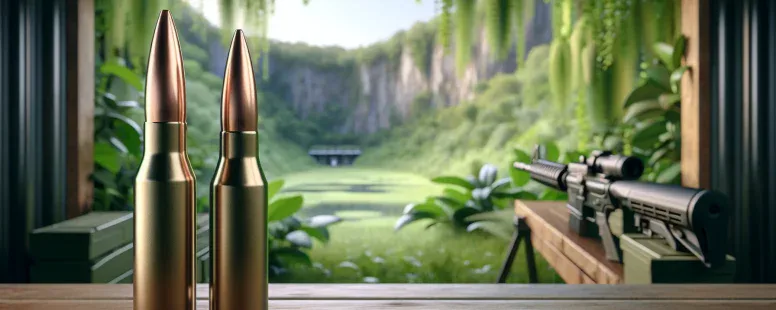
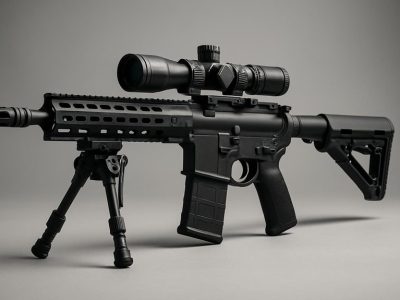
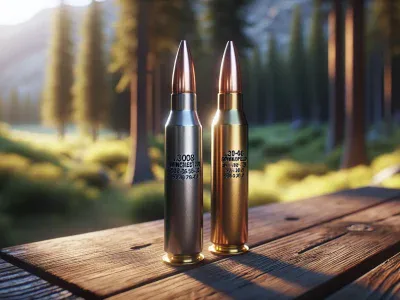
Picture yourself on the range, the sharp scent of gunpowder hanging in the air, a rifle cradled in your hands. You squeeze the trigger and feel the distinct kick—was it the deep, thunderous push of 300 Blackout or the crisp, lightning-fast snap of 5.56? Each round tells a different story, each echo carrying secrets of speed, power, and precision.
Choosing between 300 Blackout and 5.56 isn’t just about numbers on a chart—it’s about how you want your shooting experience to feel. Maybe you crave the whisper-quiet stealth of suppressed subsonics or the flat trajectory that lets you reach out a little farther. Understanding the real differences opens up a world of possibilities you might not expect, whether you’re chasing tighter groups or searching for the ultimate home defense setup.
Overview Of 300 Blackout And 5.56
300 Blackout and 5.56 show distinct differences in caliber, performance, and application. You might notice the diameter first—300 Blackout fires a .308-inch bullet, compared with a .224-inch for the 5.56 NATO. Both rounds fit in the same AR-15 platform, but each changes how you experience shooting.
300 Blackout was designed for suppressed fire and short barrels, according to Advanced Armament Corp. This cartridge excels in low-light or covert scenarios; the whisper-soft subsonic loads paired with a suppressor almost sound like you dropped a hardcover book on a carpet. Law enforcement and home defenders often cite its stopping power in compact rifles—while, for example, wild boar hunters in Texas favor 300 Blackout for quick, humane takedowns at under 100 yards, often at night.
5.56, by contrast, stands out for velocity and range. Originating from military needs (see U.S. Army field manuals), its zippy, lightweight bullets sail flat over longer distances, making precision easier for target shooters and varmint hunters. Suburb residents routinely select 5.56 for defense due to reduced penetration risk (FBI ballistic tests show lower wall penetration vs. larger calibers), while competitive shooters love the recoil’s gentle roll—noticeably less snap compared to 300 Blackout.
You’ll see both rounds compared often, yet their personalities don’t overlap much. Are you picturing yourself clearing a hallway in total darkness, or nailing a steel plate at 300 yards in open daylight? Each cartridge shapes that scenario differently. Is your environment urban or rural, wide open or tight and cluttered? Matching cartridge traits to your surroundings and missions isn’t just technical—it’s strategic.
Questions about ammo costs or availability? 5.56 usually wins the economy race in North America, but supply swings yearly, sometimes reversing—2013’s ammo panic proved that. Local gun stores sometimes stack boxes of 5.56 like cans of soup, while 300 Blackout can vanish in a heartbeat after a string of new product launches or Hollywood blockbusters featuring suppressed rifles.
Reflect on what matters most for your shooting role, appetite for versatility, or thirst for quiet precision. 300 Blackout and 5.56 are not just numbers or specs—they’re choices that shape your entire firearm experience.
Key Differences In Cartridge Design
You see these cartridges on the shelf, but they’re more than simple chunks of brass and lead—each holds its own story and mission. The 300 Blackout and 5.56 NATO reveal their deepest secrets through design: shaping velocity, recoil, and real-world utility with every component.
Case Size And Shape
Case size and shape lay the foundation for performance between the 300 Blackout and 5.56 cartridges. The 5.56 cartridge stretches longer and slimmer, measuring about 45mm in case length with a pronounced bottleneck, engineered for smooth chambering and optimal powder burn. The 300 Blackout case, by contrast, starts life as a 5.56, but gets trimmed and reshaped to 35mm, with a wider neck to accommodate a .308-inch bullet.
Designers originally crafted the 300 Blackout’s stubby profile to deliver big energy in compact AR-15 platforms and maximize subsonic performance. With that, you get flexibility: it chambers—usually—flawlessly in rifles built for 5.56, though it’s not always perfect, and misfeed stories appear on forums like AR15.com. Side-by-side, you’d see the Blackout’s fatter mouth and shorter stature inviting heavy, slow rounds, while the 5.56’s long neck cradles skinny, aerodynamic projectiles.
Bullet Weight And Diameter
Bullet weight and diameter significantly distinguish the 300 Blackout and 5.56 NATO cartridges. The 5.56 launches bullets as light as 40 grains up to about 77 grains, each barely thicker than a pencil lead at .224 inches in diameter. Typical rounds, like Federal XM193 or M855, sit at 55–62 grains, zipping beyond 3,100 feet/second—ideal for flat trajectories and precise shots.
The 300 Blackout favors mass over speed. Bullets range from 110 to 220 grains, with the hefty subsonic loads feeling nearly twice as heavy as a standard 5.56 projectile. With a diameter of .308 inches, these slugs resemble classic hunting rounds. That extra girth means greater momentum and a bigger wound channel at close range—a fact cited in police department after-action reports and tactical reviews. Federal’s 220-grain subsonics whisper under the speed of sound, enhancing suppressed shooting. For hunting, that .308 diameter creates more reliable expansion on hogs or deer within 100 yards.
Cartridge design isn’t just metal and math—it’s a dialogue between mission and material, challenge and solution. Which profile fits your purpose—flat-shooting pencil or heavy-hitting hammer?
Performance Comparison
Performance shapes your experience with the 300 Blackout and 5.56, whether you’re squeezing off rounds at dusk or dialing in on a distant silhouette. These rounds do more than just feed your rifle—they shape every trigger pull into a story about velocity, impact, and stealth.
Velocity And Energy
Velocity sets the stage for how each round behaves in flight and on target. 5.56 cartridges, such as M855 62-grain, usually clock speeds of 2,900–3,100 fps from a 16-inch barrel, creating high kinetic energy and sharp trajectories (Federal Premium). In contrast, 300 Blackout rounds—especially subsonic types—travel much slower, often just 1,000–1,050 fps for 220-grain projectiles. Supersonic 300 Blackout, like 125- to 150-grain loads, can reach 2,100–2,350 fps.
Energy transfer shifts as well. 300 Blackout hits with up to 500 foot-pounds more energy than 5.56 at close range, especially in subsonic form. Picture a home defender walking a dim hallway; the heavy 300 Blackout behaves like a sledgehammer compared to the 5.56’s scalpel. Hunters using 300 Blackout often recall dropping feral hogs on Texas ranches with a single subsonic shot, where the 5.56 might’ve zipped through with less immediate effect.
Effective Range
Effective range draws out the battlefield’s boundaries. 5.56 shines at 400–600 yards when paired with quality optics, making it the preferred choice for target shooters and competitive marksmen (NRA High Power Rifle). Its flat trajectory keeps you on point across varied distances. Conversely, 300 Blackout thrives at 50–200 yards, especially with subsonic loads.
Picture yourself guarding a woodland edge at dusk, subsonic 300 Blackout in hand. The ideal range brings elusive prey no closer nor further than you want. Should you face shots beyond 200 yards, wind and bullet drop pull the 300 Blackout off the mark unless you’re running lighter, faster rounds. Yet, inside a dense neighborhood or tight hallway, effective range shrinks and the advantage tips to 300 Blackout for powerful, low-penetration responses.
Recoil And Sound Suppression
Recoil and sound suppression frame your shooting comfort and stealth. 5.56 generates mild recoil, especially in AR platforms, letting you zip through magazines with little disruption—think of urban patrol officers recounting hours of range drills. 300 Blackout, with heavier bullets, delivers a modest increase in recoil, still manageable for most users.
Suppression tells a different story. 300 Blackout, using subsonic 220-grain loads and a quality suppressor, quiets to near airgun levels. Shooters describe whisper-quiet shots echoing softly through brush or drywall, a feature prized by tactical teams and property defenders. 5.56 rounds, even suppressed, break the sound barrier and create a sharper report, though technology narrows the gap yearly.
Cartridge
Typical Muzzle Velocity (fps)
Bullet Weight Range (gr)
Effective Range (yds)
Subsonic Suppression
Typical Energy (ft-lbs)
5.56 NATO
2,900–3,100
55–77
400–600
No
1,200–1,400
300 Blackout
1,000–2,350
110–220
50–200 (subsonic)
Yes
400–1,350
Are you loading for stealth or speed? Your context—urban defense, predator control, or sport—demands different strengths. Choosing between the 300 Blackout and 5.56 creates a unique performance narrative every time you press the trigger.
Applications And Use Cases
Applications for the 300 Blackout and 5.56 cartridges cover a wide set of shooting roles, stemming from how each round leverages its unique ballistics and design. Your choice shapes not just technical outcomes but also the real-world adaptability and daily experiences with your rifle.
Home Defense
Home defense scenarios often pivot on cartridge characteristics like penetration, recoil, and noise. With 300 Blackout, especially when using subsonic ammunition, you get reduced noise levels and less risk of overpenetration through walls—factors that matter deeply in apartments or tight urban layouts (Ballistic Magazine, 2021). Its .308-caliber bullet gives significant stopping power without the sharp report and flash of supersonic rounds. Many users, for example, retrofit AR-15 pistols in .300 BLK with suppressors, creating a stealth tool for home protection that makes reactions easier at night.
5.56, in contrast, offers low recoil and impressive control during rapid or sustained fire, allowing quicker follow-up shots. Law enforcement citations like the FBI’s Ballistics Research Facility suggest that with modern fragmenting or hollow-point projectiles, 5.56 can reduce the risk of overpenetration as efficiently as low-velocity handgun rounds. If you think about defending multi-family dwellings or fast movement from room to room, the balance between speed and force is very apparent with 5.56.
Hunting
Hunting applications highlight sharp distinctions in effectiveness. 300 Blackout, thanks to its heavier bullet (110–220 grains), is often selected for hogs or deer at close ranges (within 200 yards). Hunters chasing wild boar in the southern U.S., for example, prefer suppressed 300 Blackout SBRs for ambushes in brushy fields, where silence and heavy-hitting subsonics mean animal doesn’t have time to run far. The stopping power is more robust than that of the 5.56, whose lighter, faster projectile may lack the terminal effect needed for a quick, humane kill on medium game (Hornady, 2023).
5.56 finds its stride in varmint and smaller game hunting. Prairie dog shooters, for example, value the flat trajectory and high-speed impact at 300 yards, reducing the need to guess holdover. In managed forests or open plains, 5.56 rifles make use of lighter recoil to string together accurate, repeat shots on fast-moving coyotes or foxes.
Tactical And Military Use
Tactical and military scenarios foreground reliability, adaptability, and mission-specific needs. The 300 Blackout, adopted by select U.S. SOCOM units (Military Times, 2019), fits missions where short-barrel rifles and integrally suppressed platforms enable silent entry and rapid engagement at close distances. Teams breaching doors or conducting building searches often use subsonic 300 Blackout ammunition for stealth, minimizing the auditory and visual signature while retaining decisive knockdown force.
5.56, the NATO standard for decades, forms the backbone of modern infantry doctrine due to light weight, abundant global supply, and parts commonality. In open terrain, soldiers often favor its extended effective range and flatter trajectory for coordinated suppressive fire or long-range engagements. Urban warfare, ranging from 200 to 600 yards, often exploits the controllability and magazine capacity of 5.56 platforms, so squads maintain sustained pressure in active engagement zones.
In these stories and settings, you see cartridges aren’t just numbers, they’re tools tailored to challenge, task, and terrain.
Ammunition Availability And Cost
Ammunition availability shapes your range habits. You walk into a local shop. Bright boxes line the shelves, hundreds of 5.56 options glinting in rows—Federal, Winchester, Lake City, each brand promising reliability. You reach for a 300 Blackout and suddenly choices shrink. This round isn’t a unicorn, but it feels rare beside the 5.56’s abundance. In 2023, GunBroker indexed 5.56 options at a ratio of 8:1 compared to 300 Blackout, a pattern echoed in big-box retailers and rural supply outlets [source: GunBroker.com/reports].
Costs paint another chapter in this story. Check the table: per-round prices tell a tale of supply and demand economics.
Cartridge
Typical Price (per round, USD)
Bulk Availability (cases)
Major Retailers
5.56 NATO
$0.38–$0.50
High (1,000+ cases)
Cabela’s, Walmart, Palmetto
300 Blackout
$0.75–$1.20
Moderate (250–500 cases)
Brownells, Cheaper Than Dirt
You see the difference when you plan your training budget. Buying three boxes of 300 Blackout for a weekend hunting trip might dent your wallet twice as hard as a 5.56 range day. Reloaders sometimes hunt for 300 BLK brass online, scouring forums, swapping stories about “once-fired” deals, and rebuilding a cartridge bit by bit. This community can be tight-knit, but less convenient than grabbing cheap 5.56 right off a pallet.
Market panic sometimes scrambles shelves—political changes, headlines, or sudden surges can wipe out both calibers. But history favors 5.56 when the dust settles. As a NATO standard, AR-15 platform rifles (your likely host for 5.56) anchor the industry’s logistics chains, so shipments rebound quicker. 300 Blackout, while beloved for stealth and stopping power, rides the coattails of special demand and boutique runs.
How do you handle this unpredictability? Some shooters hedge bets: stack cases of both. Others specialize, embracing the challenge of keeping their 300 BLK fed during dry seasons.
Ask yourself—do you crave the certainty of ready shelves, or the thrill of pursuing exotic ammo? Both journeys paint the story of your firearm experience. The market’s never static, and neither’s your strategy.
Rifle Compatibility And Modifications
You discover the heart of the 300 Blackout vs 5.56 debate when you start swapping uppers on your AR-15. Most AR-platform rifles you pick up use 5.56, but transforming your carbine into a 300 Blackout beast only demands a barrel swap—your bolt carrier group and magazines, they’re already ready. Picture the ease: building a low-light predator rig or a suppressed home-defense setup with just a new barrel and maybe subsonic rounds.
Shooters juggling both calibers can find themselves in a tight spot if they accidently load 300 Blackout in a 5.56 barrel—kabooms aren’t just an Internet myth. Check colored mags or distinct markings if running both. Plinking at the range, you’ll watch others double-checking their gear, swapping mags and BCGs, chasing reliability.
Builders chasing sub-MOA groups or “the quietest AR in the county” lean into upper receiver swaps. Some chase a whisper-silent 300 Blackout, investing in pistol-length gas systems and adjustable blocks. Others crave the flat-shooting 5.56, sticking with mid-length or rifle gas for minimal recoil and faster follow-ups. Tinkerers rave on forums about mixing and matching, modding with suppressors, and chasing that sweet spot between stealth and spray.
Are you a minimalist or a mad scientist? If reliability rules, stay streamlined with a 5.56-dedicated build—fewer variables, fewer headaches. If adaptability excites you, modularity in the AR-15 world lets you experiment at-will, changing roles with a single pin. Which story fits your rack?
Rifle Component
5.56 Compatibility
300 Blackout Compatibility
Modifications Needed
Lower Receiver
Compatible
Compatible
None
Bolt Carrier Group
Compatible
Compatible
None
Magazines
Compatible
Compatible
None
Barrel
5.56-specific
300 Blackout-specific
Barrel swap
Gas System
Standard (mid/rifle)
Often pistol-length, adjustable blocks
May require tailored setup
Let your next build tell your story—whether it hums quietly in the dark or rings out sharp across the range.
Conclusion
Choosing between 300 Blackout and 5.56 isn’t just about specs—it’s about matching your rifle to your needs and shooting environment. Your decision shapes everything from handling and noise to ammo costs and tactical flexibility.
Think about your primary use and the scenarios you expect to face. Whether you value stealth and close-range power or you need speed and reach, your choice defines your experience on the range or in defense situations. Eventually, the right cartridge is the one that best fits your goals and shooting style.
To provide the best experiences, we use technologies like cookies to store and/or access device information. Consenting to these technologies will allow us to process data such as browsing behaviour or unique IDs on this site. Not consenting or withdrawing consent, may adversely affect certain features and functions.
Functional
Always active
The technical storage or access is strictly necessary for the legitimate purpose of enabling the use of a specific service explicitly requested by the subscriber or user, or for the sole purpose of carrying out the transmission of a communication over an electronic communications network.
Preferences
The technical storage or access is necessary for the legitimate purpose of storing preferences that are not requested by the subscriber or user.
Statistics
The technical storage or access that is used exclusively for statistical purposes.The technical storage or access that is used exclusively for anonymous statistical purposes. Without a subpoena, voluntary compliance on the part of your Internet Service Provider, or additional records from a third party, information stored or retrieved for this purpose alone cannot usually be used to identify you.
Marketing
The technical storage or access is required to create user profiles to send advertising, or to track the user on a website or across several websites for similar marketing purposes.