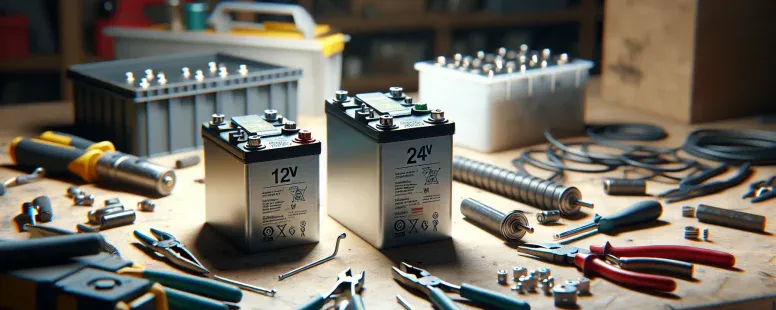
Picture yourself standing in a garage filled with the hum of power tools and the faint scent of engine oil. You’re eyeing two batteries—one marked 12V, the other 24V—wondering which one will spark your project to life. It’s more than just numbers printed on a label; it’s the gateway to efficiency, performance, and even safety.
Choosing between 12V and 24V isn’t just about volts—it’s about unlocking hidden advantages that could surprise you. From smoother starts on chilly mornings to powering up devices you never thought possible, the right voltage can make all the difference. So what really sets these two apart, and how does your choice shape the outcome? Let’s peel back the layers and discover the secrets behind the numbers.
Understanding Voltage: 12V vs 24V
Voltage, the electric potential difference between two points, really shapes what your setup can do. A 12V system often shows up in cars, RVs, and small solar power banks—for instance, when you plug in a phone charger on a camping trip, you’re probably tapping into a 12V source. In contrast, 24V systems power heavy-duty equipment: think of big boats starting up or commercial solar installations humming away on a sunny roof. A question pops up—why do some people choose the extra volts, and what’s at stake if you stick with 12V?
If you compare these systems, 12V batteries send more current (amps) than 24V to deliver the same amount of power, which means thicker cables and bigger connectors. Thinner wires make installation way easier when voltage goes up to 24V—just like a wide river flows slower than a narrow stream, higher voltage lets energy move efficiently with less resistance and less heat. Homeowners installing solar panels sometimes notice the wiring getting hot with long cable runs on 12V—that’s wasted energy and might mean safety issues.
Could 24V be too much for simple gadgets? Many small appliances and car accessories just expect 12V—it’s a standard. Hooking them up to 24V could fry circuits. On the flip side, power tools and industrial gear run smoother at 24V, since motors draw fewer amps, reducing strain and potential voltage drops (source: Solar Power World, 2022). If you’ve ever noticed your headlights dim when blasting the speakers, you’ve hit a moment where voltage and current battle in real-time.
Upgrading from 12V to 24V impacts not just performance, but also budget and flexibility. For instance, electricians working with 24V say maintenance costs may be lower over time, since components can last longer due to lower heat build-up (Renewable Energy World, 2021). On the other hand, DIYers love 12V for its availability—walk into any auto store and 12V batteries line the shelves.
Want the best setup for winter camping? Some say 24V systems handle cold better, since their higher output jumps engines and larger appliances with less fuss. Deciding on voltage shapes your project from cabling down to final use. Would you risk safety for a quick install, or do you aim for longevity and efficiency in your next adventure?
Key Differences Between 12V and 24V Systems
Key differences between 12V and 24V systems impact power delivery, installation, applications, and budget. Understanding these aspects helps you match system capabilities to real-world use and project goals.
Voltage Output and Power Efficiency
Voltage output in 12V and 24V systems determines current flow and power efficiency. With 24V systems, you get the same power as 12V with only half the current. That means, if your boat’s winch draws 1000W, the 12V version pulls about 83A while a 24V winch draws just over 41A (P=VI). More current in a 12V system leads to higher energy losses as heat, especially over longer cable runs [source: National Electrical Code]. In off-grid solar banks, 24V setups often run cooler and deliver energy more efficiently to appliances in distant cabins.
Wiring and Installation Considerations
Wiring in 24V systems requires thinner cables compared to 12V to carry equivalent power. For example, running power to an RV fridge at 12V demands thicker, heavier wires—sometimes as chunky as your thumb. With 24V, cable size drops, making installation simpler and panel space more flexible. Lower amp draw means fewer losses and easier cable routing. Miswiring—mixing up 12V and 24V circuits—can fry sensitive electronics; double-check compatibility before plugging in anything.
Application and Use Cases
Applications for 12V and 24V systems diverge by power needs. Car batteries, light-duty RVs, and compact solar kits almost always pick 12V because every accessory from coolers to phone chargers expects 12V DC. In contrast, commercial solar arrays, electric forklifts, or marine propulsion systems embrace 24V for their bigger load demands and efficiency gains. You see city buses draw on 24V networks for long daily routes. If you picture your dream off-grid retreat in the woods, picking 24V lets you run larger inverters and heavy pumps without melting wiring.
Cost and Availability
Costs swing depending on voltage and components. You’ll usually find more 12V batteries at hardware stores, auto shops, or even gas stations—12V reigns in availability. Entry-level cost stays lower for 12V setups, but expenses creep up when you scale (thicker cables, more connectors, bigger copper outlays). Brands like Trojan, Battle Born, and Renogy offer both 12V and 24V products (reference: datasheets, Home Depot). Over time, 24V’s efficiency edge can shrink maintenance and wiring spend, offsetting the steeper upfront price tag for advanced systems.
Pros and Cons of 12V and 24V Systems
Comparing 12V and 24V systems surfaces a spectrum of advantages and limitations in real-world power setups. Understanding their key tradeoffs can change the outcome of a power project—the difference can shape efficiency, safety, and costs.
Advantages of 12V Systems
12V systems finds a home in everyday tech—autos, campers, LED lights—because of their ubiquity and compatibility. You notice that most gadgets in your car, like dash cams or USB chargers, prefer 12V. This wide acceptance means replacements becomes simpler, and standard parts are always around the corner. Wiring seems familiar, making troubleshooting less intimidating.
The lower voltage brings inherent safety; when you touch a 12V wire, risk of shock stays minimal. Families outfitting RVs or off-grid cabins often lean on 12V for peace of mind with curious kids and pets nearby. For small projects—even hobby robotics—12V acts like a friendly mentor: easy, accessible, risk-averse.
Advantages of 24V Systems
24V systems steps up in commercial solar, yachts, and e-bikes where power needs jump. If you picture long runs of cable on a solar array crossing your barn roof, 24V shines, as the current halves for equal wattage, so wires heat up less and installations can look tidier. Thinner wires slice costs and hassle—critical as projects scale beyond the garage.
Industrial-grade gear leans into 24V. If you’re fitting out a work truck with hydraulic lifts or big inverters, the 24V platform lets you get more done per amp, all while reducing voltage drop over distance. The savings accumulate—a hidden profit, evident only when next year’s upkeep feels lighter. You get to explore more ambitious projects without rethinking wiring after every expansion.
Drawbacks of Each Voltage System
12V limitations catch you by surprise when scales tip from small cars to sprawling setups. Watch as cable thickness—like thick garden hoses—swallows trunk space and ramps up costs. Try to run heavy-draw tools, and the system trips up, overheating wires or gobbling more battery amps than expected.
With 24V, compatibility rears as the lead constraint. Standard 12V appliances, from mini-fridges to portable water pumps, don’t play nice. You’re hunting for pricier adapters or specialized gear, and mistakes risks frying investments. Safety bumps up, too; at 24V, shocks hurts more and code compliance tightens. New users face a learning curve, sometimes with errors that echo through projects—ask any builder who swapped gear by mistake.
These voltage systems reveal a landscape of trade-offs—balancing convenience, safety, and ambition. Do you scale up and brave complexity, or stick with universal, unfussy options easily replaced at your local shop? Each choice, like a fork in the power road, leads you toward a different project outcome and experience.
Which Voltage System Should You Choose?
Understanding your project’s DNA guides the voltage choice—you’d never use a paintbrush to hammer a nail. 12V systems often dominate light-duty settings: think tailgate parties with portable coolers, RV camping weekends, or DIY solar trickle chargers. If you power gadgets like LED lights, phone chargers, or fish finders, a 12V setup just fits, almost as if it was made for these everyday heroes.
Compare that to a 24V system, which handles heavy-lifting with the stamina of a marathon runner. Roof-top solar arrays on commercial buildings, off-grid cabins, or trolling motors for 20-foot fishing boats—each benefits from the smoother current flow and smaller-gauge wiring. Traveling twice the distance with half the effort, 24V systems curb heat loss and keep things cool under pressure, which matters when you’re scaling up operations. One Amazon reviewer describes retrofitting a barn with a 24V solar bank, cutting wire costs by 30% and ending overheating issues that plagued their original 12V layout.
But don’t let high voltage dazzle you if your gear isn’t compatible. A friend once fried a $200 portable fridge plugging it into a 24V socket, learning firsthand that voltage mismatches aren’t forgiving. Design constraints matter; most consumer devices tap into 12V systems, so switching voltages means adding converters or swapping hardware—sometimes more trouble than it’s worth.
Ask yourself, what story will your setup tell when the sun sets? If you run short wires from battery to appliance, rarely topping 500W, 12V keeps life simple and safe. But when your vision stretches across long distances or loads hit four digits, 24V steps in, reducing cable chaos and stretching efficiency. The U.S. Department of Energy notes that higher voltage systems minimize power loss during transmission; this insight drives many solar professionals to recommend 24V for large installations.
Many hobbyists discover that initial savings favor 12V, yet professionals bet on 24V to futureproof upgrades. Picture your project five years from now. Will you scale up? Add new panels or power a barn workshop? Growth often makes the 24V path smoother—and not just for the wire gauge.
Some industries straddle both: Class B RVs stick with 12V for plug-and-play gadgets, while commercial trucks with electric lifts universally opt for 24V, even if it means ordering custom cables. Here’s the “choose-your-own-adventure” moment: try sketching your layout, counting wire runs and amp draws. Does the path get tangled with each 12V branch, or does 24V draw a clear line straight to performance gains?
There’s really no one-size-fits-all answer, but every choice echoes—each voltage tweaks your project’s balance of risk, reward, and reliability. If you treat the voltage as the main character, your whole system magically falls into place, playing supporting roles that make or break the final act.
Conclusion
Choosing between 12V and 24V systems shapes the way your project performs now and in the future. By weighing your specific needs and priorities you’ll set yourself up for a safer more reliable and more efficient setup.
Take time to match your voltage choice to your equipment and goals. This careful approach helps you avoid costly mistakes and ensures your system delivers the results you expect.
To provide the best experiences, we use technologies like cookies to store and/or access device information. Consenting to these technologies will allow us to process data such as browsing behaviour or unique IDs on this site. Not consenting or withdrawing consent, may adversely affect certain features and functions.
Functional
Always active
The technical storage or access is strictly necessary for the legitimate purpose of enabling the use of a specific service explicitly requested by the subscriber or user, or for the sole purpose of carrying out the transmission of a communication over an electronic communications network.
Preferences
The technical storage or access is necessary for the legitimate purpose of storing preferences that are not requested by the subscriber or user.
Statistics
The technical storage or access that is used exclusively for statistical purposes.The technical storage or access that is used exclusively for anonymous statistical purposes. Without a subpoena, voluntary compliance on the part of your Internet Service Provider, or additional records from a third party, information stored or retrieved for this purpose alone cannot usually be used to identify you.
Marketing
The technical storage or access is required to create user profiles to send advertising, or to track the user on a website or across several websites for similar marketing purposes.