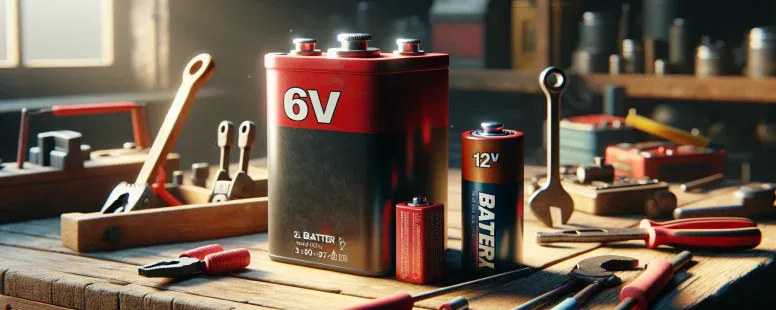
Picture the quiet hum of a classic toy train as it glides along its tracks or the steady glow of vintage headlights cutting through a misty evening. Behind these everyday wonders lies a hidden world of voltage—specifically the subtle dance between 6V and 12V power. why some devices spring to life with just a whisper of energy while others demand a stronger surge?
Choosing between 6V and 12V isn’t just a technical detail—it’s a decision that shapes performance, safety, and even the lifespan of your favorite gadgets. Unlocking the secrets of these two voltages could help you save money, boost efficiency, and avoid costly mistakes. Let’s peel back the layers and discover how this simple difference can create a ripple effect in your projects and daily life.
Understanding Voltage: What Do 6V and 12V Mean?
Electric voltage enables devices to transform power into action. When you read 6V or 12V, you’re seeing a label that tells the potential difference available for electric currents. Two volt batteries—6V and 12V—operate like water flowing downhill: 12V pushes with twice the force of 6V, giving more energy to each electron. Think of a flashlight. If you put 12V batteries instead of 6V, the light shines brighter, but sometimes the bulb may burn out if it’s not ready for that kind of push.
You might wonder why manufacturers specifys a certain voltage for their products. Voltage not only decides how powerful a device runs, but also affects safety. For example, most children’s toys uses 6V to minimize risk, while car batteries almost always uses 12V for strong engine starts. The same device plugged into two different voltage sources can behave oddly: motors spin faster, lights glow at different brightness, and circuits heat up.
Consider real-world scenarios: Electric scooters often run on 12V batteries, while remote control cars use 6V batteries for slower, longer rides. If you’re ever tempted to swap voltages for more speed or power, think about the risks: fried circuit boards, dead batteries, or worse. Industry standards and user manuals reference numbers set by organizations like ANSI and IEEE ensure compatibility and prevent mishaps (IEEE Standard 1184-2006).
Choosing the right voltage isn’t just a numbers game—it’s about matching your needs, understanding limits, and protecting your investments. What’s the smartest way to use 6V or 12V in your project? Ask yourself about energy needs, device design, and longevity goals.
Key Differences Between 6V and 12V Systems
You often face a choice between 6V and 12V systems in projects, each voltage holding unique pros and cons that impact real-world results. These differences appears not just in numbers, but in how your devices behave, how you use them, and what you expect from them every day. Power output, portability, and practical use cases all define which voltage fits your needs best.
Power Output and Efficiency
Power output in 12V systems gives you twice the push compared to 6V, directly affecting motor speed, light brightness, and charging rates. Devices like car starters rely on 12V batteries to handle heavy loads, while vintage toys or lanterns with 6V wiring output less power, preserving battery life but sacrificing sheer energy. According to SparkFun Electronics, circuits running on 12V can deliver more output without greatly increasing current, so they heat up less and run longer on the same size wire. If you want efficiency, a 12V system in your classic car will generally use thinner cables, giving you less voltage drop as the wire runs extend.
Size and Weight Considerations
Size and weight play a crucial role in design, travel, and repair. A 12V battery typically packs more energy in the same footprint than a 6V cell, so a 12V lantern battery is lighter for the amount of power you get, making it a favorite for modern day flashlights compared to the chunkier lanterns your parents maybe remembered. Small garden tractors stick to 6V, where weight helps maintain balance, but e-bikes and power tools choose 12V packs for lighter frames and longer rides. If you look at battery specs from Exide and Interstate, you’ll see higher voltage equals less weight per watt-hour, giving riders the edge in races against time and gravity.
Application and Compatibility
Application compatibility stems from voltage design limits in every component, from bulbs to motor windings. Car enthusiasts swapping 12V motorcycle horns into a 6V tractor experience muted sound and poor results because the 6V source can’t provide the wattage needed for the 12V load. In contrast, using a 12V battery on a 6V system can fry circuits instantly, sometimes blowing bulbs or fuses in seconds. Manufacturers such as KidTrax design kids’ ride-on toys with 6V to limit risk and speed, while cars, RVs, and marine systems adopt 12V as a nearly universal standard (National Electrical Manufacturers Association, 2021). Checking for voltage ratings on devices keeps you from unexpected disasters and ensures your project starts every time, not just on a lucky day.
Advantages and Disadvantages of 6V and 12V
You’ll notice right away how 6V and 12V systems split their strengths and weaknesses, each tailored to unique user needs. When you dig into real-world examples, you can see why a kid’s ride-on truck runs on 6V, but your car cranks up with 12V. Which advantage do you value more—safety or raw power?
Benefits of 6V Systems
Safety features define 6V systems, shrinking electrical risks for young users, such as those in Power Wheels or simple lanterns. For low-drain gadgets, you get steady, affordable energy—think of the classic flashlight that runs for dozens of hours on a set of 6V batteries. In off-grid setups, 6V golf cart batteries builds deep cycle stability, lasting through constant charging and discharging. When you need gentle power, especially for delicate toys or retro radios, 6V fits the bill without excess. You won’t get shocked easily if you touch exposed terminals, which adds peace of mind in households and schools.
Benefits of 12V Systems
Performance shines with 12V systems, charging up starters in cars or pushing bike motors faster. You power a boat’s accessories, RV lighting, or a robust home security system—12V carries energy farther, letting you use thinner wires and save weight on installations. For solar power banks, 12V batteries store more juice, enabling reliable backup during storms. Your portable air pump, often rated 12V, inflates tires much quicker than a sluggish 6V version. Emergency lights in critical facilities run brighter for hours, providing safer visibility when the grid collapses. More accessories are made for 12V, so finding a charger, inverter, or spare part gets easier.
Drawbacks of Each Voltage Option
Efficiency limits 6V batteries—large size and weight hurts mobility in modern gadgets like drones or digital cameras. You’ll spot manufacturers swapping out 6V for lighter lithium packs in new tech, so sticking to 6V may mean settling for shorter runtimes and less choice. For 12V, risk grows: touch both terminals accidentally while standing on wet ground and you might feel a sharp tingle, which is rare but possible. Price bumps up as well—those 12V batteries used in cars or marine gear typically cost more and demand complex chargers. Some electronics burn out quick if you mix 12V supplies with sensitive 6V devices, illustrating why matching voltages matters (source: Electrical Safety Foundation International). Are you prepared to invest in proper adapters and battery care when choosing higher voltage platforms?
Choosing the Right Voltage for Your Needs
Selecting between 6V and 12V systems shapes the experience you get from your devices. Picture your project as a garden—a 6V system is like watering delicate seedlings, while a 12V system pours strength over sturdy plants. Each voltage tier creates unique opportunities and challenges. Which one fits your design best? Let’s explore the roots of your decision.
Factors to Consider
Device compatibility becomes the first stop on your voltage journey. You don’t connect a 12V battery to a device labeled 6V without consequences, just as you wouldn’t water a cactus the same way as a fern. Batteries, chargers, motors, and even fuses speak their own “voltage dialect,” and mismatches cause frustration or device breakdowns.
Safety requirements determine whether you choose security over power. Entrust a toddler’s ride-on toy to 6V, not only because manufacturers like Peg Perego and Fisher-Price standardize this (source: CPSC.gov), but also because lower voltage means less risk of dangerous shocks or burns. For home automation or automotive repair, you probably reach for 12V—your energy needs demand it, but so does your familiarity with insulation and fuse protection. Has the risk ever shaped your project plans?
Weight and size can tip the balance, literally. In e-bikes and power tools, a 12V lithium-ion battery packs high wattage into a lighter frame than a 6V lead-acid block. Think about a drone zipping through the air: the lighter, the longer the flight. Still, these benefits mean nothing if your gadget’s internals don’t match up.
Longevity and cost often trade places during decision-making. Higher voltage systems sometimes run more efficiently and conserve energy on longer circuits, thereby reducing electricity loss as heat (source: Engineering ToolBox). But initial costs rise—12V chargers, cables, and replacements generally cost more, and you must weigh that against lower replacement rates and improved performance.
Common Use Cases
Children’s toys usually operate on 6V. Electric cars for toddlers, vintage radios, and camping lanterns serve as common examples. Safety dominates here, with less current available for short-circuiting or shocks. Ask yourself—when did you last replace a child’s toy battery?
Vehicles and appliances most often require 12V systems. Car starters, marine electronics, and backup power supplies depend on 12V to deliver strong surges of energy. A story: A mechanic replaces a 12V car battery, noticing its universal fit across sedans, SUVs, and even riding lawn mowers. This “one size fits many” approach simplifies maintenance industry-wide (source: SAE.org).
Power tools frequently use 12V for portability and punch. Cordless drills, portable vacuums, and garden trimmers show how increased voltage means more torque or suction with slimmer batteries. Yet, vintage hobbyists still seek 6V for authenticity in classic model trains or period lighting.
Home and renewable energy systems balance both. Many off-grid cabins combine 6V batteries in series to achieve 12V or 24V, maximizing storage and minimizing wire losses—a puzzle solved with a few clicks and a voltmeter (source: Energy.gov). The flexibility invites experimentation but rewards precision.
Ask: When faced with a project, do you reach for higher voltage to futureproof your setup, or do you lean toward safety and tradition? This crossroads shapes every device experience, from the noise a model train makes to the power behind your car’s ignition.
Conclusion
When you’re deciding between 6V and 12V systems it’s all about matching the voltage to your specific needs and goals. The right choice helps you get the best performance while keeping safety and efficiency in mind.
Take the time to assess your project’s requirements and consider how voltage impacts everything from device compatibility to long-term costs. By making an well-informed choice you’ll set yourself up for safer smoother and more reliable results in any application.
To provide the best experiences, we use technologies like cookies to store and/or access device information. Consenting to these technologies will allow us to process data such as browsing behaviour or unique IDs on this site. Not consenting or withdrawing consent, may adversely affect certain features and functions.
Functional
Always active
The technical storage or access is strictly necessary for the legitimate purpose of enabling the use of a specific service explicitly requested by the subscriber or user, or for the sole purpose of carrying out the transmission of a communication over an electronic communications network.
Preferences
The technical storage or access is necessary for the legitimate purpose of storing preferences that are not requested by the subscriber or user.
Statistics
The technical storage or access that is used exclusively for statistical purposes.The technical storage or access that is used exclusively for anonymous statistical purposes. Without a subpoena, voluntary compliance on the part of your Internet Service Provider, or additional records from a third party, information stored or retrieved for this purpose alone cannot usually be used to identify you.
Marketing
The technical storage or access is required to create user profiles to send advertising, or to track the user on a website or across several websites for similar marketing purposes.