Imagine the comforting hiss of a gas flame or the sleek, silent surface of an induction cooktop. When it comes to your kitchen, the choice between gas and induction stoves isn’t just about aesthetics—it’s about how you cook, save energy, and even impact the environment. Each option has its own charm and challenges, leaving you to decide what fits your lifestyle best.
Are you drawn to the timeless reliability of gas, offering precise control and a tactile cooking experience? Or does the futuristic efficiency of induction, with its rapid heat and energy-saving benefits, spark your interest? Understanding the differences can transform your cooking routine and help you make a smarter investment for your home. Let’s jump into the key features, pros, and cons of these two popular options to help you discover which one truly suits your needs.
Overview Of Gas Stoves Vs Induction Stoves
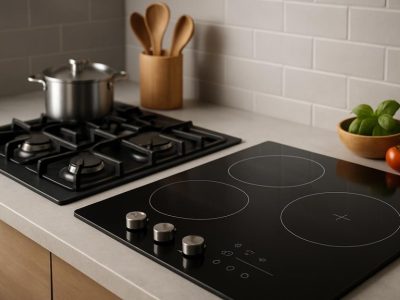
Gas and induction stoves differ in heat generation, efficiency, and cooking methods. Gas stoves use an open flame while induction stoves rely on electromagnetic fields to heat pots directly. This fundamental difference impacts energy use, cooking speed, and safety.
Gas stoves offer precise flame control and compatibility with a wide range of cookware like cast iron pans or stainless steel pots. They’re popular with traditional chefs who prefer visible flames for techniques such as charring or flambéing. But, gas stoves have lower energy efficiency and produce more heat losses, as approximately 60% of the heat escapes into the surrounding air.
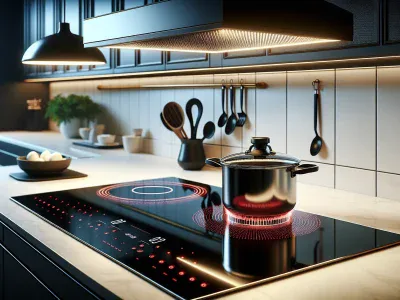
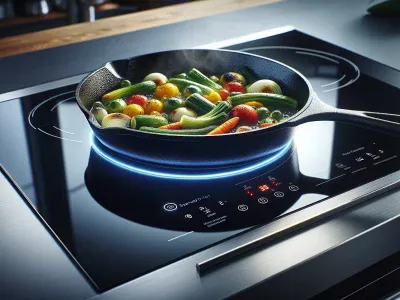
Induction stoves use magnetic technology, heating cookware with no flame or radiant heat. They’re more efficient as nearly 85-90% of the energy converts directly into heat within the cookware, reducing energy waste. Induction stoves are known for faster cooking times and safer surfaces, which cool rapidly once the cookware’s removed. On the downside, they require magnetic-compatible cookware, such as those with iron bases.
Choosing between gas and induction often depends on cooking habits and energy preferences. If your focus is on traditional cooking styles, a gas stove might be better for its versatility. If energy efficiency and safety are priorities, induction stoves provide an excellent alternative.
Performance And Efficiency
Gas and induction stoves exhibit notable differences in performance and energy optimization, impacting your cooking experience and cost-effectiveness.
Cooking Speed
Induction stoves heat cookware directly via electromagnetic energy, reducing cooking times by 20-30% compared to traditional gas stoves. For instance, boiling two liters of water on an induction stove might take approximately 4-5 minutes, while a gas stove may take 8-10 minutes. Gas stoves, though slower, offer precise control over heat levels during slower cooking techniques like simmering or sautéing. This makes them ideal for recipes demanding gradual or exact heat adjustments.
Heat Distribution
Induction stoves distribute heat evenly across cookware with compatible surfaces, eliminating cold spots or uneven heating. This uniformity ensures better cooking results, like perfectly seared steaks or evenly browned pancakes. But, gas stoves rely on an open flame, leading to heat dispersion around the cookware’s edges. Cooking processes requiring precision, such as caramelization, may benefit from induction, while gas stoves remain useful for charring or flame-grilled finishes unique to their flame pattern.
Energy Efficiency
Induction stoves convert 85-90% of energy into heat, drastically minimizing energy loss, while gas stoves operate at approximately 40-60% efficiency. This significant gap translates into lower electricity bills for induction users in regions where electricity is cost-effective. Gas stoves waste energy due to the open flame and heat dissipation into surroundings. If environmental impact is a consideration, induction’s energy efficiency and reduced carbon footprint make it a greener option. But, the availability and cost of electricity versus gas can influence your choice.
Continual comparison shows distinct situational advantages for both stove types based on cooking methods, speed preferences, or energy priorities.
Cost Analysis
Understanding the cost differences between gas and induction stoves helps you decide which aligns better with your budget and cooking needs. By breaking down purchase, operating, and maintenance costs, you can identify the most practical option for your kitchen.
Purchase Cost
Gas stoves generally have lower initial costs. Basic models start at $100 to $250, while high-end versions with advanced features can reach up to $1,200. Induction stoves, on the other hand, are more expensive upfront. Entry-level models average $300 to $500, with premium options costing between $1,500 and $3,000. If you don’t already own magnetic-compatible cookware, you may incur additional expenses for induction, as traditional aluminum or copper pots aren’t usable.
Operating Cost
Gas stoves use natural gas or propane as fuel. On average, natural gas costs $1.50 per therm, making monthly usage dependent on your cooking frequency and stove power—often $5 to $15. Induction stoves rely on electricity, averaging $0.13 per kilowatt-hour (kWh) in the U.S. They consume about 1.8 kWh for standard daily use, which equals $7 to $10 monthly. While induction stoves are more energy-efficient, the affordability of gas might offset this advantage in regions with low gas prices.
Maintenance Expenses
Gas stoves require regular cleaning due to grease buildup and exposure to open flames. Burner replacements cost $50 to $150, while repairing gas leaks can run several hundred dollars. Maintenance for induction stoves is simpler, involving wiping flat surfaces and occasional repairs. Electronic component fixes typically range from $100 to $300. Long-term maintenance costs for gas stoves may grow higher, given the potential for wear and tear on burners and gas lines.
Safety Features
Safety is a critical factor when choosing between gas and induction stoves. Both options have distinct safety features designed to minimize risks while cooking.
Gas Stoves Safety
Gas stoves rely on open flames, which can pose various hazards. The most notable risks are gas leaks, flame-related burns, and accidental fires. Regular maintenance checks and immediate detection systems for leaks, like gas detectors, are essential to ensure a safe cooking environment. Plus, installing proper ventilation reduces the chances of exposure to dangerous carbon monoxide levels.
Burn injuries are more common with gas stoves due to their visible open flames. For instance, leaving a pan handle over the flame can lead to heating and potential skin contact. Flame blowouts can also occur when wind or liquids extinguish the flame, causing gas to continue leaking unnoticed if the ignition system isn’t working correctly. Modern gas stoves with flame failure devices address this issue by cutting off the gas supply in such cases.
Induction Stoves Safety
Induction stoves offer an advanced approach to preventing kitchen accidents. These appliances use electromagnetic fields to heat cookware, leaving the cooktop surface cool to the touch, even immediately after use. This feature significantly reduces the risk of burns, especially in households with children. For example, even if you accidentally place your hand on the induction surface, it won’t cause harm unless the cookware is present.
The absence of an open flame eliminates fire risks, and the auto-shutdown mechanisms in many induction stoves add an extra layer of security. If the wrong type of cookware is used or if there’s no pan, the system detects the issue and shuts off. Also, overheating sensors help prevent potential dangers during extended cook times.
Environmental Impact
Assessing the environmental impact of gas and induction stoves includes examining carbon emissions and energy consumption. Each stove type has distinct implications for sustainability, influencing your decision-making.
Carbon Emissions
Gas stoves release carbon dioxide (CO2) directly into your home environment when burning natural gas or propane. On average, using a gas stove generates approximately 5.3 pounds of CO2 per hour of cooking. This contributes significantly to household greenhouse gas emissions, especially in regions relying heavily on fossil fuels.
Induction stoves don’t produce on-site emissions since electricity powers them. Their carbon footprint depends on your electricity source. Renewable energy like wind or solar drastically lowers the emissions associated with induction cooking. But, in areas where coal or natural gas dominate electricity generation, the indirect emissions can be higher. Exploring renewable energy options or energy-efficient practices can mitigate this impact.
Energy Consumption
Gas stoves operate at about 40-60% energy efficiency, as much heat escapes during cooking. This inefficiency leads to higher energy consumption compared to induction models. A practical example is simmering a soup—more energy is wasted heating the surrounding air with a gas stove, while induction focuses energy directly on the cookware.
Induction stoves boast 85-90% energy efficiency. They consume less energy overall because electromagnetic fields reduce thermal loss. For example, boiling water on an induction stove generally uses around 0.2 kWh, compared to 0.35 kWh for gas. Over time, this efficiency translates into lower utility usage and environmental strain.
Energy-conscious cookware choices amplify induction’s benefits. Select pots and pans with magnetic properties, and avoid mismatched cookware to minimize energy loss.
User Experience
Gas and induction stoves offer distinct user experiences, catering to different cooking preferences and household needs. Understanding their usability can help you determine which stove aligns with your lifestyle.
Ease Of Use
Gas stoves provide simplicity and quick access to heat through a manual ignition or electronic starter. You can control the flame intensity visually and instantly, making adjustments seamless. But, cleaning can be cumbersome due to removable grates and burner components.
Induction stoves deliver modern convenience with digital controls and touch panels. Pre-set temperature options and precise adjustments streamline cooking, but they necessitate compatible cookware. Surfaces are smooth and easier to clean compared to gas stoves.
Versatility
Gas stoves excel in versatility, accommodating all types of cookware, such as cast iron, stainless steel, and clay pots. Their ability to provide high heat makes them suitable for diverse cooking techniques, including stir-frying and grilling.
Induction stoves limit versatility about cookware material since they require magnetic pots like cast iron or certain stainless steel. They are better suited for recipes demanding consistent heat, such as sauces or slow-cooked dishes.
Noise Levels
Gas stoves operate quietly, producing only minor sounds from ignitions or burners. In contrast, induction stoves may generate humming or buzzing noises, especially at high power settings, due to electromagnetic currents interacting with cookware.
Your experience can vary based on personal sensitivity to sound or the environment in which you cook.
Conclusion
Choosing between a gas stove and an induction stove eventually depends on your cooking preferences, budget, and priorities. Both options have unique strengths that cater to different needs, whether you value precise heat control or energy efficiency.
By weighing factors like performance, safety, cost, and environmental impact, you can select the stove that aligns best with your lifestyle. Consider how each option fits into your daily routine and long-term goals to make a decision you’ll feel confident about.
To provide the best experiences, we use technologies like cookies to store and/or access device information. Consenting to these technologies will allow us to process data such as browsing behaviour or unique IDs on this site. Not consenting or withdrawing consent, may adversely affect certain features and functions.
Functional
Always active
The technical storage or access is strictly necessary for the legitimate purpose of enabling the use of a specific service explicitly requested by the subscriber or user, or for the sole purpose of carrying out the transmission of a communication over an electronic communications network.
Preferences
The technical storage or access is necessary for the legitimate purpose of storing preferences that are not requested by the subscriber or user.
Statistics
The technical storage or access that is used exclusively for statistical purposes.The technical storage or access that is used exclusively for anonymous statistical purposes. Without a subpoena, voluntary compliance on the part of your Internet Service Provider, or additional records from a third party, information stored or retrieved for this purpose alone cannot usually be used to identify you.
Marketing
The technical storage or access is required to create user profiles to send advertising, or to track the user on a website or across several websites for similar marketing purposes.