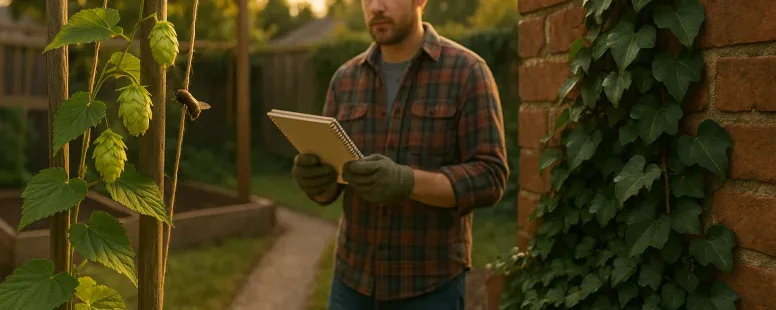
Hops vs. Ivy asks a simple question with complex answers: which climber suits your yard, your goals, and your patience? Picture two plants that both climb and cover, yet one perfumes your beer and grows anew every spring, while the other holds green leaves year-round and can quietly smother a wall. This piece compares Humulus lupulus (hops) and Hedera helix (common ivy) so you can see the differences up close. You’ll learn clear physical signs, how each one grows through seasons, what they need to thrive, and what risks they bring. Read on to pick the right plant for your intent, whether you want a beer garden, a living screen, or a low-maintenance green carpet.
How To Tell Hops And Ivy Apart
Fact: Hops and ivy look similar at a distance but they have distinct shapes, textures, and reproductive parts.
Physical Characteristics Of Hops
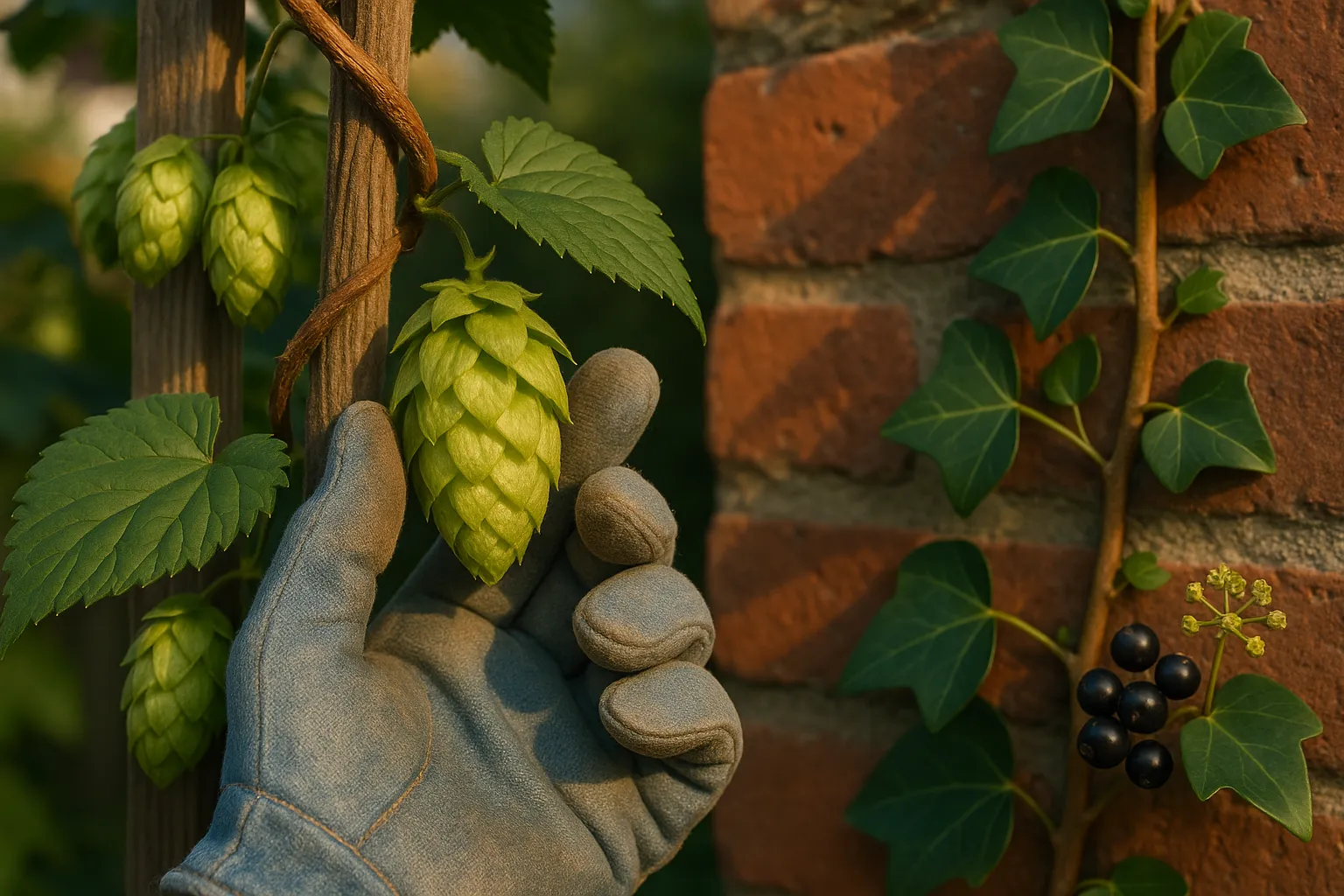
Hops is a fast-growing perennial vine named Humulus lupulus. Its stems are rough, ridged, and twine clockwise around supports. Leaves are opposite, usually three-lobed or heart-shaped, with coarse teeth at the margins. The most diagnostic feature is the cone-like flowers called strobiles, papery, green, aromatic cones that contain lupulin glands. Those cones smell citrusy, resiny, or floral: brewers prize that scent. Stems die back to the crown each winter: new shoots emerge from crowns or rhizomes in spring. Key named entity: Humulus lupulus, that is the botanical name you’ll see on seed packets and extension pages.
Physical Characteristics Of Ivy
Ivy (Hedera helix) is an evergreen climber with glossy, leathery leaves when juvenile: adult leaves on flowering stems become less lobed and more oval. Ivy climbs using aerial rootlets that cling to surfaces, brick, wood, stone, rather than twining. Ivy produces small, greenish-yellow flowers and black berries later in the season: its berries feed birds. Leaves keep their color through winter. Named entity: Hedera helix appears in many plant lists and invasive-species databases. At close range, you’ll notice tiny root hairs on ivy stems and the absence of hop cones, an easy ID trick.
Growth Habits And Lifecycle
Fact: Hops behaves like a herbaceous perennial that regrows annually: ivy behaves like a woody evergreen that persists year-round.
Hops: Vining Pattern, Seasonal Growth, And Lifespan
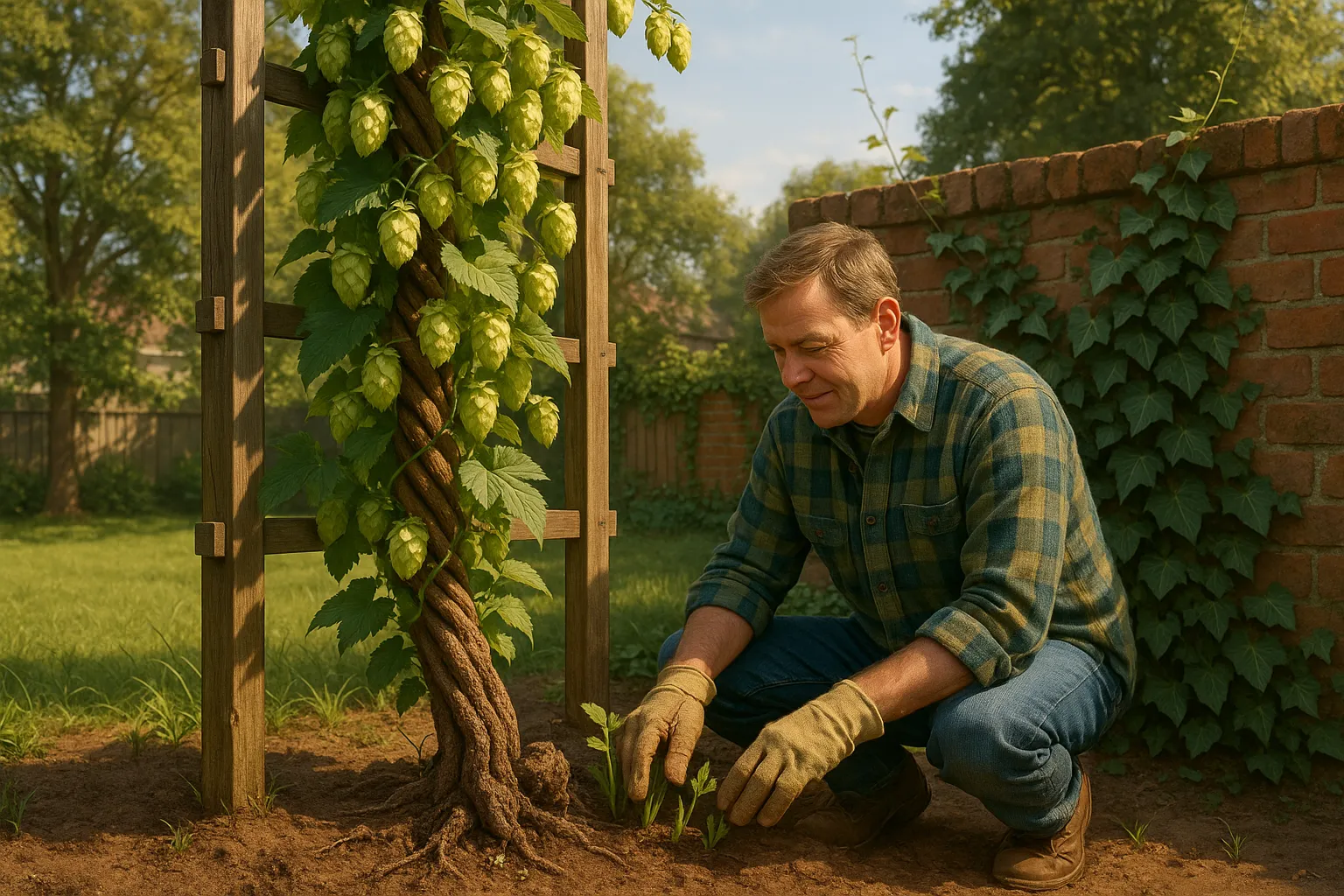
Hops climbs by twining and can reach 15–25 feet in a single season when you provide a trellis. Growth shoots appear in spring and elongate quickly, often several inches per day under ideal conditions. Hops are dioecious: male and female flowers occur on different plants. Commercially you choose female plants for cones. The crown and rootstock survive winters where USDA zones allow: above-zone limits the crown may die. Expect productive life of 8–15 years with good care: many hobbyists replant or refresh crowns every 5–7 years to maintain vigor. Real-life example: a backyard brewer in Oregon replaced hop crowns after seven seasons to restore cone yield.
Ivy: Climbing Habit, Evergreen Behavior, And Longevity
Ivy climbs using adhesive rootlets and can spread horizontally as a groundcover or vertically up structures. It does not die back seasonally: leaves stay green through frost in many climates (USDA zones 6–10 typically). Ivy is woody and can live several decades. It flowers in late summer to fall on mature, often high, shoots, so you rarely see berries unless the plant reaches tree canopy. Anecdote: a century-old Hedera helix can wrap and obscure a brick home, giving that romantic, slightly wild look. But that same vigor can become a management headache if left unchecked.
Growing Conditions And Care Needs
Fact: Hops prefer bright sites and seasonal pruning: ivy tolerates shade and needs less hands-on pruning but can demand containment.
Light, Soil, And Water Requirements (Hops Vs. Ivy)
Hops: Hops prefer full sun, at least 6–8 hours daily. They like well-drained loam with pH around 6.0–7.5 and consistent moisture during the growing season. Heavy clay requires raised beds or amended soil. Hops need a regular water schedule: inconsistent water reduces cone size.
Ivy: Ivy tolerates a wide light range from full sun to deep shade: many cultivars thrive in low-light spots. Ivy tolerates varied soils but prefers moist, well-drained conditions and slightly acidic to neutral pH. It withstands urban pollution and salt spray better than many ornamentals. If you need a shade solution, ivy is often the easier choice.
Support Structures, Feeding, And Pruning Guidelines
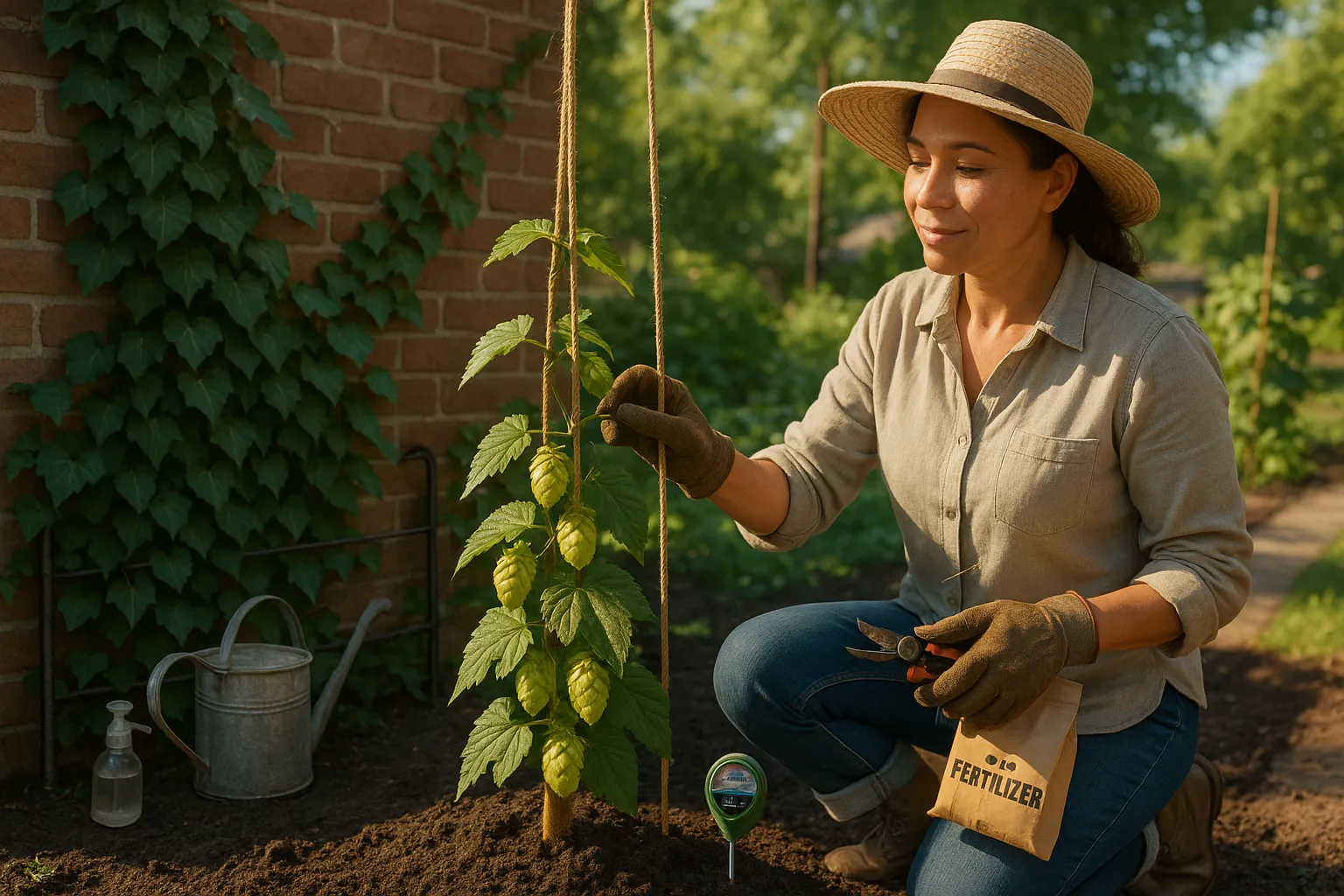
Hops: You must provide strong vertical support, strings, wires, or a hop tower, because bines (not true vines) climb by wrapping. Feed hops with nitrogen in early season and potassium/phosphorus as cones develop: many growers use 10-10-10 or tailored organic feeds. Prune or train shoots to 4–6 main bines per crown to focus energy. Remove old bines each winter.
Ivy: Ivy attaches directly to surfaces but may need cables or trellis if you want to control growth direction. Feed lightly: ivy rarely needs heavy fertilization. Pruning focuses on containment: trim annually or twice a year to check spread and to prevent it climbing to unwanted heights. Warning: extreme pruning can encourage vigorous re-sprouting. Both species demand attention: one wants structure, the other wants containment.
Common Pests, Diseases, And Troubleshooting
Fact: Hops and ivy face different pests and diseases: diagnosing early saves crops and landscape assets.
Pests And Diseases That Affect Hops
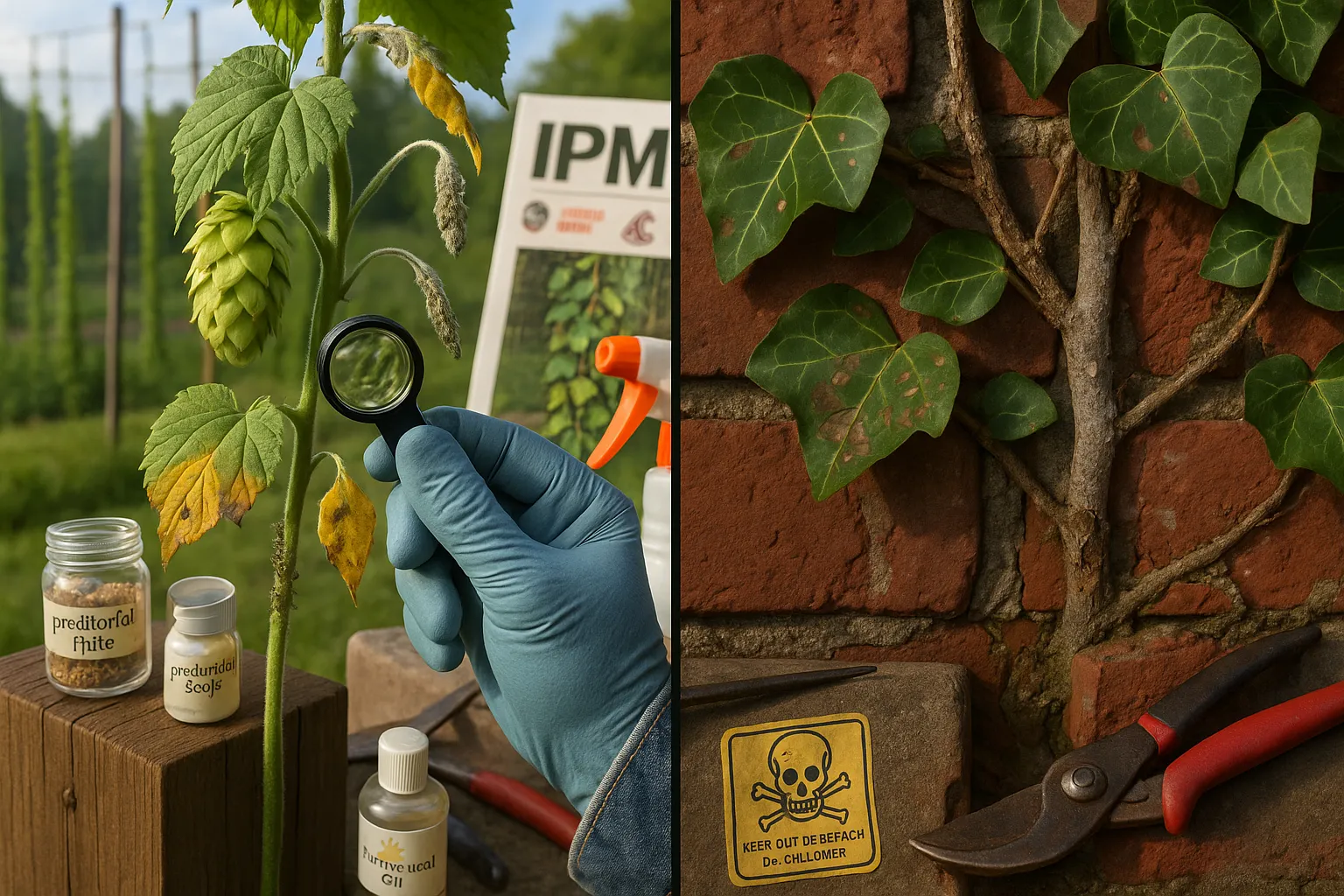
Hops commonly suffer from downy mildew (Pseudoperonospora humuli) and powdery mildew (Podosphaera macularis). Downy mildew attacks young shoots and cones and can ruin a season’s harvest: proper air flow and resistant cultivars help. Hop aphids, spider mites, and two-spotted mite can stress plants: predatory mites and insecticidal soaps help control them. Verticillium wilt and Fusarium can affect crowns, avoid infected soil and rotate planting when possible. Extension services like Oregon State University and Washington State University provide cultivar recommendations and integrated pest management (IPM) plans.
Pests And Diseases That Affect Ivy
Ivy can get scale insects, spider mites, and aphids, especially in dry indoor conditions. It sometimes shows leaf spot diseases (Xanthomonas or fungal pathogens) and root rot if overwatered. English ivy can host powdery mildew in poor air flow. A common issue is structural damage: ivy roots may penetrate mortar and trap moisture against walls, causing masonry decay over decades. Practical troubleshooting: remove affected stems, improve air flow, and treat pests with horticultural oil or appropriate systemic controls when infestation is heavy. Also: watch out for toxicity, Hedera helix berries and leaves are mildly toxic to people and pets, so keep that in mind if you have kids or dogs.
Uses, Benefits, And Landscape Roles
Fact: Hops and ivy serve different garden roles: hops for seasonal harvest and pollinators: ivy for year-round cover and erosion control.
Practical Uses For Hops (Brewing, Screens, Pollinator Value)
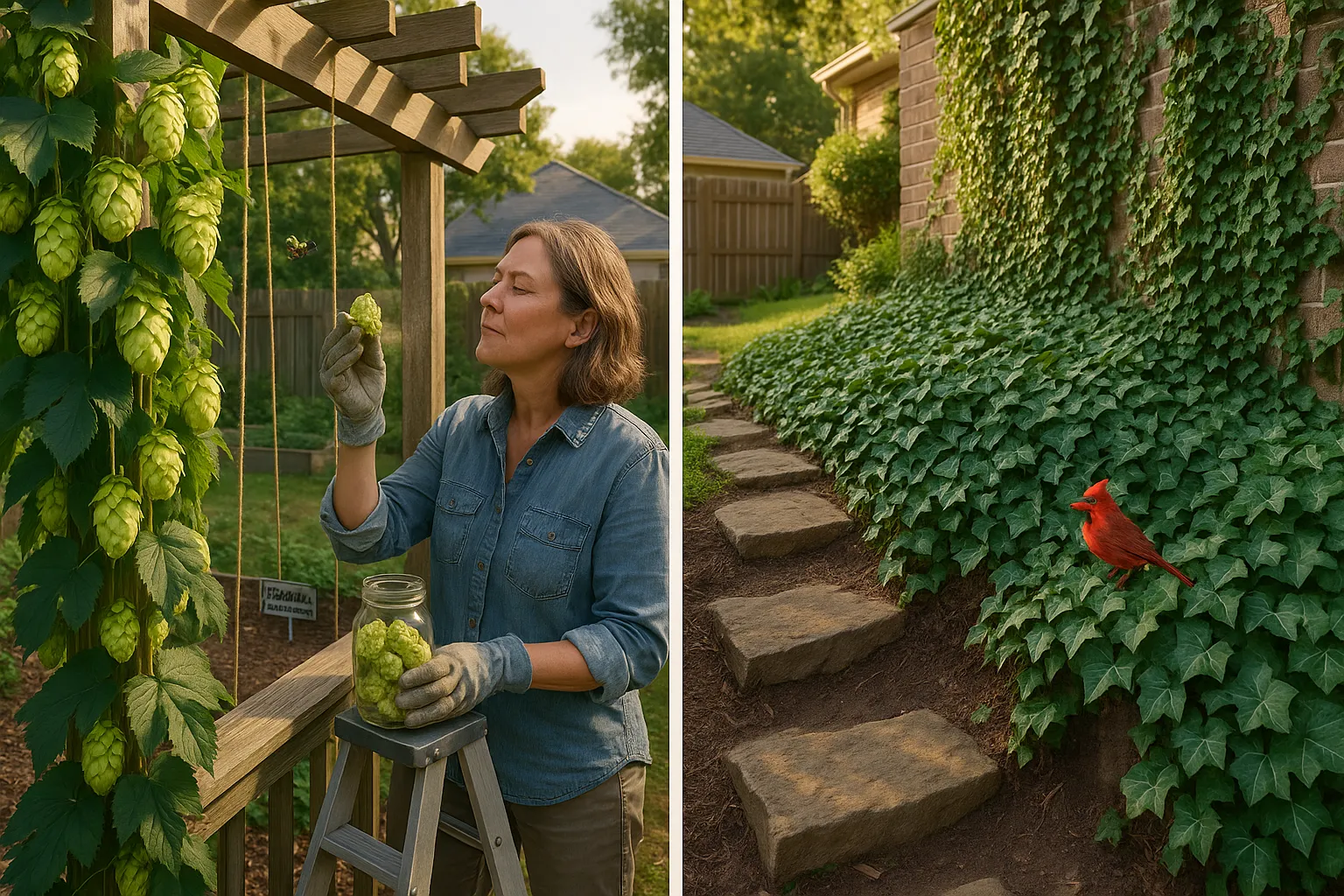
Hops are primarily grown for brewing, its cones add bitterness, flavor, and aroma to beer. Beyond brewing, hops make excellent summer privacy screens, pergola covers, and living fences because they grow tall and dense quickly. Hops also support pollinators: bees visit flowering parts and beneficial predatory insects live among bines. Named entities: many home growers select cultivars like Cascade, Centennial, or Chinook depending on flavor profile. Tip: harvest cones when they feel papery and the lupulin is aromatic.
Practical Uses For Ivy (Groundcover, Cladding, Erosion Control)
Ivy excels as low-maintenance groundcover on slopes to reduce erosion: its dense mat of roots stabilizes soil. It also provides year-round green on walls and shady yards, giving instant cover for unsightly fences or foundations. Hedera helix serves as habitat and winter cover for birds. Use cultivars like Hedera helix ‘Baltica’ or Hedera helix ‘Glacier’ for varied leaf forms and variegation. But be realistic: that coverage can hide structural issues, and many landscape professionals recommend controlled use.
Invasiveness, Environmental Impact, And Legal Considerations
Fact: Ivy is widely listed as invasive in many regions: hops is less invasive but can naturalize under some conditions.
Assessing Invasiveness And Ecological Risks
Ivy: In many U.S. states and parts of Europe, Hedera helix is considered invasive because it smothers native plants, shades young trees, and alters habitat structure. The plant’s evergreen habit lets it outcompete spring ephemerals. Local conservation groups often recommend removing or heavily controlling established stands. Named entities: consult the USDA PLANTS database and local extension for status in your county.
Hops: Hops rarely attain the same invasive status. They can naturalize along riverbanks or disturbed sites where crowns spread, but their annual dieback limits year-round competitive pressure. That said, escaped hop patches can occur near abandoned yards and can seed out when birds or mammals move seeds: monitor any volunteers.
Local Regulations And Responsible Management Practices
Some municipalities restrict planting of certain ivy cultivars. You should check local ordinances and invasive-species lists before mass planting. Responsible practices include: choosing non-invasive cultivars, removing seed heads on ivy, disposing of clippings properly, and avoiding planting ivy near vulnerable native habitats. For hops, buy certified disease-free rhizomes to avoid spreading pathogens. Many extension services publish disposal and management guides, use them. Small warning: if you plan to plant either species near protected habitats, talk to your local conservation office first.
Choosing Between Hops And Ivy For Your Garden
Fact: Choose hops if you want seasonal harvests, scent, and tall screens: choose ivy if you want evergreen cover, shade tolerance, and erosion control.
Design Scenarios And Site Recommendations
If you want a summer privacy screen, a beer garden, or to experiment with homebrewing, hops fits best. Provide full sun, strong vertical supports, and space for annual renewal. If you have a shady yard, an old wall that needs softening, or a slope that needs soil stabilizing, ivy fits better. Avoid planting ivy next to young trees that you want to keep. Hybrid approach: use hops on pergolas and ivy as a ground layer, just keep ivy clipped away from hop crowns.
Maintenance Commitment, Aesthetic Goals, And Final Decision Checklist
Decide by maintenance preference: hops needs seasonal training, fertilizing, and yearly cleanup: ivy needs periodic pruning and vigilance against spread. Ask yourself: Do you want cones and scent? Do you mind yearly replanting or crown maintenance? Are you comfortable removing volunteers and repairing ivy that climbs where it shouldn’t? Make a list: site light, soil, labor availability, wildlife considerations, and local regulations. If you follow that checklist you’ll pick the right plant, and you’ll less likely run into surprises.
Call to action: choose a test patch, monitor for a season, and adjust, your garden will tell you which climber suits it best.
To provide the best experiences, we use technologies like cookies to store and/or access device information. Consenting to these technologies will allow us to process data such as browsing behaviour or unique IDs on this site. Not consenting or withdrawing consent, may adversely affect certain features and functions.
Functional
Always active
The technical storage or access is strictly necessary for the legitimate purpose of enabling the use of a specific service explicitly requested by the subscriber or user, or for the sole purpose of carrying out the transmission of a communication over an electronic communications network.
Preferences
The technical storage or access is necessary for the legitimate purpose of storing preferences that are not requested by the subscriber or user.
Statistics
The technical storage or access that is used exclusively for statistical purposes.The technical storage or access that is used exclusively for anonymous statistical purposes. Without a subpoena, voluntary compliance on the part of your Internet Service Provider, or additional records from a third party, information stored or retrieved for this purpose alone cannot usually be used to identify you.
Marketing
The technical storage or access is required to create user profiles to send advertising, or to track the user on a website or across several websites for similar marketing purposes.