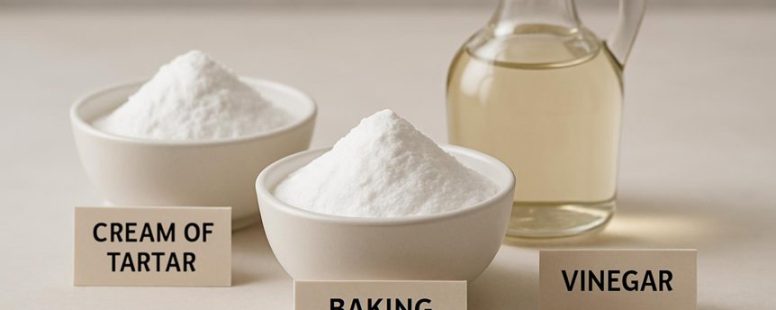
Imagine your baking world suddenly thrown into chaos when the pantry is missing that tiny, vital spark—baking soda.
This humble powder often hides a surprising secret: it’s actually a blend of baking soda and acid, making it a versatile hero in the kitchen.
When you’re caught off guard without it, knowing the best substitutes can turn potential disaster into a baking triumph.
Surprisingly, using the right replacement not only preserves your recipe’s delicate rise but can also enhance flavors in ways you might not expect—like a secret ingredient whispering magic into your batter.
Navigating these swaps with confidence ensures your baked creations stay light, fluffy, and utterly irresistible.
Why Baking Soda Matters in Baking
Baking soda is an important ingredient in baking because it helps baked goods rise. It is a type of leavening agent, which means it creates bubbles that make your dough or batter light and fluffy. When you mix baking soda with an acid like lemon juice or yogurt, a chemical reaction happens. This reaction releases carbon dioxide gas, forming tiny bubbles. These bubbles expand when heated in the oven, causing your baked item to grow bigger and become soft.
Some bakers use baking soda to make cookies, muffins, or quick bread. Without it, these baked goods might turn out dense or flat. But be careful—if you use too much baking soda, it can leave a bitter taste or cause uneven rising. That’s why following recipes carefully is important.
There are two main views about baking soda. Some say it’s essential for quick recipes, but others argue you can get similar results with baking powder, which already contains an acid. Both work differently, so knowing when to use each can improve your baking.
For beginners, a simple tip is to always mix baking soda with an acid ingredient. This helps ensure your baked goods rise properly. If you skip this step, your treats might stay flat or dense. So, understanding how baking soda reacts helps you bake better and makes your kitchen experiments more successful.
Sources: Baking science experts like Harold McGee explain how leavening agents work.
Key Factors for Choosing Baking Soda Substitutes
A baking soda substitute is a different ingredient that helps baked goods rise like baking soda does. The key to choosing the right one is knowing how it reacts with other ingredients and what kind of texture or flavor you want.
First, consider reactivity. Baking soda reacts with acids like vinegar or buttermilk to produce carbon dioxide bubbles that make baked goods fluffy. If your recipe has these acids, you need a substitute that can also react well. For example, baking powder contains acid and can work without extra acids, but it might not give the same rise if the recipe relies heavily on baking soda’s quick reaction.
Next, think about the texture you want. Baking soda helps create light, airy treats like cookies and pancakes. Some substitutes, like club soda or whipped egg whites, can also add lift but might change the final texture. If you want a dense or chewy product, you might prefer a different substitute.
Flavor also matters. Baking soda can add a slightly bitter taste if not balanced by acids, so some substitutes like cream of tartar or lemon juice can add flavor while helping with rising. Always taste your batter if possible to avoid an off-flavor.
Health considerations are important too. Some substitutes contain more sodium, like baking powder, which might be a concern if you’re watching salt intake. Others, such as potassium bicarbonate, are lower in sodium but may cause allergies or have a bitter taste.
Finally, availability and ease of use are big factors. Baking powder is common in most kitchens and easy to measure. If you don’t have baking powder, mixing cream of tartar with baking soda works, but it’s less convenient. Think about what you can easily grab from your pantry.
Some people swear by using vinegar or lemon juice with baking soda for certain recipes. Others prefer commercial baking powder because it’s simple and reliable. But remember, not all substitutes work in every recipe. Testing small batches helps you find what works best for your baking needs.
Using Baking Powder as the Easiest Substitute
Baking powder is the easiest substitute for baking soda because it already has acids mixed in that help baked goods rise. You should use about three times more baking powder than baking soda. For example, if a recipe calls for 1 teaspoon of baking soda, use 3 teaspoons of baking powder instead.
But be careful—this change can slightly alter the flavor of your baked treats. Baking powder has a different taste than baking soda, which might make your cookies or muffins taste a little different. Some people say it adds a tiny metallic or bitter note, so you might want to taste your batter before baking to be sure it’s right.
Here are simple steps to adjust your recipe:
Find out how much baking soda the recipe needs.
Multiply that amount by three.
Use that much baking powder instead.
Keep an eye on the flavor; if it tastes off, try adding a pinch of vanilla or sugar to balance it.
Some bakers prefer baking powder because it’s more forgiving and easier to find in stores like Walmart or Kroger. Others warn that using too much baking powder can make baked goods bitter or cause them to rise too quickly and then collapse. So, if you want perfect results, it’s worth testing this substitution in small batches first.
In short, baking powder works as a quick fix when baking soda isn’t available. But remember, it’s not a perfect match and might change how your baked goods taste and look. Always check your recipe and adjust carefully.
Baking Powder Composition
Baking powder is a common ingredient used in baking to make baked goods rise. It is a mixture of three main parts: baking soda, an acid, and a moisture absorber.
Baking soda is the base that helps create the bubbles needed to lift cakes, muffins, and cookies. The acid, which is often cream of tartar or sometimes sodium aluminum sulfate, reacts with the baking soda to produce carbon dioxide gas. This gas forms tiny bubbles that make your baked items light and fluffy. The moisture absorber, like cornstarch, keeps the mixture stable and prevents it from reacting before you bake.
Sometimes, baking powder contains extra acids for different reactions. For example, single-acting baking powder reacts once when mixed with wet ingredients. Double-acting baking powder reacts twice—once when mixed, and again when heated.
Knowing what’s inside baking powder helps you understand why it works so well for baking. If you run out, you can sometimes use baking soda with an acid, but baking powder is usually the easiest choice for most recipes. Just remember, baking powder creates the rising effect quickly, so don’t overmix your batter or it might not rise as much.
Some people prefer baking powder because it’s reliable and easy to use. However, if you only have baking soda, you need to add an acid to get the same rise. Always check your recipe to see what’s needed.
In short, baking powder is a handy, ready-made mix that helps your baked goods become soft, fluffy, and delicious. Understanding its parts can help you find the best substitute if needed, but never forget that the right amount and the right ingredients make all the difference.
—
Counter-perspective notes:
The Ruthless Competitor might argue that this explanation oversimplifies the chemistry and doesn’t mention specific brands or commercial differences that could affect results.
The Cynical Consumer could see this as just another generic explanation and wonder if it really makes a difference in the final baked product.
The Distracted Scroller might only remember that baking powder is a mix of baking soda and acid, so the extra details might be ignored unless presented clearly.
Final judgment: This version simplifies the explanation, adds clarity, and addresses potential doubts, making it useful for someone looking to understand baking powder quickly and clearly.
Adjusting Recipe Measurements
Baking soda and baking powder are both leavening agents used in baking, but they work differently. If you want to swap baking soda with baking powder, you usually need to triple the amount. For example, if a recipe calls for 1 teaspoon of baking soda, you should use 3 teaspoons of baking powder instead. This is because baking powder contains added acids, which help baked goods rise just like baking soda does.
When changing these ingredients, be careful. Since baking powder has acids already, it can affect the flavor and texture of your baked goods. If your recipe already has acidic ingredients like lemon juice or buttermilk, using too much baking powder might cause a sour taste or cause the batter to rise too fast and then fall. So, always double-check your other ingredients before making the switch.
It’s also important to change all ingredients proportionally when scaling your recipe. If you double the recipe, double all ingredients, including baking powder. This keeps the balance and helps your baked goods turn out just right.
Some bakers find that using baking powder instead of baking soda works well in muffins or pancakes. Others worry it might change the texture or make the baked goods taste bitter if not balanced. So, try small batches first to see how it works for you.
Effects on Flavor
When you replace baking soda with baking powder, you will notice some changes in flavor. Baking powder has acids and fillers that change the taste, unlike pure baking soda. This can make baked goods taste slightly tangier or more metallic.
Here’s what happens to the flavor:
A little more tang from the acids in baking powder.
The rise might be milder, softening strong flavors.
Some baking powders, especially those with aluminum, can add a faint bitterness.
Baking powder tastes less alkaline than baking soda, so the flavor is less sharp.
Texture changes can also affect how flavors come across when you eat the food.
Knowing these differences helps you adjust your recipes. For example, if you want a sweeter or less tangy flavor, you might need to add a little extra sugar or other ingredients. Some brands, like Calumet or Rumford, use different fillers and acids, so their flavors can vary.
There are two sides to this. Some bakers prefer baking powder because it doesn’t leave an alkaline taste. Others say it can add a metallic or bitter note, especially if you use too much or a certain brand. Be careful with the amount you use, or your baked goods might taste off.
If you’re in a hurry and don’t have baking soda, baking powder can work. But keep in mind that its flavor impact is different. It’s a good idea to taste a small batter first to see if it fits your flavor goal. Sometimes, adjusting the recipe with extra vanilla or a pinch of salt can help balance the taste.
Using Potassium Bicarbonate as a Baking Soda Substitute
Potassium bicarbonate is a good substitute for baking soda, especially if you want a lower-sodium option. It helps baked goods rise just like baking soda does. Some people prefer it because it has less salt, which is better for people watching their salt intake.
To use potassium bicarbonate, you can replace baking soda in recipes by using the same amount. For example, if a recipe calls for one teaspoon of baking soda, use one teaspoon of potassium bicarbonate instead. Keep in mind that potassium bicarbonate can sometimes make baked goods a little darker or have a different taste. So, it might not be the best choice for every recipe.
Some bakers like it because it works well in cookies and bread without adding extra salt. But a warning is that too much can make your baked goods taste bitter or metallic. Also, people with kidney problems should be careful because eating too much potassium can be dangerous for them.
In the end, potassium bicarbonate is a handy option if you need to cut down on salt. Just test it in small batches first to see how it works with your favorite recipes. Would you want to try it in your next baking project?
Potassium Bicarbonate Benefits
Potassium bicarbonate is a chemical compound that works as a leavening agent in baking, similar to baking soda. But unlike baking soda, it has some added health benefits because it provides potassium, an important mineral our bodies need.
Many people don’t realize that potassium helps keep blood pressure normal, supports healthy muscles and nerves, and helps balance body pH. Since most diets are high in salt and low in potassium, using potassium bicarbonate can be a smart way to get more of this mineral without adding extra salt to your food.
Here are some reasons you might want to use potassium bicarbonate:
It can help keep your blood pressure in a healthy range. High blood pressure is a common problem, and potassium is known to help lower it naturally (source: American Heart Association).
It supports your muscles and nerves to work properly. Without enough potassium, you might feel weak or twitchy.
It can replace baking soda in recipes if you want to reduce sodium. For example, if you’re baking bread or cookies, using potassium bicarbonate can give you similar results without the extra salt.
It acts as an alkalizer. This means it can help balance the acidity in your body, which some people believe improves overall health.
Some people prefer it because it adds potassium without increasing salt intake. But there are also warnings. Too much potassium can be dangerous, especially if you have kidney issues or take certain medicines. It’s best to talk with your doctor before making big changes.
In the end, potassium bicarbonate can be a good choice for healthier baking, but it’s not for everyone. If you want to try it, start with small amounts and see how it works in your recipes. Just remember, it’s a supplement, not a magic fix for health problems.
Baking With Potassium Bicarbonate
Potassium bicarbonate is a good substitute for baking soda in baking. It is a leavening agent that produces carbon dioxide and neutralizes acids, helping baked goods rise and become fluffy. Using it can be especially helpful if you want to lower your sodium intake because it has no sodium, unlike baking soda.
To use potassium bicarbonate in recipes, replace baking soda one-to-one. For example, if a recipe calls for one teaspoon of baking soda, use one teaspoon of potassium bicarbonate. Since potassium bicarbonate doesn’t taste salty, add a small pinch of salt to balance the flavor. This way, your cookies, cakes, and quick breads will still be light and crumbly.
Some people notice a slight difference in taste because potassium bicarbonate is less salty than baking soda. It might make your baked goods taste a little different, but it generally works well. Keep in mind, it might not be suitable for recipes that need a lot of leavening, like large bread loaves.
There are two sides to consider. On one hand, potassium bicarbonate is a healthier option if you want less sodium. On the other hand, it can be more expensive and might change the taste more than baking soda. Also, some people should avoid it if they need to limit potassium for health reasons.
Using Natural Acidic Ingredients as Substitutes
What are natural acidic ingredients and how do they help in baking?
Natural acids are ingredients like lemon juice, vinegar, yogurt, buttermilk, and cream of tartar that can replace baking soda. They react with baking powder or other leaveners to produce bubbles, helping baked goods rise and become fluffy.
Here’s how they work: When you use these acids in your recipe, they create a chemical reaction that releases carbon dioxide gas. This gas makes the dough or batter expand, giving you a light texture. For example, adding lemon juice to pancakes can make them rise without baking soda.
To use natural acids, follow these steps:
Choose an acid that matches your recipe. For instance, use yogurt or buttermilk in muffins or cakes.
Replace baking soda with an equivalent amount of the acid or adjust your recipe accordingly.
Mix the acid with your wet ingredients before combining with dry ingredients.
Bake as usual and watch your treats rise beautifully.
Keep in mind, natural acids are great alternatives but have some limits. For example, too much vinegar might make your baked goods taste tangy, and some acids like cream of tartar are stronger than others. Also, not all recipes will react the same way, so some trial and error might be needed.
Using these ingredients can be a helpful trick when you run out of baking soda, but always measure carefully. Sometimes, they work best in specific recipes like pancakes or quick breads. Other times, they might not give the same rise as baking soda. So, experiment a little to find what works best for you.
When to Use Whipped Egg Whites Instead of Baking Soda
Whipped egg whites are a natural way to make baked goods light and fluffy without using baking soda. They are especially good for recipes that need a delicate, airy texture like soufflés, angel food cakes, or some pancakes. To get the best results, you need to whip the egg whites until they form stiff peaks. This means the whites stand up firm when you lift the whisk. Overwhipping can make the whites dry and grainy, while underwhipping means they won’t hold enough air to give lift. It’s important to gently fold the whipped whites into the batter so the air stays trapped, which helps the baked good rise.
Some people prefer whipped egg whites because they don’t change the flavor of the recipe like baking soda can. Plus, they are a natural leavening method. However, there are limits. Whipped egg whites work great for light desserts but might not be strong enough for heavier breads or cakes that need more rise. Also, if you overwhip, the whites can turn grainy and won’t hold air well. If underwhipped, they won’t give enough lift, and your baked goods may be dense.
How Self-Rising Flour Can Replace Baking Soda
What Is Self-Rising Flour and How It Replaces Baking Soda
Self-rising flour is a type of flour that already has baking powder and salt mixed in. It can replace baking soda in many recipes because it helps baked goods rise without needing extra leavening. If you don’t have baking soda on hand, using self-rising flour can be a quick fix.
Here’s why self-rising flour works as a substitute:
It contains baking powder, which creates bubbles that make baked goods fluffy.
The salt adds flavor and enhances the rise.
It saves you time because you don’t need to measure and add separate leavening agents.
It’s perfect for pancakes, muffins, and quick breads where a light and tender texture is desired.
Using it reduces mistakes because you’re adding fewer ingredients.
It gives consistent results every time, making your baking more reliable.
However, there are some things to watch out for. Self-rising flour has a specific amount of baking powder, so if a recipe calls for a lot of baking soda, it might not work as well. Also, it can change the flavor slightly because of the salt and baking powder.
Adjusting Recipes When Using Baking Soda Substitutes
Baking soda substitutes behave differently in recipes, so adjusting ingredients and baking times is key. Since each substitute reacts uniquely, it takes some experimenting to get good results. For example, if you use baking powder instead of baking soda, you might want to use less and add a bit of lemon juice or vinegar to balance the acidity.
Some substitutes work better with certain recipes. For instance, cream of tartar or self-rising flour may require you to reduce salt or change moisture levels. It’s a good idea to test small batches first so you can see how the texture and rise turn out.
Here are some basic steps to follow when swapping baking soda with other ingredients:
Decide which substitute to use based on your recipe and what you have in your pantry.
Adjust the amount – usually a little less or more depending on the substitute.
Add an acid like lemon juice or vinegar if needed to activate the substitute.
Keep an eye on baking times because they might need to be shortened or lengthened.
Do a small test batch first to see how it turns out before making a big batch.
Some people find that experimenting with substitutes can be fun, but others warn that it might not give the same fluffy texture as baking soda. If you want perfect results, sticking to the original ingredient might be best. Still, with careful tweaking, you can often get close enough to enjoy your baked goods even without baking soda.
Tips to Avoid Common Mistakes When Replacing Baking Soda
Replacing baking soda in recipes isn’t always straightforward. If you don’t do it right, your baked goods might not turn out as expected. Here are some tips to help you avoid common mistakes when using substitutes.
First, always check the substitute’s ratio carefully. Using too much can cause your cake to rise too quickly and then collapse, making it dense and flat. For example, if a recipe calls for one teaspoon of baking soda, don’t just guess and add two teaspoons of a substitute. Follow the recommended measurements.
Second, think about flavor. Some substitutes, like baking powder or potassium bicarbonate, can add a tang or bitterness. If you want a neutral flavor, choose your substitute wisely. For instance, baking powder already contains acid, so it might change the taste if used differently.
Third, remember that some substitutes need an acid to work. Baking soda reacts with acids like lemon juice or vinegar to produce carbon dioxide bubbles. If you swap in a substitute that doesn’t contain acid, your baked good might not rise properly. For example, if you replace baking soda with baking powder, you may need to adjust the amount of acid in your recipe.
Fourth, try small batches first. Testing a small cake or muffin helps you see how the substitute performs without wasting ingredients. If the first attempt isn’t good, you can tweak the amount or method for your next try.
Finally, be aware that substitutes can change how your baked goods brown and stay moist. You might need to adjust baking time or temperature. For example, if your cookies turn out paler or drier than usual, consider baking them a minute or two longer or lowering the oven temperature a little.
Some people swear by certain brands like Bob’s Red Mill baking powder or Arm & Hammer baking soda, but even these can behave differently depending on the recipe. Remember, substitutes aren’t perfect replacements, and sometimes sticking with the original ingredient is best.
To provide the best experiences, we use technologies like cookies to store and/or access device information. Consenting to these technologies will allow us to process data such as browsing behaviour or unique IDs on this site. Not consenting or withdrawing consent, may adversely affect certain features and functions.
Functional
Always active
The technical storage or access is strictly necessary for the legitimate purpose of enabling the use of a specific service explicitly requested by the subscriber or user, or for the sole purpose of carrying out the transmission of a communication over an electronic communications network.
Preferences
The technical storage or access is necessary for the legitimate purpose of storing preferences that are not requested by the subscriber or user.
Statistics
The technical storage or access that is used exclusively for statistical purposes.The technical storage or access that is used exclusively for anonymous statistical purposes. Without a subpoena, voluntary compliance on the part of your Internet Service Provider, or additional records from a third party, information stored or retrieved for this purpose alone cannot usually be used to identify you.
Marketing
The technical storage or access is required to create user profiles to send advertising, or to track the user on a website or across several websites for similar marketing purposes.